Drafting Border Rejection Indemnity Terms for Thermoformed Container Supply Agreements
Draft border rejection indemnity terms by defining precise analytical triggers, mandatory notification windows, demurrage allocation, and set-off rights.


Trigger
Port customs authorities detain plastic food packaging when physical inspections or routine lab sampling reveal non-compliance with safety thresholds. In the European Union, notifications go through the Rapid Alert System for Food and Feed, while in the United States, entry refusal operates under Section 801(a) of the Federal Food, Drug, and Cosmetic Act via Import Alerts. Most border rejections for thermoformed packaging—including poly(ethylene terephthalate) trays, polypropylene clamshells, and high-impact polystyrene tubs—come down to chemical migration exceeding regulatory limits or errors in the accompanying documentation.
When a port health inspector draws samples from an ocean container, the batch remains impounded under commercial hold pending analytical clearance. If laboratory testing identifies global migration exceeding 10 milligrams per square decimeter of food contact surface under EN 1186 conditions, the port health authority issues a formal border rejection notice. That legal instrument prohibits customs clearance and orders either destruction or export out of the territory.
Chemical triggers go beyond overall mass transfer. Specific migration limits apply to residual monomers, heavy metal catalysts, and processing additives listed under Annex I of Regulation EU 10/2011. A container lot showing terephthalic acid migration above 7.5 milligrams per kilogram of food simulant, or primary aromatic amines exceeding 0.01 milligrams per kilogram, fails compliance automatically.
To prevent lengthy disputes over whether administrative detention qualifies for indemnity, contracts should spell out exactly which legal documents prove border rejection.
| Jurisdiction | Regulatory Reference | Primary Chemical Trigger | Threshold Ceiling | Official Notification Instrument |
|---|---|---|---|---|
| European Union | Regulation EU 10/2011 | Global Migration Limit | 10 mg/dm² surface area | RASFF Border Rejection Notice |
| European Union | Regulation EU 10/2011 | Primary Aromatic Amines | 0.01 mg/kg simulant | Customs Seizure Protocol |
| United States | 21 CFR 177.1630 | Chloroform Extractables | 0.05 mg/in² contact area | FDA Notice of Detention and Hearing |
| United Kingdom | BS EN 1186 Series | Specific Heavy Metals (Cobalt) | 0.05 mg/kg food simulant | Port Health Authority Refusal Order |

Official Detention Notices and Entry Refusals
Port inspections generate the paperwork that drives compliance disputes. Importers receive formal notification stating which statutory standard was breached, the sampling methodology used, and the test results from the reference laboratory. A detention letter from the United States Food and Drug Administration identifies the product code, lot number, and violated 21 CFR clause.
European customs authorities issue an official certificate of refusal alongside the RASFF entry report.
Supply agreements should explicitly name these official documents as the sole prerequisite for an indemnity claim, preventing suppliers from arguing that detention was caused by administrative filing errors. The indemnity clause triggers upon presenting the signed port authority refusal document accompanied by the lab analytical certificate showing non-compliant migrant levels.

Analytical Thresholds Defining Commercial Non-Conformity
Laboratory findings translate directly into contract breaches once test figures cross regulatory action levels. Thermoformed containers designed for aqueous, acidic, or fatty food contact undergo standardized exposure to food simulants before commercial release. Under EN 1186 protocol standards, Simulant A (10 percent ethanol), Simulant B (3 percent acetic acid), and Simulant D2 (vegetable oil) represent distinct food matrix environments.
Exceeding specific limits in any single simulant invalidates the compliance declaration for the entire batch.
Contamination by non-intentionally added substances also triggers port detentions. Breakdown products from antioxidants such as tris(2,4-di-tert-butylphenyl) phosphite, alongside cyclic oligomers generated during polymer condensation, undergo screening via gas chromatography-mass spectrometry. If unapproved substances appear above the 0.01 milligram per kilogram threshold without toxicological evaluation, customs authorities treat the shipment as adulterated.
Poor resin choices during sheet extrusion create direct financial liability for the buyer when contract terms lack precise rejection parameters.


Sheet
Extrusion profile conditions dictate the chemical stability of thermoformed containers. As virgin or recycled polymer pellets move through heated extruder zones, shear forces and elevated thermal profiles break polymer chains, leaving volatile degradation products trapped inside the plastic matrix. When the sheet is reheated inside the thermoforming mold, these residual compounds migrate to the surface layer, changing how the finished tray interacts with packaged food contents.
Heat also accelerates additive migration. In poly(ethylene terephthalate) sheet extrusion, excessive melt temperatures generate acetaldehyde through thermal cleavage of the polymer backbone. High acetaldehyde concentrations leach into neutral liquids, altering taste profiles and violating general safety requirements under Regulation EC 1935/2004 Article 3.
Polypropylene sheet production carries different degradation pathways, where thermal oxidation of slip agents like erucamide or oleamide produces low-molecular-weight fatty acid amides that migrate rapidly into fatty food simulants during testing.
Testing under EN 1186-3 using 10 percent ethanol for 10 days at 40 degrees Celsius determines overall migration compliance for aqueous food contact.
Post-consumer recycled content introduces additional chemical risks at entry. Recycled poly(ethylene terephthalate) flake integrated into thermoforming sheet must originate from super-cleaning processes evaluated by the European Food Safety Authority or covered by FDA letters of no objection. Incomplete decontamination cycles leave residual solvents, limoxene, or industrial contaminants trapped in the core layer of multi-layer A-B-A sheet structures.
Delamination during thermoforming exposes the uncleaned recycled core directly to food contact surfaces, driving migration values above statutory caps.

Extrusion Thermal History and Polymer Degradation
Melt processing parameters determine the baseline purity of thermoformed packaging. Exceeding target temperatures by fifteen degrees Celsius during extrusion accelerates the thermal breakdown of primary antioxidants like octadecyl 3-(3,5-di-tert-butyl-4-hydroxyphenyl)propionate. This breakdown consumes the stabilization package intended to protect the plastic during secondary thermoforming, leaving finished trays vulnerable to oxidative degradation on warm-fill food packing lines.
Testing laboratories isolate these degradation products using solvent extraction followed by liquid chromatography coupled with time-of-flight mass spectrometry. Test reports listing unidentified chromatographic peaks signal broken-down additive packages. Disputes over these findings often hinge on whether elevated migration values stem from terminal storage conditions or latent defects in the extrusion batch.

Additive Migration and Surface Exudation
Internal additives engineered to improve processability migrate continuously toward container boundaries. Slip additives reduce friction coefficients during denesting operations, but over-dosing leads to heavy surface exudation. When surface concentrations exceed equilibrium levels, slip molecules dissolve rapidly into fatty food simulants during contact trials, driving global migration past the legal 10 milligram per square decimeter cap.
Antistatic additives based on ethoxylated alkylamines display similar migration dynamics. While preventing dust accumulation on stored trays, these polar compounds dissolve readily in acidic food simulants. Supply agreements must specify maximum additive loading rates in raw resin specs to prevent over-dosing intended to compensate for poorly tuned tooling or inadequate denesting mechanics.
- Erucamide blooming drives fatty simulant migration above 10 milligrams per square decimeter when dosage exceeds 1500 parts per million in polyolefin resin blends.
- Acetaldehyde accumulation in PET sheet matrix alters organoleptic profiles when melt temperatures during extrusion pass 285 degrees Celsius without thermal stabilization.
- Antioxidant degradation yields volatile quinone derivatives that fail screening for non-intentionally added substances during gas chromatography mass spectrometry analysis.
- Post-consumer resin contamination introduces residual volatile organic compounds when decontamination reactors fail to hold vacuum pressure below 1 millibar during processing.


Proof
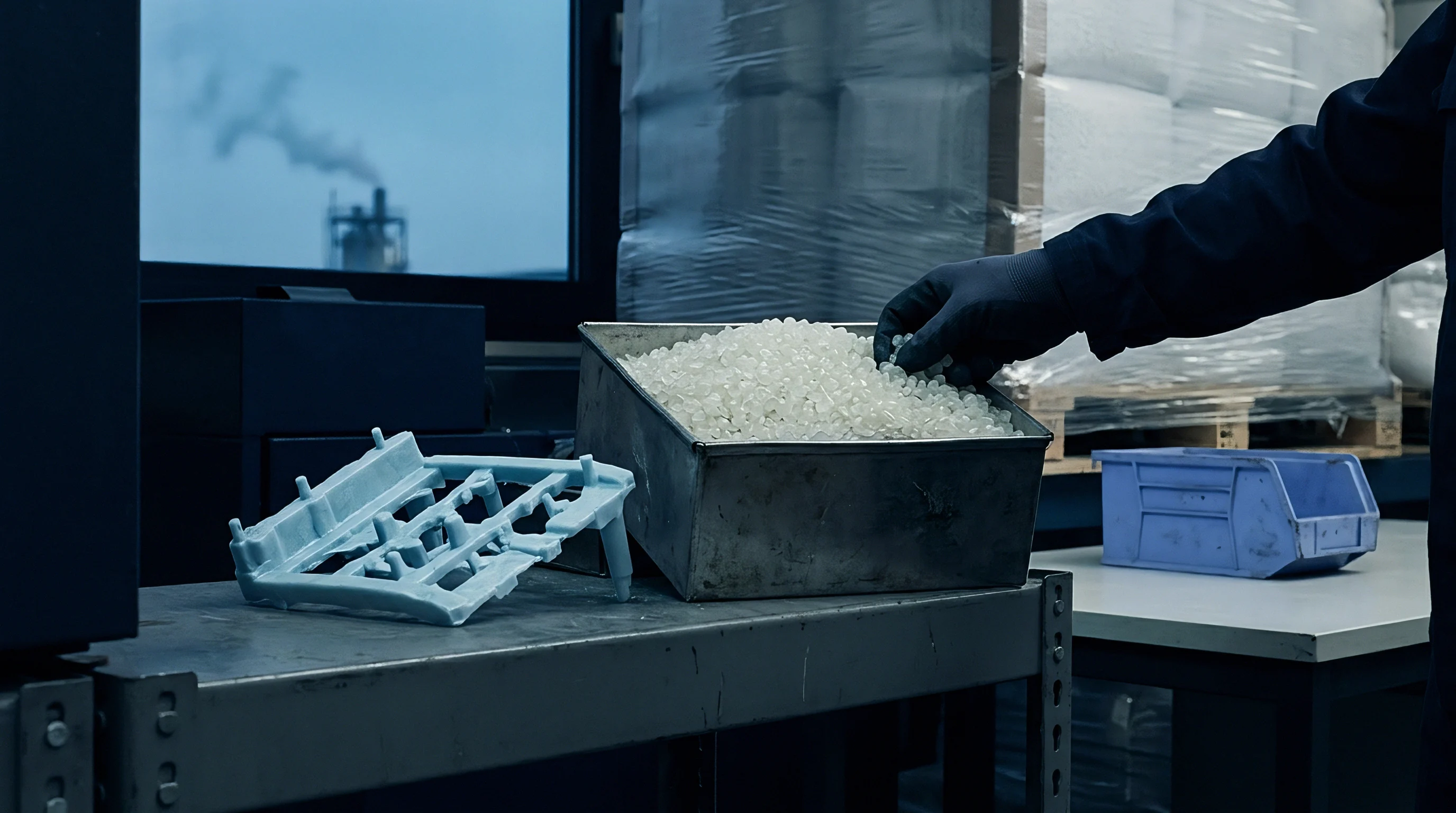
Documentary evidence determines whether a shipment clears customs. Officers check physical lot numbers stamped on shipping pallets against the Declaration of Conformity and associated lab test reports. Any discrepancy between the batch number on a container wall and the code cited in the chemical test dossier halts entry immediately.
Importers bear administrative risk when paperwork fails to prove complete traceability through every step of the conversion chain.
Declarations of Conformity must fulfill explicit legal criteria set forth in Regulation EU 10/2011 Annex IV or US FDA 21 CFR 177.810. The declaration must identify the manufacturer, chemical composition of the plastic sheet, confirmation that dual-use additives comply with food safety limits, and specific operational boundaries regarding contact food types, storage durations, and temperature limits. Submitting a raw polymer datasheet instead of a finished-article test report guarantees detention because thermoforming alters the migration profile of the plastic sheet.
A measured specific migration of 0.04 milligrams per kilogram for cobalt in 3 percent acetic acid exceeds the EU limit when contact temperature hits 70 degrees Celsius.
Simulant selection in lab protocols must represent worst-case exposure scenarios encountered during actual packaging usage. Testing a thermoformed tray intended for warm acidic sauces using only water (Simulant A) yields invalid compliance documentation. The laboratory must expose the finished article to 3 percent acetic acid (Simulant B) for ten days at forty degrees Celsius, or two hours at seventy degrees Celsius for hot-fill applications.
Contract terms must enforce that laboratory reports carry ISO 17025 accreditation specific to food contact testing standards.
Declaration Structure and Batch Traceability
Traceability systems link incoming raw resins directly to outgoing thermoformed container lots. The finished container declaration relies on supporting declarations provided by resin manufacturers, masterbatch producers, and sheet extruders. Each party in the supply chain signs a compliance statement confirming their processing step introduced no restricted or unapproved chemical substances.
Auditing the compliance dossier requires verifying that all specific migration limits listed under applicable regulations have supporting laboratory validation. If the container uses a specialized blue colorant containing phthalocyanine complexes, the test report must confirm copper and cobalt migration levels fall below statutory ceilings. Missing analytical data invalidates the downstream declaration, shifting regulatory liability entirely onto the importer of record.

Simulant Selection and Analytical Verification
Analytical verification depends on matching laboratory contact conditions to actual storage environments. Simulant D2 (rectified olive oil or substitute solvent 95 percent ethanol) measures lipid-soluble migrant transfer. When testing thermoformed containers for fatty food contact, analytical chemists measure the mass of residue remaining after evaporating the exposed simulant.
High analytical precision prevents false positive rejections caused by simulant evaporation errors or humidity fluctuations inside analytical balance chambers.
Screening for non-intentionally added substances demands advanced mass spectrometry techniques. Gas chromatography paired with flame ionization detection isolates volatile organic compounds, while high-performance liquid chromatography coupled with quadrupole time-of-flight mass spectrometry identifies non-volatile oligomers. Test reports lacking explicit quantification limits for unidentified chromatographic peaks fail rigorous customs dossier audits.

Worked Surface Ratio Calculation
Calculating migration compliance requires converting laboratory analytical findings to actual food contact geometric ratios. Regulatory limits specify a maximum allowable global migration of 10 milligrams per square decimeter of surface area (mg/dm²) or 60 milligrams per kilogram of food simulant (mg/kg). Consider a 40-tonne commercial lot of thermoformed PET clamshell containers designed for packaging 500 grams of fresh berries.
Each container possesses a internal volume of 0.5 liters and a measured food contact surface area of 3.2 square decimeters.
Standard regulatory assumptions evaluate migration based on a conventional package ratio of 6 square decimeters of plastic contact area per 1 kilogram (1000 grams) of food. For the berry container under evaluation, the actual ratio of surface area to packed mass calculates as follows:
Surface Area to Mass Ratio = 3.2 dm² / 0.5 kg = 6.4 dm²/kg.
Laboratory testing of the finished thermoformed container using Simulant B (3 percent acetic acid) for 10 days at 40 degrees Celsius returns a measured global migration of 8.5 milligrams per square decimeter (mg/dm²). To determine the actual migration into 1 kilogram of packaged food using the container’s physical geometry, multiply the surface-to-mass ratio by the measured unit surface migration:
Actual Food Migration = 6.4 dm²/kg × 8.5 mg/dm² = 54.4 mg/kg.
This calculated value falls under the maximum legal cap of 60 mg/kg. However, if the thermoforming process suffered heat degradation, raising unit surface migration to 9.8 mg/dm², the resulting calculation changes:
Degraded Food Migration = 6.4 dm²/kg × 9.8 mg/dm² = 62.72 mg/kg.
This result exceeds the legal threshold of 60 mg/kg despite the surface concentration value (9.8 mg/dm²) remaining below the nominal surface cap of 10 mg/dm². Contract drafting must specify whether compliance evaluation uses standard 6 dm²/kg assumptions or actual container geometry to prevent analytical rejection disputes at destination ports.
- Step 1 Verification demands cross-checking container lot codes printed on shipping cartons directly against the test report batch identifiers.
- Step 2 Validation requires confirming the food contact simulants selected in laboratory testing match the actual food product intended for filling.
- Step 3 Cross-matching involves auditing specific migration limits for all monomer and additive compounds listed under Annex I of Regulation EU 10/2011.
- Step 4 Sign-off secures formal written confirmation from an accredited laboratory certifying the finished article conforms to target market entry requirements.
Agreements incorporating clause 14.2 of the International Packaging Federation Standard Terms shift all analytical re-testing costs to the supplier upon confirmation of non-conforming migration levels.


Scope
Drafting border rejection indemnity terms requires mapping financial exposure when customs impounds a container. Financial liability extends far beyond the direct invoice value of the thermoformed containers. Port authorities levy daily charges while goods sit under administrative hold, rapidly expanding landed costs before legal resolution occurs.
Indemnity clauses without clear cost categorization lead to prolonged litigation regarding consequential damages.
Demurrage and container storage charges accumulate rapidly at maritime terminals. Steamship lines charge escalating daily fees for container detention after standard free-time periods expire. In major container ports, combined demurrage, terminal storage, and chassis hire fees exceed five hundred dollars per container per day.
If a customs hold lasts sixty days while re-testing proceeds, demurrage charges easily surpass the original purchase value of the thermoformed packaging lot.
Contractual indemnity terms without explicit timeframes for customs notification lose enforceability once demurrage charges accrue.
Destruction costs represent another direct financial exposure. When port health authorities issue a mandatory order for destruction due to non-compliant chemical migration, goods must be transported under bonded customs escort to an authorized hazardous waste incinerator or industrial waste disposal facility. Destruction charges, bonded freight tariffs, and official customs supervision fees require explicit inclusion within the contractual indemnity definition.
| Cost Category | Importer Responsibility Baseline | Indemnity Coverage Under Defect | Verification Requirement |
|---|---|---|---|
| Terminal Demurrage | Standard port clearance delay | Full reimbursement by supplier | Official port authority tariff receipt |
| Bonded Freight | Initial port-to-warehouse transport | Covered if diverted to destruction | Certified bill of lading from carrier |
| Product Destruction | None | Full reimbursement by supplier | Certificate of Disposal from facility |
| Third-Party Testing | Routine import audit budget | Reimbursed upon defect confirmation | ISO 17025 laboratory invoice |

Demarcation of Direct Commercial Damages
Contracts should distinguish between direct losses and indirect commercial claims. Direct losses include invoice costs, import duties paid prior to rejection, ocean freight, port demurrage, customs broker fees, laboratory re-testing fees, and certified disposal expenses. Including these line items inside the definition of direct damages ensures recovery without needing to prove foreseeability under general contract law.
Indirect losses involve plant downtime, lost sales contracts, and customer failure-to-supply penalties. Food packaging line stoppages resulting from rejected container shipments generate significant daily operational losses for commercial food packers. Supply agreements typically exclude indirect consequential damages unless the buyer negotiates specific liquidated damages provisions covering food line disruption resulting directly from supplier manufacturing defects.

When Does a Test Defect Trigger Indemnity?
Setting a clear legal threshold that activates indemnity protection prevents early contractual disputes. The indemnity mechanism activates upon formal issuance of an entry refusal order by a government customs or health authority. A buyer cannot trigger indemnity based solely on internal, non-accredited screening tests conducted without supplier participation.
Uncertainty arises when customs authorities offer the importer an option to re-export the shipment instead of ordering immediate destruction. If the contract conditions indemnity execution solely on official destruction orders, re-export might be treated as forfeiting indemnity rights. Drafters resolve this ambiguity by including official re-export orders issued under customs custody as equal activation triggers alongside mandatory destruction directives.
Contract terms should also address conditional holds that permit local sorting or surface treatment prior to final lab clearance.


Allocation
Clear administrative procedures govern the enforcement of contractual indemnity provisions. Supply agreements require strict notification windows following border holds to preserve legal rights. Failing to inform a supplier within five business days of receiving an official customs detention notice risks waiving claims by denying them the opportunity to witness sampling or request official re-testing.
Documentation protocols must dictate how samples are taken, handled, and stored during port disputes. Customs authorities usually retain official sample portions for government analysis. Importers must secure agreement for port officers to draw split samples—identical container units sealed under official customs stamps—for independent verification.
Without split samples preserved under strict chain-of-custody protocols, proving manufacturing defects against supplier counter-claims becomes difficult.
Joint laboratory verification mechanics provide a neutral path for resolving conflicting analytical findings. When port health authorities report chemical migration failures, disputes frequently arise over the laboratory extraction technique or calibration standards applied. The contract should mandate sending preserved split samples to an agreed-upon ISO 17025 accredited reference laboratory whose analytical determination binds both commercial parties.

Notification Timelines and Customs Access Rights
Timely notice provisions protect both commercial parties during import holds. Importers must transmit copies of all customs notices, port health sampling certificates, and detention orders to the supplier within seventy-two hours of service. Prompt communication enables technical teams to review production batch records and identify potential contamination causes before demurrage charges accumulate.
Supplier access rights permit technical representatives to inspect detained shipments within customs-bonded warehouses where local port regulations allow access. Inspecting physical pallet conditions, carton integrity, and batch label application helps verify whether container damage occurred during ocean transit or originated during factory production. Contract terms must outline these access rights clearly while assigning responsibility for associated bonded warehouse inspection fees.

Joint Laboratory Arbitration Protocol
Analytical disputes require structured technical resolution frameworks. When initial port tests show specific migration violations, supply agreements should specify a secondary testing protocol executed by an independent reference laboratory. The agreement lists three pre-approved international testing houses possessing specialized analytical instrumentation for food-contact polymer characterization.
Reference laboratory findings override initial screening results. If the reference facility confirms compliance, the buyer absorbs testing expenses and proceeds with customs release procedures where permitted. If the reference facility confirms migration non-compliance, the supplier pays all analytical fees, bears port demurrage liabilities, and settles outstanding indemnity claims under contract terms.
- Notify the supplying factory within seventy-two hours of receiving formal written notice of detention from port customs officers.
- Reserve twin sealed samples from the detained container batch under official customs supervision using clean stainless steel tools.
- Dispatch sample set A to an accredited independent reference testing laboratory operating under ISO 17025 certification.
- Transmit analytical chromatograms and raw spectroscopic files to the supplier technical team within five working days of receipt.
- Issue formal demand for financial settlement upon confirmed analytical non-compliance from the reference laboratory.
Defect notification windows expiring without written notice waive buyer claims for indirect port demurrage charges.

Recovery
Securing financial recovery under signed indemnity clauses requires robust contractual enforcement mechanisms. Cross-border supply contracts involving international counterparties face distinct execution challenges when recovering funds from foreign entities. A signed legal judgment or arbitration award against an overseas supplier holds little value if the supplier maintains no local assets within the buyer’s domestic legal jurisdiction.
Invoice set-off rights represent the most immediate financial recovery tool available to importers. Drafting clear set-off provisions allows buyers to deduct confirmed border rejection losses, demurrage expenses, and disposal fees directly from outstanding invoices owed for subsequent container shipments. Without an explicit contractual right of set-off, unilateral payment withholding may place the buyer in default under general commercial law, exposing them to claims for breach of payment terms.
Unilateral invoice set-off terms without documented reference testing invite counter-claims for non-payment under governing trade law.
Commercial letters of credit provide structured financial protection for large-volume packaging contracts. Buyers can require suppliers to present clean port health clearance documents or accredited pre-shipment inspection certificates as mandatory conditions for payment authorization under irrevocable letters of credit. Alternatively, standby letters of credit or performance bonds issued by international banks can secure indemnity obligations, enabling buyers to draw funds directly upon presenting certified port health rejection orders.
| Recovery Mechanism | Execution Speed | Legal Jurisdiction Risk | Supplier Countermeasure |
|---|---|---|---|
| Invoice Set-Off | Immediate (0-30 days) | Low (Self-executing domestic action) | Shipment withholding or commercial breach claim |
| Standby Letter of Credit | Fast (7-14 days) | Low (Bank obligation under UCP 600) | Court injunction against bank payout |
| Arbitration Enforcement | Slow (12-24 months) | Medium (New York Convention execution) | Asset relocation across borders |
| Escrow Retention | Immediate (0-7 days) | Low (Third-party agent hold) | Refusal to execute release authorization |

Set off Rights and Letter of Credit Terms
Drafting effective set-off provisions requires precise language allowing deductions across separate purchase orders. Rejection liabilities under one order do not automatically offset payment obligations for conforming goods delivered under another contract unless explicit terms apply set-off rights across all active commercial accounts.
Letter of credit documentation rules must align with border clearance realities. Incorporating specific document requirements—such as clean laboratory analytical certificates issued by designated inspection companies—ensures banks withhold payment when non-conforming goods enter transit. Including standby credit facilities provides financial backing for potential post-clearance claims, such as latent specific migration failures discovered after goods exit customs custody.

Cross Border Jurisdiction and Asset Execution
Jurisdiction clauses establish the legal forum for resolving high-value indemnity disputes. Choosing governing law and dispute forums requires assessing foreign judgment enforcement treaties. International arbitration administered by recognized institutions like the International Chamber of Commerce or the London Court of International Arbitration yields arbitral awards enforceable across more than 160 countries under the New York Convention on the Recognition and Enforcement of Foreign Arbitral Awards.
Enforcing arbitral awards requires identifying accessible supplier assets prior to initiating legal proceedings. Importers securing supply agreements with overseas thermoformers often structure payment terms around escrow arrangements, holding five to ten percent of contract value in trust until final customs clearance and arrival inspection confirm full compliance. Secure financial structures convert written indemnity promises into practical recovery tools, protecting business cash flow from regulatory border disruptions.