Meaning
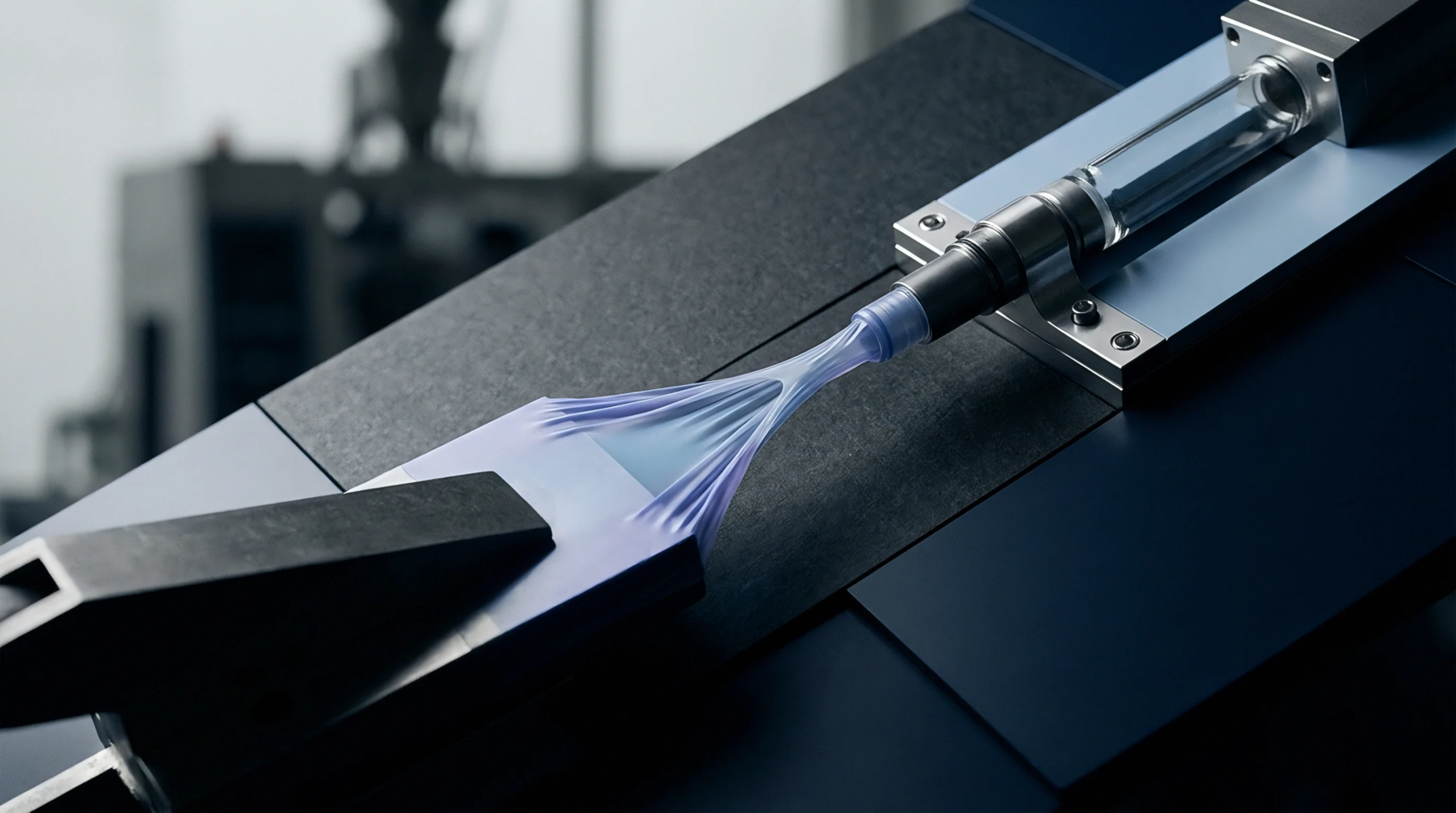
Physical metrics define the time required for a polymer chain to crawl out of its surrounding tube of entanglements via thermal motion. As a primary determinant of melt elasticity, reptation time increases with the cube of the molecular weight of the polymer. This metric determines how quickly a polymer melt relaxes after being subjected to high shear forces during extrusion or injection.
Chain Relaxation
When a melt is injected into a mold, the high shear rate stretches the polymer chains along the flow path. If the cooling is faster than the reptation time, these chains remain stretched and frozen in an oriented state, which introduces residual stresses into the part. These molded-in stresses cause subsequent warping or stress cracking when the part is exposed to heat or chemicals.
Melt Behavior
Virgin resins with high molecular weights exhibit longer relaxation times, which can lead to high melt viscosity and flow resistance. Mixing in regrind reduces the average molecular weight through chain scission, which shortens the reptation time and reduces the melt viscosity. While this makes the resin easier to inject, it also reduces the mechanical strength and impact resistance of the final moulded part.
Cycle Economy
Shorter relaxation times allow for faster cycle times because the melt reaches structural equilibrium quickly. However, moulders must balance this processing benefit against the risk of diminished mechanical performance.