Meaning
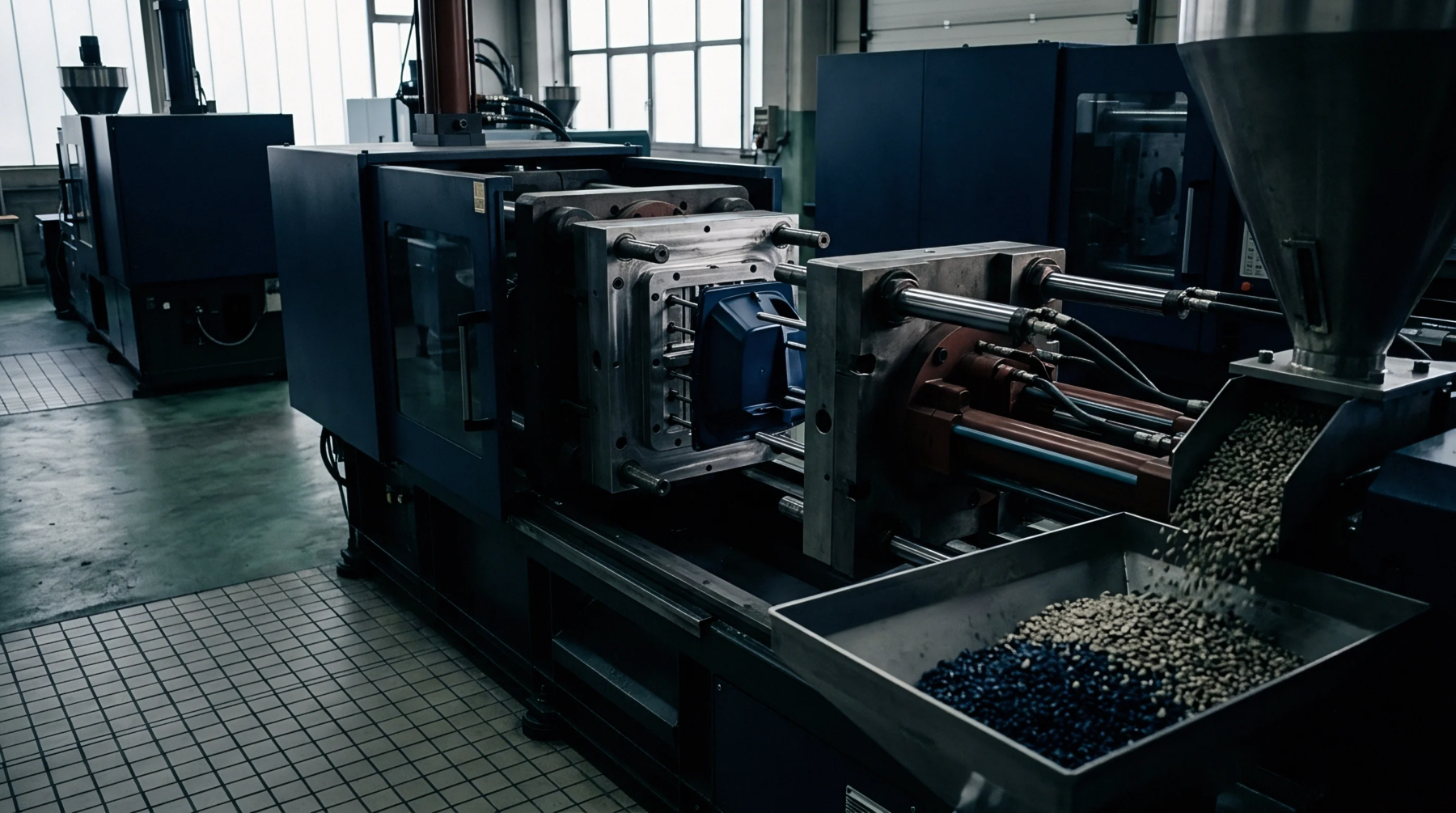
Precision-machined assemblies provide the structural frame and alignment mechanism for the internal cavity and core inserts of a tool. Every mold base consists of several plates made from high-strength steel that must resist the crushing forces of the injection cycle. This assembly houses the cooling channels and ejector pins required for repeatable part production.
Thermal Regulation
Internal passages bored through the steel plates carry water to remove heat from the molten polymer. Because the mold base acts as a heat exchanger, the layout of these channels determines how quickly a part cools and reaches ejection temperature. Efficient cooling reduces cycle times and prevents the thermal warping of thick-walled parts.
Plate Support
Rigidity of the structure prevents the tool from flexing under the extreme pressures of the injection stage. A standard mold base uses thick backing plates to ensure that the cavity inserts do not shift or compress during the shot. This stability is required to maintain the dimensional accuracy of the finished plastic component.
Custom Integration
Standardised frames allow for the rapid interchange of different core and cavity sets within the same machine setup. While the exterior of the mold base follows industry standards for clamping, the interior is often modified to fit specific part geometries. This flexibility allows a processor to run multiple products using a single master frame.