Meaning
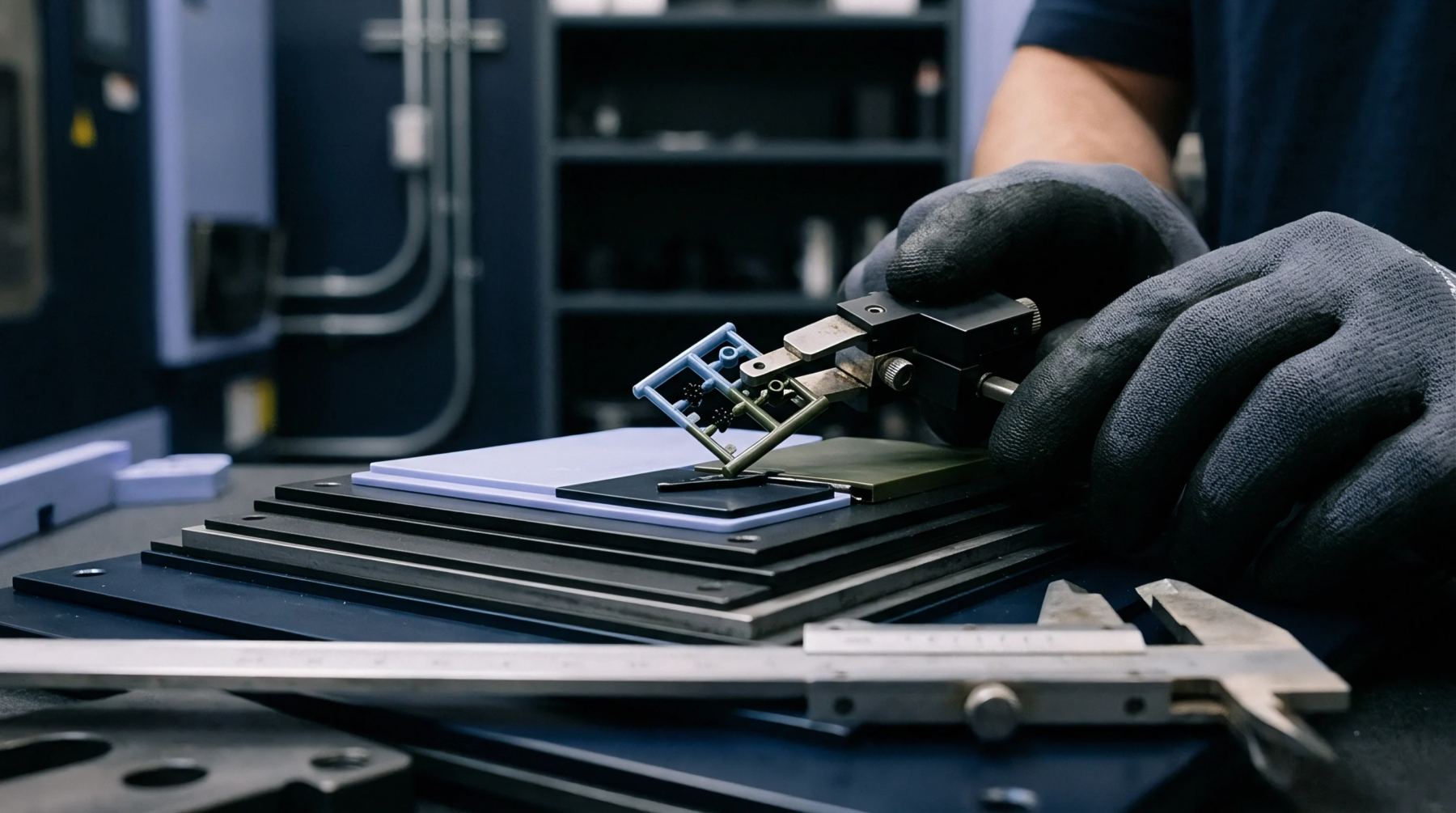
Specialized injection moulding techniques process liquid crystal polymers by exploiting their anisotropic flow characteristics and extreme thermal resistance. Executing LCP moulding requires high barrel temperatures, precise injection speed control and narrow mold gate geometry to align stiff polymer chains. The process governs thin wall connector formation, micro scale electronic housing replication and zero burr component production.
It stops being viable when component wall thicknesses become too thick, causing internal voiding and non uniform orientation profiles.
Rheological Profile
Liquid crystal polymers exhibit dramatic shear thinning behavior under high injection velocities, allowing melt streams to fill micro features easily. Polymer molecules align parallel to the flow direction, creating skin layers with exceptionally high tensile moduli. Moulders executing LCP moulding must keep injection speeds fast to maintain melt orientation before rapid surface freezing occurs.
Virgin datasheets highlight ultra low melt viscosity at high shear rates, enabling wall thicknesses down to zero point two millimeters.
Weld Strength
Melt fronts meeting inside the cavity show weak weld line strength due to parallel molecular orientation.
Tooling Design
Tools constructed for processing liquid crystal polymers require hardened steel inserts and tight vent clearances to handle high melt temperatures without flashing. Thermal expansion differences between the polymer and steel require precise tool sizing based on directional shrinkage factors. Adding regrind disrupts molecular orientation and lowers mechanical stiffness in structural electronic parts.
Precise mold temperature control prevents premature surface skinning and ensures dimensional stability across complex geometry designs.