Meaning
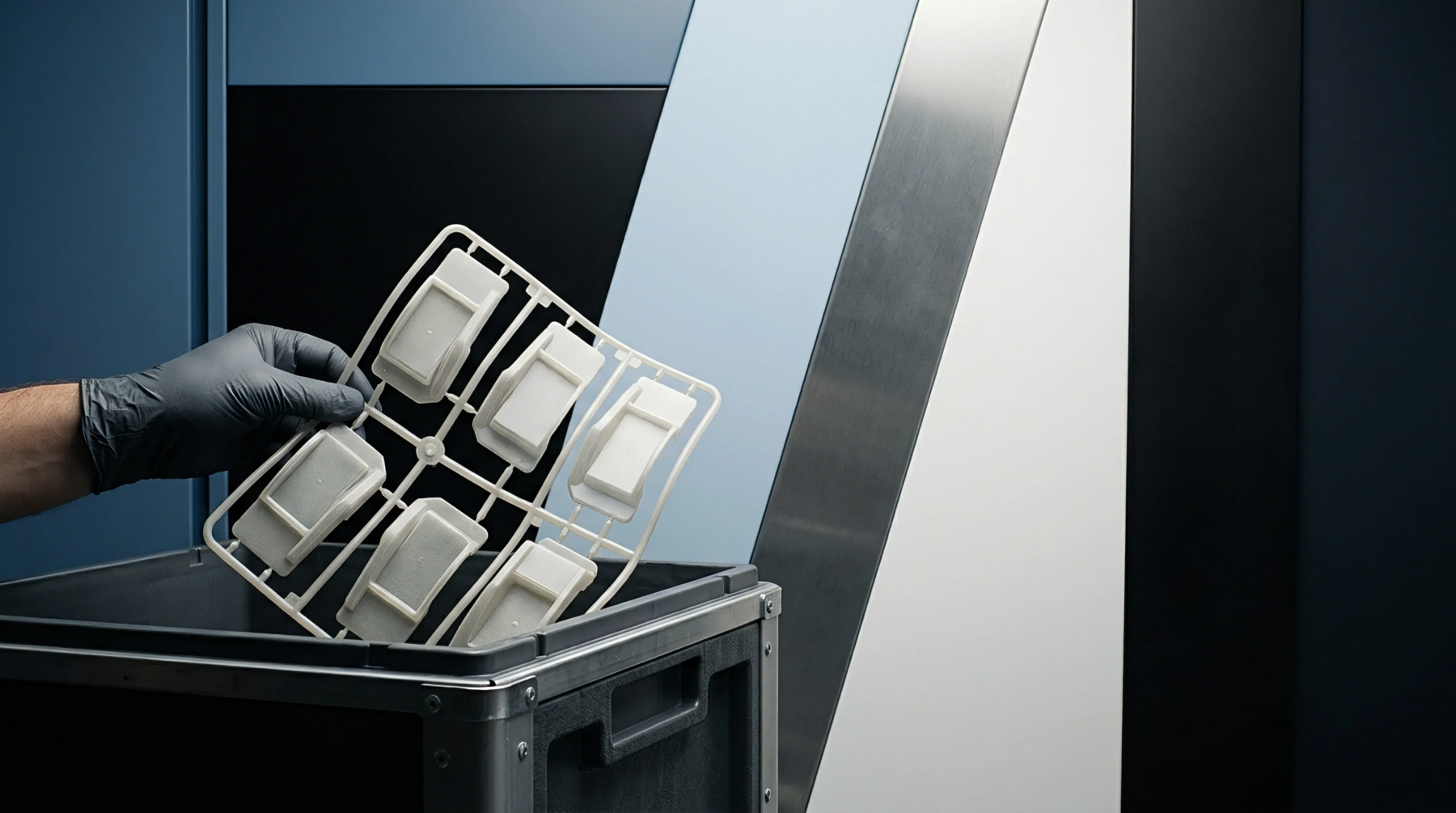
End-effectors attached to automated robot arms handle component extraction, insert placement and part transfer during injection moulding cycles. Designing specialized end of arm tooling ensures rapid and reliable part removal without damaging delicate plastic cosmetic surfaces. Pneumatic grippers, vacuum cups and customized mechanical jaws interface directly with moulded geometries.
Proper tooling design reduces total mould cycle time and protects multi-cavity mould cavities from expensive collisions.
Gripper Configuration
Selecting appropriate contact interfaces prevents part deformation during high-speed extraction from open mould plates. Vacuum-based end of arm tooling handles flat thin-walled parts, whereas mechanical jaws secure thick structural features. Custom contoured nests support fragile mouldings during high-acceleration robot sweeps.
Payload Capacity
Robot arm mechanical limits govern the maximum mass and moment arm of the EOAT and extracted part assembly. Exceeding end of arm tooling weight allowances induces vibration, causing positioning errors during part drop-off. Carbon fibre framing reduces tool mass to optimize robot speed and acceleration limits.
Ejection Timing
Precise synchronization between mould opening and robot arm entry minimizes total dry cycle time. Fault sensors mounted on end of arm tooling confirm complete part removal before the moulding machine initiates mold closing. Automated verification prevents costly mold crashes caused by stuck components.