Establishing Customer Ownership Protection for Injection Moulding Tooling Assets
Securing injection moulding tooling requires clear bailment contracts, direct steel engraving, and registered UCC security filings before placing assets.


Tenure
A tooling line item reading two hundred thousand dollars on a purchase order guarantees nothing regarding physical ownership when a contract moulder files for insolvency. Legal title over custom steel dies depends on explicit contractual drafting that separates asset ownership from possession, independent of where the tool physically resides. Sourcing practice demonstrates that injection moulding tools left inside third-party production facilities without registered security interests routinely fall under general supplier lender liens.
Physical possession creates a legal presumption of ownership for third-party creditors unless clear public filings prove otherwise.

Title Vesting Milestones
Concrete proof of purchase documentation governs when ownership rights transfer from the toolmaker to the end customer. Sourcing agreements often tie title transfer to milestone capital payments. A standard structure allocates forty percent upon purchase order issuance, forty percent upon T1 sample delivery, and the final twenty percent upon full Production Part Approval Process qualification under DIN 16742 Grade TG6 dimensional tolerances.
Unregistered liens risk tool loss.
When disputes arise before final payment, toolmakers enforce legal retention of title rights over the steel block. Tooling purchase contracts must specify that title transfers progressively or immediately upon T1 approval, preventing a supplier from holding an active tool hostage over unrelated moulding invoice disputes. Amortisation masks true asset title.
Unapproved payment terms that delay final tooling capital transfer leave the legal title vulnerable to automatic supplier bank liens under UCC Section 9-203.

Amortisation Debt Mechanics
Amortising tooling costs into piece prices creates an ambiguous legal boundary between operational debt and asset equity. When piece prices carry a five-cent tooling payback fee across a two-million-unit forecast, legal ownership remains suspended until unit targets finish or a buyout calculation settles the balance. Sourcing practices that utilize amortisation without explicit title clauses leave buyers exposed.
Unpaid invoices trigger supplier liens.
| Ownership Option | Title Transfer Timing | Lien Vulnerability Level | Capital Recovery Exposure |
|---|---|---|---|
| Direct Capital Purchase | Upon initial deposit or T1 sign-off | Low when backed by security filings | Full initial capital payment required upfront |
| Piece Price Amortisation | Upon completion of full production volume | High under general supplier bank liens | Unpaid balance due during early tool transfer |
| Tool Loan Bailment | Immediate upon delivery to press floor | Moderate without visible tag notices | Customer retains full depreciated capital value |
| Shared Equity Model | Proportional to paid volume milestones | High during joint legal disputes | Complex valuation calculation during extraction |
If production volumes fall short of projections, the contract moulder retains a financial claim against the steel assembly. Legal disputes arise when a buyer attempts to extract a partially amortized tool without settling the unamortized capital balance. A structured tooling contract defines an explicit early buyout schedule, converting remaining amortised debt into direct capital credit upon thirty days written notice.
Contracts specifying explicit bailment language under Uniform Commercial Code Article 7 convert supplier physical possession into simple custodian holding without transferring asset rights.
Tag
Physical asset identification bridges abstract legal rights and shop-floor asset recognition. A bailment contract remains ineffective during a court-ordered asset seizure if bailment tags do not directly identify the customer as the sole legal owner on the steel itself. Bailment protects customer steel investment.
External signs missing deep engraving fail during court inventory audits.

Mechanical Marking Specifications
CNC milling directly onto non-wearing steel surfaces permanently identifies tool equity beyond easily removable external nameplates. Machining customer ownership details, asset registration codes, and mold serial numbers directly onto the top face of the B-side clamping plate at a minimum depth of 0.50 mm prevents intentional plate swaps. Steel stamps outlast laser marks.
Secondary physical identification uses anodized aluminum or stainless steel asset plates secured to the outer mold frame using hardened blind rivets. These plaques state owner identity, asset tracking numbers, and legal notices asserting that the tool remains third-party property exempt from factory liens. Laser-etched QR codes on plates link directly to digital asset dossiers containing CAD model revisions and maintenance logs.
Physical asset tags missing direct deep-plate mechanical steel engraving fail when refurbishments strip external aluminum warning plaques.
Radio Frequency Tracking
High-temperature RFID transponders embedded inside pocket cavities withstand continuous two-hundred-degree heating cycles without signal decay. Industrial RFID tags rated to IP69K liquid protection allow inventory clerks to scan sealed injection tools stored in high-density rack systems without dismounting mold assemblies. Physical tags prevent asset confusion.
- External Rivet Shear occurs when press clearance limits strip riveted aluminum asset plates during rapid tool changing operations.
- Plate Over-Polishing removes surface laser etchings during routine toolroom cavity maintenance and flash repair passes.
- Thermal Degradation destroys standard printed barcode labels under continuous hot-runner manifold temperatures above one hundred eighty degrees Celsius.
- Chemical Solvent Stripping erases painted or printed inventory identification during automated ultrasonic cavity washing cycles.
| Identification Method | Engraving Depth or Mounting | Thermal Limit (Celsius) | Solvent Wash Survival |
|---|---|---|---|
| Direct CNC Steel Milling | 0.50 mm to 1.00 mm deep | 1400 degrees | Unaffected by all shop solvents |
| Anodized Aluminum Plaque | Blind rivet to mold frame | 500 degrees | Resists standard degreasers |
| Embedded Passive RFID Tag | Milled pocket in ejector housing | 220 degrees | Fully protected inside cavity steel |
| Surface Laser Etching | 0.02 mm to 0.05 mm deep | 900 degrees | Vulnerable to abrasive polishing |
Combining direct CNC milling with passive high-frequency RFID tags guarantees visible and electronic asset verification during physical audits. Sourcing teams inspect physical asset tags prior to signing off on final tooling commissioning documentation.
Failing to deeply engrave legal ownership data onto main mold plates leaves tooling assets vulnerable to summary seizure during creditor bankruptcy auctions.

Covenant
Operational control defines whether a contract holder retains functional oversight of injection moulding tooling sitting on a supplier’s press floor. Restrictive operational covenants prevent unauthorized production runs, unapproved mold modifications, and unrecorded core wear that degrades component tolerances. Cycle counters document real wear.
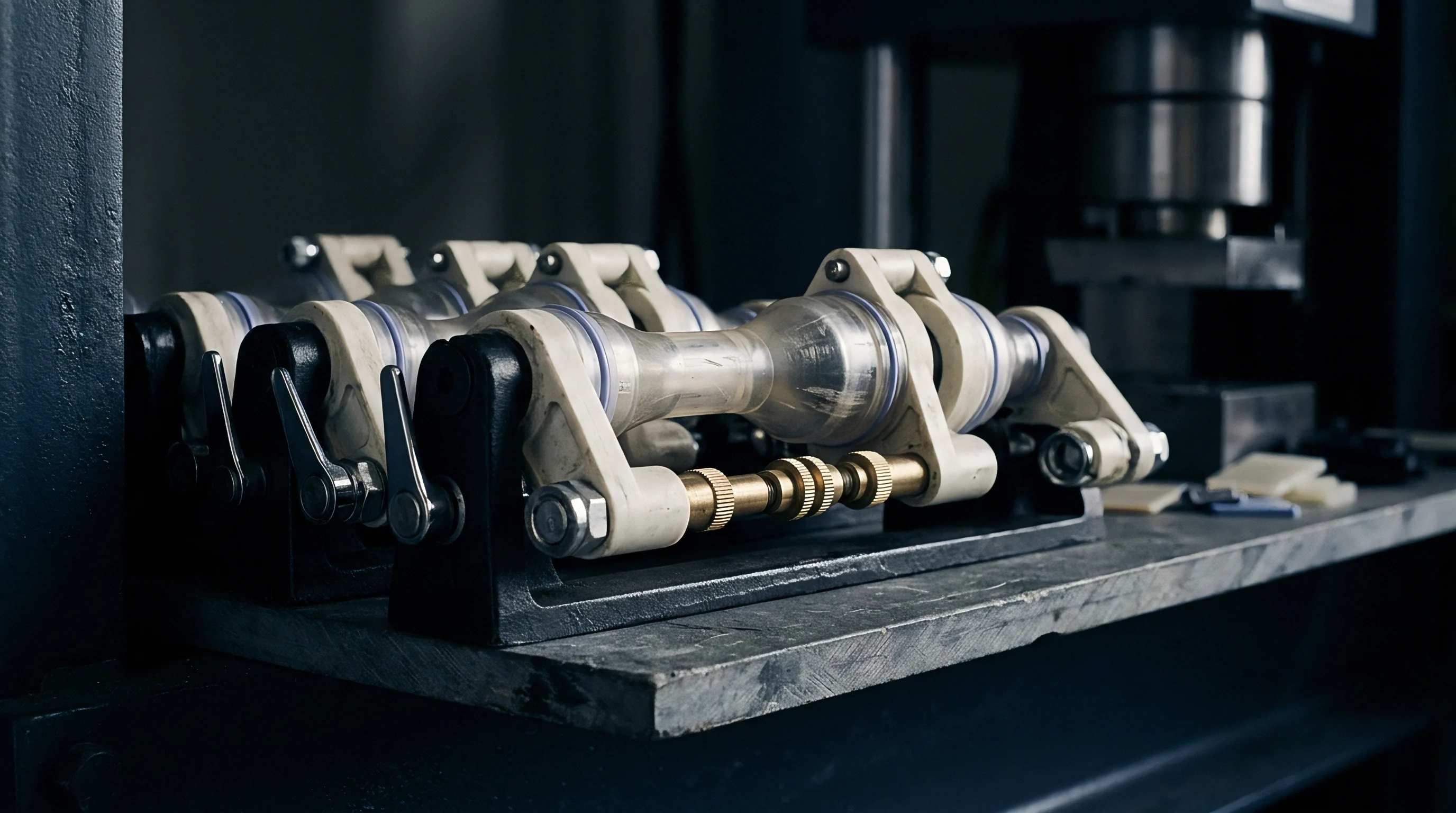
Does Tool Refurbishment Transfer Physical Assets across Borders?
Maintenance operations that replace major core and cavity inserts change the underlying physical composition of the asset. Sourcing agreements restrict suppliers from modifying core geometries, gating designs, or cooling line layouts without prior engineering change orders. Maintenance logs record insert changes.
When cavity inserts undergo complete replacement due to premature wear or fatigue cracking, questions surface regarding who holds title to the newly installed steel. Operational covenants resolve this by explicitly classifying all replacement components, refurbished slides, and spare core pins as accretions to the original customer asset, automatically vesting title to the customer upon installation.
Non-resetable mechanical stroke counters installed on the main ejector plate prove real tool utilization within a five percent margin of press-side logbooks.

Shot Count Verification
Electronic stroke counters integrated directly into hot-runner wiring harnesses log every clamping movement to prevent grey-market manufacturing. Unauthorized production runs for third parties consume tool fatigue life, accelerate cavity erosion, and dilute proprietary product designs. Mechanical shot counters installed inside locked cavity pockets serve as physical tamper-proof receipts of total mold cycles.
- Inspect press ejector stroke counters to cross-reference recorded cycle numbers against billed production delivery volumes.
- Measure critical core insert wear using optical coordinate measuring machines to detect unrecorded steel modification or cavity polishing.
- Review oil-line cooling channel flow rates using digital flow meters to verify continuous preventive maintenance execution.
- Audit toolroom maintenance records for authorized replacement parts matching original tool design specifications.
Filing UCC statements secures title. Regular auditing of physical shot counts against landed shipment volumes reveals unauthorized shift production before excess tool wear causes dimensional degradation under ISO 20753 specimen standards.
Contract moulders frequently argue that non-resettable cycle counters impede press setup adjustments during routine mold setting.


Removal
Physical asset recovery represents the ultimate test of customer ownership clauses when commercial relationships break down. Extracting heavy injection moulds requires structured legal access protocols, pre-arranged logistics rights, and complete customs documentation to clear regional borders without delay. Rigging contractors demand clear access.
Protocol for Emergency Tool Extraction
Contractual access rights permit customer representatives to enter supplier premises during standard business hours to repossess tooling. Repossession terms specify that contract moulders must immediately yield physical access to the mold, ejector sets, hot-runner controllers, and specialized auxiliary equipment upon written demand. Arbitration clauses bind both parties.
Rigging teams require unobstructed factory floor access, overhead crane utilization, and electrical disconnect cooperation. Contract terms mandate that suppliers maintain full commercial insurance coverage on customer tools up to the exact moment the asset leaves the loading dock bay onto customer-managed transport trailers.

Customs Classification and Carnets
International tool transfers operate under Harmonized System Code HS 8480.71 covering injection moulds for plastics processing. Transporting tooling across international boundaries without proper customs registration triggers severe import tariff assessments and seizure delays at border checkpoints. Customs agents halt mislabeled shipments.
Temporary cross-border movements for refurbishment or production re-allocation utilize ATA Carnets to bypass local import taxes and VAT assessments. A valid Carnet proves that the tooling remains foreign-owned capital equipment in temporary transit, preventing foreign tax authorities from asserting permanent import duties during facility transfers.
Customs authorities inspect physical asset serial numbers against invoice carnets before releasing heavy tooling across international borders.
- Power of Attorney Execution authorizes third-party rigging contractors to physically collect assets from supplier floors.
- ATA Carnet Filing eliminates import duties during temporary tool transport for maintenance across foreign customs zones.
- Press Compatibility Dossier records tie-bar spacing, ejector pattern, and hot-runner zone details required for immediate press transfer.
- Rigging Safety Sign-Off verifies lifting eye-bolt load limits match the complete mold assembly dry weight before hoisting.
| Document Type | Primary Regulatory Function | Processing Lead Time | Financial Risk Mitigation |
|---|---|---|---|
| ATA Carnet | Temporary duty-free import clearance | 3 to 5 business days | Eliminates 20% local import tariffs |
| UCC-1 Financing Statement | Public legal filing of ownership lien | 1 to 2 business days | Protects title against bank foreclosure |
| Commercial Asset Invoice | Customs valuation and HS Code declaration | 1 business day | Prevents border seizure for misclassification |
| Repossession Authorization Letter | Floor access authorization for riggers | Immediate execution | Prevents supplier trespass counterclaims |
Comprehensive extraction preparation includes maintaining duplicate CAD models, hot-runner wiring schematics, and water manifold layout drawings. Possession of complete digital tooling dossier packages allows secondary manufacturing facilities to set up presses within forty-eight hours of physical asset delivery.
A repossession clause lacking pre-negotiated floor access rights leaves rigging teams standing outside locked factory gates.


Venue
Jurisdictional choice governs whether a court order translates into physical tool recovery inside foreign manufacturing hubs. International arbitration clauses must pair with local interim relief mechanisms to lock asset movement before a supplier moves steel off-site. Injunctions freeze tool movement fast.

Jurisdictional Enforcement Mechanisms
Choosing legal venues close to the supplier’s operating assets accelerates injunction execution during ownership disputes. Establishing dispute resolution under international arbitration bodies such as the International Chamber of Commerce or regional tribunals guarantees enforceability under the New York Convention on the Recognition and Enforcement of Foreign Arbitral Awards.
However, securing an arbitral award takes months, during which a rogue supplier may dismantle or relocate injection tooling. Master service agreements must incorporate explicit consent to emergency interim injunctive relief in local civil courts where the asset physically resides. This dual approach pairs long-term binding arbitration with immediate local asset preservation.

Interim Injunctions for Tool Repossession
Urgent court petitions restrain contract moulders from removing, hiding, or altering disputed injection moulding assets. Local court bailiffs armed with ex parte search and seizure orders enforce physical entry into supplier facilities to lock down tools subject to ownership litigation.
Proving irreparable harm forms the foundation of successful emergency injunction petitions. Sourcing documentation demonstrates that losing control of proprietary injection tools halts assembly lines, causes severe breach of downstream commercial supply contracts, and forfeits irreplaceable market volume.
Legal practices remain divided on whether local administrative courts will honor foreign arbitration freeze orders when domestic suppliers claim unpaid maintenance liens.