Standard Dilute Solution Viscometry Procedures for Polyethylene Terephthalate Intrinsic Viscosity Measurement
PET intrinsic viscosity testing requires precise temperature control, verified solvent ratios, and dry sample preparation to ensure accurate grade delivery.

Solvent
Dissolving semi-crystalline polyethylene terephthalate demands chemical media capable of disrupting strong intermolecular dipole-dipole interactions between ester carbonyl groups. Solvent choice determines dissolution kinetics. Standard laboratory operations employ aggressive organic systems to achieve complete solvation without inducing thermal chain scission or transesterification side reactions.
Selecting the correct liquid medium establishes the baseline density and dynamic viscosity required for accurate capillary flow measurements.
Binary Phenolic Systems and Pure Acid Media
Commercial laboratories standardise on two main liquid mixtures to achieve complete polymer dissolution below thermal degradation thresholds. The combination of phenol and 1,1,2,2-tetrachloroethane in a 60:40 mass ratio dissolves solid polyester granules at temperatures between 110 °C and 120 °C within thirty minutes. This system maintains low volatility at operating temperatures, maintaining a stable baseline solvent efflux time during extended testing sequences.
Alternatively, equal mass mixtures of phenol and 1,2-dichlorobenzene operate under ISO standards, offering reduced toxicological exposure while maintaining identical solvation strength for bottle and fiber grades.
Pure acids present extreme handling hazards. Dichloroacetic acid and o-chlorophenol dissolve low-crystallinity PET samples rapidly at room temperature, eliminating heating steps during sample preparation. Dichloroacetic acid introduces severe corrosive risks to laboratory hardware and glass viscometer scales.
Chlorinated phenols generate persistent noxious vapours requiring continuous dedicated fume extraction and specialized disposal streams.
| Solvent Mixture | Mass Ratio | Operating Temperature | Applicable Standard | Primary Risk Factor |
|---|---|---|---|---|
| Phenol / 1,1,2,2-Tetrachloroethane | 60:40 | 30.0 °C | ASTM D4603 | Toxic vapour generation and hepatic accumulation |
| Phenol / 1,2-Dichlorobenzene | 50:50 | 25.0 °C or 30.0 °C | ISO 1628-5 | Crystallite persistence if heated below 120 °C |
| Dichloroacetic Acid | 100 | 25.0 °C | ISO 1628-5 Annex | Extreme corrosive burn hazard to laboratory personnel |
| o-Chlorophenol | 100 | 25.0 °C | ASTM D2857 | Severe odor nuisance and complex hazardous waste handling |
Binary solvent ratios alter the specific volume of polymer coils in solution. Higher phenol content expands the unperturbed polymer chain dimensions, increasing the intrinsic viscosity value obtained for a given molecular weight. Laboratories maintaining compliance across regional markets apply standard-specific conversion equations when comparing ASTM phenol/tetrachloroethane data against ISO phenol/dichlorobenzene results.
Complete dissolution of high-crystallinity bottle flake requires constant agitation at 120 °C without exceeding thirty minutes of thermal exposure.
Improper solvent handling compromises test accuracy before the solution reaches the viscometer capillary. Polymer insolubility, solvent evaporation, and atmospheric moisture pickup introduce systematic errors that skew calculated intrinsic viscosity figures.
- Incomplete crystallite solvation causes microscopic un-melted polymer domains that distort flow times through capillary necks.
- Atmospheric moisture absorption by hygroscopic acid media alters solution density and reduces apparent efflux duration during testing.
- Volatile component evaporation shifts the 60/40 mass ratio of phenolic blends, changing the baseline solvent viscosity mid-sequence.
- Peroxide formation in stored chlorohydrocarbons initiates oxidative chain scission during the high-temperature heating cycle.
Resin vendors frequently attribute erratic baseline viscometer drift to ambient moisture absorption in the laboratory phenol supply rather than unreacted oligomer fractions in the polymer matrix.


Capillary
Precision flow timing inside calibrated glass viscometer tubes forms the physical basis of dilute solution measurements. Capillary cleanliness dictates flow precision. Polymer solutions pass through narrow glass bores under gravity, with efflux time proportional to kinematic viscosity at infinite dilution.
Maintaining absolute temperature stability inside the measuring environment controls fluid expansion and viscosity variation during testing.
Ubbelohde versus Cannon-Fenske Tube Selection
Suspended-level viscometer geometry eliminates errors resulting from solution volume variations during temperature changes. Ubbelohde tubes introduce an air vent below the capillary column, creating a liquid neck detached from the reservoir bulb pressure head. Driving pressure depends strictly on vertical hydrostatic head height, allowing operators to perform serial in-bulb dilutions without removing the instrument from the bath.
Ubbelohde tubes eliminate volume error corrections.
Cannon-Fenske routine viscometers require precise volumetric filling before every run. Thermal expansion of phenolic solvents alters the working volume inside Cannon-Fenske bulbs, introducing small hydrostatic head variations. Laboratories running automated high-throughput systems select Ubbelohde size 1C units to streamline cleaning cycles and eliminate manual volumetric fill dependencies.
- Clean the size 1C Ubbelohde viscometer tube using chromic acid solution, rinse with dry acetone, and dry completely under nitrogen gas.
- Filter the prepared PET solution through a 0.45 micron PTFE syringe filter directly into the filling tube reservoir to remove insoluble particulates.
- Immerse the glass assembly into a thermostatic water bath maintained strictly at 30.00 °C plus or minus 0.01 °C for twenty minutes to achieve thermal equilibrium.
- Apply gentle suction to draw the liquid above the upper timing mark, release the vacuum, and record the efflux time to within 0.01 seconds using an optical timer.
- Perform three consecutive flow timing passes, ensuring the variance across runs remains below 0.2 seconds before calculating the average value.
Kinetic Energy and Shear Rate Corrections
Fluid velocity through narrow glass channels creates pressure drop phenomena that deviate from ideal Hagen-Poiseuille flow. Part of the potential energy driving liquid movement converts into kinetic energy at the capillary entrance, accelerating the fluid and decreasing observed flow duration. Capillaries with internal diameters below 0.5 millimetres demand kinetic energy correction factors when pure solvent flow times fall below 100 seconds.
An efflux time measurement falling below 100 seconds introduces kinetic energy error exceeding one percent of the calculated intrinsic viscosity.
High-molecular-weight PET solutions experience shear thinning when forced through narrow capillaries at elevated flow speeds. Shear-induced alignment of polymer chains reduces flow resistance, producing artificially low intrinsic viscosity figures. Choosing a capillary size that maintains solvent efflux timing between 120 and 180 seconds balances kinetic energy minimizing constraints against shear-rate degradation threshold limits.
Temperature fluctuations distort time measurements. A clean viscometer capillary drained under steady gravity yields repeatable flow times when the meniscus drops without stuttering along the glass surface.
Extrapolation
Determining intrinsic viscosity requires isolating the specific viscosity contribution of an isolated polymer chain at infinite dilution. Single point equations trade precision for speed. Extrapolating reduced viscosity data back to zero polymer concentration removes intermolecular chain entanglements, leaving hydrodynamic volume as the sole governing variable.
Multi-Point Huggins and Kraemer Determinations
Plotting reduced viscosity and inherent viscosity against concentration yields two parallel linear regressions intersecting at zero concentration. The Huggins equation models reduced viscosity as a linear function of concentration, where the slope reflects polymer-solvent interactions defined by the Huggins constant. The Kraemer equation approaches the zero-concentration intercept through the natural logarithm of relative viscosity, producing a negative linear slope governed by the Kraemer constant.
Huggins constants shift with solvent quality. Solvent systems showing strong thermodynamic affinity for PET display Huggins constants near 0.35, whereas poor solvents promote chain coiling and push constants above 0.45. Linear extrapolation provides absolute baseline figures.
Valid multi-point determinations evaluate polymer solutions across four distinct concentrations ranging from 0.1 to 0.5 grams per decilitre.
Single-Point Mathematical Conversions
Quality control laboratories utilize single-concentration equations to accelerate sample throughput without running multi-concentration dilution series. These empirical transformations calculate intrinsic viscosity from a single measurement at 0.50 grams per decilitre, assuming fixed values for the Huggins interaction coefficient.
| Model Name | Mathematical Expression | Huggins Constant Assumption | Valid Relative Viscosity Range |
|---|---|---|---|
| Billmeyer Equation | Intrinsic Viscosity = (0.25 (Relative Viscosity – 1 + 3 ln(Relative Viscosity))) / c | k_H = 0.35 | 1.15 to 1.50 |
| Solomon-Ciutǎ Equation | Intrinsic Viscosity = sqrt(2 (Specific Viscosity – ln(Relative Viscosity))) / c | Arbitrary constant cancelation | 1.10 to 1.45 |
| ASTM D4603 Inherent Relation | Inherent Viscosity = ln(Relative Viscosity) / c | Single point inherent baseline | 1.20 to 1.60 |
| Deb-Chatterjee Equation | Intrinsic Viscosity = (sqrt(1 + 1.5 Specific Viscosity) – 1) / (0.75 c) | Derived molecular volume factor | 1.12 to 1.38 |
Single-point formulations accuracy degrades when testing modified polyesters containing significant comonomer loads or hyper-branched recyclates. Divergence between Huggins constant assumptions and actual physical polymer-solvent interactions skews calculated figures across high-viscosity resins.
- Solvent interaction match determines whether Huggins constant assumptions align with empirical multi-point data for specific resin structures.
- Target concentration setting fixes solution concentration at exactly 0.50 grams per decilitre to satisfy ASTM D4603 linear conversion limits.
- Relative viscosity thresholding flags run data below 1.15 where solvent timing errors overwhelm polymer specific viscosity signals.
- Copolymer modification factor adjusts calculated parameters when isophthalic acid content exceeds three mole percent in barrier grades.
Multi-point linear extrapolation remains the definitive arbitrator whenever single-point calculated values disagree with incoming certificate data.
Whether single-point conversion formulas hold equal mathematical validity for highly branched recycled PET resins containing pyromellitic dianhydride remains an open debate among polymer characterization specialists.


Degradation
Polyester chains cleave rapidly when exposed to heat and moisture during sample preparation steps. Moisture degrades polyester chains rapidly. Thermal exposure causes rapid chain scission.
Esters hydrolyse into carboxylic acid and hydroxyl end-groups at elevated temperatures, permanently lowering molecular weight prior to viscometric timing.
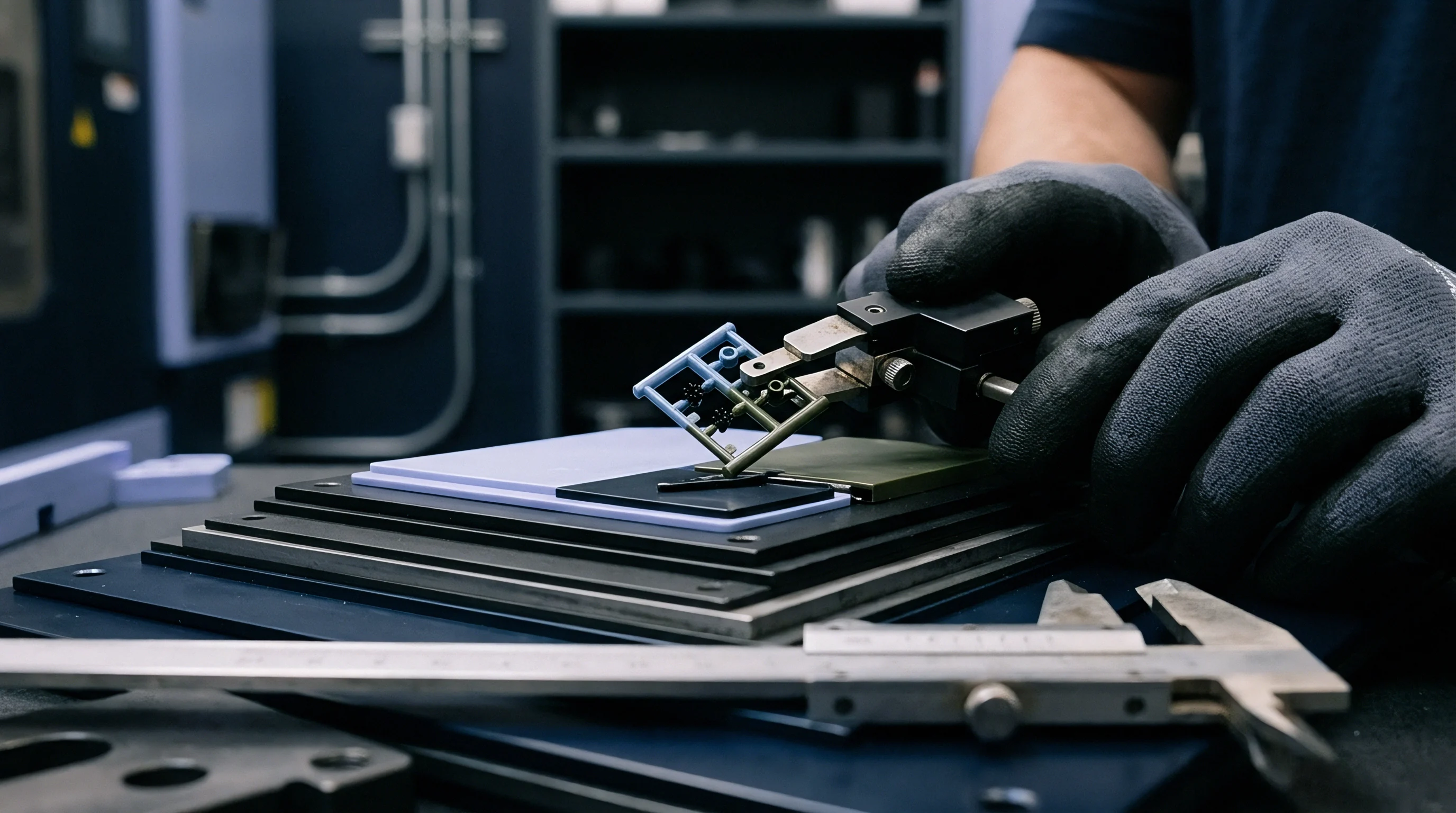
Hydrolytic Chain Scission Mechanisms
Trace water molecules remaining inside polymer pellets react with ester linkages at temperatures above the glass transition point. PET pellets absorb up to 0.6 percent atmospheric water by weight during ambient storage. Dissolving wet resin at 120 °C induces rapid hydrolytic degradation, dropping intrinsic viscosity figures by up to 0.08 decilitres per gram within fifteen minutes.
Drying pellets prevents hydrolytic degradation. Desiccant air drying at 150 °C for four hours reduces pellet moisture below 0.005 percent (50 ppm) before analytical weighing. Vacuum oven drying at 120 °C provides an acceptable alternative for low-melting modified polyesters vulnerable to surface agglomeration.
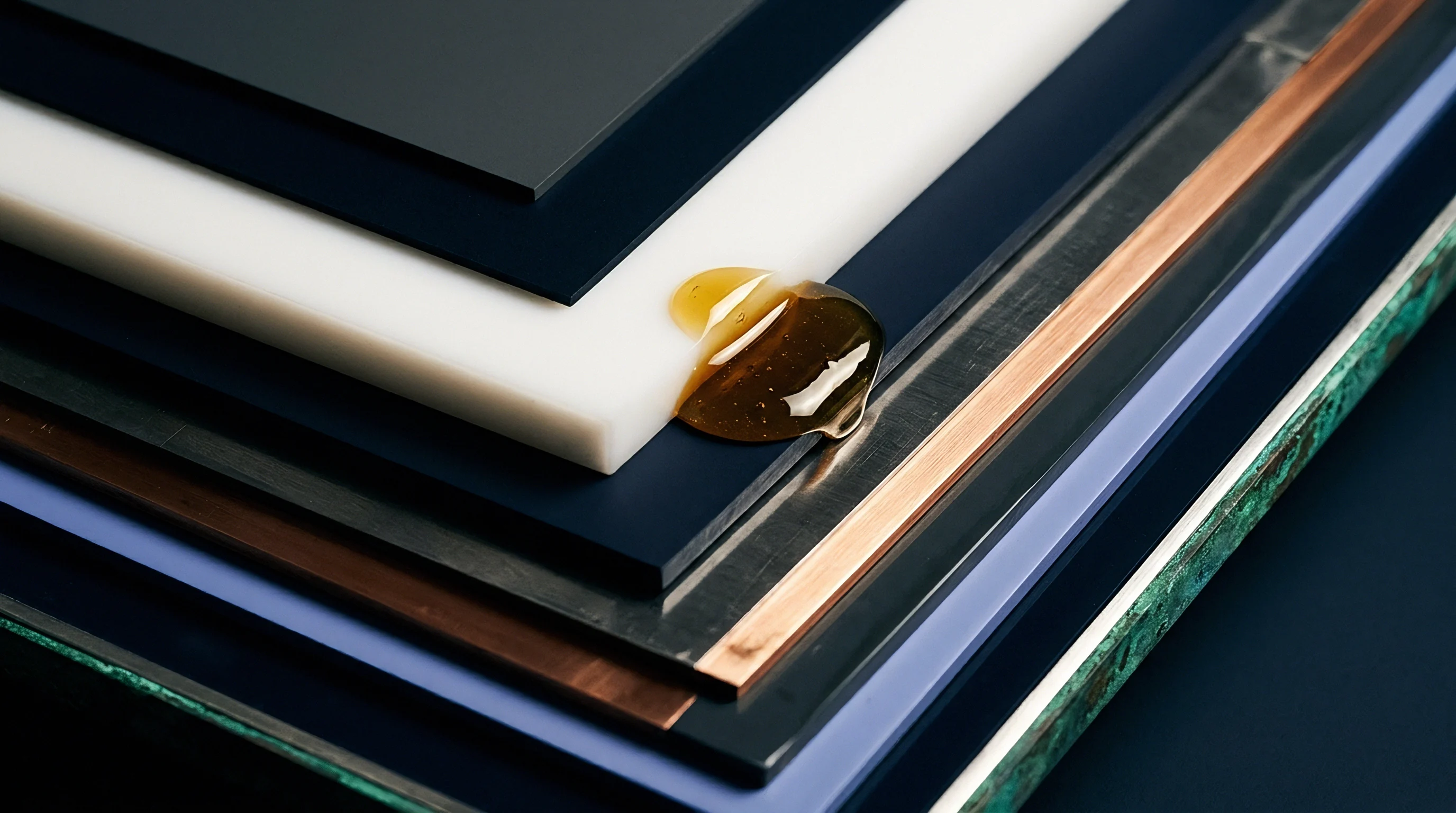
Thermal and Oxidative Degradation Controls
Extended residence times inside heated dissolution blocks alter the molecular weight distribution of dilute samples. Phenolic solvents act as weak thermal stabilizers, but prolonged heating beyond forty-five minutes at 130 °C generates radical cleavage along the ethylene glycol segment of the polymer backbone. Free radical formation leads to random chain scission, artificially deflating flow times in subsequent capillary runs.
ISO 1628-5 caps dissolution heating time at 45 minutes to prevent hydrolytic viscosity reduction from exceeding 0.01 decilitres per gram.
Preserving sample integrity during preparation requires rigid adherence to thermal exposure windows and atmospheric isolation rules. Inadequate moisture control during sample weighing reduces measured intrinsic viscosity numbers, causing unnecessary financial penalties against virgin resin suppliers during lot acceptance disputes.
Grading
Commercial PET classification relies on strict intrinsic viscosity thresholds that govern processability and final article mechanical properties. Viscosity dictates PET end-use suitability. Off-spec resin causes severe bottle collapse.
Processing equipment operating settings scale directly with molecular weight parameters determined through solution viscometry.
Application Thresholds and Polymer Architecture
Melt strength and draw ratios scale directly with solution viscosity figures across different conversion processes. Low intrinsic viscosity grades exhibit low melt strength, flowing freely through fine spinnerets to produce textile fibers. High intrinsic viscosity resins display strong melt elasticity, resisting wall thinning during stretch blow molding and melt sagging during heavy sheet extrusion.
| End-Use Application | Target Intrinsic Viscosity (dL/g) | Common Solvent Condition | MFI Equivalent (g/10 min at 285 °C, 2.16 kg) | Processing Sensitivity |
|---|---|---|---|---|
| Textile Staple Fiber | 0.58 – 0.64 | Phenol/TCE 60/40, 30 °C | 45 – 65 | High melt draw speed limit |
| Film and Sheet Extrusion | 0.70 – 0.74 | Phenol/DCB 50/50, 25 °C | 25 – 35 | Thermoforming sagging resistance |
| Carbonated Soft Drink Bottles | 0.80 – 0.84 | Phenol/TCE 60/40, 30 °C | 12 – 18 | Stress cracking and creep prevention |
| Industrial Strapping and Cordage | 0.92 – 1.05 | Phenol/TCE 60/40, 30 °C | 3 – 8 | High tensile orientation failure |
Copolymer modification alters crystallization rates without substantially shifting intrinsic viscosity numbers. Adding two to three mole percent isophthalic acid suppresses core crystallization kinetics, broadening the injection molding processing window for preform clarity while maintaining container top-load strength.
Commercial Lot Verification and Contractual Tolerances
Certificate of analysis figures match incoming laboratory testing within defined contract limits before material discharge into plant silos. Bulk railcar shipments carry statistical sampling obligations to detect lot-to-lot spread across container loads. Discrepancies between producer testing and converter receiving data usually trace back to moisture pickup during pneumatic transfer or differences in mathematical single-point conversion formulas.
Consider a 50-tonne bulk railcar shipment of bottle-grade PET resin sold at 1,150 USD per tonne under a contractual specification of 0.82 plus or minus 0.02 decilitres per gram. Incoming viscometry testing using ASTM D4603 yields an intrinsic viscosity value of 0.77 decilitres per gram. Railcar rejection triggers heavy daily demurrage.
This 0.05 dL/g negative deviation drops bottle top-load strength below regulatory packaging standards for carbonated beverages. Rejection of the railcar triggers demurrage charges of 150 USD per day and forces immediate spot market procurement at 1,280 USD per tonne to prevent line shutdown. The 130 USD per tonne price differential on 50 tonnes adds 6,500 USD in direct material cost, alongside 1,200 USD in freight and testing fees.
Incorporating ASTM D4603 re-test arbitration clauses into resin purchase contracts restricts supplier liability adjustments strictly to measurements conducted in certified independent laboratories.