Resolving Inter-Laboratory Discrepancies in XRF Fused Bead Calibration for High-Density Mineral Masterbatch Customs Disputes
Fused bead XRF customs disputes resolve by pre-ashing polymer carriers at 550 C, normalizing for mineral volatile loss, and matching flux-to-sample dilution ratios.

Flux
Customs classification for dense mineral masterbatch shipments often hinges on tenths of a percent of inorganic mass. Importers declaring masterbatch concentrates under Chapter 39 as polymer carriers with inert fillers regularly face border audits that reclassify shipments under Chapter 38 or Chapter 32 ~ a move that triggers retroactive duties, value-added tax adjustments, and demurrage penalties. Port laboratories routinely run X-ray fluorescence spectrometry on fused glass beads to determine elemental composition.
Discrepancies between the compounding plant’s certificate of analysis and customs findings often reach three to seven percentage points of total mineral loading, marking the difference between an exempt polymer preparation and a heavily dutiable chemical compound.
Compounding plants typically check mineral loading with direct combustion ash testing under ISO 3451-1 or energy-dispersive X-ray fluorescence on pressed powder discs. Customs laboratories, by contrast, almost always insist on fused cast beads analyzed by wavelength-dispersive X-ray fluorescence, citing ISO 12677 or adapted geological fusion protocols. Pressed powder discs suffer from particle-size effects, mineral orientation biases, and surface roughness.
Fused beads eliminate grain boundaries altogether by dissolving the sample in molten borate flux between 1025 C and 1100 C, creating a homogeneous glass free of micro-absorption artifacts, though the dissolution itself introduces chemical shifts as organic resin burns off.
A three-percent deviation in verified calcium carbonate content shifts customs valuation from raw polymer resin lines into compounded chemical preparations.
Making fused beads requires a precise mixture of lithium tetraborate and lithium metaborate blended with the sample in ratios from 5:1 to 10:1. Masterbatches with 70 percent to 85 percent mineral loadings ~ whether calcium carbonate, barium sulfate, or talc ~ are notoriously difficult to fuse. Acidic minerals such as silica and titania need a basic lithium metaborate flux, whereas alkaline earths like calcium oxide require acidic lithium tetraborate.
Using the wrong flux ratio leads to crystallization during pouring, phase separation as the bead cools, or un-dissolved refractory particles. Those un-dissolved crystalline micro-domains cause scattering losses that pull down the measured X-ray intensity of the target element.
Uncontrolled flux hygroscopy widens inter-laboratory discrepancies even further. Borate fluxes can absorb up to 1.5 percent atmospheric moisture in humid warehouses, so weighing uncalcined flux introduces a systematic error into the dilution factor. If Laboratory A ignites its flux at 500 C before weighing while Laboratory B scoops straight from an opened container, their actual sample-to-flux ratios diverge instantly.
Because calibration curves map photon count rates against assumed elemental masses, an uncorrected 1.2 percent moisture weight translates directly into an artificial drop in measured mineral concentration. Customs labs taking that lowered count rate recalculate the resin fraction upward, rejecting the manufacturer’s declared mineral loading.
Burn
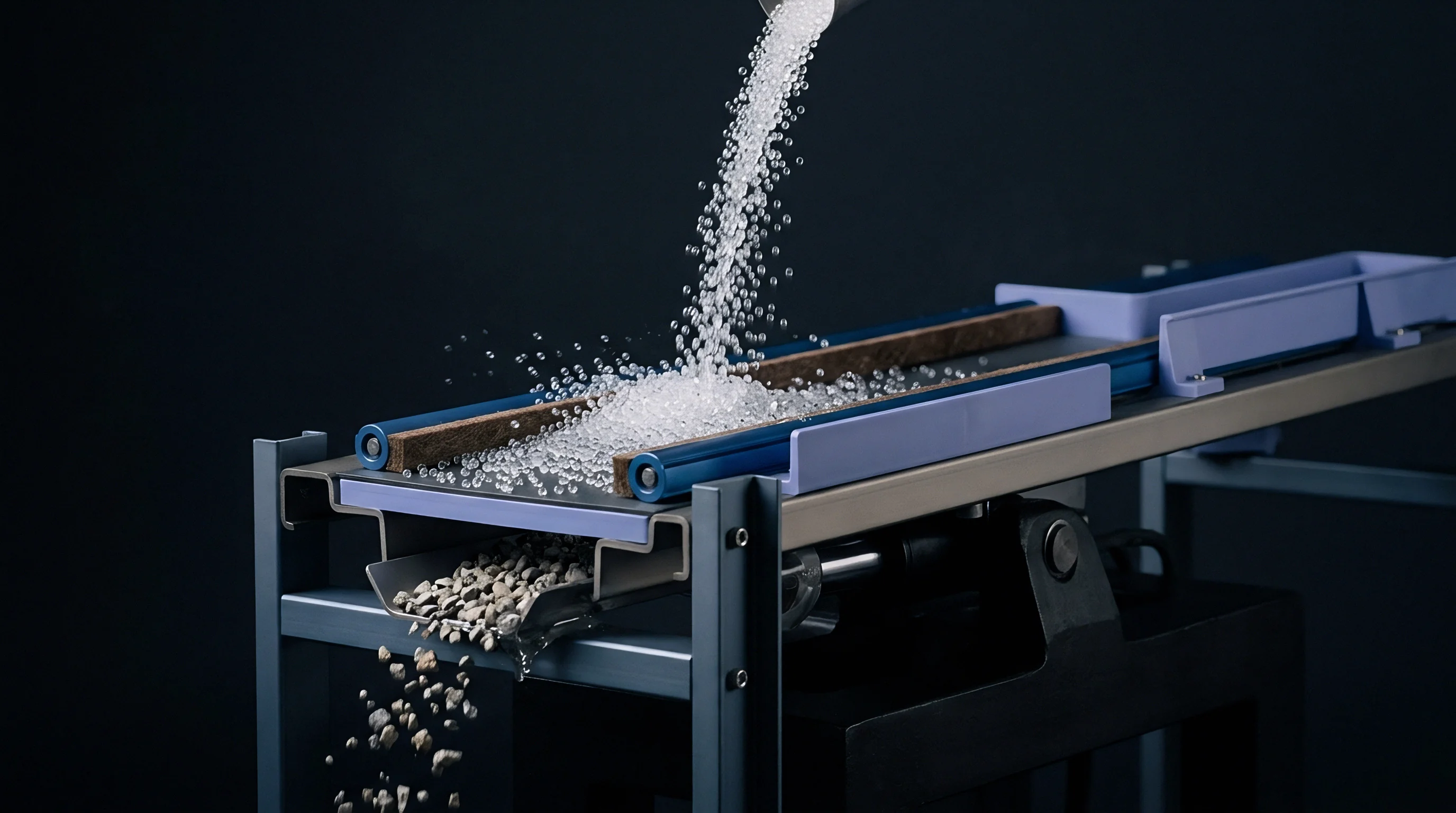
Polymer volatilization is the main mechanical cause of analytical discrepancies between testing facilities. High-density masterbatches combine carrier resins like linear low-density polyethylene or polypropylene with fine mineral powders, where the organic carrier accounts for 15 to 30 percent of total sample mass. Dropping raw masterbatch pellets directly into a hot fusion furnace causes violent combustion as the polyolefin burns into carbon dioxide and water vapor.
This rapid gas evolution ejects mineral particulates from the crucible ~ a physical mass loss called mechanical spitting. At the same time, localized reducing zones form in the furnace atmosphere, attacking platinum-gold alloy crucibles.
To prevent violent combustion, laboratories use a two-stage heating routine. The first stage relies on controlled muffle furnace ashing per ASTM D7348 or ISO 3451, holding temperatures between 500 C and 550 C. This limit burns off the polyolefin without altering sensitive minerals. Calcium carbonate begins decarbonating into calcium oxide and carbon dioxide above 600 C, while barium sulfate reduces to barium sulfide if trapped carbon char starves the sample of oxygen at high heat.
Talc irreversibly loses structural hydroxyl groups between 850 C and 1000 C. Ashing above standard temperatures removes volatile mineral components and distorts the final mass balance.
| Mineral Filler Type | Primary Chemical Formula | Thermal Decomposition Onset | Volatile Byproduct Evolved | Theoretical Mass Loss Window |
|---|---|---|---|---|
| Ground Calcium Carbonate | CaCO3 | 620 C to 680 C | Carbon Dioxide (CO2) | 43.6 to 44.0 wt% |
| Precipitated Calcium Carbonate | CaCO3 | 580 C to 640 C | Carbon Dioxide (CO2) | 43.8 to 44.0 wt% |
| Talc (Magnesium Silicate) | Mg3Si4O10(OH)2 | 880 C to 950 C | Structural Water (H2O) | 4.5 to 5.2 wt% |
| Natural Barite | BaSO4 | 1100 C to 1180 C | Sulfur Dioxide (SO2) | 0.2 to 0.8 wt% |
| Rutile Titanium Dioxide | TiO2 | Above 1200 C | None (Phase Transition) | 0.0 to 0.1 wt% |
Customs laboratories often process masterbatch samples with geological rock analysis protocols, placing them directly into a 1050 C furnace. Under such aggressive ignition, calcium carbonate loses 43.97 percent of its mass as carbon dioxide gas. Unless the chemist adjusts for this loss on ignition, the XRF software simply registers calcium oxide dissolved in borate glass.
A raw masterbatch containing 80.0 weight percent calcium carbonate in polyethylene leaves an ash residue of just 44.8 weight percent calcium oxide after decarbonation. If the lab treats that ignited residue weight as total filler without applying the stoichiometric factor of 1.7848 to convert back to calcium carbonate, the assay incorrectly concludes the product holds under 50 percent mineral loading.
Suppliers run into serious delays when customs inspectors take calcination mass loss as a sign of missing filler. Plant paperwork usually reports total calcium carbonate as formulated, while customs lab sheets list elemental calcium as an oxide equivalent. Avoiding these errors requires systematic gravimetric tracking at every stage: clean crucible weight, unburned pellet mass, residual ash weight after 550 C, and final glass bead mass after fusion.
Skipping any of these measurements breaks the audit trail needed to contest a misclassification notice.
Export documentation routinely defends against classification rejections using standard phrases supplied by plant chemists.

Matrix
Quantification in wavelength-dispersive X-ray fluorescence depends on measuring photon emission rates from irradiated atoms. In dense masterbatch beads, secondary photon emissions run into inter-element absorption and enhancement, known as matrix effects. Heavy elements like barium, titanium, and calcium have high mass attenuation coefficients, absorbing the softer X-rays emitted by lighter elements such as aluminum, silicon, and magnesium.
Residual organic carbon fragments also alter the bead’s average absorption coefficient, disrupting the link between measured fluorescence intensity and actual elemental concentration.
Matrix correction calculations rely either on empirical alpha coefficients or fundamental parameter models. Empirical alpha algorithms, like the Lachance-Traill and de Jongh formulations, require matrix-matched reference materials. However, certified masterbatch standards are scarce ~ commercial polymer references rarely exceed 30 percent mineral loading.
To build calibration curves reaching up to 85 percent inorganic content, laboratories often mix geological standards with virgin polymer granules. That practice creates physical heterogeneity during fusion that empirical alpha models cannot resolve.
Fundamental parameter algorithms yield erratic elemental concentrations when light organic elements are omitted from the automated mass balance calculation.
Modern XRF software usually defaults to fundamental parameter quantification, relying on physical constants like absorption jump ratios, fluorescence yields, and transition probabilities. The software solves iterative equations under the assumption that all components total 100 percent. But in a fused bead, the spectrometer only detects elements heavier than fluorine or oxygen ~ carbon and hydrogen from unburned polymer remain invisible to standard analyzing crystals.
If an analyst forgets to declare carbon and hydrogen as balance elements in the setup, the software normalizes whatever metal oxides it sees to 100 percent. This error can turn a 75 percent mineral masterbatch into a calculated 98 percent concentration on paper, completely warping regulatory findings.
Is Metaborate Flux Suitable for Heavy Barite Masterbatch?
Barium sulfate masterbatches with densities over 2.2 grams per cubic centimeter pose severe matrix absorption problems. Barium strongly attenuates both low- and medium-energy X-rays, causing heavy self-absorption of Ba L-alpha and K-alpha emission lines. Because lithium tetraborate alone cannot lower the melting point enough to fully dissolve heavy barite, labs turn to 67:33 or 50:50 mixtures of lithium tetraborate and lithium metaborate.
While higher metaborate content speeds up dissolution, it shifts the background continuum right beneath the sulfur K-alpha line.
Accurate sulfur measurement is vital because customs authorities check the stoichiometric Ba-to-S ratio to distinguish natural ground barite from precipitated blanc fixe or adulterated salts ~ substances that carry different tariff rates. Dense barite beads also cause severe spectral overlap between Ba L-alpha and Ti K-alpha lines. When a masterbatch combines barite with titanium dioxide for weight and opacity, matrix software miscounts photons unless line-overlap coefficients have been calibrated against pure single-element blanks.
Dense masterbatch formulations containing mixed alkaline fillers dissolve unpredictably during fusion if flux basicity is not matched to the mineral oxides.

Drift
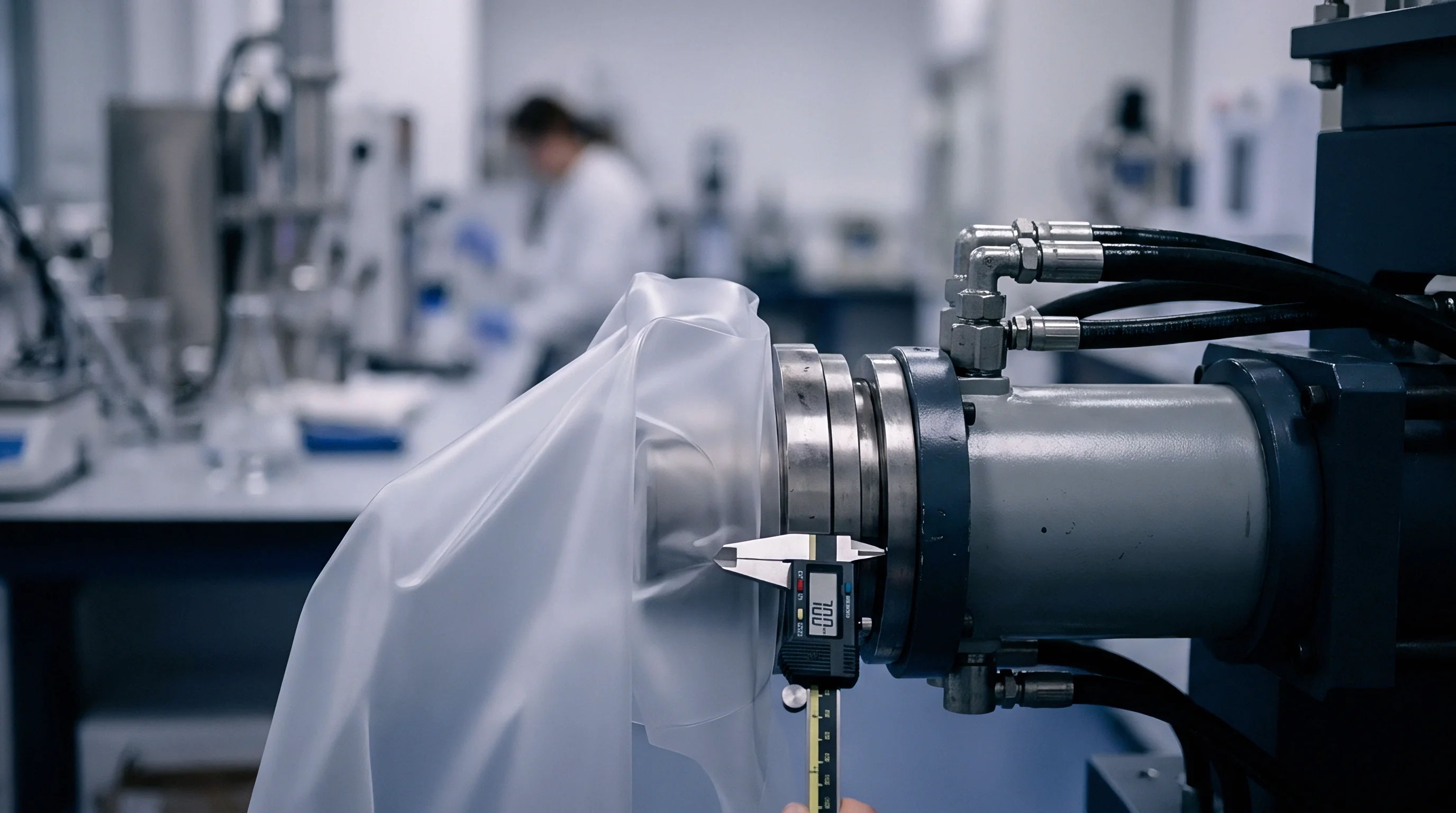
Discrepancies between testing facilities often stem from instrument drift, detector fatigue, and varied maintenance schedules. Wavelength-dispersive systems use flow proportional counters for light elements like magnesium, aluminum, and silicon, and scintillation detectors for heavier elements like calcium, titanium, and barium. The flow counter relies on a steady flow of P10 gas (90 percent argon and 10 percent methane).
Small variations in regulator pressure, ambient temperature, or tubing moisture shift the detector’s pulse height distribution. That shift lowers counting efficiency for calcium K-alpha lines, causing subtle calibration decay over time.
Scintillation counters suffer from crystal aging and dynode degradation inside the photomultiplier tube. As gain drifts, high signal rates from mineral-rich beads hit counting dead-time losses. Unlike raw rock samples or lightly filled polymers, a fused bead with an 80 percent calcium carbonate equivalent can expose the detector to over 1,000,000 counts per second at full tube power.
If the instrument’s dead-time correction is off by a mere two microseconds, the recorded intensity at high count rates underestimates actual mineral content by four to six percent.
- Instrument warm-up periods stabilize high-voltage X-ray generators and remove thermal gradients in the crystal turret, preventing subtle 2-theta angular indexing shifts during measurement.
- P10 gas regulator verification maintains consistent gas density across the thin-window flow proportional detector, ensuring stable pulse amplification for soft characteristic radiation.
- Drift monitor bead measurements run at fixed four-hour intervals, using a synthetic multi-element glass bead to calculate mathematical correction factors for X-ray tube aging.
- Pulse height distribution adjustments realign upper and lower energy discriminators, filtering electronic noise while keeping valid elemental photon signals.
- Detector dead-time calibration uses high-purity metal foil standards to determine count loss saturation points, keeping response linear when high-flux lines hit the sensor.
Where Do Inter-Laboratory XRF Calibration Curves Separate?
Disputes often arise when one lab uses calibration curves built from synthetic glass discs while another relies on geological reference materials like carbonatites or limestones. Natural rock standards contain trace matrix elements like strontium, iron, manganese, and silica. In a 75 percent calcium masterbatch, trace strontium substitutes into the mineral lattice and its K-alpha radiation excites secondary calcium K-alpha fluorescence, artificially boosting the calcium signal.
A synthetic standard made from ultra-pure calcium carbonate lacks strontium, producing no secondary excitation. As a result, calibration slopes between the two approaches diverge by 1.8 to 2.4 percent.
Sample preparation can introduce physical geometry errors that mirror instrument problems. Platinum-gold crucibles distort over repeated heating cycles, producing fused beads with slightly convex or concave undersides. Wavelength-dispersive spectrometers rely on strict optical geometry along the Rowland circle or collimator path.
A non-planar bead face shifts the sample-to-collimator distance by tenths of a millimeter; because X-ray intensity drops with the square of the distance, this defocusing degrades count rates across the entire spectrum. Labs that skip micrometer checks on bead flatness end up recording lower count rates that look like low filler content.
Crucible release agents cause further spectral artifacts if improperly controlled. Technicians add small amounts of lithium bromide or lithium iodide during fusion to lower surface tension so the glass pops out cleanly. However, bromine and iodine have rich X-ray spectra.
Excess release salts leave residual halide ions in the bead: the bromine L-beta line directly overlaps aluminum K-alpha emissions, while iodine L lines obscure calcium and titanium baselines. In masterbatches filled with mixed talc, kaolin, or calcium carbonate, unmeasured release agents generate phantom mineral signals in automated software routines.
Can an international consensus standard eliminate the calibration drift between regulatory border testing and commercial factory floor batch release?
Hold
When border authorities issue a notice of tariff misclassification, financial liabilities stack up fast. Demurrage charges on containers held at port facilities run 150 to 400 dollars per container each day. For high-volume processors importing thirty-container shipments, a three-week administrative delay can wipe out the margin on the entire order.
Resolving the issue takes swift legal and technical action: demanding split-sample retention, requesting an administrative review of test procedures, and commissioning accredited secondary verification.
Customs regulations generally grant importers the right to independent referee analysis under chain-of-custody protocols. Importers should formally request re-testing at an ISO/IEC 17025 accredited facility using an agreed calibration procedure. The dispute file should include the original formulation recipe, raw mineral loss-on-ignition certificates, and carrier polymer density measurements.
Polyethylene density measured by ISO 1183-1 gradient column testing correlates directly with theoretical ash loading, offering verification that does not depend on XRF matrix physics.
Auditing the border laboratory’s test file often uncovers procedural shortcuts that undermine its findings. Sourcing teams should check whether the agency followed proper sample ignition steps, tracked release agent levels, or applied volatile corrections to elemental oxide figures. The following documents should be requested from the customs laboratory to evaluate its reclassification decision:
- Raw instrument count data sheets showing absolute photon counts, live measurement time, detector dead time, and background subtraction settings for all target channels.
- Gravimetric fusion bench logs recording pellet masses, dehydrated flux amounts, release agent volumes, and final cast bead weights to the nearest tenth of a milligram.
- Spectrometer calibration files detailing reference materials, regression coefficients, alpha correction models, and the date of the latest drift monitor run.
- Thermal pre-treatment documentation specifying exact furnace temperatures, ramp rates, dwell times, and atmosphere controls during initial organic polymer burnout.
Masterbatch procurement contracts ought to define referee testing protocols before shipments ship. Supply agreements can stipulate that classification disputes automatically trigger re-testing via pre-ignited, stoichiometric-corrected fused bead XRF under ISO 12677 guidelines at an agreed referee institute. Commercial terms should also state that discrepancies under 1.5 weight percent mineral loading defer to the plant’s certificate of analysis.
If authorities refuse that margin, the contract should require converting entry paperwork into customs transit bonds, releasing the cargo into production while technicians settle the dispute without incurring port demurrage.
Under standard terms, when classification changes result from test variations under two percent mineral loading, the seller covers re-testing costs while the buyer maintains clearance through bonded customs entry lines.