Quantifying Trace Dolomite Dissociation Thresholds inside High Speed Compounder Quality Control Operations
Trace dolomite dissociation above 240 °C releases carbon dioxide, causing micro-voiding and melt pressure spikes in high-speed filler compounding.

Kinetics
Calcium magnesium carbonate minerals introduce dual-phase breakdown mechanisms during high-speed polyolefin compounding. Pure calcium carbonate (CaCO3) stays thermally stable up to 800 circC under atmospheric pressure, but dolomite (CaMg(CO3)2) alters reaction dynamics inside twin-screw extruders. High-speed compounding at high shear rates generates localized temperature spikes within kneading blocks, initiating preferential calcination of the magnesium carbonate component well below classical bench-scale equilibrium values.

Thermal Breakdown Mechanics of Magnesium Carbonate Minerals
Pure calcium carbonate decomposes above 800 circC under atmospheric pressure, whereas dolomite dissociates in two distinct stages. The magnesium carbonate phase within the dolomite crystal lattice breaks down at lower thermal thresholds ~ initiating between 550 circC and 750 circC in open-atmosphere thermogravimetric testing. Inside a polymer melt, localized shear stress, hydrostatic pressure, and contact with acidic polymer degradation products alter this thermodynamic equilibrium.
In filled polypropylene or high-density polyethylene formulations running through co-rotating twin-screw extruders at screw speeds exceeding 800 RPM, local melt temperatures frequently reach 260 circC to 310 circC. Under these conditions, the kinetic activation energy for magnesium carbonate dissociation drops from the nominal un-catalyzed value of 185 kJ/mol to an effective range of 120 kJ/mol to 145 kJ/mol, triggering micro-scale carbon dioxide (CO2) gas evolution directly inside melt conveyance zones.
- Dry the mineral sample at 105 circC for two hours to eliminate adsorbed surface moisture prior to kinetic testing.
- Load a 15-milligram specimen into an alumina crucible inside a thermogravimetric analyzer equipped with evolved gas analysis.
- Ramp the specimen temperature at 10 circC per minute under a constant nitrogen purge of 50 mL per minute.
- Record the mass loss derivative peak appearing between 380 circC and 520 circC corresponding to localized magnesium carbonate lattice destabilization.
- Calculate the evolved carbon dioxide mass fraction to determine the original trace dolomite concentration inside the raw filler feed.
At barrel shear temperatures above 265 °C, calcined dolomite releases carbon dioxide at rates exceeding 0.14 weight percent per minute under a vacuum of 50 millibar.

Thermodynamic Equilibria inside Polymer Melts
Extrusion barrels maintain static pressures between 30 bar and 120 bar within melt zones. High hydrostatic pressure suppresses gas bubble nucleation, forcing dissolved carbon dioxide to remain within the molten polymer matrix. When the polymer exits restrictive shear elements and enters low-pressure devolatilization zones, CO2 solubility drops sharply and the gas flashes out of solution, producing micro-voids, melt pressure oscillations, and foam-like structures at the die orifice.
Carbon dioxide dissolved in molten polyolefins acts as a plasticizer, temporarily lowering apparent shear viscosity. This drop destabilizes the melt pump feed and alters die swell parameters. When the melt exits the die land and cools to ambient temperature, escaping gas leaves behind structural voids and visual splay marks across extruded strands or injection-molded test bars.
Quarry processing guarantees ninety-eight percent calcium carbonate content, yet the remaining two percent frequently contains active magnesium carbonate phases.

Vent
Extruder screw elements generate intense localized friction within heavy filler dispersion zones. When compounding mineral-filled masterbatches containing 40% to 70% loading levels, energy input from the screw motor converts directly into thermal energy within the polymer film surrounding filler particles. Mechanical energy dissipation drives the local temperature of the mineral interface past nominal barrel temperature setpoints.
How Do Shear Spikes Trigger Sub-Boundary Dolomite Dissociation?
Mechanical energy dissipation in restrictive kneading blocks raises local fluid temperatures far above setpoint values. A compounding line set to a barrel profile of 210 circC often experiences internal melt shear spikes exceeding 280 circC inside high-shear mixing elements such as 45-degree and 90-degree kneading blocks. These transient micro-domain heat spikes supply the required activation enthalpy for trace dolomite dissociation.
Gas release occurs in fractions of a second during screw pass-through. Small volume fractions of trace dolomite ~ even levels as low as 0.05% by mass of total filler loading ~ generate sufficient gas volume to overwhelm the devolatilization capacity of standard venting arrangements. At processing temperatures, 1 gram of fully dissociated magnesium carbonate releases approximately 260 cubic centimeters of carbon dioxide gas at standard pressure.

Devolatilization Efficiency across Vacuum Extraction Zones
Gas phase removal requires low absolute pressures at the barrel opening. Twin-screw extruders deploy single or dual vacuum vent ports downstream of the primary melting and dispersion zones to extract moisture, residual monomers, and evolved inorganic gases. Standard vacuum systems operating at 50 mbar to 200 mbar extract ambient moisture efficiently, but struggle to capture carbon dioxide generated continuously downstream of the vent port by ongoing shear-induced dissociation.
Un-vented gas passing through the final metering zone and screen pack leads to density variances in output pellets. Standard polyolefin pellets exhibit densities near 0.90 to 0.95 g/cm³, whereas gas-entrained pellets drop to 0.82 g/cm³. This bulk density drift causes feed throat bridging, volumetric feeding inaccuracies, and inconsistent fill weights in downstream processing machinery.
Degassing efficiency in twin-screw extruders relies more on melt seal integrity before the vent port than on applied vacuum magnitude.
Establishing a dense melt seal before the vacuum opening improves devolatilization performance far more effectively than increasing vacuum pump speed.


Metrology
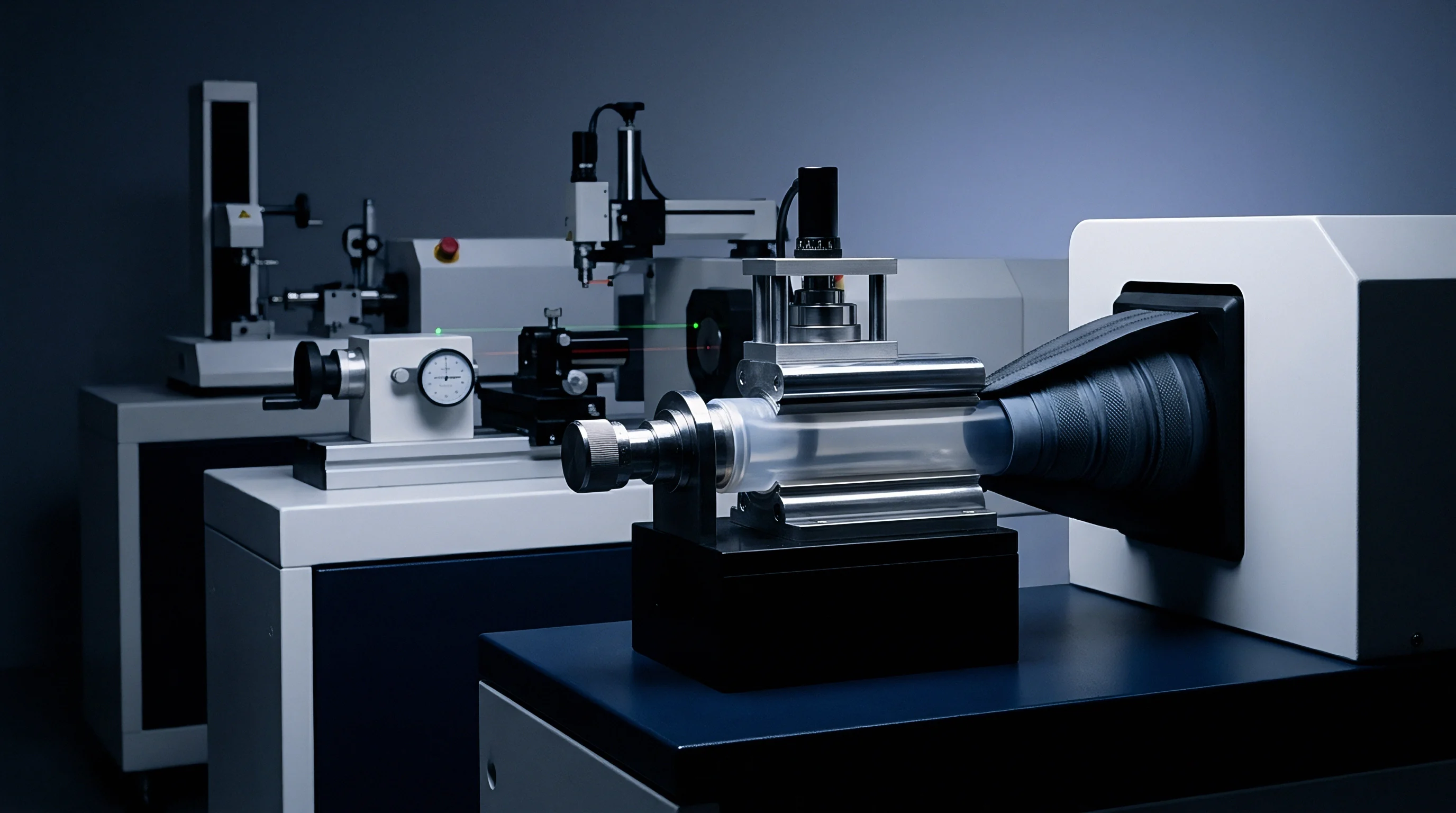
Analytical verification relies on precise thermogravimetric techniques linked directly to mass spectrometers or infrared gas cells. Standard incoming inspection methods like ash testing or simple loss-on-ignition fail to differentiate pure calcite from dolomite because both compounds yield residual metal oxides after complete high-temperature calcination. Quality control procedures must isolate mass loss events occurring specifically within the low-temperature decomposition window of magnesium carbonate.
Thermogravimetric Analysis and Evolved Gas Spectroscopy
Sample heating under inert nitrogen sweeps volatile products into analytical measurement channels. High-resolution thermogravimetric analysis coupled with Fourier-transform infrared spectroscopy (TGA-FTIR) measures thermal mass loss while identifying the chemical signature of off-gassed species. Magnesium carbonate dissociation yields a distinct mass loss peak between 400 circC and 520 circC, accompanied by intense infrared absorption at 2350 cm-1 corresponding to the asymmetric stretching vibration of carbon dioxide.
Standard quality control operations measure the baseline mass loss derivative curve to determine the ratio of calcium carbonate to magnesium carbonate. Pure calcite shows negligible mass loss below 600 circC when tested at a heating rate of 20 circC/min. Any mass loss detected between 380 circC and 550 circC directly indicates trace dolomite or magnesite contamination in the raw filler lot.
- Thermal Splay Generation manifests as silver streaks along the flow length of injection-molded components caused by trapped gas pockets.
- Melt Pressure Instability creates continuous head-pressure fluctuations at the die, causing strand breakage on the water bath pelletizing line.
- Micro-Void Formation reduces the ultimate tensile strength and notched Izod impact resistance of the final compounded resin formulation.
- Extruder Mold Plating deposits fine calcium and magnesium oxide powders along cold mold surfaces and vent slits, necessitating frequent tool cleaning outages.
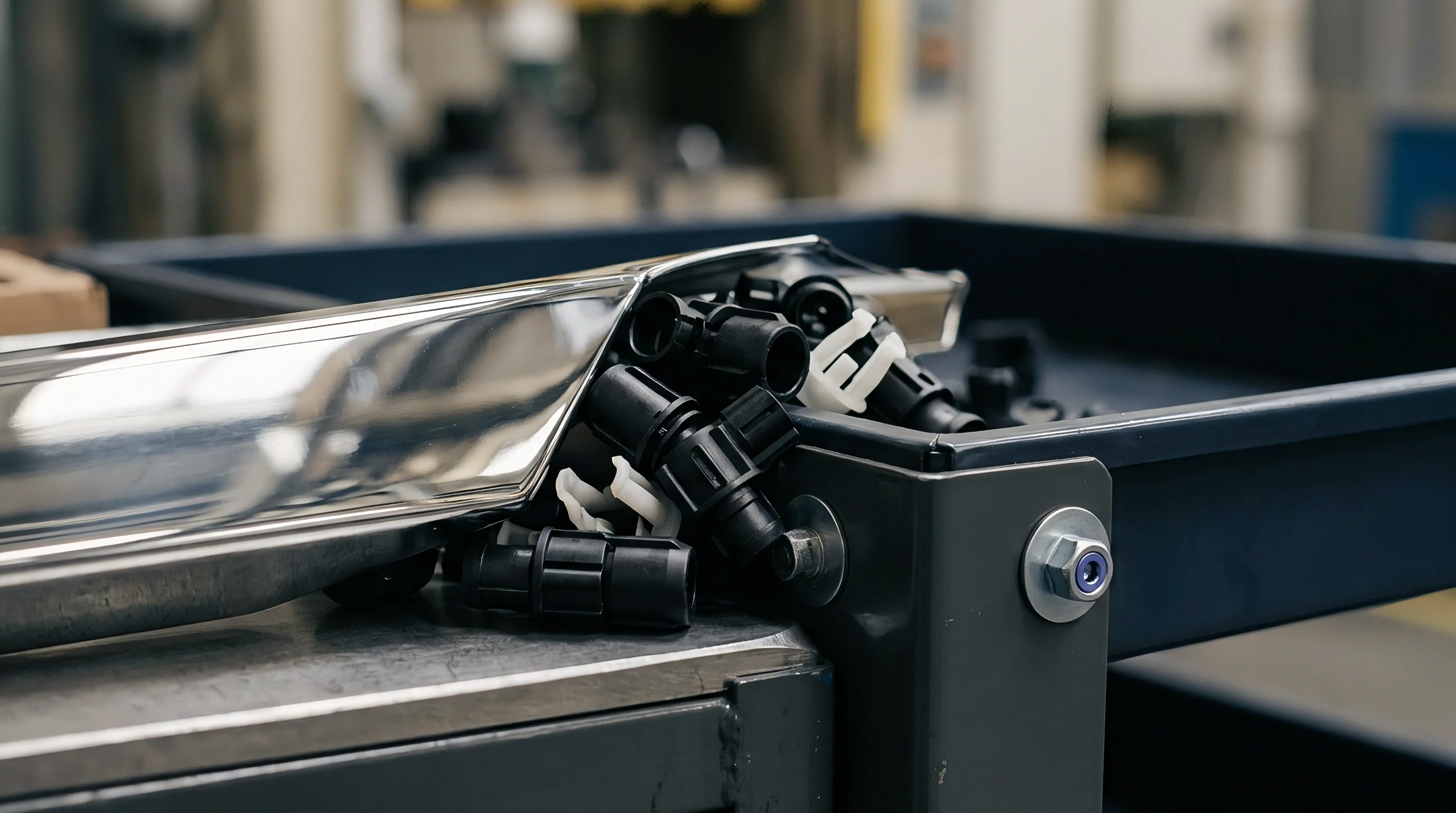
Differential Scanning Calorimetry Quantification Techniques
Endothermic energy absorption patterns reveal phase transition thresholds of mineral impurities. Differential scanning calorimetry (DSC) under elevated pressure conditions resolves the endothermic dissociation peaks of mixed carbonate minerals. While atmospheric DSC masks low-level dissociation reactions under thermal drift baselines, high-pressure DSC (HP-DSC) under 30 bar of nitrogen accentuates the sharp endothermic enthalpy peak of magnesium carbonate decomposition.
Consider a 40-tonne delivery of ground calcium carbonate filler masterbatch specified at 70% mineral loading in a polypropylene homopolymer matrix. Thermogravimetric screening reveals a 0.18% mass loss step between 400 circC and 520 circC. This mass loss corresponds to a magnesium carbonate concentration of 0.35% within the filler fraction, or 98 kilograms of dolomite contaminant across the total shipment.
During compounding at 250 °C, this contaminant mass liberates up to 23.4 cubic meters of carbon dioxide gas inside the extruder barrel. If the vacuum vent removes only 85% of evolved volatiles, 3.5 cubic meters of gas remains entrained within the finished resin pellets. This volume of trapped gas generates micro-voids in finished extruded sheet products, raising scrap rates by 4.2% over a standard 24-hour production run.
| Mineral Phase | Chemical Formula | Onset Temp (°C) | Peak Mass Loss (°C) | Primary Volatile Species |
|---|---|---|---|---|
| Pure Calcite | CaCO3 | 680 | 785 | Carbon Dioxide |
| Dolomite Step 1 | CaMg(CO3)2 | 380 | 480 | Carbon Dioxide |
| Dolomite Step 2 | CaCO3 remnant | 660 | 760 | Carbon Dioxide |
| Magnesite | MgCO3 | 320 | 410 | Carbon Dioxide |
| Hydromagnesite | Mg5(CO3)4(OH)2·4H2O | 220 | 340 | Water Vapor / Carbon Dioxide |
| Data recorded via TGA-MS at a ramp rate of 10 °C/min under dry nitrogen flow of 50 mL/min. The data confirms the lower thermal stability of magnesium-bearing phases relative to pure calcite. | ||||
Compliance with ASTM E1131 for thermogravimetric compositional analysis invalidates incoming filler lot claims whenever heating rates are held below 20 °C per minute during carbon dioxide off-gassing evaluation.
In accordance with ASTM E1131 section 9.2, reported mass losses below 600 °C automatically reclassify incoming filler lots from pure calcite to mixed carbonate grades, transferring financial liability for off-gassing scrap back to the mineral distributor.


Drift
Quarry extraction faces natural geological variability across mineral seams. Limestone deposits naturally grade into dolomitic limestone and pure dolomite veins over short distances. Filler processing plants deploy optical sorting and froth flotation to remove heavy silicates, but struggle to separate calcite from dolomite due to their near-identical specific gravity and surface energy profiles.
As a consequence, incoming bulk shipments exhibit lot-to-lot variance in trace magnesium content.
Incoming Quarry Variance and Masterbatch Quality Control
Raw calcium carbonate shipments display shifting trace mineral ratios based on bench location. A compounding facility purchasing calcium carbonate under a standard technical datasheet expecting 99.0% purity often receives lots containing up to 3.5% dolomite when quarry operations migrate toward secondary bench seams. This unannounced shift changes the thermal off-gassing baseline of the incoming raw material.
| Test Parameter | Standard Method | Target Value | Upper Rejection Limit |
|---|---|---|---|
| Low-Temp Mass Loss (350 ~ 550 °C) | ASTM E1131 | < 0.05% | 0.12% |
| Magnesium Oxide Content (XRF) | ISO 12677 | < 0.20% | 0.65% |
| Moisture Content (105 °C) | ISO 787-2 | < 0.08% | 0.15% |
| Particle Size D97 Pass | ISO 13320 | 5.0 µm | 6.2 µm |
High concentrations of magnesium oxide byproduct residues from low-temperature dissociation blind filter screens and alter filler surface pH and chemical reactivity. These alkaline oxide residues interact with acidic hindred amine light stabilizers (HALS) and phenolic antioxidants, deactivating the additive package and accelerating thermo-oxidative degradation during downstream processing.

Lot Screening Sampling Plan Design
Statistical confidence in incoming material quality demands representative composite sampling from bulk shipments. Single-point bag sampling misses localized pockets of dolomitic contamination within railcars or bulk silos. Sampling frameworks must utilize multi-point core sampling combined with composite blending to catch high-density contaminant pockets prior to conveying into compounder storage silos.
- Multi-Zone Railcar Thief Sampling extracts core specimens across five vertical points and three horizontal cross-sections within every receiving hopper.
- X-Ray Fluorescence Screening measures elemental calcium-to-magnesium ratios in under three minutes per composite lot sample.
- Thermogravimetric Verification Traps confirm whether detected magnesium originates from stable magnesium silicate talc or thermally unstable magnesium carbonate.
- Moisture-Isotherm Differential Testing isolates surface-adsorbed water from chemical hydroxide and carbonate reaction products.
Trace magnesium carbonate calcination generates microscopic void networks that degrade impact resistance before visual surface splay manifests.
Machine operators continue to debate whether real-time acoustic emission monitoring can reliably distinguish between moisture vapor release and trace carbonate calcination inside high-speed co-rotating extruders.


Yield
Off-gassing during compound processing translates directly into lost material value and operational overhead. Scrap rates caused by splay, density instability, and low mechanical performance force compounding plants to downgrade prime compound lots to secondary non-critical applications, destroying profit margins on high-specification engineering grades.
Financial Impact of Outgassing Defect Rates
Scrapped pellet volumes increase manufacturing costs through lost machine hours and remelt energy. When a high-speed compounding line producing 3,000 kg/hr of filled polypropylene experiences carbon dioxide micro-foaming, output pellets must be diverted to re-regrind silos or scrap sales. Downgrading prime material valued at $1.65 per kg to scrap value at $0.45 per kg generates an immediate loss of $3,600 per operating hour.
Tool plate-out represents another hidden cost driver. Evolved carbon dioxide carries volatile low-molecular-weight polymer fractions and additive vapors out of the melt, depositing them onto die faces and vacuum vent lines. Die face buildup forces line shutdowns for manual cleaning every 12 hours, reducing overall equipment effectiveness (OEE) by 4.5% across annual operations.
Commercial Specification Thresholds for Mineral Acceptance
Purchase contracts fix maximum allowed impurities to prevent process instabilities at compounding plants. Traditional raw material procurement relies on crude calcium carbonate purity clauses that specify total carbonate content without isolating magnesium carbonate fractions. Procurement officers must update raw mineral technical specifications to explicitly limit magnesium carbonate content.
- Magnesium Carbonate Fraction Ceiling specifies a maximum threshold of 0.25% MgCO3 by mass confirmed by high-resolution thermogravimetric analysis.
- Low-Temperature Mass Loss Ceiling caps off-gassing loss between 350 °C and 550 °C at 0.08% under dry nitrogen flow.
- Supplier Certificate of Analysis Verification requires batch-specific TGA derivative thermograms accompanying every delivered bulk silo truck.
- Rejection and Indemnification Clause assigns scrap compound costs to the filler supplier if post-delivery TGA tests reveal un-declared dolomite.
High-quality mineral sourcing relies on binding supply agreements directly to verified analytical thresholds rather than generic commercial trade descriptions.
Ignored dolomite dissociation thresholds lead directly to corrupted melt stability, ruined surface aesthetics, rapid mold fouling, and uncompensated scrap losses during commercial production runs.