Non Aqueous Potentiometric Acid Value Determination in Mixed Polyolefin Extrusion Compounds
Non-aqueous potentiometric titration isolates active maleic grafts from oxidative degradation acids in polyolefin blends using hot o-dichlorobenzene and KOH.
Matrix
Incoming bags of maleic anhydride grafted polypropylene combined with fractional-melt post-consumer low-density polyethylene carry an ambiguous certificate value: 1.2 mg KOH/g acid number measured by manual colour indicator titration under ASTM D974. That single number hides whether the acidity stems from active grafted anhydride rings, unreacted residual maleic acid monomers, or thermal-oxidative carboxyl groups generated across multiple extrusion passes. Unreacted maleic acid ruins adhesion.
When the compound enters a coextrusion line for ethylene vinyl alcohol barrier film, unreacted acid volatilises at 220 °C, generating bubble defects across the die lip, whereas under-grafted carrier resin delaminates under peel testing at 0.4 N/mm.
Carboxylic Functionality in Recycled Olefin Extrusion
Polyolefin backbones lack native functional groups capable of generating titratable hydronium equivalents in polar or non-polar media. Compounding operations introduce acidity through two discrete pathways: purposeful reactive extrusion with functional monomers and accidental thermal-oxidative chain scission during recycling cycles. Reactive grafting typically binds maleic anhydride onto polypropylene tertiary carbons or polyethylene secondary carbons via peroxide initiation, establishing succinic anhydride pendants.
In post-consumer polyolefin fractions, reprocessing through vented twin-screw extruders exposed to trace atmospheric oxygen creates ketone, aldehyde, ester, and free carboxylic acid end-groups along the hydrocarbon backbone.
Extrusion compounds containing post-consumer fractions yield baseline acid values between 0.45 and 1.80 mg KOH/g under ASTM D664 at 25 °C without added maleic compatibilizer.
The distinction between grafted anhydride moieties and degraded backbone carboxyls dictates mechanical performance in polar-nonpolar immiscible blends. Polypropylene and high-density polyethylene blends depend on covalent coupling or dipole alignment across interfacial boundaries to arrest crack propagation. Thermal carboxyl groups generated by oxidative degradation sit alongside cleaved chains of lower molecular weight, reducing tensile strength from 28 MPa to 19 MPa under ISO 527 test conditions at 50 mm/min.
Grafted succinic anhydride rings preserve backbone integrity while providing coupling sites for polar fillers such as glass fibres, talc, or ethylene vinyl alcohol layers.

Additives Masking Compatibilizer Acid Numbers
Formulations destined for automotive or technical film applications rarely consist of pure polymer backbones. Standard stabilization packages alter the measured non-aqueous potentiometric titration curve through parasitic consumption of titrant. Zinc stearate lubricants, calcium stearate neutralisers, and phenolic antioxidants contain ester linkages, phenolate precursors, or metal soaps that react with alkaline titrants under elevated temperatures.
Hindered amine light stabilizers behave as weak Brønsted-Lowry bases, buffering the solution and obscuring the inflection jump. Extrusion compounders frequently over-stabilize recycled post-industrial polyolefin streams to prevent colour drift, masking degraded polymer acidity while depressing the apparent graft level on the testing bench.
The compounding extruder introduces further analytical interference through unreacted monomers and process aids:
- Unreacted maleic acid remains dissolved in the amorphous polyolefin fraction following incomplete devolatilization in the vacuum zone.
- Secondary aliphatic carboxylates originate from slip additives such as erucamide and oleamide undergoing atmospheric oxidation during silo storage.
- Metal carboxylate complexes form through interactions between acid scavengers and degraded polymer fragments, yielding false equivalence inflections.
- Phosphite processing stabilizers hydrolyse under atmospheric humidity into phosphonic acids that consume titrant at elevated millivolt levels.
The compounder maintains that batch-to-batch variation in graft efficiency reflects normal raw material fluctuation rather than poor extruder residence time control.
Flask
Dissolving semicrystalline polyolefins requires breaking rigid lamellar structures held together by dense van der Waals interactions. Polypropylene crystallises below 115 °C. At ambient temperatures, neither linear low-density polyethylene nor isotactic polypropylene will dissolve in common titration media like methanol, acetone, or water. Attempting room-temperature extraction leaves the functional groups trapped within solid crystalline spherulites, inaccessible to the alkaline titrant.
The reaction vessel must maintain the polyolefin in a fully solvated random-coil conformation throughout the measurement sequence.
High Temperature Solvent Selection and Polyolefin Dissolution
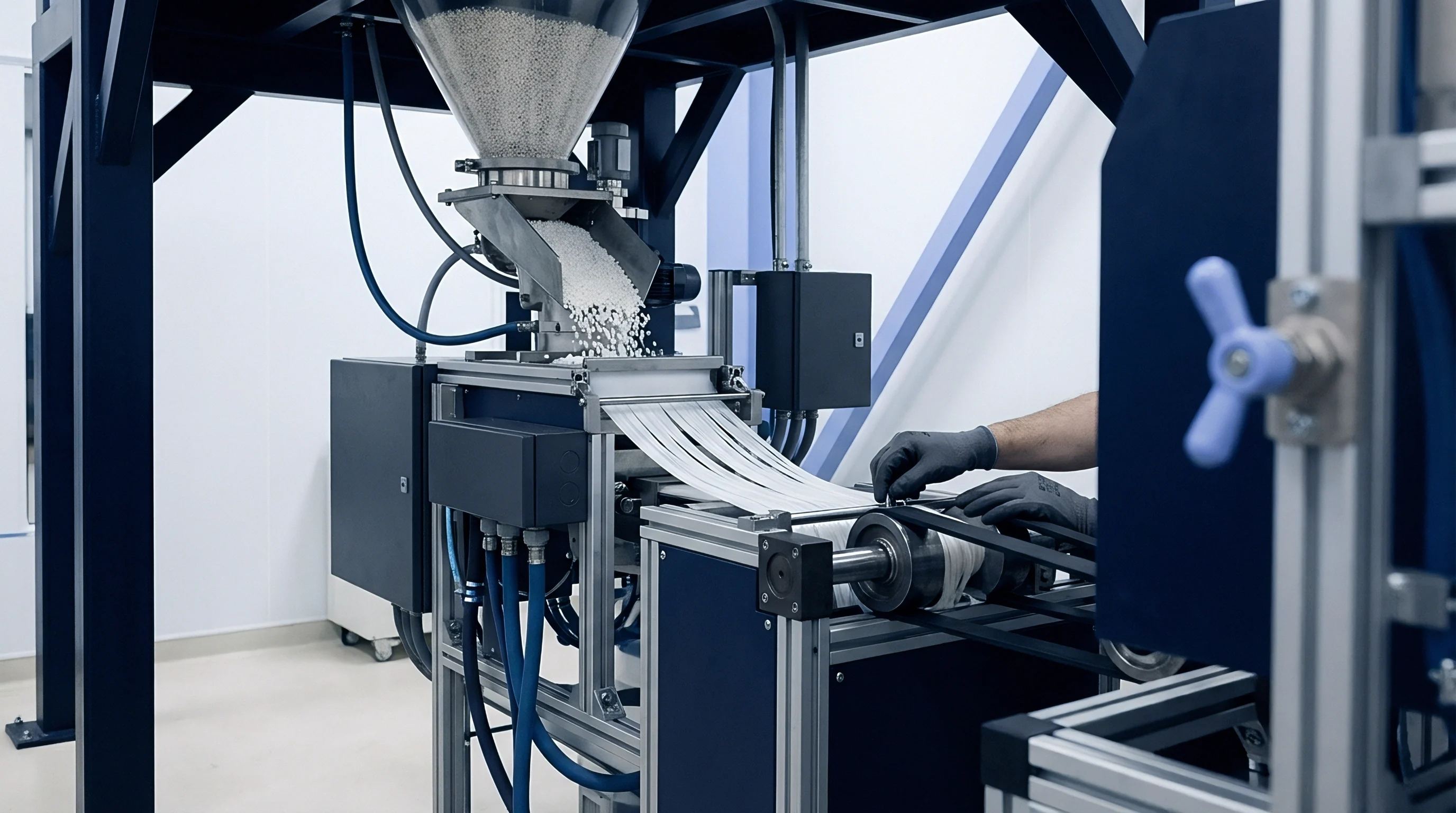
Solvation requires high-boiling aromatic hydrocarbons paired with polar organic co-solvents capable of sustaining electrical conductance without crashing the hydrophobic polymer out of solution. Pure toluene dissolves nothing. Xylene isomers dissolve polyethylene homopolymers at 110 °C and polypropylene at 125 °C. Pure xylene exhibits a dielectric constant below 2.4, suppressing ion dissociation and preventing the glass electrode from registering a stable millivolt signal.
Formulating a binary or ternary solvent mixture solves the dual demands of polymer solvation and ionic transport.
| Solvent System | Ratio (v/v) | Polyolefin Solvation Limit (g/100 mL) | Dielectric Constant (25 °C) | Potentiometric Signal Drift (mV/min) |
|---|---|---|---|---|
| Xylene / Isopropanol | 80 / 20 | 2.5 | 5.8 | 0.4 |
| Toluene / Ethanol | 70 / 30 | 1.8 | 7.2 | 1.2 |
| o-Dichlorobenzene / Methanol | 85 / 15 | 3.2 | 8.6 | 0.2 |
| Tetralin / Benzyl Alcohol | 60 / 40 | 2.8 | 9.4 | 0.8 |
| Values measured using a 50 mL solvent volume with 1.0 g maleic anhydride grafted polypropylene at an agitation speed of 250 rpm. | ||||
Phase separation occurs rapidly. When the temperature of an 80/20 xylene and isopropanol mixture falls below 95 °C during titrant delivery, the polymer precipitates as a cloudy suspension. Pellet geometry governs dissolution rates.
Encapsulated carboxylic groups become shielded inside precipitating polymer chains, producing an apparent drop in acid value and an artificially premature titration endpoint. Maintaining vessel jacket temperatures at 115 °C prevents premature crystallization during extended titration runs.

Is Non-Aqueous Potentiometric Titration Justified across Recycled Blends?
Engineers testing post-consumer fractions frequently question whether instrument-heavy potentiometric analysis justifies the overhead compared to high-temperature Fourier transform infrared spectroscopy. Infrared absorption at 1780 cm⁻¹ monitors carbonyl stretching of cyclic anhydrides, while absorption at 1712 cm⁻¹ captures open-chain carboxylic acids. Infrared methods require calibration standards matching the exact optical transparency, filler loading, and thickness of the analyzed resin film.
Recycled polyolefin extrusion compounds vary in carbon black concentration, talc contamination, and moisture content across every gaylord box, scattering infrared beams and invalidating baseline calibrations. Potentiometric determination operates independently of optical clarity, measuring total reactive proton concentration regardless of pigment loading.
The dissolution and preparation sequence follows strict procedural control:
- Dry mixed polyolefin pellets under vacuum at 80 °C for four hours to eliminate absorbed moisture capable of hydrolysing anhydride rings prematurely.
- Weigh 2.000 g of dried resin to four decimal places into a jacketed three-neck round-bottom container fitted with a reflux condenser.
- Dispense 80 mL of dry reagent-grade o-dichlorobenzene and heat the mixture to 130 °C under constant mechanical stirring until the solution becomes optically transparent.
- Introduce 20 mL of anhydrous isopropanol containing 1 volume percent water to convert grafted anhydride rings into dicarboxylic acid equivalents.
- Cool the jacketed vessel to 105 °C to establish potentiometric thermal equilibrium before immersing the analytical probe.
Complete polymer dissolution demands clear optical transparency at temperature, because partial gel suspension clouds the potentiometric baseline.

Electrode
Standard aqueous pH probes fail completely inside hot hydrocarbon mixtures. Glass electrodes foul quickly. The hydrated gel layer on the exterior surface of a conventional glass bulb dehydrates rapidly when exposed to anhydrous aromatic hydrocarbons and alcohols.
Dehydration shrinks the gel matrix, elevating internal bulb resistance from 100 megaohms to over 2000 megaohms. The high electrical resistance produces severe signal noise, baseline drift exceeding 15 mV per minute, and sluggish response times that cause titrator dosing algorithms to overshoot true inflection points.

Sleeve Junction Stability in Aprotic Environments
Reference half-cells present greater operational hurdles than the indicator glass. Traditional reference designs rely on a porous ceramic pin immersed in an aqueous potassium chloride solution. When immersed in hot xylene or isopropanol, potassium chloride precipitates within the ceramic pores through solvent anti-solvent shock.
The blocked junction creates an open electrical circuit, causing the titrator voltmeter to register erratic off-scale readings. Solvent purity alters results.
Specifying ASTM D664 with non-aqueous lithium chloride electrolyte prevents false equivalence points caused by silver ion precipitation in mixed polyolefin solutions.
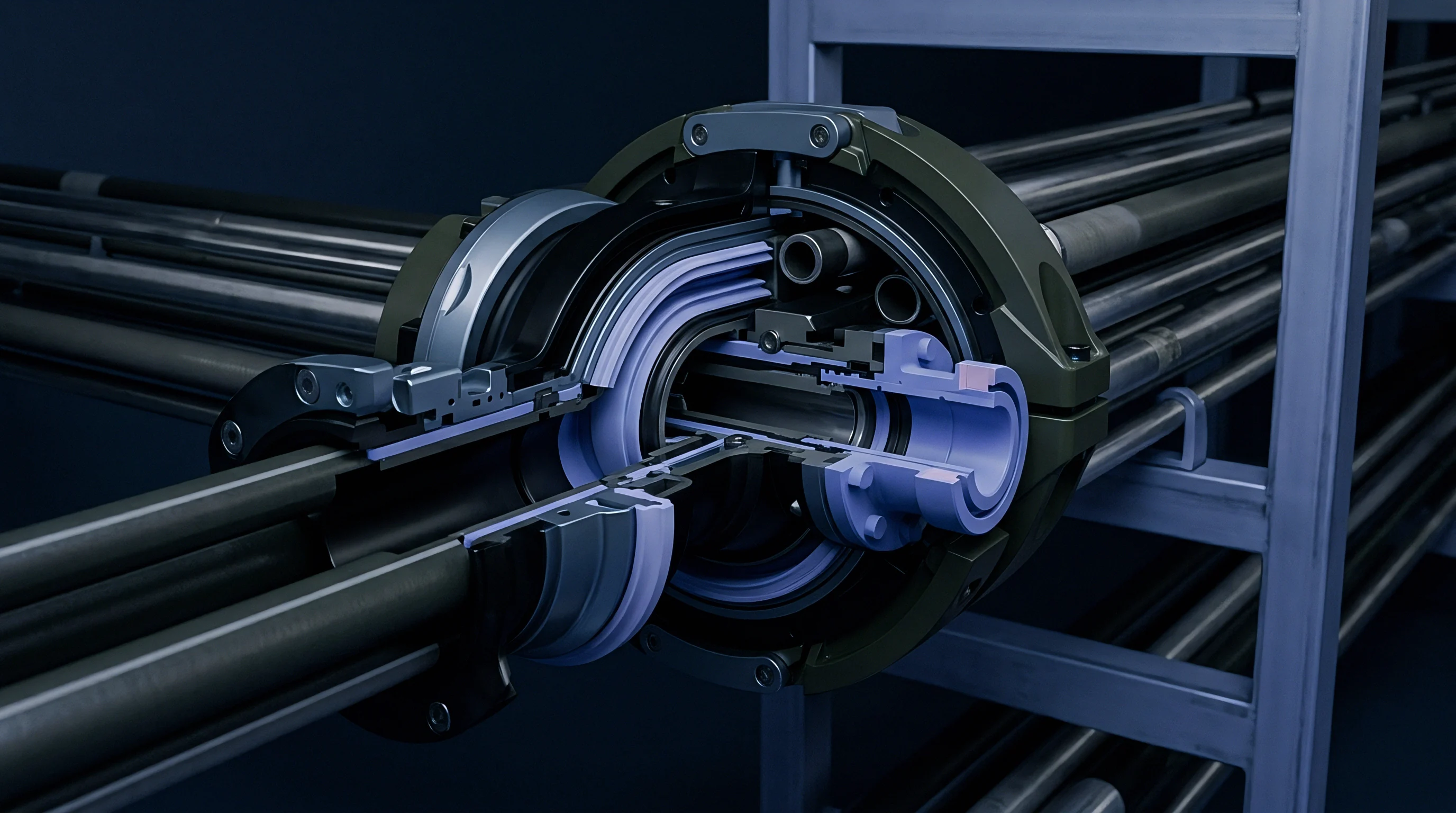
A specialized ground-glass sleeve junction addresses reference clogging. Instead of a narrow ceramic frit, the sleeve junction establishes liquid-to-liquid contact across a broad ground-glass interface. The reference compartment contains a solution of 1.0 M lithium chloride dissolved in anhydrous isopropanol or ethanol.
Lithium chloride remains completely soluble in both the internal reference fluid and the organic solvent mixture inside the titration beaker. The wide sleeve generates a continuous outward flow of electrolyte at 0.5 to 1.5 mL per hour under a small hydraulic head, preventing the polyolefin solution from diffusing back into the reference chamber.
Why Do Carboxylic Groups Alter Polyolefin Interfacial Mechanics?
Immiscible blends of polypropylene and polyethylene undergo phase separation upon cooling from the melt, developing coarse droplet morphologies with weak boundary cohesion. Carboxylic acid moieties, when converted to ionomeric zinc or sodium salts during extrusion, assemble into ionic clusters 2 to 5 nanometers in size. These clusters act as physical crosslinks that anchor disparate polymer phases together.
In coextrusion tie-layers, free carboxylic groups form hydrogen bonds with polyamide amine groups or covalent ester linkages with ethylene vinyl alcohol hydroxyl groups. If the measured acid value drops below 0.8 mg KOH/g, interfacial peel strength in nine-layer coextruded food packaging films falls from 4.5 N/15 mm to catastrophic separation below 0.5 N/15 mm.
The behavior of electrical double layers in non-polar organic solvents mirrors the dielectric response observed in geophysical oilfield logging, where hydrocarbon-water ratios dramatically skew galvanic sensors across borehole formations. In polymer analytical cells, the low bulk polarity forces ions to associate as neutral ion-pairs rather than isolated charges. Electrode calibration drifts overnight.
The analytical chemist must condition the glass membrane in dilute aqueous hydrochloric acid for ten minutes every five runs, rehydrating the outer silicate gel lattice before recalibrating against non-aqueous buffer standards.
Erroneous junction potential calibration misidentifies unreacted maleic acid as bound graft, leading to delamination in downstream multilayer extrusion.
Titrant
Standardizing alkaline reagents for organic media demands reagents that remain stable without precipitating carbonate salts. Potassium hydroxide dissolved in anhydrous isopropanol serves as the primary basic titrant for polyolefin acid numbers under ASTM D664 and modified DIN 53402. Sodium hydroxide is unsuitable; it exhibits poor solubility in branched alcohols and readily absorbs atmospheric carbon dioxide to form insoluble sodium carbonate, which deposits on autotitrator delivery valves and skews dispensing precision.

Potassium Hydroxide Standardization in Alcoholic Media
Titrant preparation utilizes 0.05 M or 0.1 M potassium hydroxide in high-purity 2-propanol. Standardization runs against primary chemical standards like potassium hydrogen phthalate or certified benzoic acid dissolved in ethanol. Standardization occurs daily because alcoholic potassium hydroxide slowly oxidises into potassium acetate, reducing effective molarity by approximately 0.0002 mol/L every forty-eight hours of ambient exposure.
Automatic burettes must use polytetrafluoroethylene delivery tubes and dry nitrogen headspace blankets to eliminate carbon dioxide ingress. Moisture hydrolyses maleic anhydride rings.
Potentiometric inflection slopes flatten when secondary amine antioxidants consume alcoholic titrant before carboxylic acid neutralisation completes.
Inflection curve evaluation depends on understanding how maleic anhydride hydrolyses relative to free dicarboxylic acid. Maleic anhydride rings possess only one titratable proton when reacted with an alcohol, forming a mono-ester half-acid that yields a single clear inflection point. In the presence of trace water, the anhydride ring hydrolyses into maleic acid, which contains two distinct carboxylic protons.
Titrating a mixture of grafted polyolefin and hydrolyzed maleic acid in a mixed organic solvent produces two consecutive potential jumps on the millivolt curve: the first jump represents the neutralisation of the first carboxylic proton of free maleic acid plus the mono-ester half-acid, while the second jump corresponds to the neutralisation of the weaker second proton.
The interpretation of complex multi-inflection curves relies on specific criteria:
- First derivative maxima must exceed 50 mV per 0.1 mL of titrant addition to distinguish a genuine chemical endpoint from background noise.
- Equivalence point buffering indicates the presence of phenolic antioxidant degradation products that consume hydroxide between 300 mV and 450 mV.
- Blank titration offset accounts for intrinsic solvent acidity, requiring subtractive correction from every raw polyolefin titration volume.
- Electrode stabilization delay requires dynamic dosing intervals where the autotitrator pauses until the potential drifts less than 2 mV per minute before injecting subsequent reagent.
Worked Quantitative Acid Value Calculation
Determining acid values in commercial extrusion compounds involves distinct mathematical corrections. Take a 40-tonne lot of black compatibilized automotive compound consisting of 75 percent recycled polypropylene and 25 percent maleic anhydride grafted high-density polyethylene. The sample preparation assumes a 5.000 g pellet sample dissolved in 100 mL of 80/20 xylene-isopropanol at 115 °C. Assume a standardized potassium hydroxide concentration of 0.0512 M in anhydrous isopropanol.
Assume the autotitrator reaches an inflection point at a delivered titrant volume of 3.420 mL. Assume a separate solvent blank titration under identical conditions requires 0.180 mL of titrant to reach the same millivolt threshold.
The acid value calculation applies the standard formula:
Acid Value = ((V_sample – V_blank) M 56.1) / W
Where V_sample is 3.420 mL, V_blank is 0.180 mL, M is 0.0512 mol/L, 56.1 is the molecular weight of potassium hydroxide in g/mol, and W is the 5.000 g sample mass.
Acid Value = ((3.420 – 0.180) 0.0512 56.1) / 5.000
Acid Value = (3.240 0.0512 56.1) / 5.000
Acid Value = 9.306 / 5.000 = 1.861 mg KOH/g
Converting this acid number into weight percentage of grafted maleic anhydride depends on whether the functionality exists as an open dicarboxylic acid or an unhydrolyzed cyclic anhydride. Assuming unhydrolyzed cyclic anhydride where each ring generates two titratable carboxylic groups following full in-situ alcoholysis and water hydration:
Graft Percentage = (Acid Value 98.06) / (2 561) = (1.861 98.06) / 1122 = 182.49 / 1122 = 0.163 wt%
If the anhydride had remained strictly a half-acid mono-ester without complete ring cleavage, the calculated graft percentage would double to 0.326 wt%. Graft levels drop. This discrepancy represents the central technical dispute between compounders and extrusion converters.
Analytical chemists continue to debate whether steric hindrance in dense branched polyolefin structures prevents stoichiometric access of hydroxide ions to tertiary carboxylic groups during room-temperature titration runs.
Dispute
Commercial contracts for compatibilized polyolefin resins hinge on tight acid number specifications, frequently bounded between 1.0 and 1.5 mg KOH/g. The melt fractures. When an extrusion converter runs incoming lot testing using manual colorimetric titration per ASTM D974, phenolphthalein color changes occur between pH 8.2 and 10.0 in aqueous systems.
In cloudy, high-temperature xylene solutions containing dark recycled polymer fractions or carbon black, visually identifying the pink transition of phenolphthalein is impossible. The analyst overshoots the endpoint, logging an acid value of 2.1 mg KOH/g and rejecting the shipment. The compounding mill tests the identical lot using non-aqueous potentiometry per ASTM D664, recording an inflection point at 1.25 mg KOH/g and declaring full contractual compliance.
Discrepancies between Indicator and Potentiometric Standards
The conflict between test methods is grounded in physical chemistry. Manual colour indicator titration under ASTM D974 was originally developed for petroleum lubricating oils with low molecular weights and rapid liquid diffusion. Semicrystalline polyolefin compounds introduce phase boundary limitations, steric hindrance, and optical opacity that defeat manual indicators.
Viscosity climbs with loading.
| Standard Method | Detection Principle | Solvent Matrix | Lower Detection Limit (mg KOH/g) | Reproducibility Relative Std Dev (%) | Commercial Rejection Risk |
|---|---|---|---|---|---|
| ASTM D974 | Visual Colour Indicator | Toluene / Isopropanol / Water | 0.50 | 18.5 | Extreme on coloured resins |
| ASTM D664 | Potentiometric Titration | Toluene / Isopropanol / Water | 0.10 | 6.2 | Moderate on phase separation |
| ISO 2114 | Potentiometric Titration | Acetone / Toluene | 0.20 | 8.4 | High on polypropylene solubility |
| Modified DIN 53402 | Non-Aqueous High-Temp Potentiometry | o-Dichlorobenzene / Isopropanol | 0.05 | 2.8 | Minimal across all polyolefin grades |
A specific published figure claims that non-aqueous potentiometric titrations of maleic anhydride grafted polypropylene achieve a repeatability relative standard deviation of 1.4 percent under ASTM D664. That claim rests on testing pristine homopolymer pellets grafted at a high concentration of 1.0 weight percent maleic anhydride dissolved in high-purity decalin at 140 °C across ten consecutive runs within an academic laboratory setting in 2018. The figure collapses when applied to post-consumer mixed polyolefin extrusion compounds containing 0.05 percent carbon black, 20 percent linear low-density polyethylene, and residual zinc stearate.
In commercial incoming testing, reproducibility widens to 6.5 percent because mineral fillers absorb organic acid species, shielding them from titrant interaction.
Resin lots exhibiting split inflection peaks indicate incomplete maleic anhydride hydrolysis rather than distinct polymer fractions.
The desk cannot fully defend an industry-wide universal correlation factor between titratable acid value and functional tie-layer peel strength across mixed post-consumer extrusion streams. Recycled compounds carry unquantified levels of oxidized degradation fragments that contribute to measured acid value without contributing to mechanical adhesion. When sourcing mixed polyolefin extrusion compounds, the procurement team must avoid relying on gross acid value numbers alone.
Specifying a differential non-aqueous potentiometric protocol that measures both total acid number and free unreacted monomer fractions separates active compatibilizing chains from destructive degradation by-products.
Tie-layer adhesion fails downstream. When peel strengths on laminated multi-layer automotive fuel tubes drop below 5 N/cm, warranty liabilities fall squarely on whoever approved the resin lot. Compounders dispute unreacted monomer fractions.
If the purchasing dossier specifies only a bare acid value line on the certificate of analysis, the compounder delivers resin containing 0.4 percent free maleic acid that passes total acid checks but debonds under thermal cycling.
Incorporating ASTM D664 with a mandatory blank-corrected baseline clause into the purchase order shifts the financial burden of ambiguous inflection curves back to the resin supplier.