Establishing Desorption Temperatures and Carrier Flow Rates for Polymer Titration
Set oven desorption temperatures twenty degrees below polymer degradation points while maintaining carrier gas sweep rates between forty and seventy milliliters.


Vapor
Incoming polyamide and polyester shipments arrive with strict moisture thresholds that govern melt processing success. When resin moisture exceeds two hundred parts per million, injection molding barrels trigger severe hydrolytic chain scission, cutting intrinsic viscosity and destroying mechanical impact strength in finished components. Standard loss-on-drying gravimetric balances fail across these tight tolerances because polymer additive packages, slip agents, and processing oils volatilize simultaneously, masking moisture loss behind total weight change.
Thermal desorption titration provides the necessary separation by vaporizing volatile water molecules inside a dedicated oven and carrying them via an inert dry gas stream into a Karl Fischer coulometric cell.
Analytical precision depends entirely on pairing specific desorption temperatures with precise carrier gas volumetric flow rates. Setting the extraction chamber twenty degrees too cold leaves bound water trapped inside the crystalline pellet matrix, yielding artificially low moisture readings that pass wet material into production silos. Setting the extraction chamber twenty degrees too hot causes thermal decomposition of the polymer backbone and additive package, generating pyrolytic reaction water, aldehydes, and acidic vapors that react directly with Karl Fischer reagents.
Virgin resin buyers establish strict test conditions per resin grade to verify certificates of analysis against actual incoming container quality before unloading bulk trucks.
A sample mass of two grams heated to one hundred seventy degrees Celsius desorbs ninety-five percent of internal moisture within eight minutes.
Carrier flow velocity dictates how swiftly desorbed water molecules leave the sample tube and enter the titration vessel. Flow rates below twenty milliliters per minute permit vapor stagnation inside pneumatic lines, promoting premature condensation along cool tubing walls. Flow rates exceeding one hundred fifty milliliters per minute generate excessive backpressure, disrupt electrochemical drift stability, and strip iodine from the generator electrode before stoichiometric reactions complete.
Regulating mass flow delivery stabilizes analytical baselines across extended sampling campaigns.
Operational Titration Settings for Engineering Thermoplastics
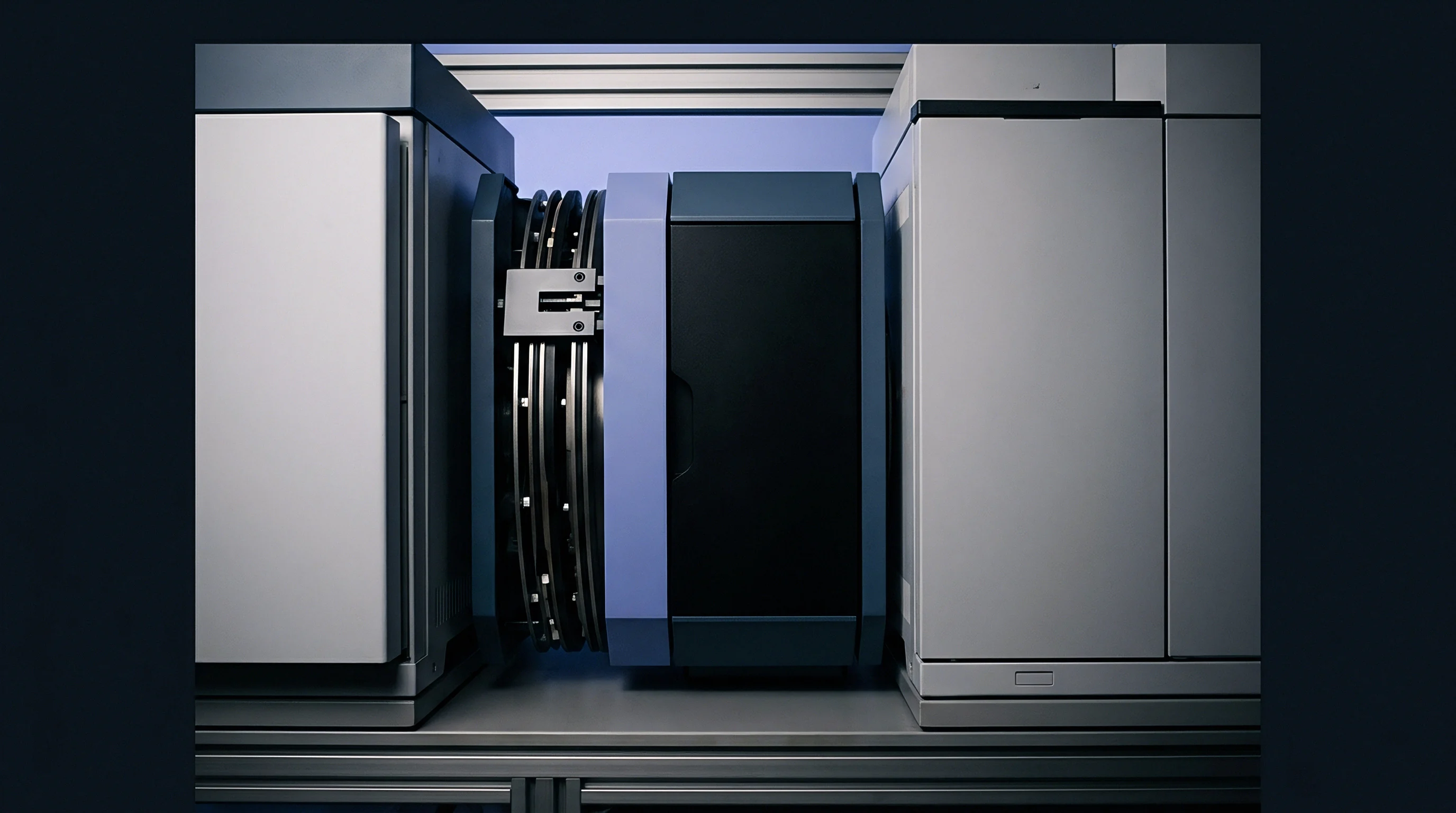
Quality departments rely on automated thermal extraction ovens directly coupled to electrochemical detection cells. The operational window balances moisture diffusion kinetics against matrix thermal degradation limits established under ISO 15512 Method B2 and ASTM D6869. Semicrystalline polyamides demand higher extraction energy than amorphous styrenics because polar amide groups form strong hydrogen bonds with water molecules throughout the amorphous and interlamellar regions.
| Polymer Grade Designation | Desorption Temperature | Carrier Gas Flow Rate | Sample Mass | Extraction Duration | Target Moisture Limit |
|---|---|---|---|---|---|
| Polyamide 66 Unfilled Prime | 180 °C | 50 mL/min | 1.5 g | 12 min | 150 ppm |
| Polyamide 6 Heat Stabilized | 170 °C | 50 mL/min | 2.0 g | 15 min | 200 ppm |
| Polyethylene Terephthalate Bottle Flake | 160 °C | 60 mL/min | 3.0 g | 18 min | 50 ppm |
| Polybutylene Terephthalate Injection Grade | 160 °C | 50 mL/min | 2.5 g | 12 min | 100 ppm |
| Polycarbonate Optical Grade | 150 °C | 40 mL/min | 4.0 g | 10 min | 25 ppm |
| Polycarbonate ABS Compound | 140 °C | 40 mL/min | 3.0 g | 10 min | 100 ppm |
| Polylactic Acid Extrusion Grade | 120 °C | 50 mL/min | 2.5 g | 15 min | 100 ppm |
Pellet geometry alters the required extraction duration. Spherical micropellets exhibit high surface area, releasing moisture rapidly under steady carrier sweep. Standard cylindrical pellets require extended isothermal dwell periods to permit core moisture migration.
Glass fiber reinforcement reduces the organic polymer volume fraction, demanding higher sample masses to introduce sufficient absolute water mass into the coulometric detection threshold.
Carrier Gas Selection and Flow Calibration Boundaries
High purity nitrogen supplied from compressed cylinders passes through desiccating molecular sieve columns before reaching sample heating chambers. Using compressed ambient shop air ruins analytical resolution because humidity shifts destabilize baseline titration drift rates. Hydrocarbon impurities within low-grade industrial nitrogen generate false titration currents by oxidizing cathode screens inside coulometric generator assemblies.
- Dry nitrogen gas maintains analytical stability across high-temperature extraction sequences due to moisture levels controlled below three parts per million.
- Purified synthetic air functions reliably during polyolefin testing where low-temperature vaporization prevents oxidation reactions.
- High purity argon provides dense displacement mechanics for heavy molecular fraction testing but increases analytical operating expenditures substantially.
- In-line molecular sieve traps strip trace water vapor from source lines, preventing baseline titration drift from exceeding ten micrograms per minute.
Mass flow controllers deliver higher reproducibility than simple needle valves. Temperature fluctuations inside compounding inspection laboratories alter gas density, shifting mass throughput across uncompensated rotameters. Automated electronic flow regulators maintain delivery within two percent of target velocity, stabilizing vapor residence time through transfer lines and titrator vessels.
ASTM D6869 Section 11 specifies that laboratory ambient temperature shifts exceeding five degrees Celsius invalidate calibration factors, forcing automated recalibration before accepting resin delivery data.
Heat
Pellet thermal conductivity determines the duration required to extract internal water molecules from condensed phases. Thermoplastics exhibit low thermal diffusion coefficients, meaning core pellet temperatures lag external barrel surface conditions by several minutes during heating cycles. Establishing the desorption temperature demands matching the thermal energy input to the binding energy of the solvated water without triggering structural backbone cleavage.
Differential scanning calorimetry and thermogravimetric analysis define the boundary envelope. For polybutylene terephthalate, the glass transition sits near forty-five degrees Celsius, and melting begins at two hundred twenty-two degrees Celsius. Moisture extraction occurs between one hundred fifty and one hundred seventy degrees Celsius.
Operating at one hundred sixty degrees Celsius supplies sufficient molecular mobility for rapid water desorption while staying sixty degrees below the melting point, preventing pellets from collapsing into an impermeable molten mass inside the sample vial.
Pellets dried below their equilibrium solubility point absorb surrounding atmospheric moisture faster than saturated pellets lose it.
Melting inside sample containers destroys extraction kinetics. Molten resin puddles along the bottom of the test container, shrinking the effective surface area exposed to the sweep gas. The polymer skin solidifies upon cooling, sealing residual core moisture inside a dense glassy plug.
Desorption temperatures must remain safely below the polymer melting point for semicrystalline grades, or below the glass transition plus fifty degrees Celsius for amorphous resins.
What Governs Thermal Extraction Envelopes across Condensation Polymers?
Moisture trapped in pellet cores diffuses along chemical concentration gradients toward the polymer boundary layer. Diffusion coefficients scale exponentially with absolute temperature following standard Arrhenius behavior. In saturated polyamides, hydrogen bonds holding water to amide linkages require substantial thermal activation to release water into the free volume of the matrix.
Polybutylene terephthalate degrades under molten moisture. When molders process wet polyester pellets, hydrolytic cleavage cuts long chains into acidic oligomers, dropping melt strength instantaneously. The laboratory thermal desorption oven reproduces this exact vulnerability if temperatures run high.
At one hundred ninety degrees Celsius, residual water initiates hydrolysis directly inside the sealed titration vial, consuming water molecules in chain cleavage reactions and suppressing the measured titration value. Moisture hydrolyzes molten polyamide chains instantly.

Stepped Temperature Scanning for Matrix Decomposition Boundaries
Baseline profiling couples an analytical balance to an automated furnace running twenty-minute isothermal segments. Ramping a polyamide sample from one hundred to two hundred forty degrees Celsius reveals distinct mass loss phases. The initial plateau between one hundred twenty and one hundred eighty degrees Celsius corresponds strictly to water vapor evolution.
Above two hundred degrees Celsius, secondary off-gassing begins as oligomers, low-molecular-weight waxes, and volatile lubricants leave the matrix.
| Polymer Matrix | Glass Transition | Melting Point | Desorption Window | Decomposition Onset | Volatile Offgas Identity |
|---|---|---|---|---|---|
| PA6 Prime Pellets | 52 °C | 220 °C | 160 to 180 °C | 205 °C | Caprolactam monomer |
| PA66 Prime Pellets | 70 °C | 260 °C | 170 to 190 °C | 225 °C | Cyclic cyclopentanone derivatives |
| PET Virgin Flake | 78 °C | 255 °C | 150 to 170 °C | 200 °C | Acetaldehyde, ethylene glycol |
| PBT Molding Grade | 45 °C | 225 °C | 150 to 170 °C | 195 °C | Tetrahydrofuran, butadiene |
| PMMA Acrylic Sheet | 105 °C | Amorphous | 130 to 150 °C | 175 °C | Methyl methacrylate monomer |
| POM Copolymer | -60 °C | 165 °C | 130 to 145 °C | 155 °C | Formaldehyde vapor |
Stabilizer packages alter decomposition onset thresholds. Prime grades stabilized with hindered phenols withstand higher desorption temperatures than post-consumer recycled flakes containing consumed antioxidant reserves. Polyacetal requires rigorous temperature regulation.
Heating polyoxymethylene above one hundred fifty degrees Celsius unleashes rapid unzipping of polyoxymethylene chains, generating formaldehyde gas that immediately reduces Karl Fischer reagents, producing massive artificial water indications.
Pellet cores retain bound moisture tenaciously.
Pellets dried below their equilibrium solubility point absorb surrounding atmospheric moisture faster than saturated pellets lose it.
Sweep
Pneumatic transport routes move desorbed molecules from the heating chamber to the reaction vessel. Delivering vapor across transfer manifolds demands continuous positive pressure and precise gas velocity. Without appropriate carrier velocity, water molecules settle along tube walls, creating measurement lag that extends titration analysis durations beyond acceptable plant intake schedules.
Carrier flow velocity dictates laminar versus turbulent transport regimes within sample lines. Narrow transfer tubing with an inner diameter of two millimeters operating at fifty milliliters per minute maintains smooth laminar transit. Laminar flow minimizes wall contact turbulence while providing sufficient kinetic force to sweep heavy water molecules out of the hot vaporization tube into the titration vessel before wall cooling occurs.
Cold spots ruin quantitative vapor recovery.
Carrier gas containing five parts per million background water doubles blank drift rates inside coulometric titrator cells.
Backpressure regulation protects the electrolyte seal inside coulometric glassware. Titration vessels incorporate anolyte solutions, porous ceramic diaphragms, and platinum indicator pins submerged in volatile methanol or ethanol formulations. Carrier delivery rates above one hundred milliliters per minute generate liquid splashing, aerosolizing cell reagents into vent ports and stripping volatile sulfur dioxide co-reactants.
Regulating flow protects electrochemical equilibrium.
Gas Velocity and Pneumatic Transfer Dynamics
Mass transport within narrow tubing depends directly on volumetric delivery rates measured at room condition. An operational balance exists between transit time and detector stabilization. Low flow prolongs analysis, while excessive flow destabilizes the baseline drift rate through evaporative solvent cooling.
The practical optimization sequence requires methodical calibration steps on the factory floor:
- Connect high purity carrier supply lines directly to a digital bubble flowmeter to verify volumetric delivery at ambient pressure and temperature.
- Set the mass flow regulator to seventy milliliters per minute while monitoring the coulometric titration cell baseline until background drift stabilizes below five micrograms per minute.
- Inject ten microliters of pure deionized water into an empty test vial at one hundred fifty degrees Celsius to record absolute recovery percentages across four minutes.
- Reduce flow incrementally by ten milliliters per minute across replicate runs to pinpoint the minimum carrier velocity that delivers ninety-nine percent water recovery without solvent turbulence.
Transfer lines remain above two hundred degrees. Polyethylene heating sleeves or insulated resistive wire wraps prevent the gas stream from cooling during its journey from the oven block to the titration cell inlet needle. If transfer tubing drops below one hundred degrees Celsius, water vapor condenses into microscopic liquid droplets along internal tube walls.
Desorption precedes thermal backbone cleavage.
Does Carrier Velocity Suppress Transfer Tube Condensation?
External heating tapes wrap around stainless connections to maintain internal surfaces above the boiling threshold. Elevating gas velocity shortens the physical residence time of vapor within unheated transfer sections, preventing individual moisture molecules from reaching boundary wall dew points. High velocity carries droplets into detectors.
Nitrogen purity exceeds ninety-nine percent. Gas containing trace oil or hydrocarbons fouls platinum electrodes, suppressing voltage response times. Condensation within tubing creates false zeros.
When operators run subsequent dry samples, heat conducted along the line slowly vaporizes previously trapped wall droplets, yielding phantom moisture spikes that fail good polymer lots.
Transfer line condensation causes erratic background drift that forces repeated titration cell cleaning and scrap production on downstream injection molding lines.

Volatiles
Compounded resins release plasticizers, unreacted monomers, and stabilizer breakdown fragments during prolonged thermal exposure. In flame-retardant polyamide compounds, brominated additives and antimony trioxide synergists exhibit low volatilization temperatures. When heating ovens hit target moisture desorption levels, these additive compounds release acidic vapors that travel directly into the Karl Fischer detection chamber alongside desorbed moisture.
Standard coulometric reagents utilize an organic base, sulfur dioxide, and iodide ions dissolved in an alcohol matrix. Water reacts stoichiometrically in a one-to-one molar ratio with iodine according to the Bunsen reaction mechanism. When volatile aldehydes or ketones distill out of heated polyester samples, they react with methanol inside the reagent to form acetals or ketals, releasing synthetic water molecules that artificially inflate titration values.
Dry nitrogen prevents atmospheric back-diffusion.
Melt viscosity drops within seconds. Sourcing managers examining analytical test logs look for abnormal drift curves. A standard water titration displays a sharp peak that returns to baseline drift within five minutes.
Non-water volatile interferences display continuous, elevated titration plateaus that persist for thirty minutes, indicating continuous chemical reactions between matrix degradation products and the electrolyte solution.
Chemical Interferences in Coulometric Cells
Karl Fischer reagent solutions react stoichiometrically with water molecules through a sulfur dioxide reduction cycle. Secondary chemical interactions alter solution pH, disrupting reaction rates. If volatile acids enter the vessel, solution pH drops below five, reducing titration velocity and generating sluggish detector endpoints.
If volatile amine catalysts escape polyurethane samples, solution pH rises above eight, causing spontaneous dark consumption of iodine without water present.
- Acetaldehyde vapors produced during polyester degradation react with alcohol reagents, forming acetals and generating continuous artificial moisture signals.
- Caprolactam sublimation from heated polyamide 6 coats transfer lines, eventually accumulating inside delivery needles and restricting sweep flow.
- Volatile amine scavengers shift cell electrolyte pH into basic regimes, causing unprompted reagent exhaustion and erratic baseline drift.
- Phosphite antioxidant decomposition products evolve phosphonic acids that oxidize cell electrodes, causing premature system termination during routine testing.
Specialized reagents mitigate volatile interactions. Methanol-free titration media formulated with long-chain alcohols suppress ketalization side reactions when testing polybutylene terephthalate and polycarbonate compounds. Aldehydes consume Karl Fischer iodine directly.

Distinguishing Moisture from Condensation Byproducts
Secondary condensation reactions generate water molecules within the heated chamber as hydroxyl and carboxyl end-groups join under thermal stress. In polyethylene terephthalate, esterification equilibrium shifts at elevated temperatures. Heating PET flake to two hundred degrees Celsius causes terminal carboxylic acid groups to react with terminal hydroxyl groups, building polymer chains and releasing reaction water as a chemical byproduct.
This reaction water enters the carrier gas and registers as original pellet moisture, even though it was generated by thermal abuse inside the test vial. Sourcing engineers prevent this artifact by capping desorption temperatures at one hundred sixty degrees Celsius. Lowering thermal input slows extraction kinetics slightly but guarantees that measured water reflects residual moisture requiring hopper drying rather than polymer structural synthesis.
Resin producers frequently state that unexpected iodine consumption reflects harmless antioxidant volatilization rather than off-specification resin moisture.

Allowance
Commercial resin purchase agreements define acceptable water content thresholds alongside landed billing terms. When buying virgin polyamides or high-grade polyesters, moisture represents more than a molding variable; it represents raw material mass paid for at full pellet market price. Sourcing contracts specify moisture ceilings between one hundred and two hundred parts per million for injection molding grades, and fifty parts per million for critical industrial filament applications.
Wet resin increases injection cavity scrap. If a fifty-ton bulk container arrives containing eight hundred parts per million of water, the converter incurs substantial drying utility expenses, extended hopper dwell times, and the risk of catastrophic barrel hydrolysis. When resin fails moisture checks on arrival, receiving docks hold the delivery vehicle, triggering immediate commercial price renegotiations or outright cargo rejection.
Contract specifications enforcing ISO 15512 Method B2 cancel supplier demurrage exemptions whenever moisture exceeds two hundred parts per million.
Verifying compliance requires testing three independent composite samples drawn from distinct container depths. Discrepancies between the supplier certificate of analysis and receiving dock titration values usually trace back to differences in desorption oven temperature and carrier gas velocity settings. Standardizing analytical operating parameters eliminates testing variance and enforces commercial specifications.

Settling Moisture Rejections at the Receiving Silo
Incoming railcars wait on factory sidings while plant laboratories draw composite samples from top inspection hatches. Pneumatic transfer into plant storage silos remains blocked until coulometric titration yields values below the specification ceiling. Railcar demurrage accumulates after forty-eight hours.
When moisture exceeds contractual limits, sourcing desks choose between three commercial actions:
- Reject the shipment entirely, requiring the resin distributor to re-route the container at their sole logistical expense.
- Accept the delivery under a commercial price allowance that deducts auxiliary drying energy costs and machine schedule adjustments from the landed invoice.
- Downgrade the resin lot to non-critical utility applications, applying market price differentials for off-specification material against the original purchase order.
Silo moisture surveys establish baseline figures. Moisture ingress during pneumatic silo loading causes significant lot-to-lot processing shifts across subsequent molding shifts.
Landed Cost Calculations for Off-Spec Shipments
Processing wet polymer generates financial losses across cycle time expansion, drying energy consumption, and finished part scrap. A standard engineering compounder operating twin-screw extruders requires resin dried below one hundred parts per million to prevent melt fracture and molecular weight breakdown. Calculating the real landed cost includes the operational penalties of removing excess water.
| Lot Condition Category | Delivered Moisture | Purchase Price Per Ton | Drying Energy Cost | Scrap Yield Loss | Real Net Part Cost |
|---|---|---|---|---|---|
| Prime Dry Specification | 45 ppm | $1,420 | $18 | 0.8% | $1,452 |
| Borderline Off-Gas Lot | 120 ppm | $1,400 | $42 | 2.1% | $1,475 |
| Wet Distressed Railcar | 350 ppm | $1,310 | $98 | 6.4% | $1,504 |
| Degraded Saturated Stock | 850 ppm | $1,180 | $165 | 14.2% | $1,543 |
A lower raw resin purchase price rarely compensates for high delivered moisture. As shown in the cost analysis, a distressed lot discounted by one hundred ten dollars per ton ends up costing fifty-two dollars per ton more in real net parts due to dehumidifying energy requirements and elevated injection molding scrap. Establishing precise desorption temperatures and sweep velocities protects converters from buying unverified water at high resin prices.
Analytical laboratories still debate whether high-temperature moisture measurements on biobased succinates capture true moisture or unreacted monomer esterification water.