Determining Tariff Line Classification for Import Resin Masterbatches
Masterbatch tariff classification depends on active payload function, carrier resin mass fractions, and legal chapter notes override rules.
Taxonomy

Harmonized System Frameworks for Polymer Concentrates
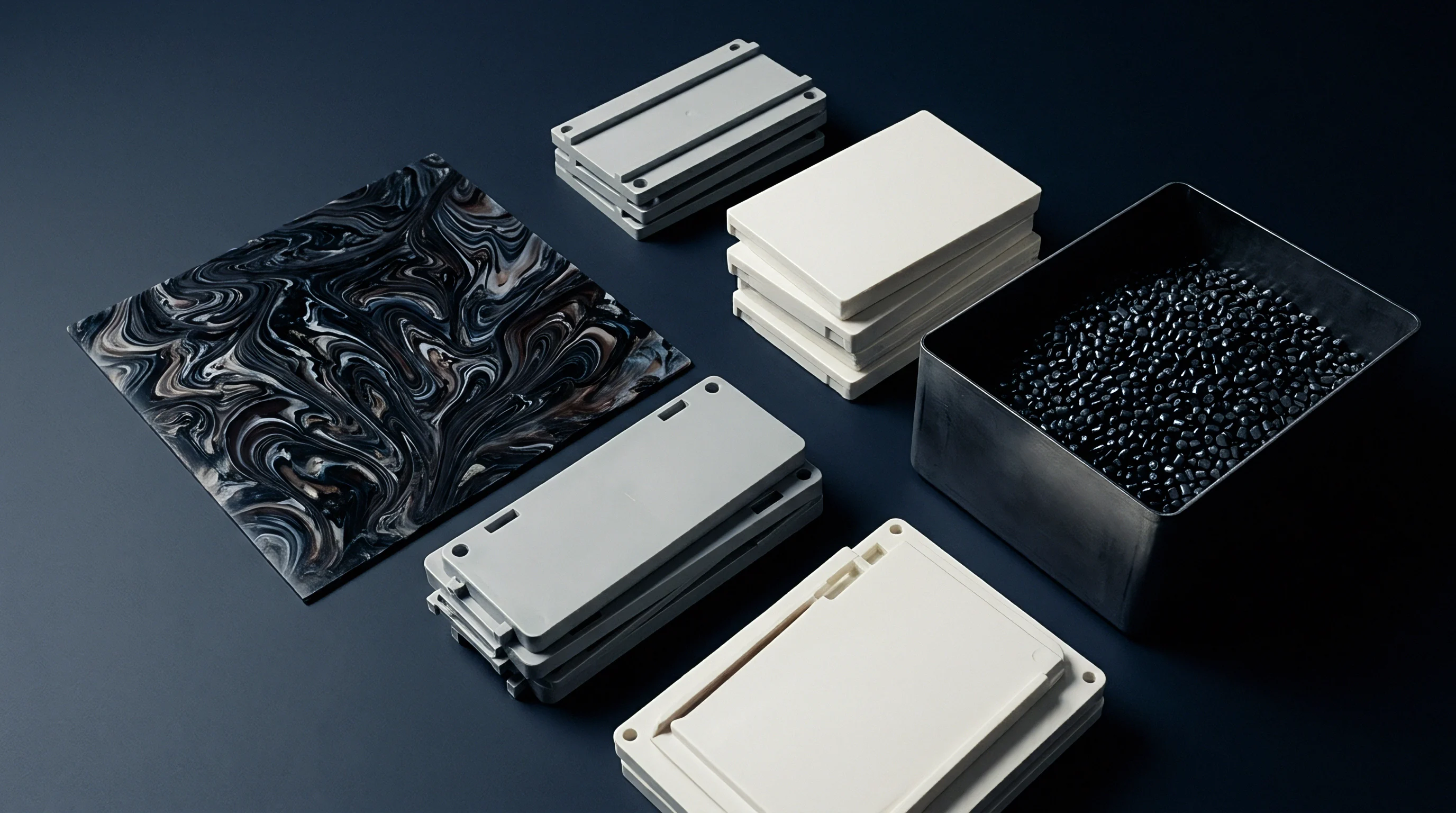
Classifying imported resin masterbatches requires navigating the line between primary polymers in Chapter 39 and chemical preparations under Chapters 32 and 38. Customs authorities across jurisdictions evaluate granular concentrates against strict legal notes rather than commercial trade terms. A masterbatch consists of an active payload ~ such as organic or inorganic pigments, functional chemical additives, or mineral fillers ~ encapsulated within a carrier resin matrix like polyethylene, polypropylene, or ethylene-vinyl acetate.
Classification disputes arise when customs officials question whether the carrier resin functions as a primary polymer component or purely as a dispersion medium.
Heading 3204 covers synthetic organic coloring matter and preparations based on it used to color any material. Heading 3206 covers other coloring matter and preparations, including inorganic pigment masterbatches like titanium dioxide or carbon black concentrates. Note 3 to Chapter 32 governs these color masterbatches: preparations based on coloring matter used to color any material remain under Chapter 32, provided they are not dispersed in non-aqueous liquid or paste forms used to manufacture paint under Heading 3212.
The active color payload drives tariff classification. When a concentrate contains pigments or dyes meant to impart color to plastic end products, Chapter 32 takes precedence over Chapter 39 regardless of carrier resin concentration.
Functional additive masterbatches follow a different path. Concentrates carrying ultraviolet light stabilizers, slip agents, antioxidants, flame retardants, or antistatic additives do not fall under Chapter 32 color headings. Importers must evaluate Heading 3824 or Heading 3828 for chemical products and preparations of the chemical or allied industries not elsewhere specified.
Headings 3901 through 3914 apply when the carrier resin gives the product its essential character or when the mixture forms a modified polymer compound rather than an additive concentrate. Legal Note 1 to Chapter 39 defines polymers in primary forms, including granules, pellets, and powder. The essential character test under General Rule for the Interpretation 3(b) resolves competing classifications between Chapter 38 additive preparations and Chapter 39 primary polymers.
| Masterbatch Type | Primary Active Constituent | Typical Active Mass Fraction | Applicable HS Heading | Governing Legal Note | Duty Rate Impact Tier |
|---|---|---|---|---|---|
| Organic Color Masterbatch | Phthalocyanine, Azo, or Quinacridone Pigments | 15% to 40% | Heading 3204 | Chapter 32 Note 3 | Elevated (3.0% to 6.5%) |
| Inorganic Color Masterbatch | Titanium Dioxide, Iron Oxide, Ultramarine | 30% to 75% | Heading 3206 | Chapter 32 Note 3 | Moderate (2.0% to 5.0%) |
| Carbon Black Masterbatch | Furnace or Thermal Carbon Black | 20% to 50% | Heading 3206 | Chapter 32 Note 3 | Moderate (2.0% to 4.5%) |
| Mineral Filler Concentrate | Calcium Carbonate, Talc, Silica | 50% to 80% | Heading 3824 / Heading 3901-3902 | GRI 3(b) Essential Character | Variable (0.0% to 6.5%) |
| Additive Masterbatch | UV Stabilizer, Slip Agent, Antioxidant | 5% to 25% | Heading 3824 / Heading 3828 | Chapter 38 Note 7 / GRI 1 | Standard Chemical (3.5% to 6.5%) |
Legal Interpretative Rules for Composite Resin Granules
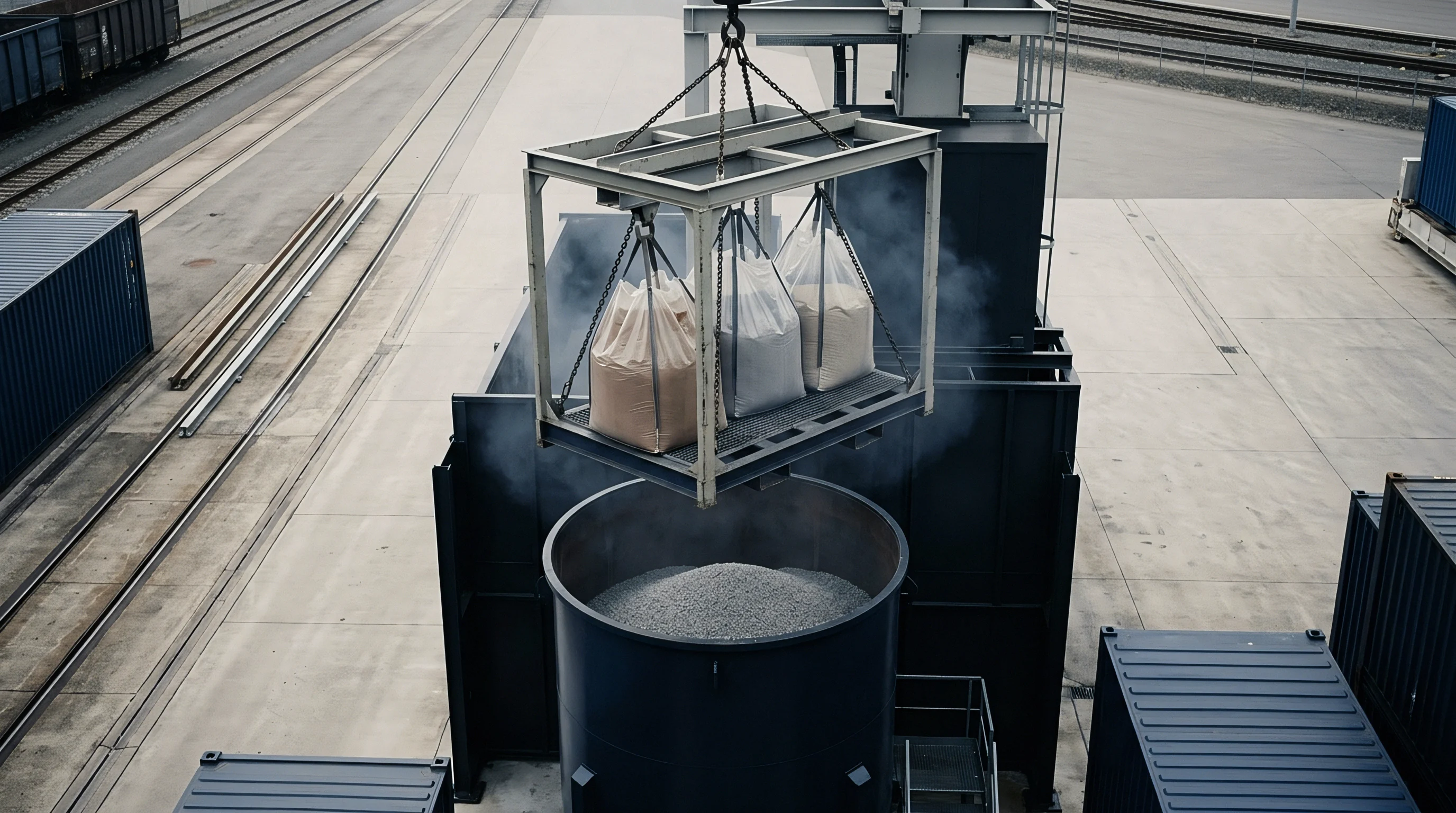
Customs classification relies on the General Rules for the Interpretation. GRI 1 establishes that classification is determined according to heading terms and any relative Section or Chapter Notes. When a color masterbatch enters port, Chapter 32 Note 3 directs the entry away from Chapter 39, assigning preparations based on coloring matter directly to Headings 3204 or 3206.
The presence of a linear low-density polyethylene or polypropylene matrix does not redirect the commodity to Heading 3901 or 3902. The resin serves merely as a vehicle to distribute pigment particles inside the molding barrel.
For goods containing more than one material or substance, GRI 2(b) extends headings to cover mixtures and combinations. GRI 3 handles cases where goods appear classifiable under two or more headings. GRI 3(a) dictates that the heading providing the most specific description takes precedence over general descriptions.
Heading 3204 specifically names coloring preparations, superseding the broad polymer descriptions of Chapter 39. GRI 3(b) applies to mixtures, composite goods, and goods put up in sets for retail sale, assigning classification to the material that gives the article its essential character. For uncolored mineral masterbatches containing eighty percent calcium carbonate in a polypropylene carrier, customs authorities analyze whether the mineral mass or the polymer binder determines essential character.
Thermogravimetric testing at 600 °C under nitrogen atmosphere quantifies volatile polymer carrier mass fraction against residual inorganic pigment.
Misclassification carries direct commercial risk. Importers entering functional additive masterbatches under primary polymer lines to access lower duty rates face administrative penalties during customs audits. Customs authorities regularly challenge vague descriptions on commercial invoices.
When an invoice reads Polyethylene Granules, but the shipment contains twenty percent hindered amine light stabilizer dispersed in a low-density polyethylene carrier, customs agencies reclassify the line under Heading 3824. Reclassification results in retroactive duty assessments, interest charges, and potential vessel seizure at the terminal.
Entering resin masterbatches into global trade requires identifying specific misclassification triggers across supply chain operations.
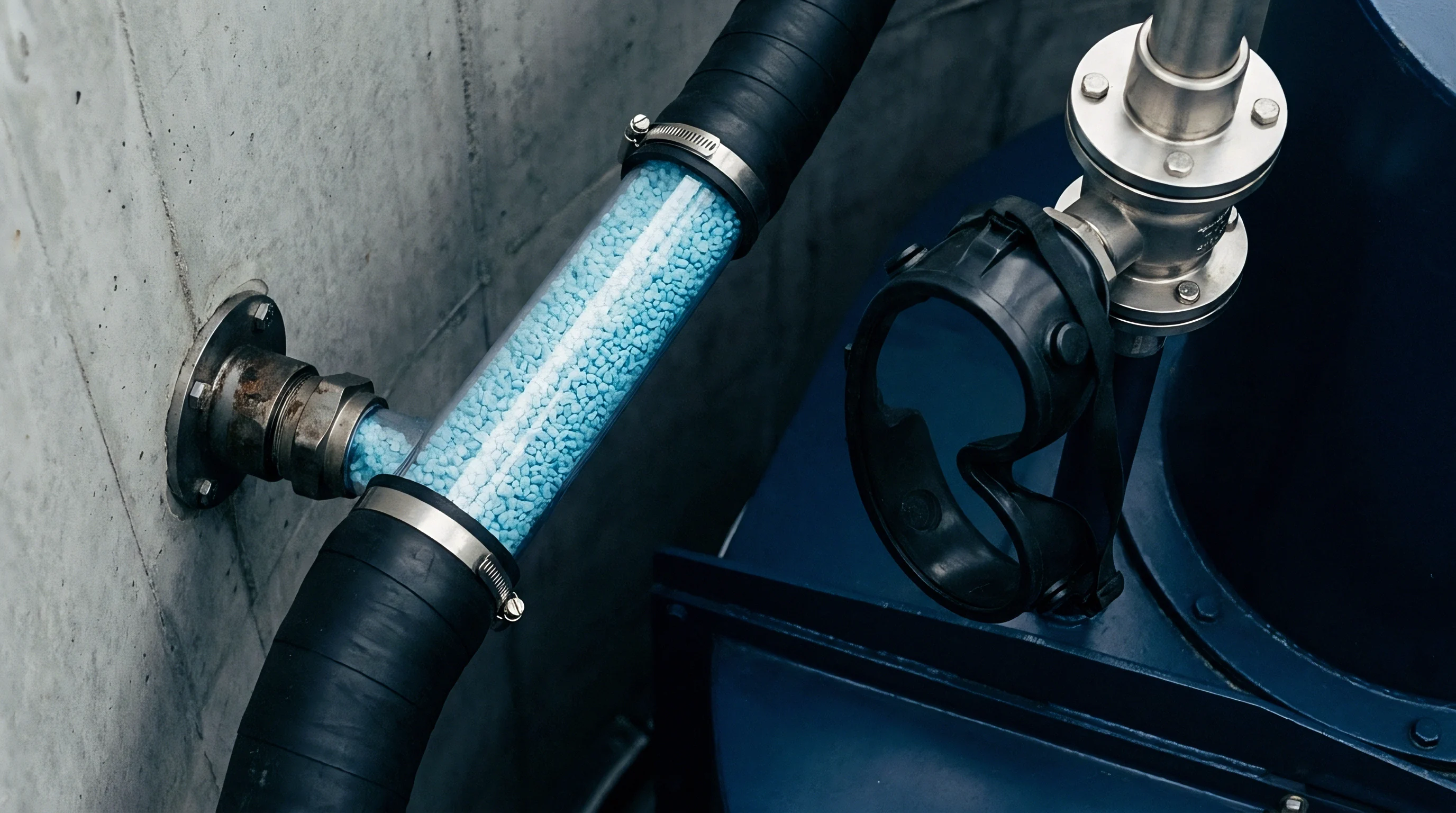
- Unspecified Generic Invoices descriptions like plastic resin or polyolefin compound mask functional additive payloads and trigger immediate physical inspection at port customs clearance terminals.
- Omission of Pigment CAS Numbers on technical data sheets prevents customs officers from confirming synthetic organic coloring matter status under Heading 3204.
- Incorrect Essential Character Declarations for calcium carbonate concentrates misrepresent heavy mineral loading as primary polymer compounds under Heading 3902.
- Failure to Disclose Carrier Melt Flow Rates hinders verification that the matrix acts strictly as a carrier rather than a structural engineering polymer.
- Misapplying Liquid Color Exemptions to solid masterbatch pellets creates false claims under Heading 3212 paint solvent classifications.
Classification errors trigger retroactive duty assessments.
Assay
Analytical Protocols for Carrier and Payload Identification
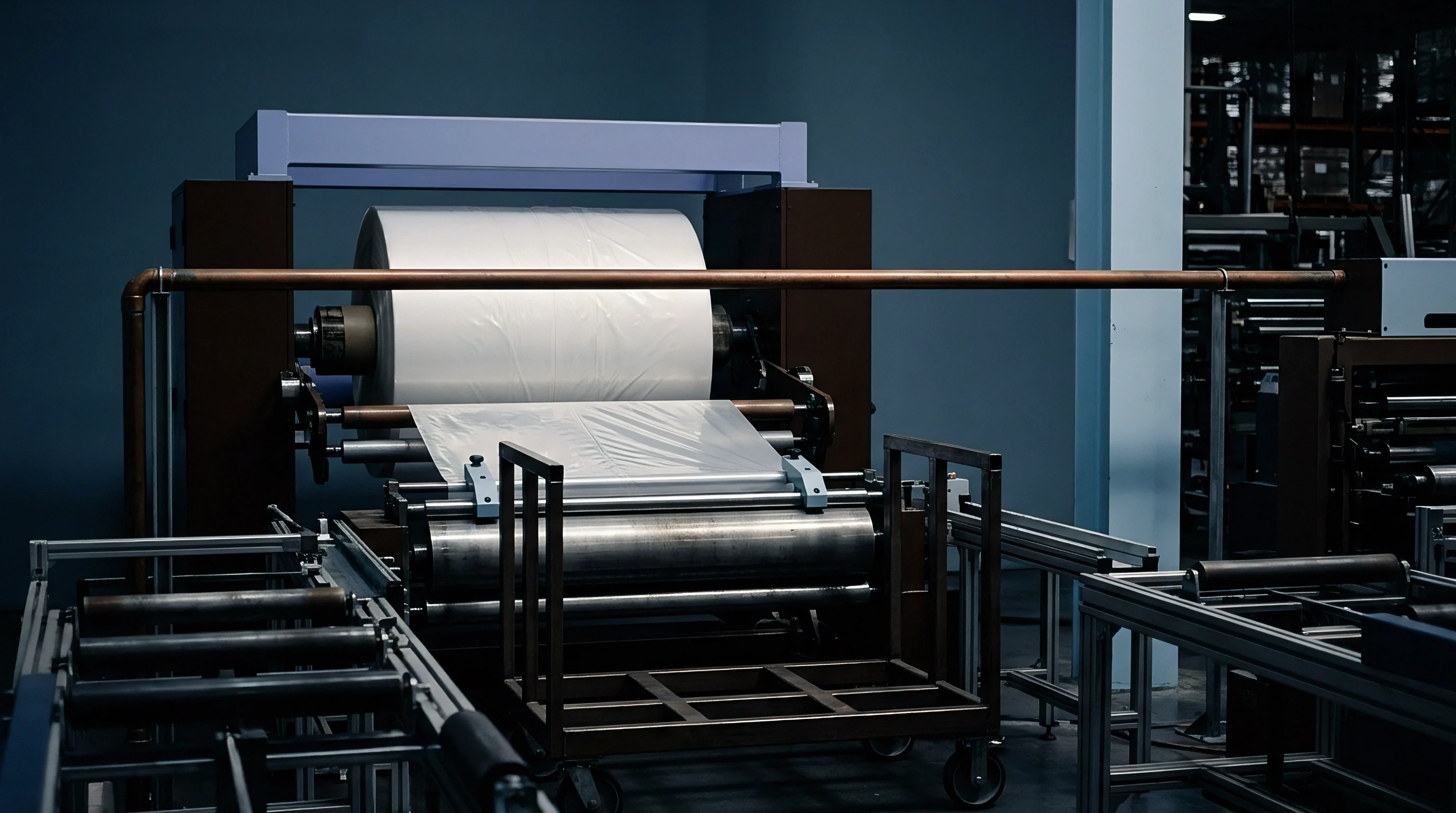
Resolving tariff classification disputes requires quantitative analytical data extracted directly from imported masterbatch pellets. Laboratory testing turns subjective invoice statements into verifiable chemical composition data. Sourcing engineers use thermal, spectroscopic, and chromatographic methods to separate the carrier polymer from active additives, pigments, or inorganic fillers.
Thermogravimetric analysis under nitrogen isolates organic carrier degradation from mineral residue. Determining the exact mass fractions of volatile organic matter, organic pigment, carbon black, and inert inorganic ash establishes the necessary foundation for applying Chapter Notes.
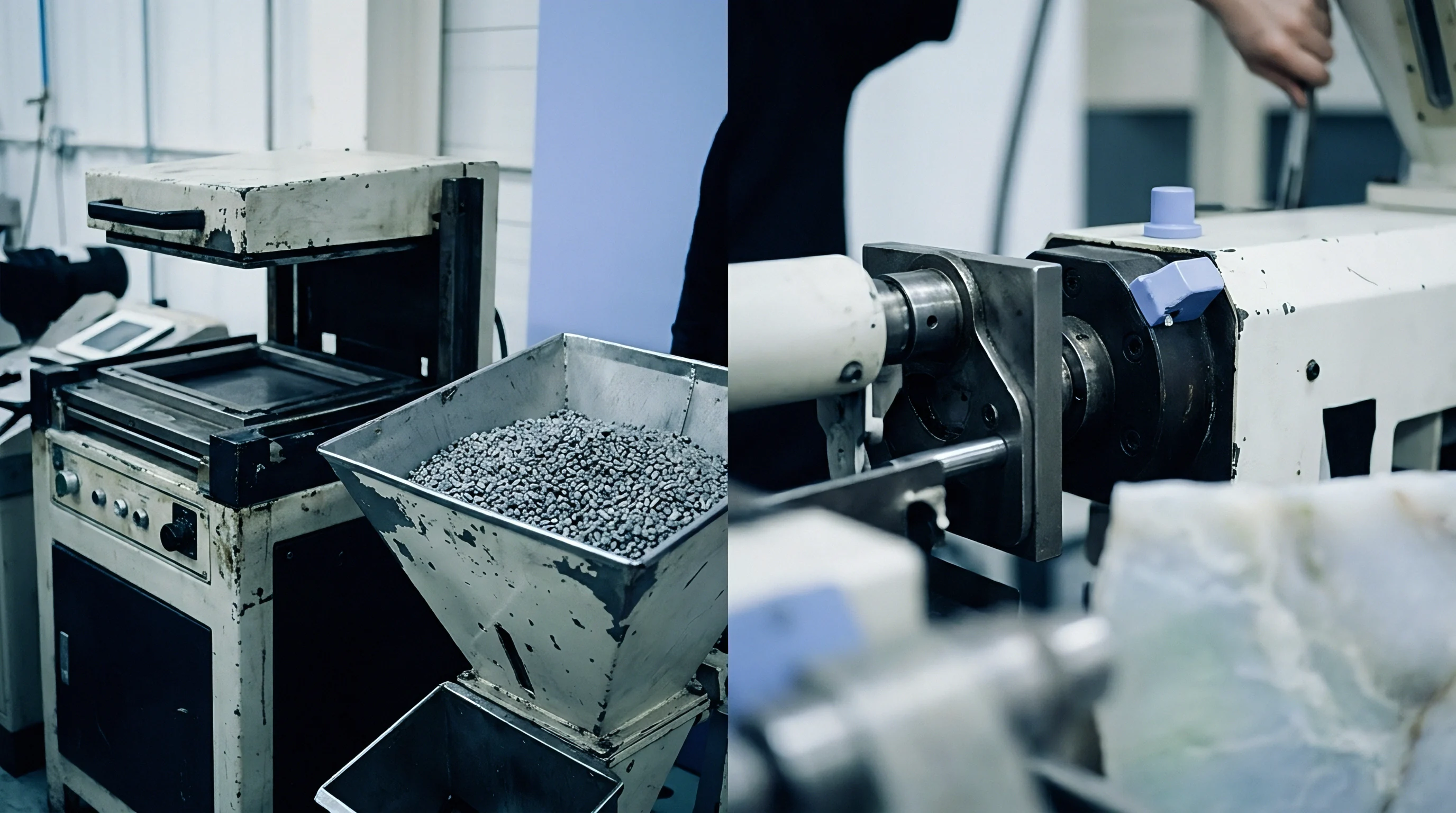
Thermogravimetric analysis performed under ASTM E1131 or ISO 11358 measures weight loss as a function of temperature under controlled atmospheres. The sample is heated from ambient temperature to 600 °C in an inert nitrogen atmosphere at a rate of 20 °C per minute. The organic polymer carrier, such as polyethylene or polypropylene, pyrolyzes completely within this temperature window, yielding the organic carrier mass percentage.
Switching the purge gas to oxygen or air at 600 °C and continuing heating to 900 °C oxidizes carbon black or organic pigments, allowing precise quantification of the carbon payload. The remaining residue represents inert mineral fillers, such as calcium carbonate, titanium dioxide, or talc, defined as ash content under ISO 3451-1.
Which Test Method Resolves Carrier Polymer Ambiguity?
Fourier-transform infrared spectroscopy coupled with attenuated total reflectance identifies carrier polymer species after active payloads are removed. ASTM E1252 governs infrared qualitative analysis of polymeric materials. Direct ATR-FTIR scanning of masterbatch pellet surfaces often yields distorted spectra due to heavy pigment or filler absorption.
Laboratories must execute solvent extraction under ISO 6427 or ASTM D2124 to isolate the pure carrier polymer. Boiling xylene or toluene dissolves polyolefin carriers, leaving insoluble pigments and mineral fillers in the filter residue. Precipitating the dissolved polymer into cold methanol yields a clean resin sample for ATR-FTIR analysis.
| Test Protocol Standard | Analytical Technique | Thermal / Chemical Test Condition | Target Measured Constituent | Measurement Accuracy Range |
|---|---|---|---|---|
| ASTM E1131 / ISO 11358 | Thermogravimetric Analysis (TGA) | 20 °C to 900 °C (N2 switch to O2 at 600 °C) | Polymer Carrier vs Carbon Black vs Ash | ± 0.2% Mass Fraction |
| ISO 3451-1 Method A | Muffle Furnace Ash Content | 600 °C ± 25 °C Constant Mass Heating | Inorganic Mineral Filler (CaCO3, TiO2, Talc) | ± 0.1% Mass Fraction |
| ASTM E1252 / ISO 6427 | Solvent Extraction & ATR-FTIR | Refluxing Xylene / Methanol Precipitation | Carrier Polymer Identification (PE, PP, EVA) | Qualitative Identification |
| ISO 11357-3 / ASTM D3418 | Differential Scanning Calorimetry | -50 °C to 250 °C at 10 °C/min Heating Rate | Carrier Melting Peak & Crystallinity | ± 0.5 °C Transition Temp |
| ASTM D1238 / ISO 1133-1 | Melt Mass-Flow Rate (MFR) | 190 °C / 2.16 kg or 230 °C / 2.16 kg Load | Viscosity / Polymer Carrier Rheology | ± 0.05 g/10 min |
Differential scanning calorimetry performed under ISO 11357-3 provides melting temperature peaks and enthalpy values. The carrier resin melting point distinguishes high-density polyethylene melting at 130 °C to 135 °C from low-density polyethylene melting at 108 °C to 115 °C or polypropylene melting above 160 °C. The enthalpy of fusion calculates carrier crystallinity percentage when compared against theoretical hundred-percent crystalline values. Melt mass-flow rate testing under ISO 1133-1 or ASTM D1238 quantifies carrier resin viscosity.
High melt flow rates, such as 20 g/10 min to 100 g/10 min at 190 °C under 2.16 kg load, indicate low molecular weight waxes or carriers tailored purely for dispersion rather than structural compounding.
Establishing defensible laboratory evidence requires a systematic physical extraction sequence during incoming shipment audits.
- Sample ten random containers across the shipment lot, pulling fifty grams of masterbatch pellets from each container under clean sampling protocols.
- Homogenize the composite five-hundred-gram sample and extract five duplicate five-milligram specimens for thermogravimetric testing.
- Execute thermogravimetric analysis from 30 °C to 600 °C under nitrogen gas flow at fifty milliliters per minute to record polymer carrier mass loss.
- Perform xylene extraction on a ten-gram specimen under continuous reflux for four hours to isolate the carrier polymer from insoluble pigments.
- Evaporate solvent from the extracted polymer under vacuum at 80 °C and analyze the dry film using ATR-FTIR spectroscopy to confirm carrier polymer identity.
- Calcine a separate five-gram specimen in a muffle furnace at 600 °C for two hours under ISO 3451-1 to measure total inorganic residual ash percentage.
Certificates accompanying high-filler masterbatches often describe the material as primary polyolefin polymers on the grounds that the carrier resin encapsulates every particle. This argument fails before customs valuation laboratories, where solvent extraction and ash calcination readily show that mineral content exceeds sixty percent by weight. When the organic polymer matrix serves merely to bind high volumes of pulverized calcium carbonate, customs authorities treat the matrix as an auxiliary processing aid.
Polymer encapsulation alone does not override the classification principles set forth in General Rule of Interpretation 3(b).

Grain

Physical Morphology and Mineral Loading Thresholds
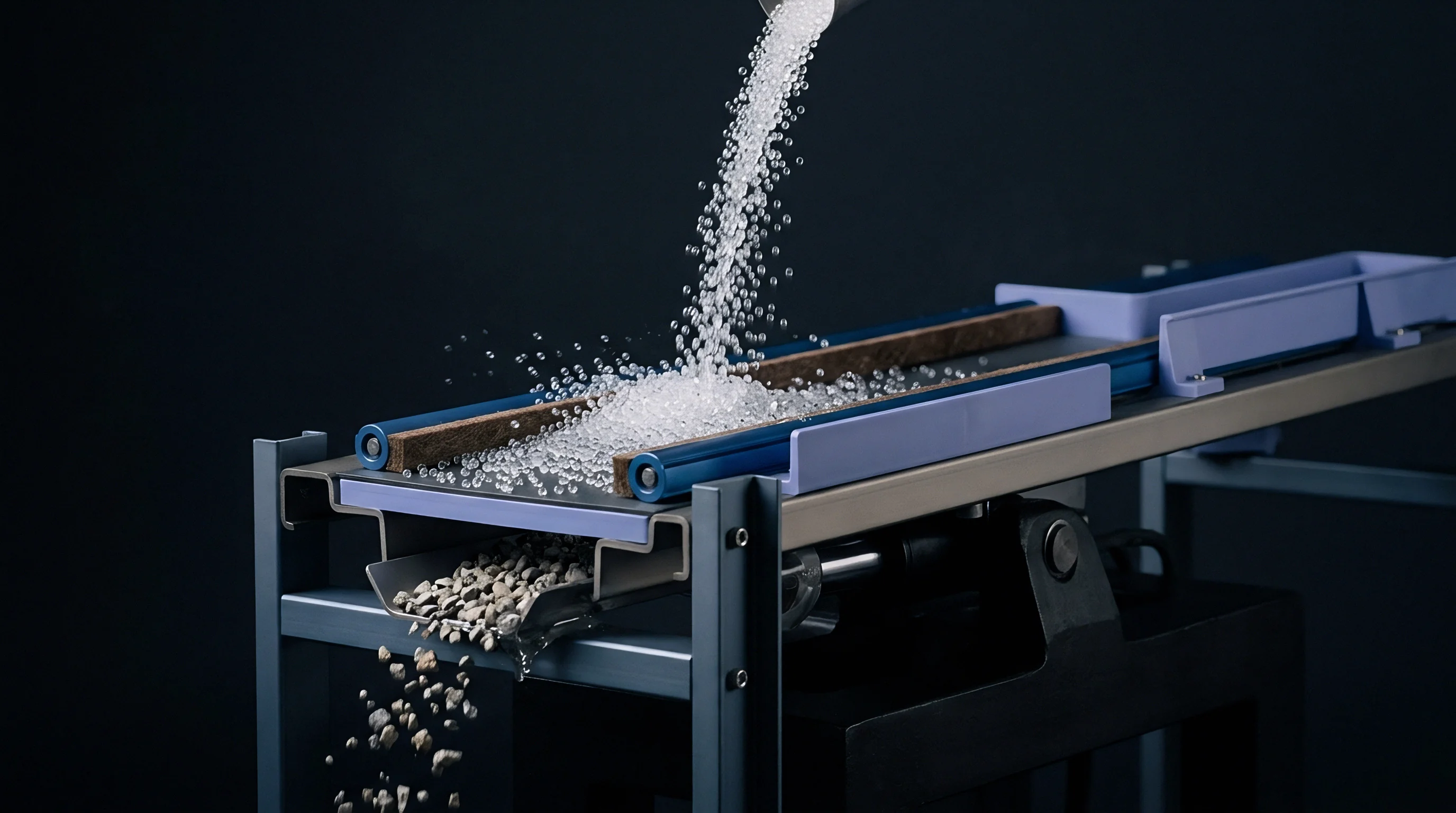
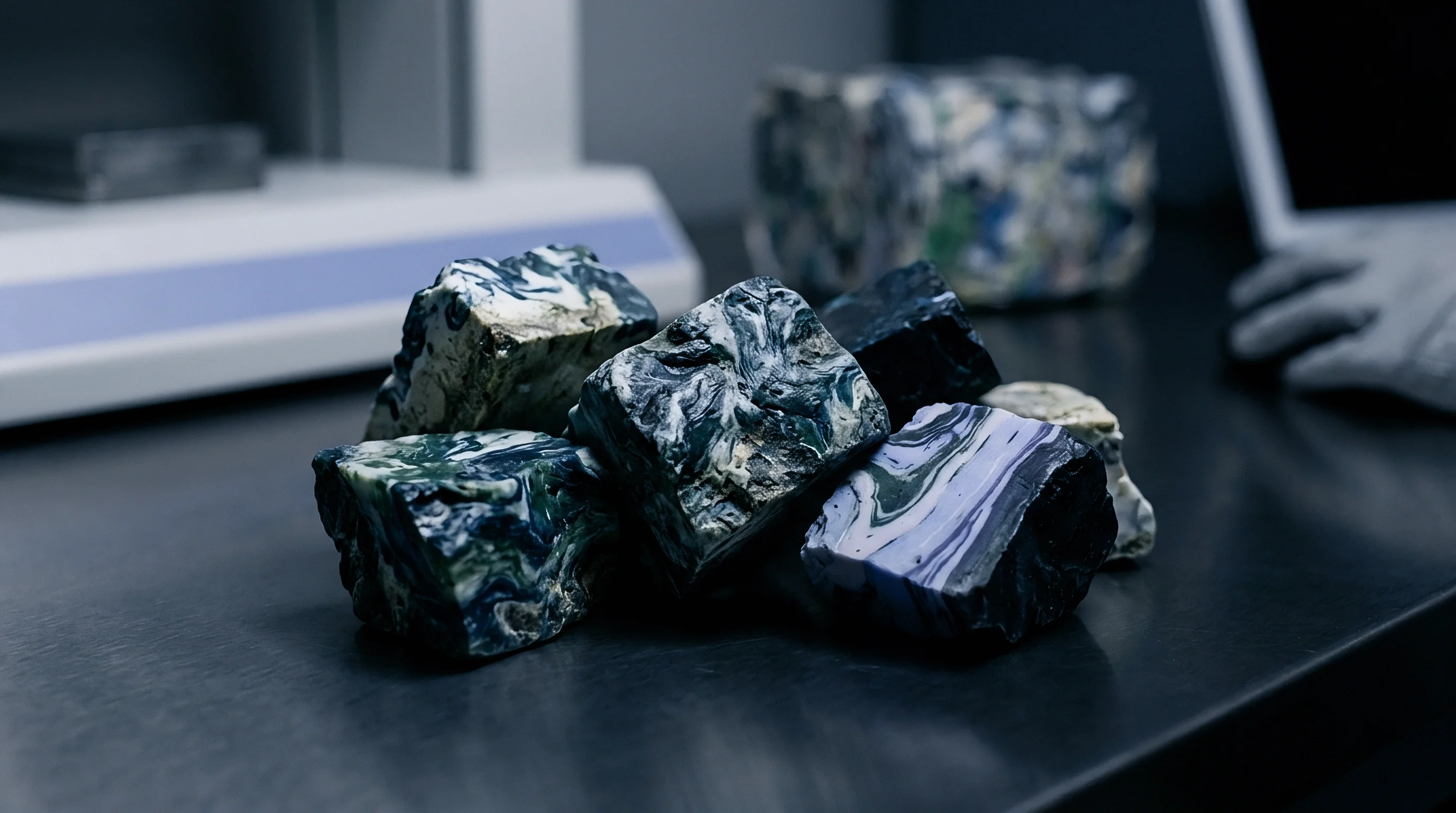
Physical appearance, pellet morphology, and particle dimensions drive initial customs risk profiling at port facilities. Customs inspectors perform visual and tactile assessments before authorizing laboratory testing. Masterbatch pellets display distinct physical signatures depending on whether they contain carbon black, titanium dioxide, organic dyes, or heavy mineral fillers.
White masterbatches carrying sixty percent titanium dioxide display high specific gravity, often exceeding 1.8 g/cm³, whereas unfilled polyethylene pellets possess a density near 0.92 g/cm³. Density measurements conducted under ISO 1183-1 via immersion or gas pycnometry provide quick field differentiation between unfilled primary resins and dense masterbatches.
Particle size and dispersion quality within the pellet matrix define both the functional performance and legal status of the masterbatch. Inorganic pigments like titanium dioxide typically exhibit primary particle sizes ranging from 0.2 to 0.3 micrometers, aggregated within the resin matrix. Mineral fillers like calcium carbonate show broader particle size distributions, often between 1.0 and 10.0 micrometers.
When mineral content reaches extreme loadings, such as eighty percent calcium carbonate in a linear low-density polyethylene carrier, the physical integrity of the pellet changes. High filler loadings increase brittle fracture susceptibility and shift pellet surfaces from smooth, glossy polyolefin textures to chalky, matte finishes.
Mineral concentrates containing heavy filler loads shift from polymer classification to chemical preparations when the resin matrix serves merely as a binder.
Density measurements clarify polymer families. Carbon black concentrates create unique classification challenges due to furnace black particle properties. Primary carbon black particles, ranging from 10 to 50 nanometers, form complex branched aggregates.
A masterbatch containing forty percent carbon black in polyethylene possesses a density of approximately 1.15 g/cm³. Under Chapter 32 Note 3, carbon black masterbatches qualify as coloring preparations under Heading 3206, provided the carbon black acts as a colorant. If the carbon black is incorporated exclusively to provide electrical conductivity or ultraviolet protection without pigmentary intent, disputes arise regarding whether Heading 3206 or Heading 3824 applies.
Customs authorities rely on standard colorimetric tests and jetness measurements to confirm coloring intent.

Filler Loading Thresholds and Primary Form Definitions
Determining the boundary between a mineral-filled polymer compound under Heading 3901 or 3902 and a prepared mineral filler concentrate under Heading 3824 requires evaluating mass fraction thresholds. When calcium carbonate content remains below fifty percent by weight, the compound retains standard plastic processing characteristics, maintaining its status as a modified primary polymer under Chapter 39. When mineral filler loading exceeds fifty percent, the primary function of the resin shifts from a structural matrix to a carrier vehicle.
The material is no longer molded directly into end products. It is added at low let-down ratios, such as one percent to five percent, into virgin resin streams during final part production.
Ash testing isolates inorganic mass. Customs valuation guidelines in multiple jurisdictions apply specific mass fraction cutoffs. A masterbatch containing over seventy percent calcium carbonate by weight is routinely reclassified out of Chapter 39 and into Heading 3824 or Heading 2517, depending on whether the mineral is treated with stearic acid surface coatings.
Stearic acid treatment on calcium carbonate particles alters chemical classification. Uncoated calcium carbonate falls under Heading 2836 as an inorganic carbonate, whereas stearic-acid-coated calcium carbonate constitutes a prepared industrial chemical under Heading 3824.
Pellet dimensions and cold cut geometries also reveal compounding parameters. Strand-cut cylindrical pellets, underwater die-cut spherical pellets, and water-ring face-cut discs exhibit different surface-to-volume ratios. Spherical pellets produced via underwater pelletization feature uniform carrier encapsulation, minimizing surface dust.
Strand-cut filled pellets often display exposed mineral grains at cut faces. Exposed filler surfaces permit rapid solvent attack during laboratory extractions, accelerating carrier resin isolation during customs audits. Heavy filler loading lowers carrier resin melt strength, altering pellet aspect ratios during strand cooling.
High carrier loading ensures smooth extrudate surfaces during pellet production.


Precedent

Customs Rulings and Judicial Interpretations
Importers must examine established administrative precedents, including United States Customs Rulings (CROSS) and European Binding Tariff Information (BTI) decisions, to anticipate classification outcomes. Customs authorities globally align under World Customs Organization Harmonized System guidelines, but regional tariff schedules introduce specific legal nuances. Analysis of historical CROSS rulings reveals consistency regarding color masterbatches under Chapter 32.
Rulings consistently hold that concentrates containing synthetic organic pigments in polyolefin carriers must enter under Heading 3204, even when carrier polymer content exceeds seventy percent of total product mass.
In contrast, rulings addressing additive masterbatches containing UV absorbers or antioxidants follow more complicated paths. Under CROSS ruling procedures, products containing hindered amine light stabilizers (HALS) dispersed in low-density polyethylene carriers under twenty-five percent active loading are classified under Heading 3824. Customs authorities assert that the HALS compound imparts the essential utility to the mixture, rendering the low-density polyethylene an inert carrier.
When the active chemical component dominates functionality, Chapter 39 primary polymer descriptions are rejected. A contested classification entry covering forty metric tons of black masterbatch was resolved by demonstrating forty-five percent carbon black content under ASTM D1603.

Does Country of Origin Influence Substantial Transformation for Concentrates?
Substantial transformation rules dictate origin determination when masterbatch manufacturing involves multi-country processing. Compounding raw pigments or chemical additives with imported carrier resin constitutes a substantial transformation, shifting the tariff line classification of the raw constituents from their individual headings to a masterbatch heading under Chapter 32 or Chapter 38. If raw titanium dioxide powder originating in Country A is compounded with polyethylene resin from Country B in a compounding plant located in Country C, the finished white masterbatch acquires Country C origin.
The manufacturing process results in a distinct name, character, and tariff classification change under the Harmonized System shift rules.
Inclusion of the exact polymer carrier percentage on the certificate of analysis eliminates customs reclassification under Chapter 38 basket provisions.
Simple dry blending of resin granules with powder pigments without thermal extrusion melting does not constitute substantial transformation. Customs regulations require hot-melt extrusion compounding where the polymer carrier fully encapsulates the dispersed active payload. If cold powder mixing occurs without extrusion pelletization, customs authorities deem the operation a simple mixing step.
Under non-preferential origin rules, simple mixing operations fail to confer country of origin changes, exposing the importer to origin fraud allegations and double-dumping duty liabilities.
Importers seeking formal certainty prior to shipping large masterbatch volumes should prepare binding classification applications containing comprehensive technical documentation.
- Complete Chemical CAS Register providing chemical abstract service numbers and formal chemical names for every active additive, organic pigment, and carrier polymer.
- Quantitative Formulatory Percentages specifying exact mass fractions of carrier resin, active payload, dispersion aids, and residual moisture.
- Detailed Extrusion Process Descriptions outlining compounding temperatures, twin-screw extruder configurations, and pelletization methods.
- Representative Laboratory Certificates incorporating FTIR spectra, TGA ash curves, and melt flow rate test results performed under international standards.
- Commercial End-Use Documentation detailing recommended let-down ratios and final product processing techniques.
Disputes pivot on chemical definitions. Administrative appeals filed against reclassification notices require supporting expert testimony and analytical laboratory validation. When contesting a customs tariff shift, the importer must prove that the active component does not alter the essential primary polymer classification or demonstrate that Chapter 32 Note 3 legally forces the specific color classification.
Failure to file technical rebuttal evidence within statutory appeal windows renders the reclassification final, establishing an adverse precedent for all future import shipments under that commercial line.
The open legal question remains whether microencapsulated reactive additive masterbatches carrying living catalysts fall under primary polymer lines or organo-inorganic chemical headings.

Calculus
Duty Variance and Landed Cost Arithmetic
Financial liability associated with tariff classification errors depends on the duty rate spread between competing HS headings across target import jurisdictions. Sourcing practices must model landed costs by incorporating ad valorem duty rates, antidumping duties, countervailing duties, and port clearance surcharges. Importers entering a high-volume calcium carbonate masterbatch under a primary polyolefin line under Heading 3902 at a 3.0% duty rate face sudden margin destruction if customs reclassifies the product under Heading 3824 at a 6.5% duty rate, accompanied by retroactive multi-year assessments.
Consider a commercial import scenario involving one hundred metric tonnes of white color masterbatch containing sixty percent titanium dioxide dispersed in a linear low-density polyethylene carrier. The transaction value is $2,200 per metric tonne CIF port of entry, yielding a total customs entry value of $220,000. Under incorrect classification as primary low-density polyethylene under Heading 3901, the general ad valorem duty rate sits at 3.0%, resulting in an initial duty payment of $6,600.
When customs authorities execute a post-clearance audit and apply Chapter 32 Note 3, the product is reclassified under Heading 3206 at a duty rate of 5.5%.
| Declared HS Heading | Reclassified HS Heading | Transaction Value (CIF) | Declared Duty Rate | Reclassified Duty Rate | Direct Duty Differential | Potential Section 592 Penalty Risk |
|---|---|---|---|---|---|---|
| 3901.10 (PE Primary) | 3206.11 (TiO2 Masterbatch) | $220,000 | 3.0% ($6,600) | 5.5% ($12,100) | +$5,500 | Up to $44,000 (20% Value) |
| 3902.10 (PP Primary) | 3824.99 (Additive MB) | $310,000 | 3.0% ($9,300) | 6.5% ($20,150) | +$10,850 | Up to $62,000 (20% Value) |
| 3901.20 (HDPE Primary) | 3204.17 (Organic Pigment) | $450,000 | 3.5% ($15,750) | 6.5% ($29,250) | +$13,500 | Up to $90,000 (20% Value) |
| 3902.30 (PP Copolymer) | 2517.10 (Mineral Filler) | $140,000 | 3.0% ($4,200) | 0.0% ($0) | -$4,200 (Overpayment) | Administrative Re-entry Fee |
The direct duty differential in this hundred-tonne example equals $5,500. Under statutory penalty provisions, such as 19 U.S.C. § 1592 in the United States or equivalent customs enforcement frameworks in the European Union, negligent misclassification penalties reach two to four times the duty loss, or twenty percent of the entered merchandise value. For a $220,000 entry, a twenty percent value penalty imposes an additional $44,000 fine.
Adding statutory interest calculated from the date of entry creates an administrative liability that exceeds the original profit margin on the masterbatch order.
Importers paying general polymer duty rates on high-value additive masterbatches incur unnecessary cash flow drain at port.
Tariff engineering must remain strictly within legal boundaries. Formulating masterbatches to meet specific tariff headings without violating Legal Notes requires precise chemical engineering. If a compounder reduces calcium carbonate loading from seventy percent to forty-five percent while adjusting polyolefin carrier melt index, the material shifts legally from an additive preparation under Heading 3824 back to a modified primary polymer compound under Heading 3902.
The resulting compound processed directly by end-users reduces total import duty exposure legally while delivering identical functional properties during final part molding.
Customs authorities challenge simplistic descriptions. Antidumping duty risks present another financial exposure. Many jurisdictions impose heavy antidumping duties on raw titanium dioxide pigment or carbon black powder originating from specific countries.
If an importer attempts to circumvent pigment antidumping orders by importing raw titanium dioxide loosely blended in a minimal wax carrier, customs authorities apply anti-circumvention rules. The entry faces antidumping duty rates often exceeding fifty to one hundred percent of entered value, alongside criminal investigation for intentional evasion.
Sourcing contracts should embed dynamic tariff adjustments: “The contract unit price assumes import classification under HS 3206.11 at 5.5% duty; any customs reclassification under Chapter 38 or Chapter 39 shall automatically adjust landed payment terms and allocate duty variance directly to the seller.”

Filing

Integrity Requirements for Custom Entries and Technical Dossiers
Maintaining audit-ready documentation ensures smooth clearance through customs checkpoints. Sourcing engineers must align commercial invoices, packing lists, and Certificates of Analysis with the exact chemical composition verified during laboratory assays. The filing package must avoid ambiguous commercial terms like plastic granules, masterbatch pellets, or chemical additives.
Every invoice line item must detail the full technical description, including active component mass percentage, carrier resin type, and primary function within the target manufacturing process.
Certificates of Analysis accompanying import entries must state analytical test results with clear protocol citations. Specifying carrier polymer identification directly on entry documents prevents port delays. A compliant CoA lists polymer carrier identity under ATR-FTIR ASTM E1252, active pigment or additive content under TGA ASTM E1131, ash fraction under ISO 3451-1, and melt flow index under ISO 1133-1.
Presenting complete test metrics on certified mill documentation prevents customs inspectors from detaining containers for independent port laboratory analysis, saving demurrage and detention fees at ocean terminals.
Cross-border supply chains require robust record retention protocols. Import compliance dossiers containing technical data sheets, safety data sheets under GHS standards, binding tariff rulings, and entry summary records must remain accessible for at least five years following import liquidation. Customs authorities initiate post-clearance audits years after merchandise enters distribution.
When an audit notice arrives, the sourcing practice must immediately produce original laboratory analytical data proving that the declared HS code matched physical cargo composition at the time of entry.
Building an internal classification dossier matrix creates a defensible compliance framework across global procurement channels. The dossier links vendor specification sheets directly to internal laboratory verification reports, tracking composition drift across production lots. Sourcing teams updating supply specifications must immediately evaluate whether chemistry changes alter the customs tariff status of the imported masterbatch before placing commercial purchase orders.