Determining Carboxyl Content in Recycled Polyethylene Terephthalate
Carboxyl end group content in recycled PET determines hydrolytic stability and solid-state polymerization kinetics, requiring accurate non-aqueous titration.

Hydrolysis
Thermal processing of recycled polyethylene terephthalate converts residual moisture into a cleavage agent that splits ester bonds along the polymer backbone. At melt temperatures between 270 degrees Celsius and 300 degrees Celsius, unbound water attacks the ester carbonyl carbons, yielding one free carboxylic acid end group and one hydroxyl end group per scission event. This scission raises the overall concentration of carboxyl end groups, measured in milliequivalents per kilogram or millimoles per kilogram.
Unprocessed virgin bottle-grade resin typically carries a carboxyl concentration between 15 and 25 millimoles per kilogram, whereas recycled flake from post-consumer wash lines often arrives with 35 to 60 millimoles per kilogram.
Ester Scission Mechanisms in Molten Polyethylene Terephthalate
When molten polymer enters an extruder barrel with a moisture content exceeding 50 parts per million, hydrolytic degradation dominates all other chain reduction mechanisms. Backbone breakdown follows pseudo-first-order kinetics relative to water concentration, rapidly lowering the number-average molecular weight of the matrix. Independent of moisture, thermal degradation proceeds via a cyclic six-membered transition state to form a carboxylic acid group and a vinyl ester group.
The vinyl ester reacts further into acetaldehyde, while the carboxyl group stays bound to the polymer chain, permanently elevating the compound’s total acid titer.
Carboxyl end groups in post-consumer resin act as intrinsic catalysts that accelerate subsequent hydrolytic scission during thermal reprocessing.
Autocatalytic Acid Kinetics and Viscosity Degradation
Free carboxylic acid groups exert a self-catalytic effect on subsequent hydrolytic reactions. The acidic proton of the carboxyl terminal protonates the carbonyl oxygen on an adjacent ester linkage, making the carbon center far more susceptible to nucleophilic attack by trace moisture. Consequently, a recycled resin batch carrying an initial carboxyl content of 45 millimoles per kilogram degrades twice as fast during melt processing as a clean virgin grade with 18 millimoles per kilogram, even when both lots undergo identical drying protocols prior to extrusion.
Intrinsic viscosity drops as carboxyl content grows under given thermal conditions. As chain scission proceeds, loss of molecular weight translates directly into reduced melt strength and compromised mechanical properties. Sheet extrusion lines and preform injection systems suffer severe instability when processing feedstock with unmeasured carboxyl variance, because shifting acid concentrations alter melt rheology inside the barrel and die.
A five millimole per kilogram increase in carboxylic acid content correlates with a drop of approximately 0.03 deciliters per gram in intrinsic viscosity during standard conversion cycles.
Ignoring carboxyl buildup in incoming recycled flake leads directly to unexpected viscosity drops during moulding, higher reject rates from brittle failures, and irreversible degradation inside decontamination reactors.

Dissolution
Quantifying carboxylic end groups relies on bringing the semi-crystalline polymer into a clear, single-phase liquid state without introducing chemical artifacts. The chosen solvent must disrupt the strong hydrogen bonding and aromatic ring stacking within crystalline domains without triggering secondary chain cleavage or generating acidic byproducts. Standard testing protocols use polar phenolic or aromatic alcohol media at elevated temperatures to achieve rapid solvation.

Solvent Selection and Solvation Thermodynamics
Selecting appropriate liquid media requires balancing solvation power against chemical stability and safety. Phenol mixed with 1,1,2,2-tetrachloroethane in a fifty-fifty weight ratio dissolves highly crystalline material at 100 degrees Celsius, but tetrachloroethane presents severe toxicity issues and volatile halogenated emissions. O-cresol at 135 degrees Celsius effectively dissolves flake samples without chlorinated additives, though its high viscosity requires strict temperature control during transfer to avoid localized crystallization.
Benzyl alcohol dissolves amorphous and semi-crystalline chips rapidly at 135 to 140 degrees Celsius, making it the standard choice for routine bench testing.
Trace moisture in technical-grade solvents reacts with hot polymer during heating, creating artificial carboxyl end groups through fresh chain scission. Solvents are therefore distilled and stored over molecular sieves to keep water levels below 20 parts per million. Reagents must carry verified acid blank values, established by running daily blank titrations with identical heating times and vessel geometry.
Thermal Decomposition Artifacts during Sample Preparation
Exceeding recommended solvation temperatures introduces significant systematic errors into acid measurements. Benzyl alcohol undergoes atmospheric thermal oxidation above 140 degrees Celsius, breaking down into benzaldehyde and benzoic acid. Any benzoic acid generated during sample dissolution titrates alongside the polymer carboxyl groups, artificially inflating reported values by as much as 12 millimoles per kilogram.
Introducing an inert nitrogen blanket over the dissolution flask at 50 milliliters per minute suppresses atmospheric oxidation during heating. Sample dissolution must remain strictly below 140 degrees Celsius and complete within 20 minutes. Once fully dissolved, adding chloroform at an eight-to-five volume ratio rapidly cools the solution to 25 degrees Celsius, stabilizing it and lowering viscosity for subsequent burette titration.
Upstream compounders frequently blame elevated acid figures on solvent oxidation during laboratory prep rather than addressing thermal degradation inside their wash-plant extruders.
Titration
Chemical quantification converts dissolved carboxyl end groups into neutral carboxylate salts through controlled addition of a standardized strong base. Because polyethylene terephthalate precipitates upon contact with water, the titration proceeds entirely in a non-aqueous medium. Detecting the equivalence point precisely requires either colorimetric indicators or potentiometric glass electrode assemblies calibrated for organic solvents.
Pohl Non-Aqueous Potentiometric Quantification
Non-aqueous potentiometric measurement offers better accuracy than visual indicators when analyzing colored or hazy recycled flake solutions. The apparatus uses a combination glass-calomel electrode or a non-aqueous pH probe with a sleeve junction filled with 0.1 molar tetraethylammonium bromide in ethylene glycol. Titrants typically consist of 0.02 molar or 0.05 molar potassium hydroxide or tetrabutylammonium hydroxide in benzyl alcohol or isopropyl alcohol.
As titrant enters the stirred solution, electrode potential shifts smoothly until approaching the equivalence point, where a sharp voltage inflection occurs. Automatic titrators calculate the derivative peak of the potential curve to identify the true endpoint, bypassing operator bias. Daily standardization of the alcoholic potassium hydroxide titrant against primary standard potassium hydrogen phthalate maintains precision within 0.2 millimoles per kilogram.
Colorimetric Indicator Endpoints and Interference
Visual titration using colorimetric indicators offers a quick alternative for clear, unpigmented resin. Bromophenol blue and phenol red serve as standard indicators in benzyl alcohol and o-cresol systems. Phenol red shifts from yellow to pink across the pH range where carboxylic acid converts to potassium carboxylate, whereas bromophenol blue turns from yellow to blue-violet at the neutralization endpoint.
Carbon dioxide absorbed from ambient air reacts with potassium hydroxide titrant to form potassium carbonate, altering titrant concentration and obscuring visual endpoints. Sweeping the titration vessel continuously with dry, carbon-dioxide-free nitrogen eliminates atmospheric interference. Dark green or blue bottle flake masks visual color transitions, requiring potentiometric electrode tracking instead.
Worked Calculation of Carboxyl End Group Concentration
Calculating carboxyl content relies on subtracting the solvent blank volume from the sample titration volume, scaled by titrant molarity and sample weight. Consider a protocol where 2.500 grams of dried recycled PET flake is dissolved in 50.0 milliliters of benzyl alcohol under nitrogen at 135 degrees Celsius, cooled with 30.0 milliliters of chloroform, and titrated against 0.0250 molar potassium hydroxide in benzyl alcohol.
The core mathematical formula governing carboxyl end group concentration calculations is structured as follows:
Carboxyl Content = ((V_sample – V_blank) M 1000) / m
Where V_sample is the titrant volume consumed by the polymer solution in milliliters, V_blank is the titrant volume consumed by the solvent blank in milliliters, M is the molarity of the potassium hydroxide titrant in moles per liter, and m is the dry mass of the polymer sample in grams.
Assuming the sample consumes 3.85 milliliters of titrant and the blank consumes 0.45 milliliters under identical conditions, the calculation proceeds as follows:
First, determine the net titrant volume reacting with polymer carboxyl groups:
Net Volume = 3.85 mL – 0.45 mL = 3.40 mL
Next, calculate total millimoles of potassium hydroxide consumed by the sample:
Millimoles KOH = 3.40 mL 0.0250 mol/L = 0.0850 mmol
Finally, divide the consumed millimoles by the dry sample mass in kilograms:
Carboxyl Concentration = 0.0850 mmol / 0.00250 kg = 34.0 mmol/kg
The resulting value of 34.0 millimoles per kilogram shows that this recycled flake lot exceeds virgin specifications, requiring modified drying or reactive extrusion processing downstream.
| Method Parameter | Pohl Manual Titration | Non-Aqueous Potentiometric | Photometric Titration |
|---|---|---|---|
| Primary Solvent | Benzyl alcohol / Chloroform | O-cresol / Chloroform | Phenol / Tetrachloroethane |
| Standard Titrant | 0.05M KOH in Benzyl Alcohol | 0.02M TBAOH in Isopropanol | 0.02M KOH in Ethanol |
| Detection Mechanism | Visual Phenol Red endpoint | Glass-calomel pH Electrode | Optoelectronic Absorbance Cell |
| Dissolution Condition | 135°C for 20 minutes | 140°C for 15 minutes | 100°C for 30 minutes |
| Repeatability Range | +/- 1.5 mmol/kg | +/- 0.3 mmol/kg | +/- 0.8 mmol/kg |
| Sample Suitability | Clear, unpigmented resin | All flake types, pigmented/hazy | Low-viscosity industrial yarns |
Purchase contracts governed by DIN EN ISO 13920 explicitly specify that deviation between duplicate titrations must not exceed 1.0 millimole per kilogram for lot release approval.


Spectroscopy
Optical analytical techniques infer carboxyl content by tracking vibrational energy absorptions associated with carboxylic acid functional groups. Infrared measurement offers rapid, non-destructive evaluation without requiring hazardous organic solvents. However, molecular orientation, sample thickness, and crystalline morphology strongly influence absorption intensity, requiring careful baseline correction.
Infrared Carbonyl Region Absorbance Ratios
Fourier-transform infrared spectroscopy targets the carbonyl stretching vibration and hydroxyl stretching bands of terminal carboxylic acid groups. The broad OH absorption band appears between 3250 and 3300 reciprocal centimeters, while the primary ester carbonyl overtone sits at 3435 reciprocal centimeters. Normalizing the carboxyl absorption peak against an internal reference band, such as the aromatic carbon-carbon skeletal vibration at 1410 reciprocal centimeters, eliminates path length variation across thin pressed film samples.
Preparing uniform pressed films requires melting 200 milligrams of pellet resin between Teflon-coated plates at 275 degrees Celsius for 60 seconds, followed by immediate ice-water quenching to yield an amorphous disc between 100 and 150 micrometers thick. Attenuated total reflectance setups bypass film pressing by pressing pellets directly against a diamond crystal face, though variations in contact pressure alter light penetration depth and baseline stability.

Why Does Infrared Spectroscopy Fail without Direct Chemical Calibration?
Infrared absorbance measurements do not yield absolute chemical values directly. Beer-Lambert calculations rely on empirical absorption coefficients that shift with polymer crystallinity, copolycondensation ratios, or moisture levels. Near-infrared systems measuring overtone bands at 4800 reciprocal centimeters depend on multivariate chemometric models built against hundreds of wet chemical titration benchmarks to achieve acceptable predictive accuracy.
Spectroscopic carboxyl estimation models drift rapidly when applied to post-consumer streams containing uncalibrated isopthalic acid or diethylene glycol comonomer fractions.
When processing facilities switch feedstock from clear bottle flake to thermoform tray scrap containing structural comonomers, infrared calibration algorithms frequently misinterpret baseline shifts as carboxylic acid variation, creating unresolved discrepancies between optical inline sensors and chemical bench analysis.

Chain
Managing high carboxyl concentrations during compounding relies on chemical neutralization and structural restoration of degraded polymer chains. Reactive additives introduce functional groups capable of reacting rapidly with terminal carboxylic acids during melt extrusion. This coupling seals acidic chain ends, prevents further autocatalytic scission, and rebuilds molecular weight.

Reactive Extrusion and Epoxy End-Capping
Multifunctional epoxy additives, styrene-acrylic oligomers, and bis-oxazolines act as chemical scavengers for carboxyl end groups inside compounding extruders. Epoxides react with carboxylic acid groups via ring-opening addition, converting the terminal acid into a stable beta-hydroxy ester linkage without producing volatile reaction byproducts. This converts a degrading chain end into a stable link, lowering the overall carboxyl content of the recycled resin.
Pyromellitic dianhydride introduces tetra-functional reactivity, combining two carboxyl and two hydroxyl terminals to form branched structures that increase melt strength for sheet extrusion. Adding 0.3 weight percent of a multifunctional epoxy-functionalized styrene-acrylic chain extender to a recycled lot with 50 millimoles per kilogram of carboxyl groups reduces the acid titer below 20 millimoles per kilogram within a 30-second extruder residence time at 280 degrees Celsius.

Solid-State Polymerization Equilibrium Shifts
Solid-state polymerization raises intrinsic viscosity by heating solid resin pellets to 200 to 220 degrees Celsius under high vacuum or continuous dry nitrogen flow. The process relies on two reversible condensation reactions: esterification, combining hydroxyl and carboxyl end groups to release water, and transesterification, combining two hydroxyl end groups to release ethylene glycol.
An unbalanced hydroxyl-to-carboxyl ratio severely retards solid-state polymerization kinetics. Because esterification releases water, removing moisture via vacuum or nitrogen gas drives the forward reaction. If initial carboxyl content exceeds 40 millimoles per kilogram while hydroxyl content remains low, esterification dominates and releases large quantities of water inside the pellet core.
Water diffusion then limits reaction rates, stretching required dwell time in the solid-state reactor from 12 hours to over 22 hours to reach a target intrinsic viscosity of 0.84 deciliters per gram.
| Resin Grade Quality | Carboxyl Range (mmol/kg) | Target Intrinsic Viscosity (dL/g) | Primary Downstream Conversion | Processing Limit / Constraint |
|---|---|---|---|---|
| Prime Bottle-to-Bottle | 12 – 22 | 0.78 – 0.84 | CSD and water preform injection | Hydrolytic scission rate < 2% per melt pass |
| Standard Thermoform Sheet | 25 – 38 | 0.70 – 0.76 | A/B/A clear packaging sheet | Requires desiccant drying to < 30 ppm H2O |
| Industrial Strapping / Fiber | 35 – 50 | 0.62 – 0.68 | High-tenacity strapping, staple fiber | High chain extender let-down required |
| Off-Spec Reprocessed Flake | > 52 | 0.52 – 0.60 | Compounded injection grades | Incapable of reaching bottle-grade IV via SSP |
Excessive carboxyl concentration always demands proportional increases in chain-extender dosage or extended dwell times in solid-state reactors.
Specification
Procuring recycled polyethylene terephthalate for demanding applications requires embedding explicit carboxyl end group thresholds directly into commercial specifications. Datasheets that quote intrinsic viscosity without declaring carboxyl limits fail to protect buyers against severe thermal degradation during conversion. Incoming verification routines enforce quality boundaries before resin enters storage silos.
Incoming Quality Control Protocols for Flake and Pellet Lots
Verifying incoming shipments requires structured sampling procedures designed to catch lot-to-lot degradation variance. Receiving protocols mandate collecting composite samples across multiple bags or bulk railcars using target sampling spears that draw material across the entire container depth. Testing protocols follow a structured verification sequence:
- Moisture Determination ~ Measure moisture content immediately upon bag opening using Karl Fischer coulometric titration at 160 degrees Celsius to establish whether ambient water absorption occurred during transit.
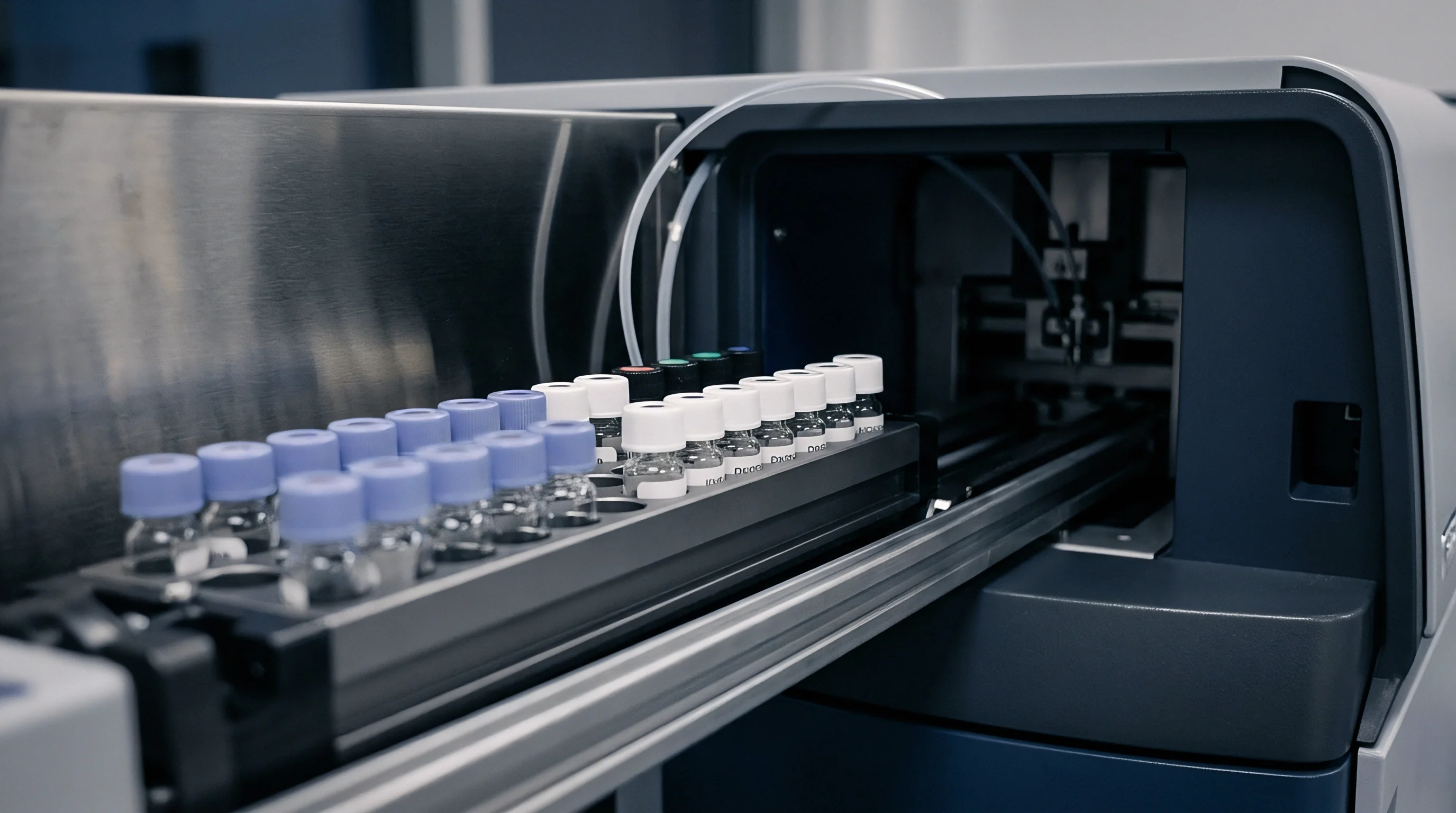
- Solvent Solvation ~ Dissolve a 2.5-gram dried sample fraction in benzyl alcohol under nitrogen at 135 degrees Celsius for 20 minutes to prevent thermal oxidation artifacts.
- Potentiometric Titration ~ Perform non-aqueous potentiometric titration using standardized 0.02 molar potassium hydroxide titrant to establish true carboxyl content within 0.5 millimoles per kilogram.
- Intrinsic Viscosity Mapping ~ Measure solution viscosity in dichloroacetic acid or phenol/tetrachloroethane to calculate molecular weight parallel to acid concentration.
- Data Comparison ~ Plot measured carboxyl content against intrinsic viscosity on an acceptance matrix to evaluate whether the lot underwent thermal degradation during previous recycling cycles.
Commercial Sourcing Allowances and Landed Cost Penalties
Commercial contracts define price adjustment scales linked directly to measured carboxyl end group values on Certificates of Analysis. Buyers specifying food-grade pellet lots establish a baseline carboxyl limit of 25 millimoles per kilogram. Shipments measuring between 26 and 32 millimoles per kilogram incur automatic cost adjustments of 25 Euros per metric tonne to offset higher drying and chain-extender expenses during conversion.
Lot rejection triggers automatically when carboxyl concentrations exceed 35 millimoles per kilogram for food-grade preform resin or 48 millimoles per kilogram for sheet extrusion flake. When incoming flake exceeds agreed acid limits, the compounding plant faces increased processing scrap, reduced throughput, and elevated additive consumption, directly inflating the landed cost per good part.