Coulometric Thermal Desorption Testing for Recycled Polyester Flake Quality Control
Coulometric thermal desorption isolates bound water from organic volatiles in rPET flake, enabling precise incoming quality control and preventing hydrolytic degradation.

Outgassing

Volatile Species in Post-Consumer PET Matrices
Thermal processing of post-consumer polyethylene terephthalate flake releases entrained atmospheric water alongside organic compounds generated during prior consumer use, mechanical shredding, and wash-line drying. Heat applied to recycled flake vaporizes low-boiling surface moisture, bound structural moisture, matrix-trapped flavor compounds like limonene, residual wash surfactants, and degradation byproducts including acetaldehyde, formaldehyde, and benzene. Standard loss-on-drying gravimetric tests measure total weight loss across a sample, failing to separate water weight from volatilized organic contaminants.
Coulometric thermal desorption isolates evolved gases by sweeping thermal degradation products and vaporized liquids through an inert carrier gas into a selective detection system, preserving the identity and mass of each off-gas fraction.
Acetaldehyde generation occurs through thermal cleavage of the polyethylene terephthalate ester backbone at temperatures above 180 °C, accelerating rapidly as temperatures enter the melt phase near 250 °C. The vinyl ester intermediate formed during β-scission reacts to liberate acetaldehyde, which imparts off-flavors to food-contact packaging at concentration thresholds as low as 10 parts per billion. Limonene, absorbed into bottle walls from citrus beverages during consumer storage, desorbs continuously between 120 °C and 175 °C, bypassing standard desiccant drying protocols. When residual limonene enters an extrusion barrel, the organic compound functions as a plasticizer, lowering melt viscosity and creating pinhole voids in blown sheet or preforms.
Contaminant compounds present in post-consumer flake display distinct thermal release windows. Understanding these desorption temperatures enables target gas separation during incoming material screening.
| Volatile Species | Desorption Temperature Window (°C) | Chemical Origin | Processing Impact |
|---|---|---|---|
| Surface Water | 80 – 110 | Atmospheric condensation on flake skin | Extruder hopper bridging and steam generation |
| Bound Water | 120 – 170 | Amorphous matrix absorption | Hydrolytic chain scission in processing melt |
| Acetaldehyde | 140 – 240 | Thermal degradation during prior conversion | Organoleptic failure in beverage containers |
| Limonene | 130 – 180 | Flavor absorption from bottle contents | Optical hazing and melt viscosity drops |
| Benzene | 160 – 220 | Industrial chemical storage contamination | Food-contact regulatory compliance failure |
Moisture entrained within the amorphous regions of recycled polyethylene terephthalate flake triggers rapid hydrolytic degradation during melt conversion. Water molecules attack the ester linkage at elevated temperatures, cleaving polymer chains and reducing molecular weight. This scission lowers intrinsic viscosity from a target 0.80 dL/g down to levels below 0.65 dL/g, compromising tensile strength and impact resistance in molded articles.
Direct quantification of water separate from organic volatiles provides the foundational baseline for sizing pre-drying equipment and setting solid-state polymerization dwell times.
Thermal desorption carried out at 160 °C under dry nitrogen carrier flow isolates bound matrix water while preventing the thermal generation of secondary ester cleavage products.
Incoming flake lots contain variable volatile profiles depending on source bale composition, deposit scheme origin, and flaking equipment maintenance. The following mechanisms govern volatile accumulation inside recycled flake matrices:
- Hydrolytic condensation traps retain atmospheric water inside sub-surface micropores created during mechanical shredding of degraded bottle shoulders.
- Sorption of flavor compounds occurs when non-polar organic molecules diffuse into the amorphous PET matrix during multi-year storage of consumer liquids.
- Thermal oxidation deposits form on flake surfaces during aggressive hot-wash caustic cleaning cycles operating above 85 °C.
- Entrained wash surfactants remain on flake geometries possessing tight radii where post-wash clean water rinsing fails to penetrate.
Uncontrolled volatile desorption during sheet extrusion creates volatile organic emissions that foul melt vacuum degassing vents, forming carbonized build-up that drops back into the polymer stream as black specks, leading to immediate rejection of finished thermoforming sheet.

Titration
Coupled Thermal Vaporization and Chemical Reagent Reaction
An integrated analytical system pairs a temperature-controlled heating chamber with an absolute Karl Fischer reaction cell to measure desorbed water without organic vapor cross-sensitivity. An inert nitrogen carrier gas, dried to a dewpoint below -60 °C, flows through the thermal sample chamber at controlled velocities between 100 mL/min and 300 mL/min. As heat transfers into the flake matrix, desorbed vapors enter the titration cell containing an iodide-rich electrolyte solution.
Electrically generated iodine reacts stoichiometrically with arriving moisture molecules according to the classic Bunsen reaction, consuming two electrons per molecule of water converted.
Coulometric calculation of water content relies on Faraday’s law of electrolysis. The total electric charge passed through the generator electrode directly measures the mass of reacted water, eliminating the requirement for chemical reagent standardization. High-precision coulometers detect current draw at microampere resolution, providing an absolute detection limit of 1 microgram of water.
This precision allows quality control laboratories to analyze small sample masses between 0.5 grams and 3.0 grams, obtaining reliable moisture figures even on pre-dried flake carrying water levels under 50 parts per million.
Executing an accurate analysis demands rigid operational sequencing to prevent ambient humidity contamination during sample transfer. The sequence establishes baseline stability before sample exposure.
- Purge the heating chamber and carrier gas lines with dry nitrogen for twenty minutes until cell drift settles below 5 micrograms per minute.
- Condition the coulometric titration cell by running an automated pre-titration cycle to consume residual moisture in the anode reagent.
- Weigh an aluminum sample boat on an analytical balance reading to 0.1 milligram, recording the tare mass.
- Transfer approximately 1.5 grams of rPET flake into the boat using clean tweezers, avoiding skin contact and ambient exposure times beyond fifteen seconds.
- Seal the sample boat into the heating chamber valve, initiate nitrogen sweep, and start the automated heating program.
- Record total integrated electric current until the cell titration rate returns to the original baseline drift value.
Volatile organic compounds like aldehydes and ketones desorbed alongside water can react with standard methanol-based Karl Fischer reagents, causing side reactions that consume iodine and yield artificially elevated moisture readings. Specialty reagents formulated with methanol-free solvents prevent sulfur dioxide oxidation by aldehydes, isolating the true water mass. Gas washing traps containing activated carbon or cold finger condensers fitted between the heating chamber and the coulometric cell capture heavy hydrocarbons while permitting water vapor passage into the electrolyte solution.
Compounders often report that moisture values measured via loss-on-drying match coulometric figures on virgin resin, but recycled flake suppliers frequently attribute discrepancies to harmless organic volatiles burning off during gravimetric heating cycles.
Trace
Isothermal and Dynamic Ramp Analysis
Differentiating surface water, bound matrix water, and thermal decomposition products requires evaluating the complete desorption curve rather than relying solely on total integrated ppm figures. Dynamic temperature ramping elevates sample chamber temperatures from 40 °C to 280 °C at controlled rates between 5 °C/min and 20 °C/min. The resulting thermogram plots water generation rate against temperature, producing distinct peak profiles corresponding to specific binding energies within the PET flake matrix.
Surface moisture desorbs rapidly below 100 °C, yielding a steep initial peak, whereas bound structural moisture desorbs gradually between 130 °C and 180 °C.
Isothermal testing holds the heating cell at a constant target temperature, typically 160 °C, tracking desorbed water evolution over a fixed time frame of ten to twenty minutes. This temperature sits safely below the melting point of polyethylene terephthalate and avoids the thermal generation of secondary water via esterification of terminal hydroxyl groups. The shape of the isothermal desorption curve reveals drying kinetics; well-crystallized flake releases bound moisture at a slower, more uniform rate than amorphous flake due to the reduced diffusion coefficient of water through ordered crystalline domains.
| Parameter | Isothermal Method | Dynamic Ramp Method | High-Temperature Peak Step |
|---|---|---|---|
| Target Temperature | 150 °C – 170 °C | 40 °C to 260 °C at 10 °C/min | 220 °C – 240 °C |
| Carrier Gas Velocity | 150 mL/min N2 | 200 mL/min N2 | 100 mL/min N2 |
| Primary Analyte Target | Bound structural water | Full volatile spectrum profiling | Entrained degradation species |
| Typical Test Duration | 15 minutes | 25 minutes | 10 minutes |
| Baseline Return Drift | < 2 µg/min | < 5 µg/min | < 3 µg/min |
Is Coulometric Method Superior to Karl Fischer Titration?
Direct liquid Karl Fischer titration requires dissolving the PET matrix in toxic, aggressive solvent mixtures like phenol and chloroform at elevated temperatures. Coulometric thermal desorption eliminates liquid halogenated solvents entirely, replacing chemical dissolution with thermal extraction into an inert gas stream. Thermal desorption prevents reagent poisoning caused by post-consumer contaminants, insolubles, and metal catalyst residues embedded within recycled flake.
Test execution times drop from forty minutes per sample to under fifteen minutes while eliminating hazardous solvent waste disposal costs.
Interpreting thermogram baseline tails demands careful separation of physical desorption from chemical degradation. As temperatures exceed 200 °C, polycondensation reactions restart within un-dried flake, producing water as a byproduct of hydroxyl end-group linkages. This reaction generates a continuous background signal that never returns to baseline drift.
Setting the analytical window below 170 °C ensures measurement of pre-existing moisture only, avoiding synthetic water creation caused by elevated bench temperatures.
Standard ISO 15512 Method D governs coulometric thermal desorption testing for plastics, requiring strict verification of carrier gas dryness prior to sample evaluation.
Matrix variations in post-consumer flake introduce questions regarding the optimal peak integration cut-off point when surface contamination causes baseline drift to plateau above initial blank levels. Flake thickness varies.
Sampling

Managing Heterogeneity across Recycled Flake Lots
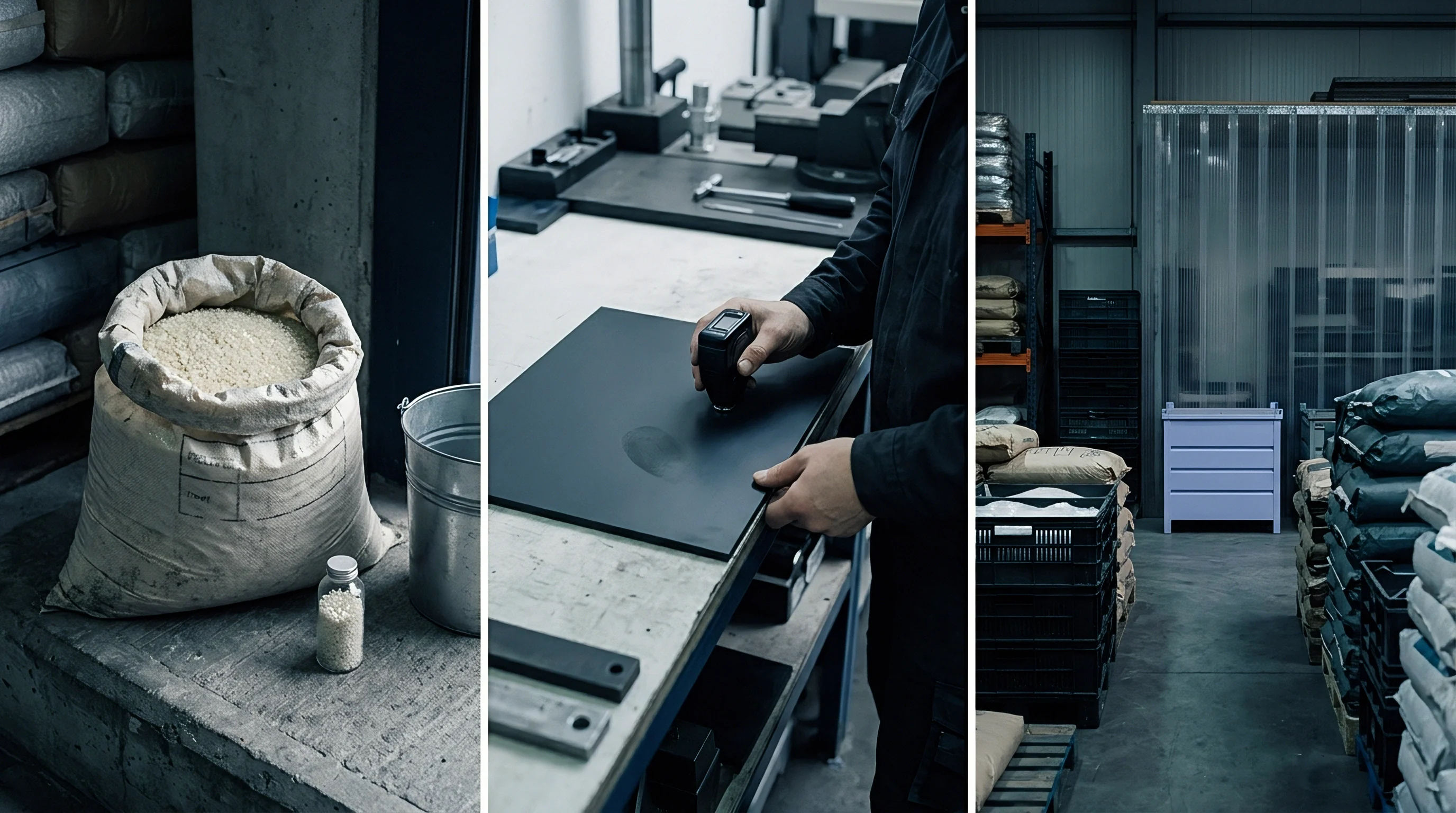
A single super-sack holding 1,000 kilograms of post-consumer PET flake contains roughly 40 million individual plastic pieces sourced from thousands of distinct bottles. Flake thickness spans from 0.2 millimeter thin-walled labels and body sections to 3.5 millimeter thick injection-molded neck finishes. Because moisture diffusion rates scale inversely with the square of wall thickness, thick neck-finish flake retains bound moisture up to five times longer than thin body flake under identical drying conditions.
Testing a 1-gram analytical sample without proper lot homogenization introduces severe sampling error, yielding false pass or fail results based on random flake selection.
Gross sample collection must follow statistical principles outlined in ASTM D1898. Taking primary increments from top, middle, and bottom discharge valves during bag unloading creates a composite sample weighing at least 2 kilograms per 20-tonne shipment. This composite undergoes mechanical quartering or rotary sample splitting to reduce overall mass down to a 50-gram laboratory representative sample.
Fines, defined as particles passing through a 1-millimeter mesh sieve, carry disproportionately high surface area and moisture levels, requiring controlled separation or proportional inclusion during analytical portioning.
A well-defined lot release protocol mandates standardized analytical parameters alongside rigorous sample preparation documentation. Quality control release dossiers must present the following specific records:
- Gross sample increment logs detailing container positions, sampling probe types, and total composite mass gathered at the receiving dock.
- Particle size classification data documenting the percentage ratio of neck-finish flake, thin body flake, and fine dust.
- Cryogenic grinding mill settings confirming liquid nitrogen bath immersion times and screen mesh sizing used during sample homogenization.
- Desorption cell drift calibrations carrying system blank verification curves recorded within four hours of sample testing.
- Moisture evolution thermograms showing baseline return proof, peak integration limits, and total water mass in parts per million.
Cryogenic grinding of representative flake aliquots reduces particle sizes down to uniform powders below 500 micrometers. Fine grinding eliminates wall-thickness diffusion variances, accelerating water extraction during thermal desorption so that total moisture content evolves completely within three minutes at 150 °C. The grinding step must take place under liquid nitrogen cooling to prevent frictional heating, which vaporizes entrained water and artificially lowers measured moisture figures.
Grinding flake under cryogenic conditions prevents thermal moisture loss while homogenizing variable bottle wall geometries into uniform analytical powders.
Handling prepared sample powders requires immediate sealing into airtight glass vials fitted with PTFE-lined septa, because ambient room humidity rehydrates fine polymer powders within sixty seconds of room exposure. A rule of thumb dictates that sample handling in open room air must finish within fifteen seconds of vial opening.
Dispute

Commercial Adjustments and Quality Control Verification
Incoming inspection of recycled PET flake establishes the technical basis for accepting or rejecting multi-tonne commercial shipments. Contracts specified on intrinsic viscosity and volatile thresholds enforce financial penalties or lot rejections when shipments fail quality limits. When an incoming super-sack lot exhibits 1,200 ppm moisture due to inadequate wash-line drying against a contract specification maximum of 300 ppm, the purchasing compounder incurs immediate operational losses.
Excess moisture extends desiccant dryer residence times from four hours to ten hours, increasing energy consumption while reducing compounding line throughput by up to thirty percent.
A worked example demonstrates the landed cost impact of off-spec moisture and volatile outgassing across a 20-tonne flake shipment. Assume a baseline purchase price of $1,250 per metric tonne for food-grade rPET flake, with a target processing yield of 98% through a sheet extrusion line. If incoming coulometric thermal desorption testing reveals 1,500 ppm of total volatile content, including 800 ppm water and 700 ppm entrained organic solvents, line operations suffer two main cost penalties:
First, hydrolytic degradation during processing drops average intrinsic viscosity from 0.78 dL/g to 0.68 dL/g, rendering the extruded sheet unsuitable for deep-draw thermoforming applications. Re-processing this material through a solid-state polymerization tower to rebuild intrinsic viscosity adds $180 per tonne in conversion costs. Second, heavy organic outgassing forces vacuum degassing unit pressure up from 2 mbar to 15 mbar, decreasing volatilization efficiency and causing void formation that elevates melt scrap rates from 2% to 6%.
Across a 20-tonne lot, the additional 4% scrap loss consumes 800 kilograms of resin, valued at $1,000 in raw material loss plus $320 in wasted compounding energy. The total operational penalty equals $3,600 for rebuilding intrinsic viscosity plus $1,320 in scrap losses, representing a $246 per tonne cost penalty that must be claimed against the supplier’s Certificate of Analysis.
| Quality Tier | Total Water (ppm) | Organic Volatiles (ppm) | Operational Action | Commercial Adjustment |
|---|---|---|---|---|
| Grade A Food-Contact | < 300 | < 50 | Direct processing through standard dryer | Full contract price settlement |
| Grade B Non-Food Sheet | 300 – 600 | 50 – 150 | Extend drying residence time by 50% | $30 per tonne processing rebate |
| Grade C Strapping Grade | 600 – 1,000 | 150 – 300 | Mandatory vacuum degassing during melt | $85 per tonne price reduction |
| Off-Specification Lot | > 1,000 | > 300 | Lot rejection or full re-drying cycle | Supplier pays return freight or re-work |
Defending financial claims against flake suppliers requires rigorous analytical alignment between seller and buyer laboratories. Discrepancies between Certificates of Analysis and incoming verification tests frequently stem from differences in desorption test temperatures, sweep gas flow rates, or sample storage durations. Storing flake samples in permeable polyethylene bags allows moisture absorption during transit, causing incoming receiving tests to read up to 400 ppm higher than origin testing conducted immediately post-wash.
Sampling dossiers sent for third-party arbitration must prove sample integrity using hermetically sealed aluminum foil laminate bags.
Commercial claims rely on verifiable chain-of-custody documentation and standardized test parameters executed on sealed referee samples.
Standard purchase contracts incorporate arbitration terms defining acceptable test method tolerances. Model commercial specification clauses state that incoming moisture testing following ISO 15512 Method D governs final lot acceptance, and values exceeding contract limits by more than 50 parts per million grant the buyer the right to reject the shipment or deduct documented re-drying energy costs directly from the invoice.