Cross Border Tooling Reallocation Mechanics under Temporary Import Bonds and Multi Jurisdictional Customs Audits
Cross-border tooling transfers require TIB clearance, verified shot-count depreciation, and DIN 16742 press re-qualification to survive customs audits.


Bond

Customs Guarantees for Relocating Production Steel
Cross-border movement of injection moulds and metal stamping dies without permanent asset transfer relies on temporary import regimes. Customs authorities treat production tooling under Harmonized System code 8480.71 for plastics injection moulds as capital equipment capable of generating taxable local economic value. Importing a multi-cavity tool without commercial sale triggers duty obligations unless cleared under a Temporary Importation under Bond, known as TIB, or an ATA Carnet.
The financial security posted under a TIB equals double the calculated duty and tax liability in most jurisdictions. That collateral remains tied up with customs services until the tool physically exits the country or enters a customs-bonded warehouse.
Importers facing short-term production shifts between offshore facilities choose between bond structures based on cycle duration and intended tool modification. An ATA Carnet simplifies transit across seventy-eight signatory nations for standardized tool transfers limited to twelve months. Carnets prohibit any structural modification, cavity re-machining, or permanent tool alteration while abroad.
Tools undergoing engineering changes, core replacement, or active production runs exceeding one year cleared under standard Carnet protocols risk immediate cancellation of the temporary status. TIB entries allow extensions up to thirty-six months under specific regional tariff provisions but demand rigorous documentary links between entry serial numbers and re-export shipping manifests.
| Instrument Type | Maximum Term | Collateral Requirement | Tool Modification Permitted | Audit Burden |
|---|---|---|---|---|
| ATA Carnet | 12 Months | 100 percent of duty value | No | Low |
| Temporary Import Bond (TIB) | 36 Months | 200 percent of estimated duty | Yes, with declaration | High |
| Bonded Warehouse Entry | 60 Months | Customs surety bond | Restricted | Moderate |
Customs authorities track serial numbers. Precision tool manufacturing leaves permanent identity markings on the die set. Inspectors verify physical steel stamping against import documentation during entry and exit checks.
Mismatches between listed tool drawings and physical core plates invalidate temporary status, converting the transfer into a permanent entry subject to immediate duty assessment and back-dated interest fees.
A failure to present re-export bill of lading documentation within thirty days of bond expiration converts the collateral into an immediate liquid penalty collected by customs authorities.
Executing a temporary tool importation requires precise sequence management across freight forwarders, customs brokers, and plant operations:
- Obtain certified tool engineering drawings displaying permanent serial numbers and physical mold dimensions.
- Establish commercial invoice valuation using historical cost less accumulated shot-count depreciation.
- File customs entry under tariff classification 8480.71 with explicit temporary import bond declarations.
- Post financial security equal to calculated duty multiples through an authorized surety provider.
- Perform physical joint inspection with customs officers at the port of entry to record seal numbers.
- Maintain operational logs tracking shot counts and internal component replacements during production.
- File re-export documentation and present the unopened transport container for export verification.
Contractual terms dictate that the supplier warrants compliance with local temporary entry regulations, indemnifying the asset owner against duty assessments triggered by unauthorized tool movement between regional manufacturing sites.

Transit

Physical Containment and De-Installation Mechanics
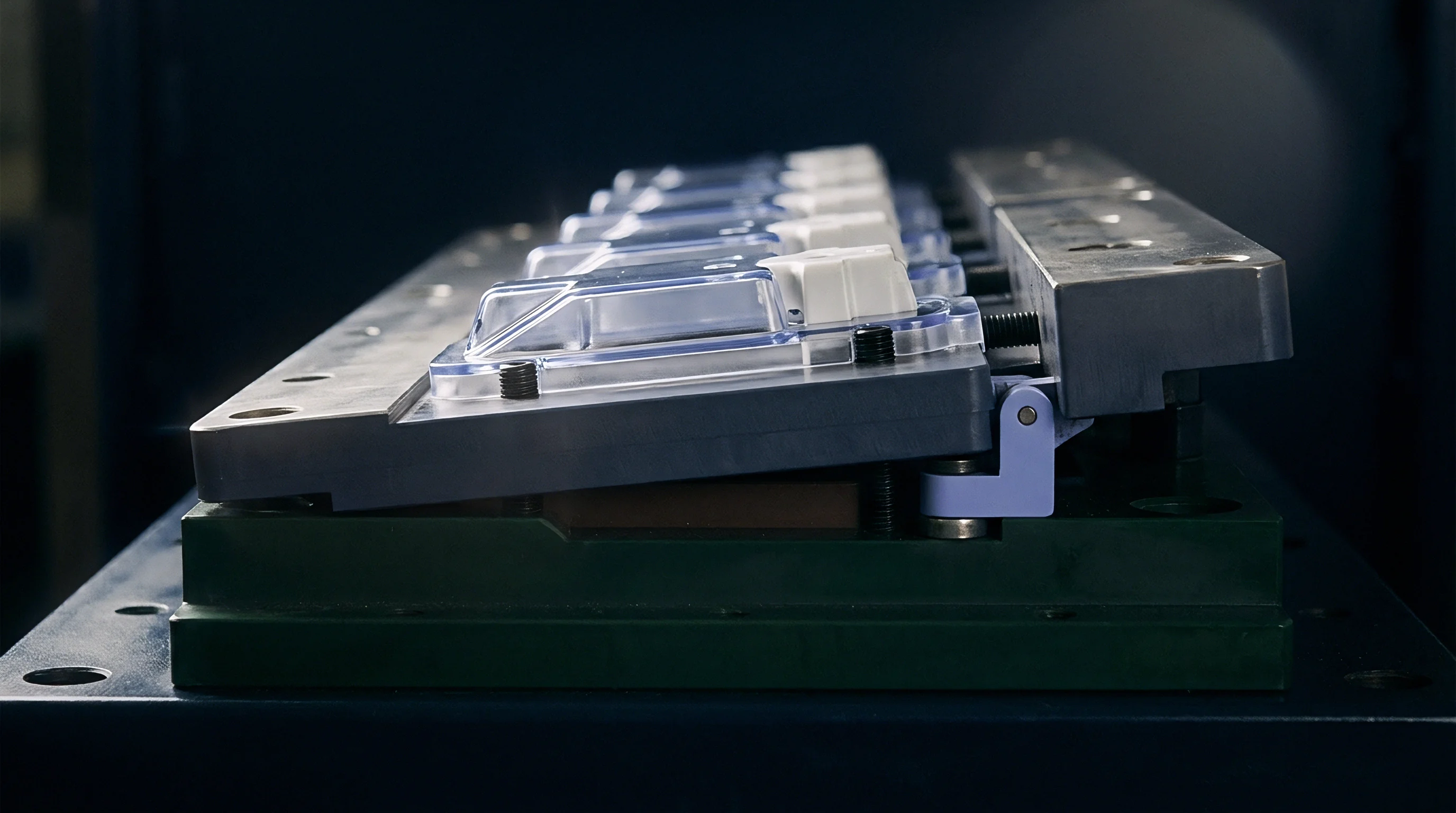
Steel holds memory. Extracting an injection tool from a press after five hundred thousand cycles shifts internal stress distributions when thermal equilibrium breaks. Coolant channels running through P20 or H13 tool steel contain treated water, rust inhibitors, and mineral deposits.
Purging internal cooling lines with dry compressed air at six bar pressure precedes any crane hoist operation. Residual moisture left inside conformal cooling passages corrodes cavity walls within forty-eight hours of ocean transit. Sealing water ports with threaded brass plugs prevents fluid leakage onto polished mold faces during containerized sea freight.
Mechanical lock-up plates hold core and cavity halves rigid during transport. Heavy slides, side-actions, and hydraulic core-pull cylinders drift under low-frequency ship vibrations if unlatched. Unlocked components damage parting line shut-offs.
Wooden crates for multi-tonne tools require heat-treated solid timber conforming to ISPM 15 standards. Floating baseboards lined with elastomeric vibration dampers isolate high-frequency road shock during drayage. Moisture degrades untreated cavity surface finishes.
Vapor-phase corrosion inhibitor bags sealed inside a three-ply polyethylene vacuum barrier envelope block oxidation across oceanic humidity fluctuations.
Freight vibration loosens unlatched slides. Structural transport failures damage precise mold geometry when containment measures lack rigour:
- Parting line crushing occurs when unlatched mold halves shift laterally inside the crate and impact internal timber bracing.
- Corrosion pitting surfaces on mirror-polished cavity steel when internal cooling fluids weep past unsealed brass port plugs.
- Ejection system binding results from bending stresses placed on guiding pins when crates drop without elastomeric base dampers.
- Hydraulic cylinder seal failure develops when side-pull actuators sit under tension without pressure relief valves open to atmosphere.
Tooling engineers inspect crate integrity before signing sea-waybills, verifying that external impact indicators show no severe handling events above twenty gravity units.


Trial

Re-Qualifying Process Windows Post-Relocation
Tool transfer across manufacturing sites alters process capability. Re-installing a multi-cavity injection mold in a secondary factory never produces identical part dimensions under historical machine settings. Hydraulic press stiffness, platen parallelism, tie-bar strain calibration, and screw recovery characteristics vary across machinery brands.
A tool running in an electric press with zero platen deflection shifts its parting line line-of-sight when moved to an aging hydraulic clamp. Dynamic injection pressure response dictates cavity filling rates. Re-establishing process windows under DIN 16742 standard tolerance grades demands a systemic design of experiments trial rather than copying machine setup sheets.
Viscosity curve studies establish actual melt behavior under local resin lots. Polypropylene or polyphthalamide resins sourced in different regions exhibit variation in melt flow rate even within identical grade designations. Machine setters run viscosity sweeps by measuring peak cavity pressure across incremental injection velocities.
Gate seal studies identify the minimum hold time needed to prevent sink marks without over-packing the gate area. Thermal imaging of the tool face during continuous automatic cycles confirms whether local chiller units deliver equivalent heat extraction capacity compared to the primary facility.
| Polymer Type | Nominal Wall (mm) | Original Class (Origin Press) | Relocated Class (Destination Press) | Dimensional Variance (mm) |
|---|---|---|---|---|
| PA66 GF30 | 2.50 | TG4 | TG5 | +0.082 |
| PBT Unfilled | 1.80 | TG5 | TG6 | +0.115 |
| PC/ABS Alloy | 3.00 | TG3 | TG4 | +0.045 |
| POM Copolymer | 2.00 | TG4 | TG5 | +0.095 |
Press rigidity alters part shrinkage. Variance between press hydraulic response profiles expands critical feature tolerances, forcing tooling engineers to adjust barrel temperature profiles to match original cavity pressure traces.
A ten percent reduction in effective platen parallelism increases parting line flash by thirty micrometers under maximum clamp tonnage.
Toolmakers at receiving plants often report that historical cavity dimensions fail nominal prints due to press hydraulic wear, requesting drawing relaxations before running scientific process trials.


Valuation
Which Valuation Method Holds under Dual Customs Inspection?
Establishing the customs value of relocated production tooling creates friction between tax authorities and global trade operations. Export country tax inspectors seek higher asset values to capture capital gain taxes, while import customs officials scrutinize low declarations aimed at duty minimization. The Transaction Value method defined under World Trade Organization customs valuation rules fails when tooling moves between related corporate entities without an arms-length invoice.
Importers fall back on computed value or altered transaction values based on net book value calculated from historical acquisition costs less straight-line depreciation.
Shot-count depreciation reflects physical tool wear with greater technical accuracy than chronological calendars. A tool rated for one million shots depreciates by twenty percent after running two hundred thousand shots, regardless of whether those cycles occurred over six months or three years. Major tooling refurbishments, such as core replacements, hot runner overhauls, or texture re-etching performed abroad, add directly to the customs asset value.
Customs auditors view non-declared tool modifications as tax evasion, retroactively assessing duties on the full value of the physical alterations plus international freight charges.
| Asset Condition Standard | Shot Count Ratio | Base Depreciation (%) | Modification Addition | Customs Valuation Multiplier |
|---|---|---|---|---|
| T1 Prototype Tool | Under 10,000 | 5.0 | Excluded | 0.95 |
| Production Qualified | 10,000 to 250,000 | 25.0 | Cost of engineering change | 0.75 + Mod Value |
| Mid-Life Refurbished | 250,000 to 750,000 | 50.0 | Full hot runner replace | 0.50 + Refurb Value |
| Terminal Production | Over 750,000 | 80.0 | Excluded | 0.20 |
Duty accrues on total valuation. Discrepancies between physical tool condition and book value declarations invite multi-jurisdictional tax audits. Re-assessed asset values retroactively recalculate duty obligations across all production components generated by the tool, triggering penalty fines up to triple the original unpaid tariff amount.
Shot-count logs validated by press control software serve as primary evidence for asset depreciation calculations during customs valuation audits.
Misclassifying capitalized tooling adjustments as standard maintenance expenses during overseas refurbishments results in asset seizure, retroactive duty payments, and mandatory five-year customs compliance monitoring.

Dossier

Multi-Jurisdictional Audit Evidence Assembly
Preparing a defensive compliance dossier demands cross-referencing engineering documentation with trade logistics records. Customs auditors audit records up to five years after temporary entry bonds cancel. Audits examine whether temporarily imported tools produced parts exclusively for export markets or sold items into local domestic economies.
Selling parts moulded on temporary tools into domestic markets without paying duty on the tooling pro-rata share constitutes customs fraud. Dossiers prove asset identity, movement tracking, and tariff payment consistency across all manufacturing locations.
Audit windows span five years. Maintaining an unbroken chain of custody documentation bridges the gap between factory tooling registries and corporate tax filings. Asset records combine technical press logs with customs broker entry entries, eliminating operational gaps that tax authorities exploit during multi-jurisdictional inquiries.
Complete audit compliance binders contain verifiable engineering and commercial records:
- Original tool purchase orders showing initial steel procurement, cavity count specifications, and baseline toolmaker invoice lines.
- Permanent tool markings photos displaying clear physical steel stampings, serial numbers, and asset tracking tags attached to the clamp plate.
- Customs clearance entries detailing Harmonized System classifications, declared import valuations, and posted temporary bond numbers.
- Press cycle logs recording exact shot counts, injection parameters, and machine identification numbers matched to part production dates.
- Maintenance and modification invoices documenting overseas engineering adjustments, cavity rebuilds, and preventative service expenses.
- Re-export bills of lading verifying physical container load-out, port customs clearance stamps, and destination entry filings.
Does the structural separation of tooling ownership and contract manufacturing entities expose the asset holder to double taxation when moving steel across free-trade zones?


Clash

Dispute Resolution and Penalty Mitigation
When customs authorities issue notices of action alleging temporary import bond violations, resolution requires immediate technical and legal defense integration. Overstaying a temporary import timeline triggers automated bond forfeiture demands from customs surety providers. Defense strategies hinge on proving technical necessity for extended tool stay, such as unpredicted qualification delays, tool steel failure demanding prolonged repair, or downstream vehicle program delays.
Submitting engineering change orders alongside press setup logs proves that the tool remained dedicated to its declared purpose without commercial diversion.
Substantial transformation rules govern whether parts moulded on re-allocated tools acquire new economic origin. Standard injection moulding operations transform raw polymer pellets into finished component shapes, conferring local origin under most preference rules. Tax authorities analyze whether tool relocation was executed purely to bypass regional content rules.
If customs determines that temporary tool allocation constitutes an illegal production subsidy or undocumented capital transfer, regional origin certificates for output parts become void. Penalty assessments target both the asset holder and the contract manufacturing plant.
Tax inspectors review invoice lines. Mitigating duty penalties relies on voluntary self-disclosure frameworks before formal audit notices land. Presenting verified shot-count logs, clear serial number chains of custody, and corrected depreciation calculations limits penalties to statutory interest charges rather than punitive fines.
Factory teams maintaining synchronized tooling software across all international plants isolate liability early, preventing cross-border administrative holds on active container shipments.