Quantifying Non-Intentionally Added Substance Migration in High Temperature Retort Laminate Packaging Structures
Quantifying retort NIAS requires high-resolution mass spectrometry screening, non-target response calibration, and adhesive cyclic oligomer risk assessment.


Steam
High-temperature retort processing subjects flexible packaging structures to saturated steam or superheated water at temperatures between 121°C and 135°C for durations ranging from 15 to 60 minutes. Retort sterilisation forces physical and chemical transformations within multi-layer laminate films. The severe thermal and hydraulic stress degrades base polymers, hydrolyses adhesive systems, and drives chemical reactions between migrating species and food simulants.
Non-intentionally added substances emerge primarily through these thermal pathways, creating complex chemical profiles absent in raw conversion materials prior to heat treatment.
Flexible retort pouches rely on multi-layer constructions to provide thermal stability, seal integrity, and barrier performance. A standard high-performance retort laminate comprises an outer oriented polyester print web, an aliphatic or aromatic polyurethane adhesive layer, an intermediate aluminum foil or high-barrier inorganic oxide coating, a second adhesive layer, and an inner cast polypropylene sealant film containing slip agents and antioxidants. Thermal stress breaks ester bonds.
Hydrolysis yields free monomer species. At temperatures above 120°C, polyurethane adhesives based on aromatic isocyanates, such as methylene diphenyl diisocyanate or toluene diisocyanate, undergo partial thermal decomposition. This breakdown generates primary aromatic amines including 4,4′-methylenedianiline and 2,4-toluenediamine.
Polyurethane systems formulated from polyester polyols additionally release cyclic polyester oligomers, which migrate through the internal sealant layer when heat softens the polymer matrix.
| Laminate Layer | Base Material | Thermal Degradation Mechanism | Dominant Non-Intentionally Added Substances |
|---|---|---|---|
| Outer Layer | Oriented Polyethylene Terephthalate (12 µm) | Thermal oxidation and ester cleavage at 121°C-135°C | Terephthalic acid, mono-2-hydroxyethyl terephthalate, cyclic PET oligomers (dimer to pentamer) |
| Tie/Adhesive 1 | Solvent-based Polyurethane Adhesive | Isocyanate hydrolysis and polyol degradation | Primary aromatic amines, cyclic polyurethane oligomers, residual solvent reaction products |
| Barrier Layer | Aluminum Foil (7-9 µm) or AlOx-coated PET | Mechanical pinholing and thermal expansion stress | Foil processing lubricant residues, silane coupling agents |
| Tie/Adhesive 2 | Solventless Polyurethane or Maleic Polypropylene | Unreacted monomer condensation and thermal cleavage | Cyclic polyester oligomers, maleic anhydride adducts, free fatty acids |
| Sealant Layer | Cast Unoriented Polypropylene (70-100 µm) | Thermal oxidation, slip agent degradation, antioxidant consumption | Oxidised polypropylene oligomers (C12-C45), erucamide degradation products, Irganox 1010 breakdown products |
Cast polypropylene acts as the primary contact layer and structural seal. Polypropylene undergoes thermo-oxidative degradation during retort sterilisation despite the presence of phenolic antioxidants such as Irganox 1010 or phosphite processing stabilisers like Irgafos 168. High heat alters polymer matrices.
Thermal energy cleaves the polypropylene backbone, generating a broad spectrum of saturated and unsaturated hydrocarbons ranging from 12 to 45 carbon atoms. Antioxidants convert into secondary transformation products; Irgafos 168 oxidises into tris(2,4-di-tert-butylphenyl)phosphate and degrades further into 2,4-di-tert-butylphenol. Fatty acid slip agents, such as erucamide, undergo thermal oxidation to form epoxy derivatives and lower molecular weight amides.
These breakdown products concentrate at the food-contact surface during thermal exposure.
Thermal degradation during retort sterilisation converts stable formulation additives into low-molecular-weight migrating species.
Print inks and primers applied to the outer web represent another origin of thermal migrants. Set-off occurs during web winding, transferring uncurred photoinitiators, acrylic monomers, and solvent impurities onto the food-contact sealant surface. Retort heating accelerates the migration of these set-off compounds into the food phase.
The extent of degradation and migration depends on the thermal dose applied during thermal processing. Sterilisation cycles operating at 135°C generate higher concentrations of low-molecular-weight oligomers than cycles conducted at 121°C, even when equivalent sterilisation values are maintained. Determining the true migrant profile requires measuring the package post-retort rather than testing unheated structural materials.
Whether secondary reaction products formed between degraded polyols and oxidised polypropylene fragments present toxicological risks distinct from their parent compounds remains an active area of investigation.

Screening
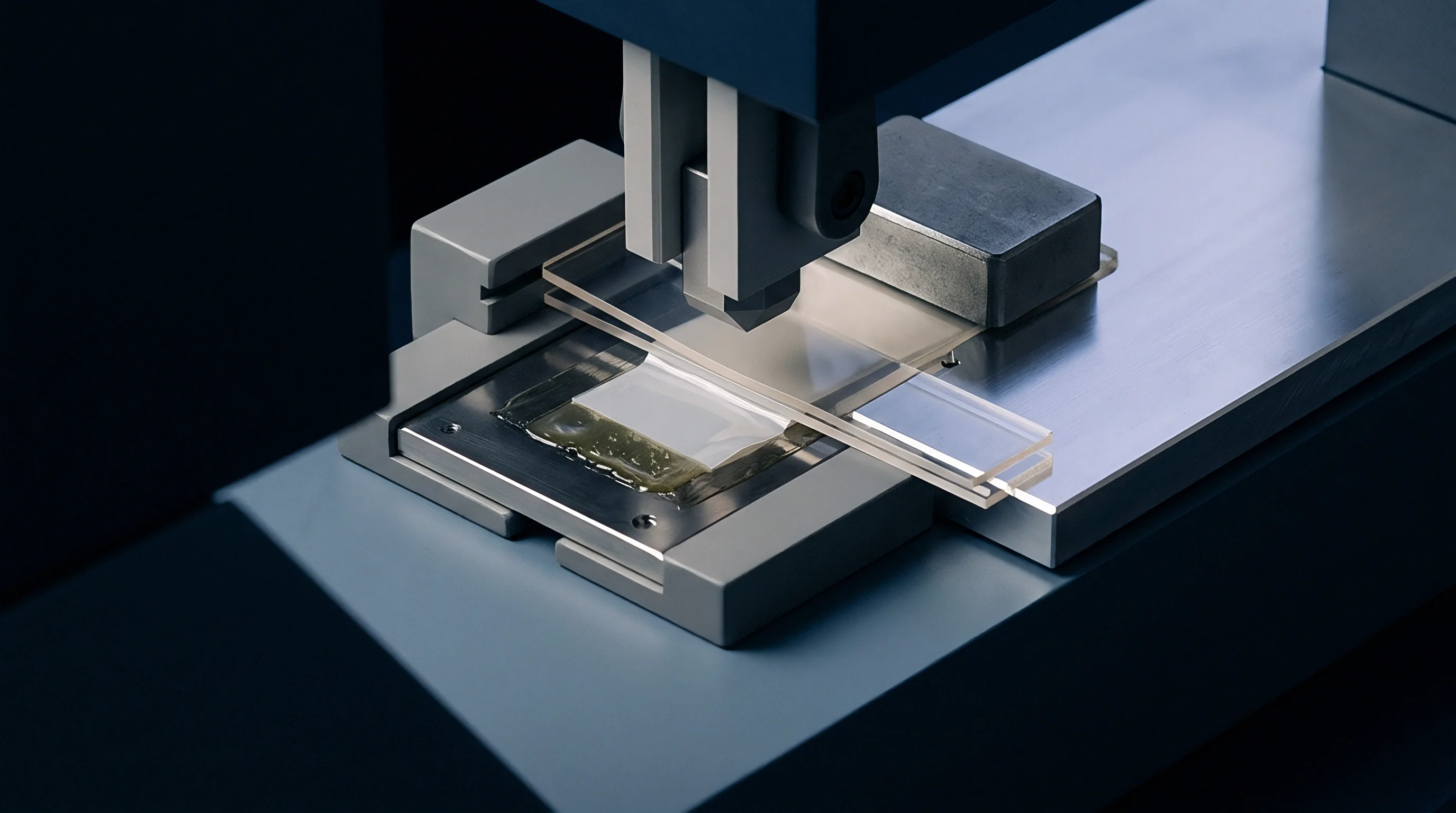
Quantifying unknown migrating species from retort laminates requires complementary analytical instruments capable of volatile, semi-volatile, and non-volatile target resolution. No single chromatographic technique detects all non-intentionally added substances present in a migration extract. Gas chromatography coupled to high-resolution mass spectrometry resolves volatile and semi-volatile compounds with molecular masses below 500 Daltons.
Liquid chromatography paired with quadrupole time-of-flight mass spectrometry separates and identifies polar, non-volatile species up to 1500 Daltons. Analytical workflows must combine electron ionization, electrospray ionization, and atmospheric pressure chemical ionization to ensure comprehensive ionisation of unknown molecules.

Which Analytical Techniques Quantify Non-Target Retort Migrants?
Non-target identification relies on high-resolution mass spectrometry operating in full scan mode with mass accuracy below 3 parts per million. Gas chromatography handles non-polar volatile degradation products, including branched alkanes, alkenes, alkylbenzenes, and residual solvents. Gas chromatography with electron ionization yields spectra comparable against standard databases like NIST or Wiley.
Liquid chromatography with positive and negative electrospray ionization captures cyclic oligomers, primary aromatic amines, photoinitiators, and surfactant residues. Ultra-high-performance liquid chromatography coupled with orbitrap mass spectrometry provides the accurate mass resolution necessary to generate empirical formulas for unknown peaks.
Response factors vary across detectors. Standard quantitative analysis relies on authentic reference standards to calibrate detector response against concentration. Non-intentionally added substances frequently lack commercially available reference standards, forcing analysts to apply semi-quantitative estimation methods.
Semi-quantitative quantification substitutes a surrogate standard of similar chemical structure to calculate concentration. Selecting an inappropriate surrogate introduces quantification errors exceeding 500 percent due to ionization efficiency differences. Unmatched standards yield inaccurate masses.
A non-target screen using a single surrogate standard carries an inherent semi-quantitative uncertainty factor of up to five.
Applying response factor variation factors mitigates quantification bias during compliance assessment. When evaluating unknown cyclic polyester oligomers, analysts select synthetic oligomeric fragments or structurally matched esters as surrogates. Internal standards added prior to extraction track sample recovery across processing steps.
Deuterated compounds or isotopically labelled analogues serve as internal standards for targeted quantification of known degradation products like 4,4′-methylenedianiline.

Analytical Workflow for Non-Target Quantification
Sample preparation determines extraction efficiency and prevents analytical artifacts. Migrates obtained from high-temperature food simulants require concentration and clean-up before chromatographic injection. Aqueous simulants undergo liquid-liquid extraction using dichloromethane or ethyl acetate to isolate organic migrants.
Standard solvent evaporation protocols must control temperature and vacuum levels to prevent the loss of volatile non-intentionally added substances.
Consider a semi-quantitative calculation for an unknown cyclic oligomer detected by liquid chromatography quadrupole time-of-flight mass spectrometry in 95 percent ethanol simulant. The peak area of the unknown compound is recorded at 1,450,000 counts. A surrogate standard, dimethyl phthalate-d4, injected at a known concentration of 0.1 milligrams per kilogram yields a peak area of 2,100,000 counts.
Assuming a response factor ratio of 1.0, the nominal concentration calculates to 0.069 milligrams per kilogram. Applying a conservative uncertainty factor of 3 to account for electrospray ionization response variation raises the reported upper concentration limit to 0.207 milligrams per kilogram. If the functional barrier limit or toxicological threshold for this compound category is 0.01 milligrams per kilogram, the structure fails compliance screening until authentic standard synthesis proves actual concentration sits below the threshold.
Surrogate selection rules dictate that non-polar compounds must be quantified against deuterated alkanes, while nitrogen-bearing species require quantification against isotopically labelled amine standards.

Transfer
Mass transport in multi-layer polymer structures follows Fickian diffusion principles accelerated by elevated temperature and swollen polymer networks. High-temperature retort conditions alter migration kinetics compared to ambient storage. Saturated steam heat increases the diffusion coefficient of small molecules within polypropylene by three to five orders of magnitude.
The glass transition temperature of outer print webs and inner sealant layers drops when saturated with hot water vapor, widening inter-chain free volume and accelerating migrant flux toward the food interface.
Barrier materials like aluminum foil block mass transport entirely when structural integrity remains uncompromised. Microscopic pinholes formed during converter handling or thermal expansion stress create physical pathways for outer-layer migrants to bypass the barrier. Volatiles from print inks and laminate adhesives pass through foil pinholes exceeding 10 micrometers in diameter.
High pressure during retort drives hydraulic flow through microscopic defects, carrying adhesive degradation products directly into the food phase.
Selecting appropriate food simulants for high-temperature testing presents technical challenges. European regulations specify simulant substitution rules for high-temperature applications where liquid simulants create physical damage to test specimens. Retort heat forces rapid diffusion.
Testing single layers misses interactions.
| Actual Food Category | Standard Regulatory Simulant | High-Temperature Substitute Simulant | Accelerated Test Condition Equivalent |
|---|---|---|---|
| Aqueous / Acidic Foods (pH < 4.5) | 3% Acetic Acid (w/v) | 3% Acetic Acid in pressure vessel | 121°C for 30 minutes or 100°C for 2 hours |
| Alcoholic / Moderate Fatty Foods | 20% Ethanol (v/v) | 50% Ethanol (v/v) or 95% Ethanol | 121°C for 30 minutes in sealed cell |
| Fatty Foods / Oils | Vegetable Oil (Olive/Sunflower) | Poly(2,6-diphenyl-p-phenylene oxide) (Tenax) | 121°C for 30 minutes or 175°C for 1 hour dry |
| Dry Foods with Surface Fat | Poly(2,6-diphenyl-p-phenylene oxide) | Modified Poly(phenylene oxide) (MPPO) | 130°C for 30 minutes dry exposure |
Testing fatty food contact at 121°C using vegetable oil presents analytical difficulties during chromatographic screening. Vegetable oil extracts contain high concentrations of triglycerides that overload mass spectrometer sources and obscure non-target migrant peaks. Poly(2,6-diphenyl-p-phenylene oxide), commercially known as Tenax, serves as a solid sorbent substitute for high-temperature dry and fatty contact testing.
Tenax absorbs volatile hydrophobic compounds without melting at 135°C. 95 percent ethanol and isooctane serve as volatile substitute simulants for liquid extraction cells operated under pressure.
Physical defects occurring during thermal processing compromise barrier performance and accelerate mass transfer.
- Flex-cracking defects occur during mechanical handling of laminates prior to retorting, creating micro-fissures in aluminum oxide or silicon oxide barrier coatings.
- Adhesive delamination separates outer polyester webs from internal barrier foils, creating channels for localized accumulation of unreacted monomers.
- Thermal shrinkage mis-matches between polypropylene and aluminum layers induce shear stress at the adhesive interface, promoting localized oligomer migration.
- Seal-channel formation allows direct liquid path contact between internal pouch seam edges and outer laminate adhesive lines during high-pressure steam cycles.
Substitutes like Tenax must be verified against actual fatty food matrices to ensure thermal sorption equivalence at 135°C.
Failure to account for thermal expansion and swelling during simulant selection results in underestimating total migrant mass, exposing importers to regulatory enforcement when official control laboratories execute testing in sealed pressurized extraction cells.
Toxicology
Non-intentionally added substances quantified during high-temperature screening require toxicological evaluation to establish safety under food-contact regulations. Structural identification precedes hazard evaluation. When exact identity remains unconfirmed, toxicological evaluation applies the Threshold of Toxicological Concern framework.
The framework assigns generic exposure thresholds based on chemical structure and calculated human exposure levels, assuming conservative food intake models.
Chemicals evaluated under the Threshold of Toxicological Concern framework fall into defined Cramer Classes based on structural alerts. Cramer Class I covers simple structures with predictable metabolic pathways, establishing an exposure threshold of 1800 micrograms per person per day. Cramer Class II represents intermediate structures, setting a limit of 540 micrograms per person per day.
Cramer Class III comprises complex structures containing functional groups associated with toxicity, establishing a threshold of 90 micrograms per person per day. Genotoxic migrants lack safe thresholds.
High-temperature retort non-intentionally added substances frequently contain structural alerts for genotoxicity. Primary aromatic amines, epoxy compounds, and organophosphorus breakdown products fall into special high-hazard categories. Genotoxic structural alerts dictate an exposure threshold of 0.15 micrograms per person per day, corresponding to a migration concentration of 0.000025 milligrams per kilogram of food, assuming standard consumption of 1 kilogram of packaged food per day.
This threshold sits below the practical detection limit of standard liquid chromatography mass spectrometry screening protocols.
- Confirm structural spectrum and accurate mass using high-resolution mass spectrometry.
- Scan molecular structure against structural alert databases for mutagens, carcinogens, and endocrine disruptors.
- Assign chemical structure to Cramer Class I, II, or III using automated decision-tree software.
- Calculate estimated daily exposure based on measured migration concentration and packaging surface-to-volume ratio.
- Compare estimated daily exposure against the defined threshold for the assigned Cramer Class.
- Commission in vitro genotoxicity assays if structural alerts suggest DNA reactivity or if exposure exceeds Class III limits.
Specific Migration Limits apply to intentionally added starting substances and known reaction intermediates listed in regulatory positive lists. European Union plastic packaging regulation sets a default functional barrier migration limit of 0.01 milligrams per kilogram for non-listed substances separated from food by a functional barrier layer. Non-intentionally added substances that demonstrate genotoxicity cannot benefit from the functional barrier concept; these compounds must remain absent at analytical detection limits.
Evaluating non-target migrants through Cramer classification assumes zero genotoxic potential unless structural alerts dictate high-hazard screening.
A converter may claim that undetected polyurethane oligomers require no safety evaluation because thermal processing seals the adhesive behind an aluminum foil layer. This claim fails when mechanical stress creates pinholes or when set-off during web spooling bypasses the barrier entirely.

Clause
Demonstrating packaging compliance requires assembling a supporting dossier containing testing reports, analytical spectra, mass balances, and declarations of conformity. A legal declaration of conformity must accompany food-contact laminates at every commercial transaction prior to retail. Declarations that cite compliance for unheated film components without documenting high-temperature retort testing present legal vulnerability for brand owners placing finished goods on the market.
Supporting test reports belong to the specific production lot tested. Physical sample parameters must match the commercial shipment in film thickness, resin grade, adhesive coat weight, and curing profile. Standard converter declarations frequently rely on historical data from generic formulations, failing to capture batch-to-batch variations in primary aromatic amine formation or cyclic oligomer content.
Testing un-retorted materials invalidates the compliance claim.
Supply agreements for retort laminate structures must specify precise analytical protocols and pass-fail criteria for non-intentionally added substances.
- Retort condition verification specifies exact temperature, hold time, and simulant matrix matching the end-use processing specification.
- Target aromatic amine limits dictate zero detection of primary aromatic amines with an analytical limit of detection at or below 0.002 milligrams per kilogram.
- Oligomer screening mandates require non-target high-resolution mass spectrometry screening for cyclic polyester and polyurethane oligomers post-retort.
- Batch traceability requirements tie each declaration of conformity directly to production roll numbers, adhesive batch certificates, and thermal curing logs.
Customs entries and official control audits evaluate both the declaration of conformity and the supporting laboratory data. Regulatory authorities reject import shipments when declarations omit non-intentionally added substance risk assessments or when test reports rely on mild contact conditions like 10 days at 40°C for packaging designed for 121°C retort sterilisation.
Contracts for high-temperature retort laminates must incorporate the following verification clause: “The supplier warrants that the multi-layer packaging structure complies with Regulation (EC) 1935/2004 and Regulation (EU) 10/2011 after undergoing thermal retort processing at 121°C for 30 minutes in contact with official food simulants. The supplier shall provide non-target screening data obtained via high-resolution mass spectrometry demonstrating that migration of all non-intentionally added substances remains below applicable Specific Migration Limits or the functional barrier threshold of 0.01 milligrams per kilogram, backed by batch-specific chemical analysis.”