Gas Phase Migration Limits for Non Intentionally Added Substances across Multi Layer Pallet Wraps
Pallet stretch wrap emits volatile non-intentionally added substances that migrate through porous secondary cartons into dry foods via gas-phase transport.
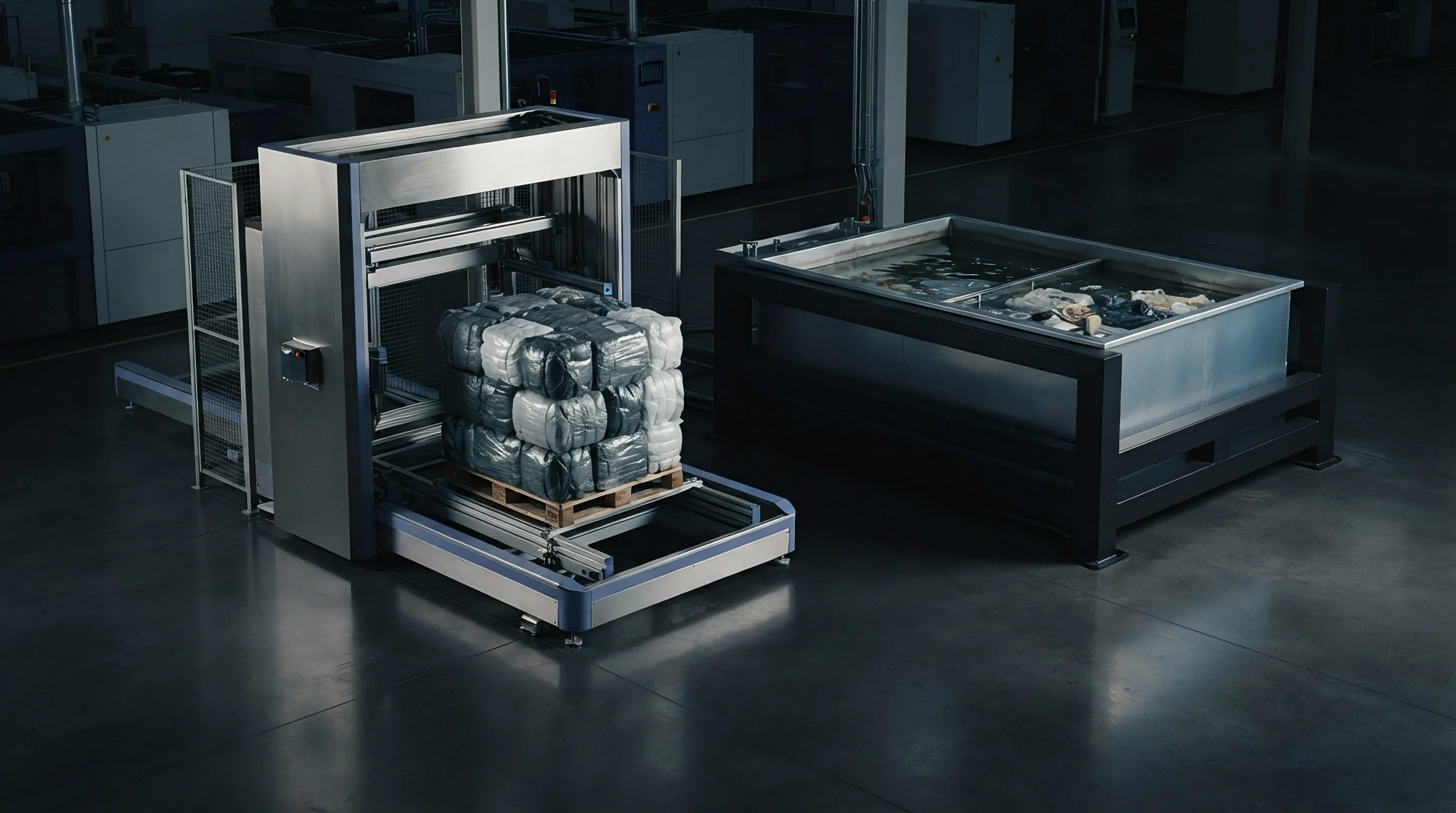

Headspace
Stretch film applied around stacked wooden pallets creates an enclosed microclimate. Volatile organic compounds trapped within this boundary layer cannot dissipate into ambient warehouse air; instead, chemical species off-gassing from multilayer polyethylene film concentrate in the air gap between the outer stretch wrap and secondary corrugated boxes. As these vapors migrate across the gap, dry foods readily absorb them, leading to off-odors that compromise product quality.
When non-intentionally added substances with high vapor pressures enter this headspace, secondary paperboard packaging offers minimal resistance to gas-phase permeation.
Mass transfer occurs without direct liquid contact. Low molecular weight molecules migrate from internal film layers into the vapor gap, diffuse through the porous fibrous matrix of paperboard cartons, and adsorb onto fatty or dry food products. Saturated aliphatic hydrocarbons, short-chain aldehydes, volatile photoinitiators, and thermal degradation products of antioxidants represent the main migrant classes identified in warehouse gas-phase transport testing.
| Substance Class | Representative Compound | Molecular Weight (g/mol) | Vapor Pressure at 25°C (Pa) | Observed Gas-Phase Transfer Rate |
|---|---|---|---|---|
| Antioxidant Degradation | 2,4-Di-tert-butylphenol | 206.32 | 0.72 | High |
| Phosphite Oxidation Product | 2,4-Di-tert-butylphenyl phosphate | 222.31 | 0.04 | Moderate |
| Polyolefin Oligomer | C15 Aliphatic Hydrocarbon | 212.41 | 1.50 | High |
| Photoinitiator Residue | 4-Methylbenzophenone | 196.24 | 0.18 | Moderate to High |
| Slip Agent Breakdown | Hexanamide | 115.17 | 12.40 | Very High |
Stretching the film increases its surface exposure. Under tension, thinner film gauges desorb volatiles more rapidly because the migration path length within the polymer matrix is reduced. Elevated transit temperatures shift the partitioning equilibrium further toward the gas phase, raising the vapor concentration around inner food containers.
Enclosed stretch wrap traps volatile compounds against secondary carton board, accelerating vapor absorption into dry food matrices.
Evaluations of food contamination incidents show that gas-phase transport across pallet boundaries accounts for off-flavor development in cereal, milk powder, and baked goods packaged in thin polyolefin inner liners. Failing to account for gas-phase accumulation under stretch film leads to food rejections at retail distribution hubs and immediate recall liability.

Strata
Multilayer film structures engineered for high stretch performance use distinct resin formulations across coextruded layers. Five-layer and seven-layer linear low-density polyethylene constructions concentrate cling additives like polyisobutene or liquid glycerol monooleate in the outer or inner contact plies, leaving the core layers to supply tensile strength. Thermal stress during extrusion breaks down these functional additives, generating volatile fragments throughout the film matrix.

Coextrusion Degradation and Additive Breakdown
Processing temperatures above 220 degrees Celsius induce thermo-oxidative chain scission in polyolefin resins. Heat degrades phosphite antioxidants; secondary phosphites added to stabilize the melt decompose into volatile phenolics and alkyl phosphates. Incorporating recycled polyethylene fractions into structural core plies introduces uncharacterized post-consumer residues that undergo further thermal degradation, producing complex mixtures of aliphatic ketones, volatile organic acids, and unsaturated hydrocarbons.
- Polyisobutene thermal shearing releases low molecular weight hydrocarbon fragments into the air gap.
- Phosphite antioxidant hydrolysis forms volatile phenols during thermal extrusion cycles.
- Recycled resin contaminant carryover introduces unknown volatile organic compounds into core layers.
- Solvent retention in printed outer layers transfers volatile ester residues through inner film plies.

Where Does Gas Phase Cross-Contamination Override Outer Packaging Barriers?
Secondary cartons lack a true vapor barrier. Standard corrugated paperboard consists of cellulose fibers arranged in an open, porous grid that stops bulk particulates but allows gas molecules to pass freely. As a result, vaporized non-intentionally added substances penetrate structural paperboard walls within hours of stretch wrapping.
Thin inner food contact bags made of plain low-density polyethylene or polypropylene offer negligible resistance to non-polar volatile molecules like mineral oil saturated hydrocarbons.
A concentration of 50 milligrams of volatile oligomers per square meter of film yields detectable off-odor migration into dry cereal within 14 days at 30 degrees Celsius.
Cross-contamination manifests when volatile migrants pass through both the secondary carton board and the primary food contact film, partitioning directly into the lipid phase of the packaged food. Outer packaging does not shield food products from film emissions, as volatile transport occurs readily across paperboard pores.


Chamber
Analytically quantifying gas-phase migration requires standardized test setups that isolate volatile transfer from direct contact migration. European standard EN 14338 establishes testing protocols using modified polyphenylene oxide ~ commercially known as Tenax ~ as a solid adsorbent simulant for dry foods. Placing the stretch film sample at a fixed distance from the adsorbent inside a closed stainless steel testing cell simulates the pallet headspace environment.
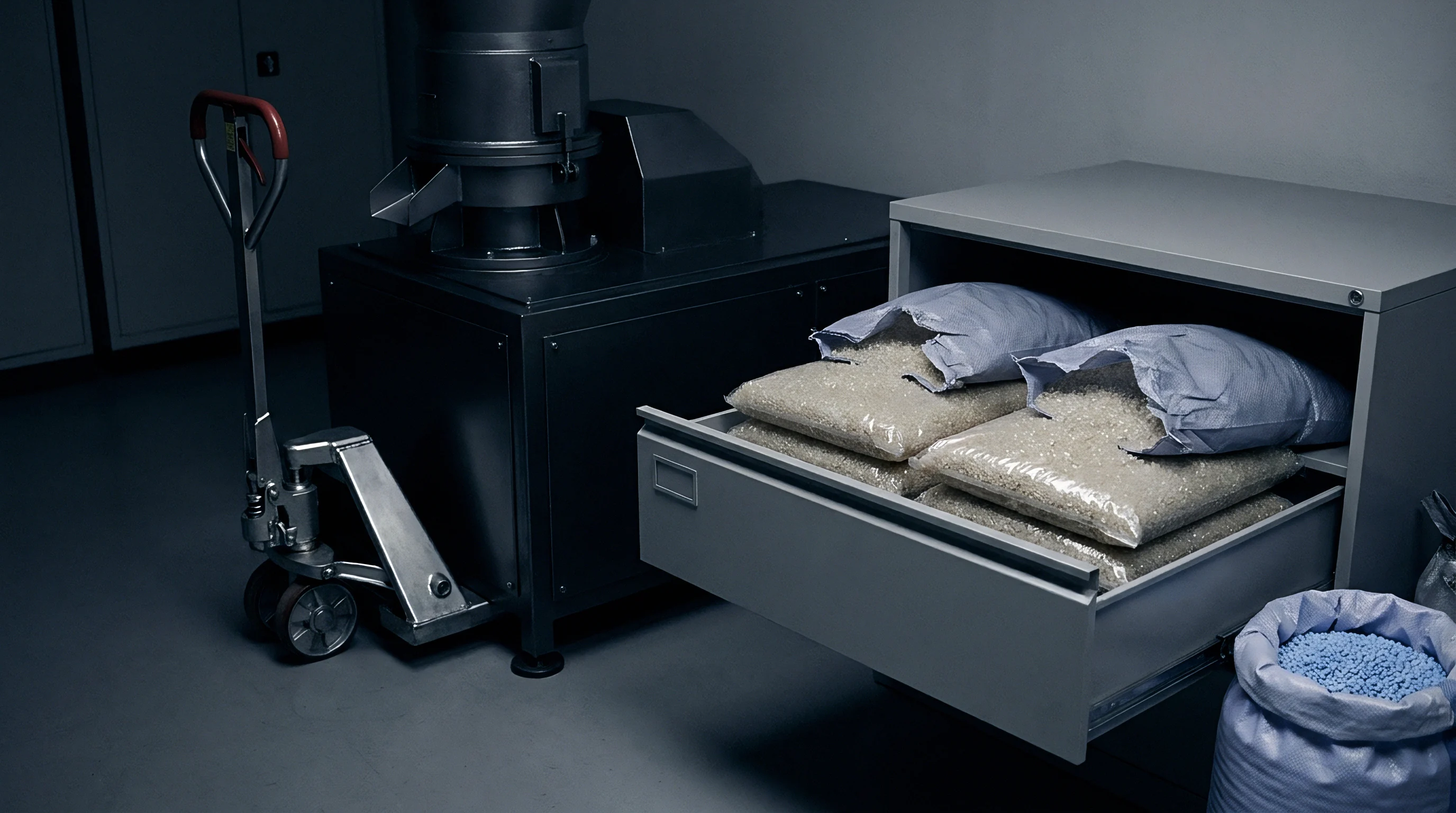
Vapor Capture on Porous Polymeric Adsorbents
Test conditions mirror transit storage, where elevated temperatures accelerate gas release. Exposing the packaging material to modified polyphenylene oxide (Tenax) at 40 degrees Celsius for 10 days accelerates volatile desorption ~ including off-gassing from polyisobutene cling additives ~ and captures non-polar volatile molecules to simulate long-term warehouse storage. Subsequent solvent extraction or direct thermal desorption coupled with gas chromatography-mass spectrometry identifies and quantifies the desorbed substance spectrum.
- Expose five square decimeters of stretch film to ten grams of modified polyphenylene oxide adsorbent at forty degrees Celsius for ten days.
- Extract the adsorbent medium with diethyl ether or solvent mixture inside a sealed glass vial.
- Inject two microliters of extract into a gas chromatograph coupled to a mass spectrometer operating in full scan mode.
- Quantify target volatile substances against semi-quantitative internal standards using toluene equivalents.
Quantitative screening isolates unknown peaks, using high-resolution time-of-flight mass spectrometry to resolve complex chromatographic overlaps between polyolefin oligomers and additive breakdown products. Matching mass spectrometry spectral patterns against reference libraries permits structural elucidation of unknown non-intentionally added substances down to individual microgram levels.
| Analytical Technique | Target Compound Class | Limit of Detection (mg/m²) | Limit of Quantification (mg/m²) | Mean Recovery (%) |
|---|---|---|---|---|
| Thermal Desorption GC-MS | Volatile Hydrocarbons (C6-C16) | 0.005 | 0.015 | 92.4 |
| Headspace SPME GC-MS | Short-Chain Aldehydes & Ketones | 0.002 | 0.008 | 88.1 |
| Tenax Extraction GC-FID | Semi-Volatile Oligomers (C16-C30) | 0.020 | 0.050 | 95.6 |
| Purge and Trap GC-MS | Residual Extrusion Solvents | 0.001 | 0.004 | 91.0 |
Adsorption capacity limits distort analytical output if the adsorbent bed saturates during extended thermal exposure. Overloading the adsorbent media leads to non-linear capture efficiency, underreporting the true volatilization rate of high-abundance oligomers.
Static raw material certificates provide zero protection against off-gassing produced during high-shear stretch film extrusion.
The long-term partitioning dynamics of oxidized degradation products between Tenax media and complex, lipid-rich food surfaces under variable transport humidity remain unquantified.
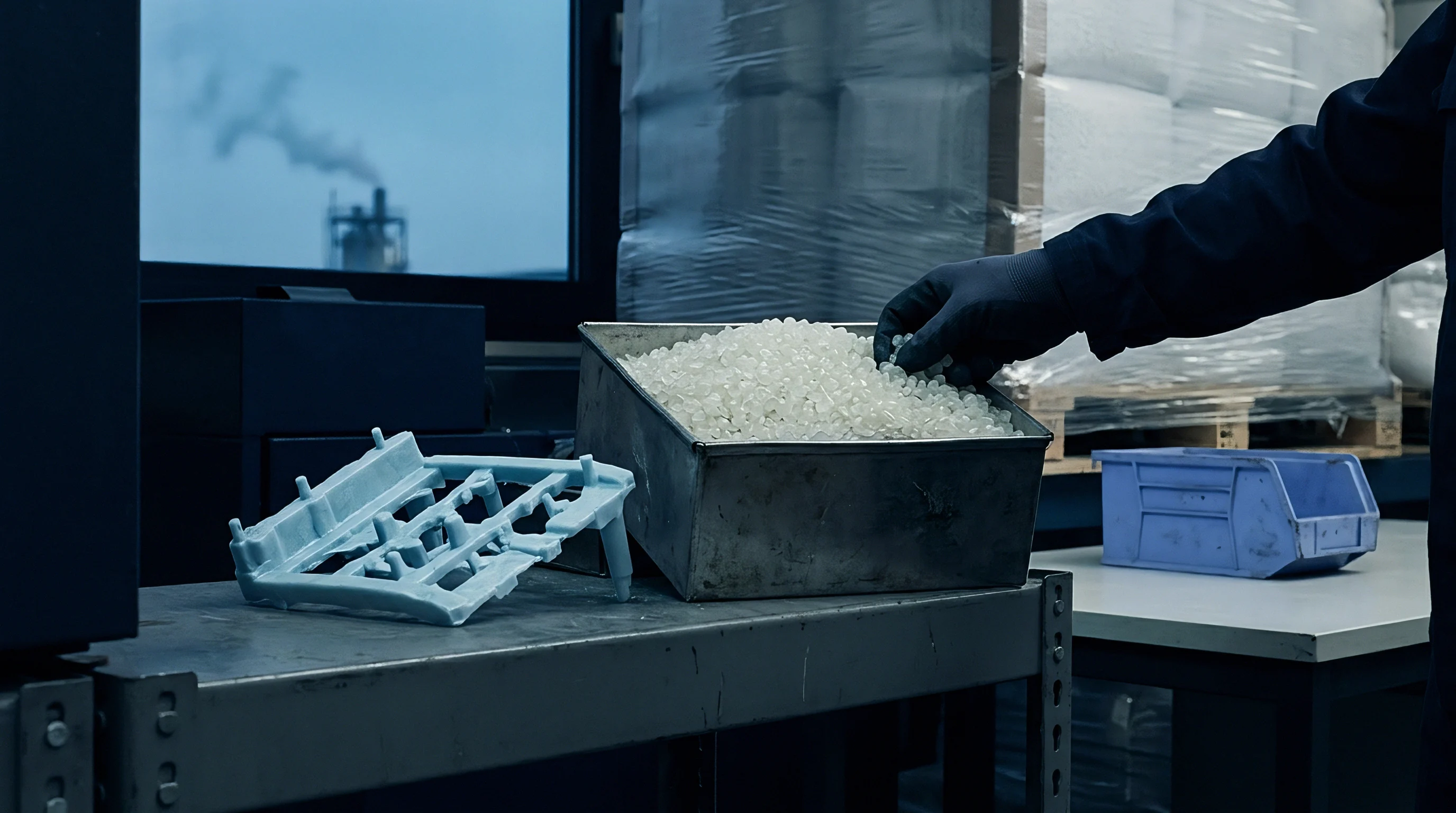
Modeling
Mathematical modeling estimates gas-phase migration kinetics by coupling mass transport diffusion equations with partition thermodynamic equilibria. Volatile transport across a multilayer packaging system occurs in three sequential phases: diffusion within the polyethylene stretch film, evaporation into the inter-package air space, and sorption into secondary and primary packaging layers.

Partition Equilibrium and Mass Transfer Calculations
Fickian diffusion controls the transport rate within the film matrix. Initial mass flux depends on the substance diffusion coefficient inside the LLDPE layer, the initial migrant concentration in the film, and the partition coefficient governing transfer between the polymer surface and the adjacent vapor phase.
Consider a transport configuration involving a 500-kilogram pallet of dry cereal packed in paperboard cartons with 0.05-millimeter low-density polyethylene inner liners, wrapped in 300 grams of five-layer LLDPE stretch film. Analytical screening reveals the stretch film contains 150 milligrams per kilogram of 2,4-di-tert-butylphenol resulting from melt antioxidant oxidation.
Under storage at 40 degrees Celsius for 30 days, the calculation proceeds through four steps:
First, calculate the total substance mass present in the applied stretch film. Multiplying 0.300 kilograms of film by 150 milligrams per kilogram yields 45 milligrams of total migrant volatile burden available on the pallet exterior.
Second, calculate the partition equilibrium between the LLDPE film matrix and the air headspace. Using a polymer-to-air partition coefficient of 12,000 for 2,4-di-tert-butylphenol at 40 degrees Celsius, the equilibrium concentration in the enclosed pallet air space reaches 0.00375 milligrams per liter of air.
Third, compute the mass flux across the corrugated paperboard carton. Given a paperboard surface area of 6.5 square meters and a porous transmission rate of 85 percent for non-polar organic vapors, 32.4 milligrams of the compound penetrate into the interior carton spaces over the 30-day exposure period.
Fourth, calculate the final concentration in the packaged food matrix. Assuming total sorption of the vaporized compound into the 500 kilograms of dry cereal, the predicted final migration concentration reaches 0.065 milligrams per kilogram of food.
Comparing this value against the specific migration limit of 0.05 milligrams per kilogram established for toxicologically uncharacterized alkylphenols demonstrates a regulatory compliance failure arising purely from gas-phase transport across tertiary film packaging.
| Layer Parameter | LLDPE Stretch Film | Pallet Air Space | Corrugated Board | Dry Food Matrix |
|---|---|---|---|---|
| Thickness (mm) | 0.023 | 15.0 | 3.50 | 150.0 |
| Density (g/cm³) | 0.920 | 0.00118 | 0.550 | 0.450 |
| Diffusion Coefficient (cm²/s) | 1.2 × 10⁻⁹ | 6.5 × 10⁻² | 2.1 × 10⁻⁴ | 4.8 × 10⁻⁸ |
| Partition Coefficient vs Air | 12,000 | 1.0 | 180 | 45,000 |
| Values specified at 40°C test reference conditions assuming linear sorptive behavior. | ||||
- Vapor pressure screening filters out non-volatile compounds with boiling points exceeding 300 degrees Celsius.
- Cramer structural classification establishes toxicological threshold boundaries for unidentified mass spectrometry peaks.
- Corrugated board porosity assessment evaluates gas permeation resistance of secondary shipping containers.
- Temperature stress profiling measures volatile release rate amplification during high-temperature warehousing.
Standard packaging specifications incorporating Article 3 of European Regulation 1935/2004 restrict total volatile NIAS migration below 0.01 milligrams per kilogram of packaged food.
Uncertainties in diffusion modeling arise when predicting partition coefficients for complex structural isomer mixtures. Standard mathematical models oversimplify partition kinetics by treating porous paperboard as a homogenous medium, frequently underestimating early-stage breakthrough migration rates.
Standard purchasing contracts incorporating European Regulation 10/2011 Annex August 2023 updates establish that primary packaging declarations must account for chemical transport originating from tertiary stretch wrapping.

Audit
Verifying pallet stretch wrapping compliance requires structural documentation that extends beyond raw material supply datasheets. Importers bear the compliance risk, as declarations must match specific batch chemistries to maintain market access. A declaration of compliance relying exclusively on virgin polymer supplier certificates fails to address non-intentionally added substances generated during downstream film coextrusion and blown-film conversion.

Conformity Documentation and Supply Chain Traceability
Auditing packaging supply chains demands tracing every additive transformation step. Declarations must explicitly state the thermal history, coextrusion structure, and volatile NIAS screening methodologies used by the film manufacturer. When functional barrier claims are invoked to clear tertiary wrap emissions, the supporting compliance file must include experimental validation proving that secondary and primary packaging layers prevent gas-phase transmission under worst-case storage times and temperatures.
Regulatory authorities performing enforcement audits under European Regulation 2023/2006 on good manufacturing practice inspect risk assessment documentation covering non-intentionally added substances. If the compliance dossier lacks gas-phase migration screening data for stretch films containing recycled content or high cling-additive loadings, customs authorities have the authority to detain shipments at import terminals pending complete laboratory verification.
Commercial liability for product rejection cascades upward through the procurement chain. Contractual terms that fail to specify maximum permissible volatile emission limits for pallet stretch wraps leave brand owners vulnerable to unrecoverable inventory write-offs when volatile off-odors spoil intact food shipments inside warehouse distribution networks.