Establishing Baseline Migration Screening Criteria for Post-Consumer Polyolefins
Polyolefin migration screening requires validated surrogate decontamination, targeted GC-MS and LC-QTOF NIAS extraction, and simulant verification.


Decontamination
Post-consumer high-density polyethylene and polypropylene streams carry volatile organic compounds, ink residues, and legacy industrial additives absorbed during consumer use. Reclaiming these polymers for packaging requires validated cleaning processes capable of reducing chemical impurities down to parts-per-billion levels. Regulatory bodies evaluating recycled polyolefins for food-contact applications assess decontamination efficiency through formal challenge testing.
Challenge testing involves spiking virgin polyolefin flakes or ground scrap with surrogate chemical contaminants representing distinct molecular weights, volatilities, and polarities, then passing the material through a commercial recycling line to measure residual concentration reductions.
Volatiles desorb under high vacuum. Standard surrogate contaminant panels specify model substances to evaluate specific cleaning mechanisms. Toluene serves as a volatile non-polar surrogate.
Chlorobenzene represents volatile polar compounds. Phenylcyclohexane measures medium-volatility non-polar desorption kinetics. Benzophenone acts as a non-volatile polar contaminant, and methyl stearate provides data on non-volatile non-polar fatty ester removal.
Effective decontamination relies on temperature, vacuum pressure, dwell time, and polymer melt mass transfer rates inside devolatilizing extruders or solid-state reactors.
Thermal devolatilization strips light organics. When continuous twin-screw extruders run under vacuum levels below ten millibars at melt temperatures between two hundred twenty and two hundred sixty degrees Celsius, volatile surrogates desorb rapidly from the polymer matrix. Non-volatile surrogates migrate slower, constrained by solid-state diffusion coefficients within polyolefin crystallites.
Reclaimers must demonstrate a minimum surrogate removal efficiency, typically ninety-nine percent for direct food contact applications under European Food Safety Authority and United States Food and Drug Administration guidelines.
| Surrogate Compound | Chemical Class | Molecular Weight (g/mol) | Initial Spiking Level (mg/kg) | Target Decontamination Efficiency (%) |
|---|---|---|---|---|
| Toluene | Volatile Non-Polar Hydrocarbon | 92.14 | 500 | 99.9 |
| Chlorobenzene | Volatile Polar Halogenated Aromatic | 112.56 | 450 | 99.5 |
| Phenylcyclohexane | Medium-Volatility Hydrocarbon | 160.26 | 400 | 99.0 |
| Benzophenone | Non-Volatile Polar Aromatic Ketone | 182.22 | 350 | 98.5 |
| Methyl Stearate | Non-Volatile Non-Polar Fatty Ester | 298.50 | 600 | 98.0 |
Reclaimer literature frequently asserts that thermal devolatilization in twin-screw extruders renders pre-wash sorting redundant for standard non-food applications.

Flake
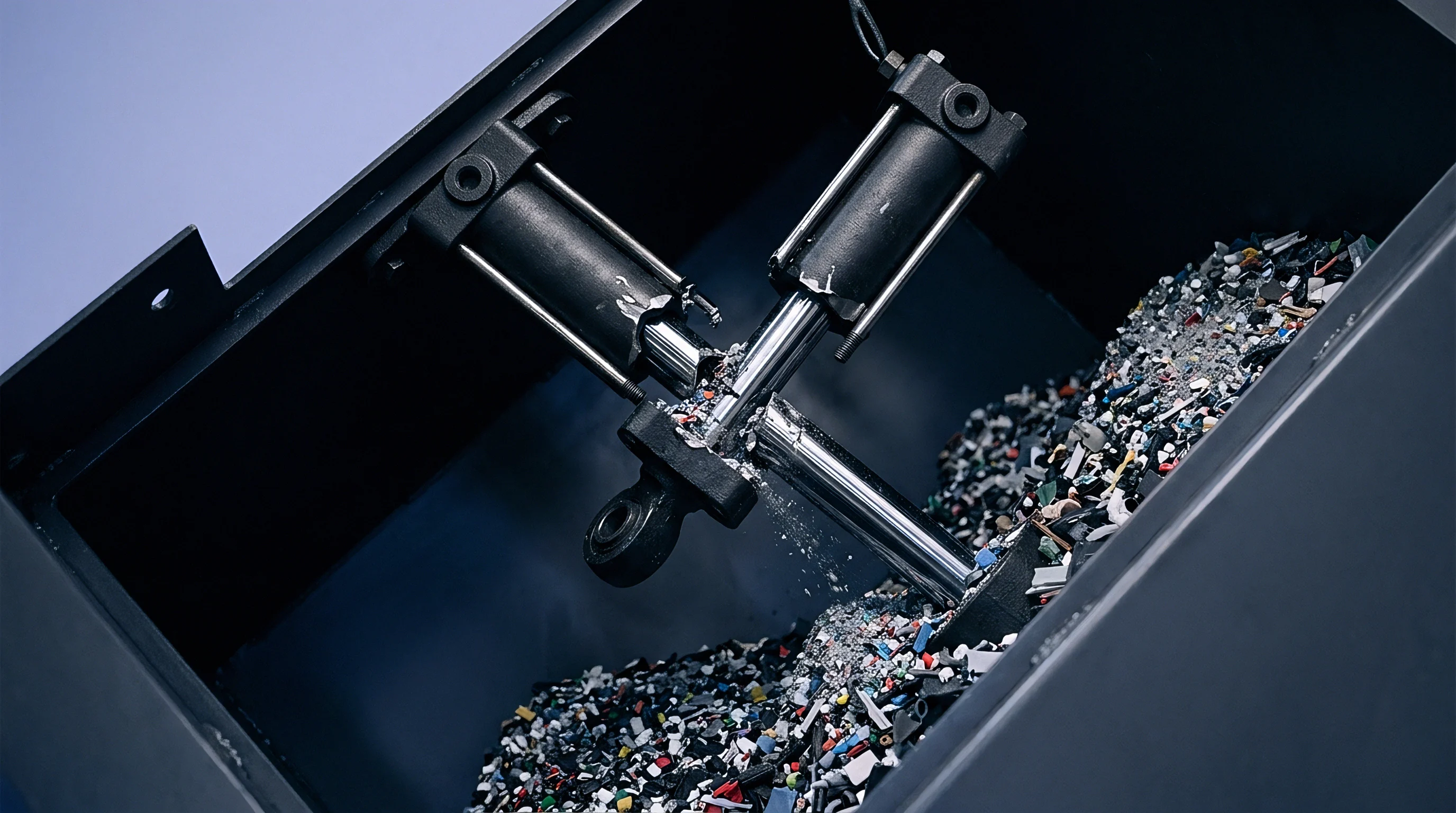
Physical preparation of shredded post-consumer regrind determines wash efficiency and analytical extraction accuracy during laboratory testing. Polyolefin containers recovered from municipal solid waste streams arrive at recycling facilities with surface label adhesives, printing inks, dirt, and residual contents. Grinding processes reduce rigid bottles and flexible films into uniform particles with nominal dimensions ranging between four and eight millimeters.
Shredded particle geometry governs the ratio of exposed surface area to volume, directly impacting chemical solvent penetration during decontamination and laboratory screening extractions.
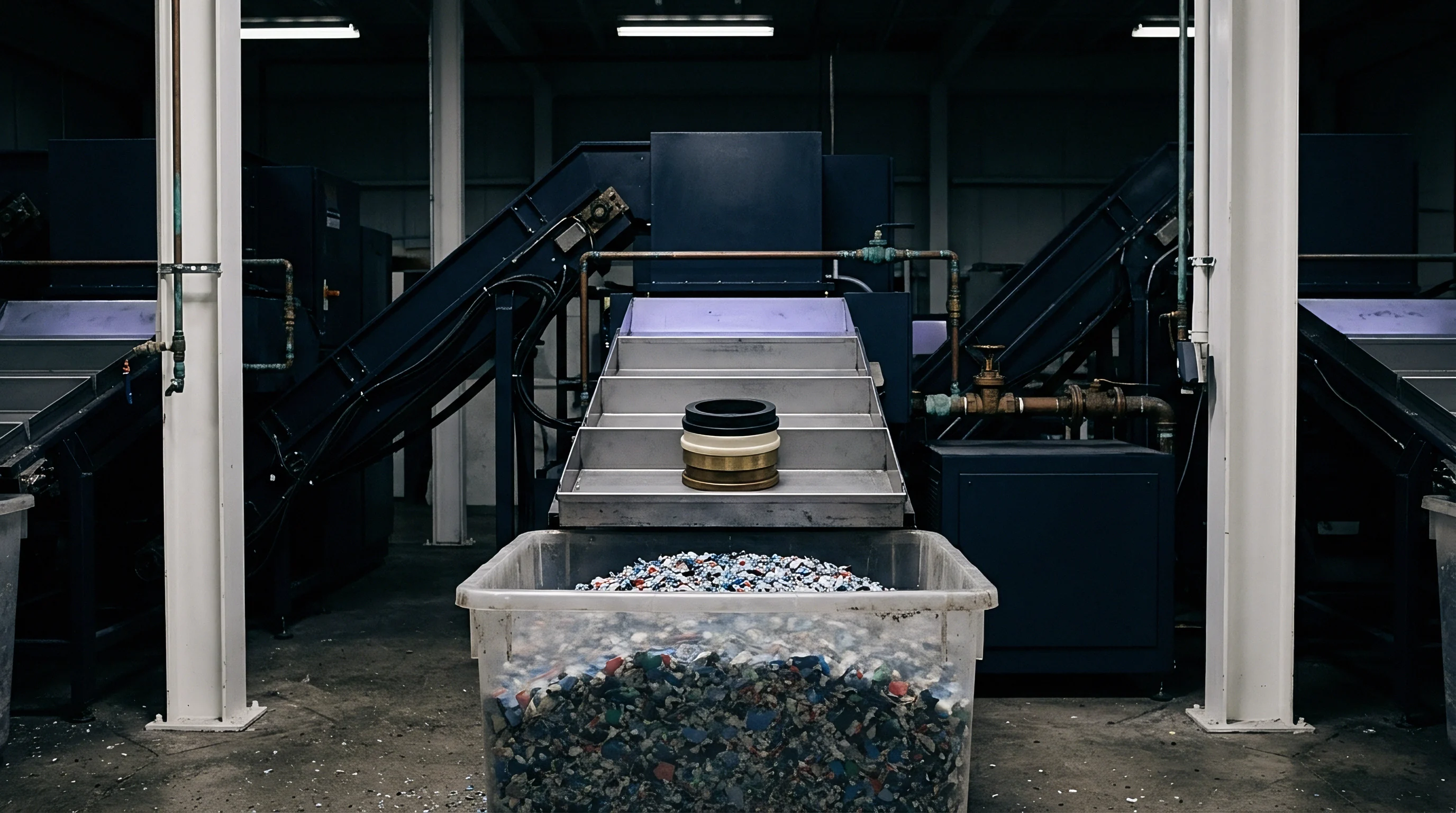
Solvents strip surface oils. Hot caustic washing processes operate at temperatures between seventy and eighty-five degrees Celsius using two percent sodium hydroxide solutions combined with specialized surfactant blends. This aqueous wash strips surface-bound organic residues and hydrolyzes water-soluble label adhesives.
Hot caustic wash removes surface dirt. Inadequate washing allows surface contaminants to melt into the polymer matrix during subsequent extrusion steps, creating non-intentionally added substances that complicate downstream specific migration testing.
Clean wash water prevents migrant re-absorption during hot caustic immersion.
Polyolefin flakes absorb organic contaminants into their amorphous regions during storage and use. High-density polyethylene demonstrates higher gas and vapor absorption rates than polypropylene due to lower glass transition temperatures and chain mobility characteristics. Screening post-consumer regrind prior to melting requires standardized sampling protocols that account for batch heterogeneity across incoming bale lots.
- Cross-polymer cross-contamination occurs when post-consumer polypropylenes mix into high-density polyethylene wash streams, altering crystallization behavior and trapping low-molecular-weight oligomers.
- Adhesive inter-layer bleed introduces unreacted acrylates and polyurethane degradation products into the regrind during high-temperature washing cycles.
- Print ink migration transfers photoinitiators like isopropylthioxanthone into porous polymer matrices during dry granulation operations.
Fine grinding before solvent extraction yields higher recovery of entrapped non-volatile migrants than coarse pellet testing.

Screening
Targeted mass spectrometry identifies known additives, whereas non-targeted high-resolution methods detect non-intentionally added substances arising from polymer thermal degradation. Recycled polyolefin matrices contain complex chemical mixtures comprising unreacted monomers, polymer oligomers, antioxidant oxidation products, slip agent degradation fragments, and environmental contaminants absorbed during previous use cycles. Comprehensive analytical characterization relies on complementary chromatographic techniques paired with mass selective detectors.
Targeted Gas Chromatography for Volatile Contaminants
Quantitative spectrometry coupled with capillary column separation isolates low-molecular-weight hydrocarbons and residual solvent residues down to trace detection limits. Static headspace gas chromatography coupled with mass spectrometry analyzes volatile organic compounds boiling below two hundred degrees Celsius. Gas chromatography detects trace solvents.
Liquid extractions using dichloromethane or hexane isolated under reflux conditions extract semi-volatile compounds including organophosphite antioxidants, phthalate plasticizers, and fatty acid amides.

High-Resolution Mass Spectrometry for Uncharacterized Migrants
Electrospray ionization time-of-flight instrumentation isolates polar oligomers, oxidized antioxidant fragments, and hindered amine light stabilizers. Non-targeted screening workflows utilize ultra-high-performance liquid chromatography coupled to quadrupole time-of-flight mass spectrometry to calculate exact mass-to-charge ratios for unknown chromatogram peaks. Isotopic pattern analysis and accurate mass fragmentation databases allow analytical chemists to elucidate chemical structures for non-intentionally added substances without reference standards.
Analytical extractions require careful mass balance calculations to convert chromatogram peak areas into equivalent migrant concentrations within the solid polymer matrix. Consider a sample of post-consumer high-density polyethylene pelletized resin extracted using dichloromethane. Fifty grams of ground pellet sample undergo static solvent extraction in one hundred milliliters of dichloromethane at forty degrees Celsius for twenty-four hours.
The solvent extract concentrates down to one milliliter under a gentle stream of nitrogen before injection into a gas chromatograph coupled to a mass spectrometer. Analytical recovery of a internal standard, such as deuterated naphthalene spiked at ten milligrams per kilogram, confirms extraction efficiency. If chromatogram integration reveals an uncharacterized alkylphenol peak at a concentration of zero point five milligrams per kilogram in the extract, the calculated concentration in the solid resin equals one milligram per kilogram, assuming complete exhaustiveness of the extraction regime.
Gas chromatography mass spectrometry identifies volatile organic contaminants down to 0.01 milligrams per kilogram in recycled high-density polyethylene extractions.
| Analytical Technique | Target Compound Class | Detection Limit Range | Standard Reference Method |
|---|---|---|---|
| Headspace GC-MS | Volatile Organics and Residual Solvents | 0.01 – 0.1 mg/kg | EN 13130-1 |
| Direct Injection GC-MS | Semi-Volatile Additives and Hydrocarbons | 0.05 – 0.5 mg/kg | EN 15586 |
| LC-QTOF-MS | Polar NIAS, Oligomers, Degradation Products | 0.005 – 0.05 mg/kg | CEN/TS 13130-9 |
| ICP-MS | Heavy Metals and Catalyst Residues | 0.001 – 0.01 mg/kg | EN 15763 |
Analytical laboratories continue to debate whether total mass transfer modeling can replace exhaustive solvent extractions for non-volatile oligomer fractions above one thousand Daltons.


Simulants
Regulatory evaluation relies on liquid contact media that replicate the chemical solubility properties of aqueous, acidic, alcoholic, and fatty foodstuffs. Food packaging compliance frameworks mandate testing finished plastic articles in standard food simulants rather than actual food matrices to maintain analytical reproducibility across testing laboratories. Specific migration testing measures the mass of chemical substances leaching from a unit surface area of plastic into a designated food simulant under defined time and temperature conditions.

Standard Contact Regimes and Alternative Testing Solvents
Test conditions specified under European Regulation 10/2011 define exact time and temperature combinations representing real-world distribution and shelf storage. Tenax simulates dry food contact. Fatty food simulants swell polyolefins.
Standard simulant assignments designate ten percent ethanol in water as Simulant A for aqueous foods, three percent acetic acid in water as Simulant B for acidic foods, and twenty percent ethanol as Simulant C for alcoholic products. Fatty food testing requires vegetable oil as Simulant D2, though chemical testing laboratories frequently utilize substitute media such as ninety-five percent ethanol or isooctane due to analytical difficulties associated with quantifying trace organic migrants inside bulk vegetable oil matrices.
- Prepare clean test specimens measuring one square decimeter of surface area per test cell.
- Fill the extraction cell with one hundred milliliters of pre-conditioned food contact test liquid.
- Seal the stainless steel immersion cell to prevent volatile loss during thermal exposure.
- Maintain specified temperature in a calibrated thermostatic oven for ten days.
- Transfer the liquid contact medium to a clean quartz evaporation basin for dry weight residue determination.
Standard EN 1186 specifies a maximum overall migration limit of ten milligrams per square decimeter of polymer surface area for food packaging compliance.
Testing polyolefins in fatty food simulants presents physical challenges due to solvent-induced polymer swelling. Isooctane penetrates polyolefin matrices faster than vegetable oil, accelerating chemical diffusion rates and yielding conservative over-estimates of migration. Testing laboratories apply reduction factors based on food type fatty contact ratios to adjust raw substitute simulant values back to equivalent real-world exposure limits.
Mismatched testing liquid selection during compliance evaluation voids regulatory clearance and forces complete product recalls across distribution channels.


Thresholds
Toxicological evaluation sets maximum allowable specific migration limits based on acceptable daily intake calculations and structural class assignments. Specific migration limits apply to known, intentionally added substances listed in positive authorization inventories. Non-intentionally added substances detected during screening extractions require risk management based on toxicological thresholds of concern when specific toxicological data is unavailable.

Toxicological Evaluation of Unidentified Non-Intentionally Added Substances
Cramer Class III structural assignments impose a conservative exposure limit of one point five micrograms per person per day for uncharacterized compounds. Cramer Class III sets limits. Heavy metals demand strict screening.
Structural alerts identified by quantitative structure-activity relationship models group unknown chromatogram peaks into Cramer structural classes. Cramer Class I covers simple structures with low oral toxicity thresholds, allowing dietary exposure up to eighteen hundred micrograms per day. Cramer Class III covers complex aromatic, heterocyclic, or reactive functional groups associated with significant toxicity potential.
Can Post-Consumer Polyolefins Meet Direct Food Exposure Standards?
Direct contact clearance demands rigorous evidence that dietary exposure to unknown migrants remains below zero point five parts per billion in the finished packaging article. Under United States Food and Drug Administration Threshold of Regulation guidelines, a substance migrating at concentrations below zero point five parts per billion in the daily diet presents negligible toxicological concern, waiving formal food additive petition requirements. Achieving this threshold with post-consumer polyolefins requires functional barriers, such as virgin polyolefin skin layers in co-extruded structures, or ultra-clean recycling processes validated by comprehensive challenge tests.
| Contaminant Category | Structural Assessment Method | Regulatory Exposure Limit | Specific Migration Cutoff |
|---|---|---|---|
| Cramer Class I Substances | TTC Decision Tree | 1800 µg/person/day | 1.0 mg/kg food |
| Cramer Class III Substances | TTC Decision Tree | 1.5 µg/person/day | 0.01 mg/kg food |
| Genotoxic Carcinogens | Structural Alert / QSAR | 0.15 µg/person/day | 0.0005 mg/kg food |
| Dual-Use Food Additives | ECHA / EFSA Union List | Specific Annex I Limit | Defined SML Value |
- Challenge test verification confirms the recycling process achieves at least ninety-nine percent reduction of surrogate contaminants across all functional barriers.
- Oligomer fraction screening identifies low-molecular-weight polyolefin species below one thousand Daltons that diffuse into fatty food matrices.
- Heavy metal screening validates that residual lead, cadmium, mercury, and hexavalent chromium concentrations remain under one hundred parts per million combined.
- Sensory off-odor evaluation detects volatile fatty acids and aldehydes that impair food organoleptic properties prior to commercial filling.
Polymer density directly influences the diffusion velocity of low molecular weight organic contaminants through polyolefin matrices.
Contractual acceptance terms specifying European Union Regulation 10/2011 compliance obligate reclaimer suppliers to provide specific migration data for all dual-use food additives present in the resin shipment.

Dossier
Technical files backing regulatory compliance declarations demand documented traceability from post-consumer collection sources through decontamination processing to final converter molding. Importers and brand owners placing recycled polyolefin packaging on commercial markets carry legal responsibility for ensuring that finished articles conform to framework safety regulations. Customs agents hold unverified shipments.
Traceability links resin to source. Lab reports document lot numbers. Importers assume full legal liability.
Recycled resins demand continuous testing. Analytical limits protect consumer health.
Declarations of compliance state the regulatory identity of the recycled resin batch, the identity of the reclaimer, and the specific operational limits under which the material may be safely used. These document files must detail food types allowed for contact, maximum operational contact temperatures, storage duration limits, and the ratio of packaging surface area to food volume used to verify migration limits. The supporting technical dossier contains laboratory test reports from accredited testing facilities, raw mass spectrometry chromatograms, challenge test validation certificates, and quality management system documentation conforming to European Regulation 2023/2006 on Good Manufacturing Practice.
Failing to maintain complete compliance files exposes packaging supply chains to severe commercial penalties during market surveillance audits. Consider a commercial lot consisting of forty metric tons of post-consumer recycled high-density polyethylene resin imported for blow-molding food containers. The purchase value of the resin lot totals sixty-four thousand dollars.
If market surveillance authorities select the lot for routine verification and find that the supporting compliance dossier lacks non-intentionally added substance screening records or accredited challenge test evidence, the shipment faces immediate quarantine. Storage fees during administrative holds average three hundred dollars per day per shipping container. If authorities reject the compliance file, re-export logistics costs and hazardous waste incineration fees add eighteen thousand dollars in unrecoverable landed losses, alongside total loss of the resin purchase value.
Importers operating in European and North American markets retain financial responsibility for full batch testing records whenever customs authorities request verification of compliance declarations.