Analytical Screening Workflows for Unknown Polyolefin Migrants in Food Simulants
Analytical screening of unknown polyolefin migrants requires coupled GC-QTOF and LC-Orbitrap mass spectrometry matched to rigorous food simulant extraction physics.


Solvent
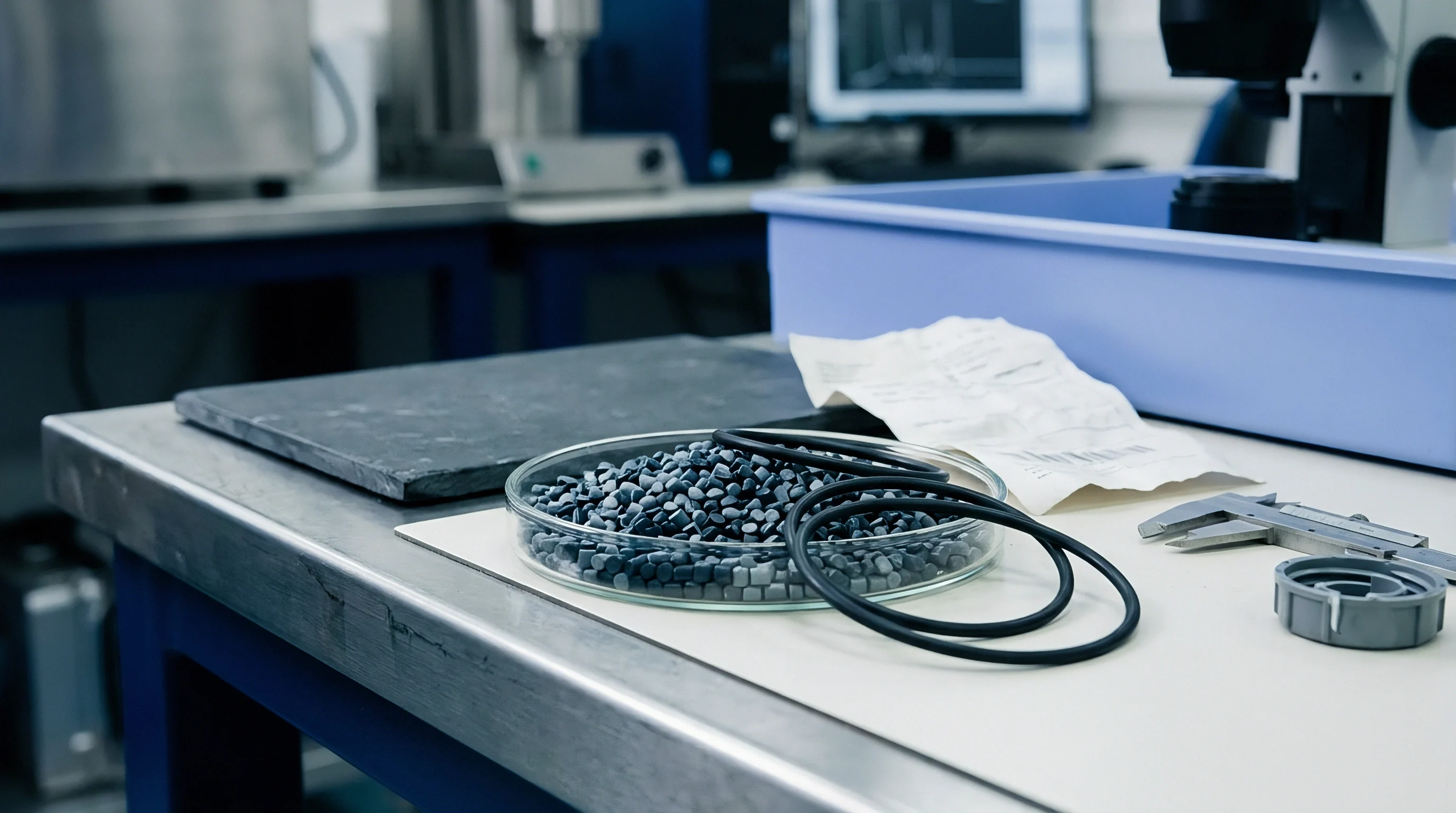
Testing plastic food contact materials for chemical migration requires matching simulant properties to intended exposure conditions. Polyolefins like low-density polyethylene, high-density polyethylene, and polypropylene hold unreacted monomer residues, low molecular weight oligomeric hydrocarbons, synthetic paraffin waxes, and additive breakdown products. Liquid media extract these species according to thermodynamic partitioning, while solvent selection governs kinetic partitioning rates.
As solvent molecules penetrate amorphous regions of the polyolefin matrix, the polymer swells, accelerating internal migrant diffusion into the contacting phase.

Food Simulant Contact Testing Physics
Regulation EU 10/2011 defines standard simulants for specific food categories. Ethanol 10 percent volume by volume serves as Simulant A for aqueous foods, while 3 percent weight by volume acetic acid acts as Simulant B for acidic foods with a pH below 4.5. Ethanol 50 percent volume by volume functions as Simulant D1 for dairy products and alcoholic beverages.
Vegetable oil, isooctane, or ethanol 95 percent volume by volume represent Simulant D2 for fatty foods, and poly(2,6-diphenyl-p-phenylene oxide) ~ commercially designated as Tenax ~ serves as Simulant E for dry matrices.
The 10 mg/dm² total migration limit under Regulation EU 10/2011 rests on a standard surface area to volume ratio of 6 dm² per kilogram of food. Shifting to smaller containers increases this ratio, lowering the allowable migrant concentration in the polymer matrix. Testing conditions must reflect worst-case predictable use: 10 days at 40 degrees Celsius models long-term ambient storage, 10 days at 60 degrees Celsius covers storage above room temperature up to six months, and 2 hours at 100 degrees Celsius covers hot-fill applications.
Fatty food substitutes like isooctane call for shorter exposures, such as 2 days at 20 degrees Celsius, because aggressive solvent swelling accelerates extraction far beyond normal oil partitioning rates.
Exposure of low-density polyethylene to 95 percent ethanol for 10 days at 60 degrees Celsius yields up to four times the total extractable oligomer mass compared to 10 percent ethanol under identical thermal exposure.

Simulant Selection Matrix
Testing parameters in Regulation EU 10/2011 align aqueous, acidic, alcoholic, and fatty foods with specific extraction fluids. Selecting the wrong simulant distorts the profile of non-intentionally added substances. Polar media pull out hydrophilic degradation products like oxidized hinder amine light stabilizers and acid scavengers, whereas non-polar media swell the polyolefin network, releasing linear and branched oligomeric hydrocarbons from ten to forty carbon atoms.
Sample Preparation Sequence
Extracts exposed to polyolefin plaques require cleanup to protect analytical instruments from wax accumulation. Injecting fatty simulant extracts directly fouls chromatographic inlets and mass spectrometer ion sources. While nitrogen stream evaporation concentrates trace migrants, it also drives off volatile compounds below twelve carbon atoms.
Solid-phase extraction on silica gel or C18 cartridges separates polar additive degradation products from non-polar oligomers before chromatography.
- Cut polyolefin test specimens into double-sided planar pieces yielding exactly one square decimeter of total contact surface area.
- Immerse the prepared specimens in thirty milliliters of ethanol ten percent volume by volume inside a sealed glass migration cell for ten days at forty degrees Celsius.
- Decant the fluid extract, spiked with internal standards including deuterated hexadecane, into an evaporative concentration vessel.
- Evaporate the contact liquid under a gentle nitrogen stream at thirty-five degrees Celsius to a residual volume of five hundred microliters.
- Inject two microliters of the concentrated extract into the gas chromatographic inlet without secondary filtration.
Unlisted chromatographic peaks are frequently attributed to inert structural fragments that pose no compliance risk to finished package structures.
Chromatography
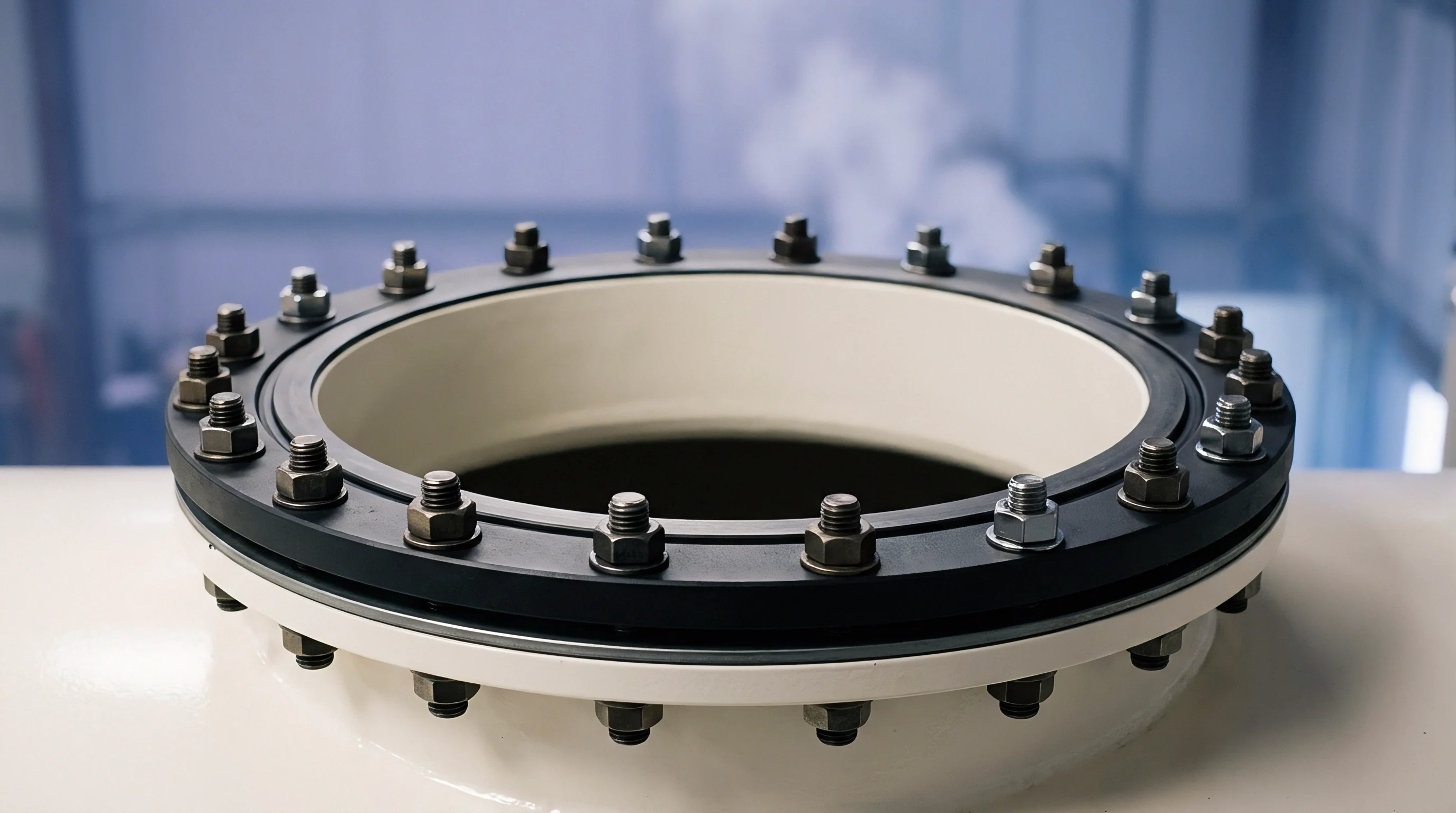
Separating complex polyolefin extracts depends on matching analyte volatility to column chemistry. Migrants span from volatile solvents to hindered phenolic antioxidants exceeding one thousand Daltons. Analytical screening workflows divide extracts into volatile, semi-volatile, and non-volatile fractions to optimize resolution and prevent column contamination.

Volatile and Semi Volatile Gas Phase Separation
High-temperature non-polar capillary columns resolve saturated and unsaturated hydrocarbon oligomers from ten to forty carbon atoms. Stationary phases of 5 percent phenyl 95 percent dimethylpolysiloxane separate linear alpha-olefins from branched polyolefin oligomers. Gas chromatography with flame ionization detection yields quantitative response factors close to unity for hydrocarbon migrants, allowing total oligomer mass estimation without individual reference standards.
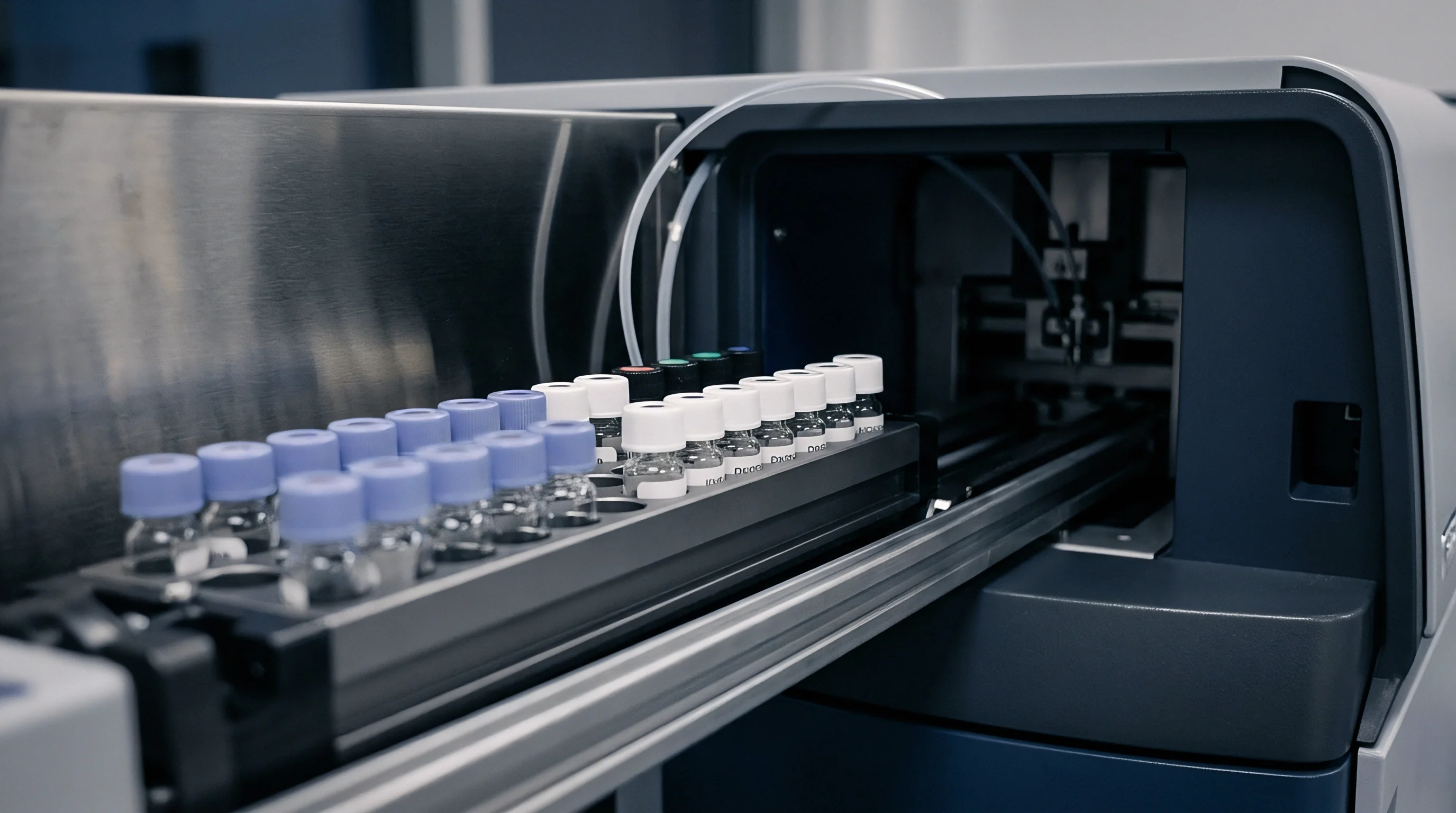
Gas chromatography coupled with high-resolution quadrupole time-of-flight mass spectrometry provides accurate mass data for volatile non-intentionally added substances. Electron ionization at 70 electronvolts fragments hydrocarbon backbones into characteristic alkyl carbocation clusters spaced 14 mass units apart. Chemical ionization using methane or isobutane reagent gases preserves the pseudo-molecular protonated adduct ion, revealing exact molecular weights.
High-density polyethylene extracts displaying dense oligomeric hump distributions require chemical ionization mass spectrometry to confirm parent molecular ion weights.

Liquid Phase High Resolution Separation
Reversed-phase C18 columns coupled with electrospray and atmospheric pressure chemical ionization capture high molecular weight additives. Non-polar oligomers escape electrospray ionization because they lack polar functional groups. Atmospheric pressure chemical ionization ionizes semi-polar and non-polar species by charge transfer, capturing polyolefin wax fraction molecules up to fifty carbon atoms.
Liquid chromatography coupled with high-resolution Orbitrap mass spectrometry yields sub-part-per-million mass accuracy for non-volatile migrants. Positive-mode electrospray ionization detects synthetic antioxidants like Irganox 1010, Irganox 1076, and their tris-ester breakdown products, whereas negative mode identifies fatty acid slip agents, erosion products, and acidic thermal degradation compounds.
Two Dimensional GCxGC Olefin Resolution
Thermal modulation couples a non-polar primary column to a mid-polar secondary column, separating linear polyolefin oligomers from branched structural isomers. Comprehensive two-dimensional gas chromatography distinguishes mineral oil saturated hydrocarbons from polyolefin oligomeric hydrocarbons: the primary dimension separates by boiling point and the secondary by polarizability. This spatial separation resolves complex isomeric humps into distinct chemical bands, preventing overestimation of toxic mineral oil contaminants in packaging extracts.
| Technique | Target Migrant Class | Separation Mechanism | Ionization / Detector | Typical Detection Limit |
|---|---|---|---|---|
| GC-FID | C10 to C40 Polyolefin Oligomers | Boiling point separation on non-polar column | Flame Ionization | 0.05 mg/kg simulant |
| GC-QTOF (EI/CI) | Volatile and semi-volatile NIAS | Capillary gas chromatography | 70 eV EI / Methane CI | 0.005 mg/kg simulant |
| LC-Orbitrap (ESI/APCI) | High molecular weight additives and NIAS | Reversed-phase C18 gradient | ESI (+/-) / APCI (+/-) | 0.001 mg/kg simulant |
| GCxGC-FID/MS | MOSH, MOAH, and branched POH oligomers | Dual-column thermal modulation | FID and TOF-MS | 0.01 mg/kg simulant |
Extended chromatographic runtimes on long capillary columns yield sharper isomer resolution than steep temperature ramps.


Fragmentation
Mass spectral fragmentation provides the basis for identifying unknowns in polyolefin extracts. High-resolution accurate mass instruments establish elemental formulas by measuring mass-to-charge ratios to four decimal places. Commercial library matching often fails for non-intentionally added substances formed through random radical recombination during extrusion.
High Resolution Mass Spectral Deconvolution
Accurate mass measurements below two parts per million enable elemental formula assignments for unknown signals. Isotopic pattern matching confirms chlorine, sulfur, or phosphorus in migrant molecules. Comparing fine isotopic structure among C-13, N-15, and O-18 isotopes eliminates impossible formulas, narrowing the candidate pool.
Algorithms deconvolve co-eluting chromatographic peaks by extracting ion chromatograms at specific accurate masses, separating target migrant ions from background noise. Fragment loss patterns in collision-induced dissociation tandem mass spectrometry reveal core structures; for instance, a loss of 56 mass units points to a tert-butyl group, characteristic of oxidation products from hindered phenolic antioxidants like Irgafos 168 and Irganox 1010.
Failing to verify unknown mass spectral features down to 0.01 milligrams per kilogram in food simulant exposes packaging converters to non-compliance notices under Regulation EC 1935 2004 Article 3.

Structural Elucidation for Olefin NIAS
Collision-induced dissociation spectra show fragment loss patterns corresponding to methyl branches and ester cleavages. Gas chromatography with electron ionization yields reproducible spectra for searching NIST and Wiley databases, while unlisted oligomers exhibit characteristic ion series at m/z 43, 57, 71, and 85 from saturated alkyl fragmentation.
Distinguishing cyclic polyolefin oligomers from unsaturated linear oligomers requires precise mass defect analysis. Saturated cyclic hydrocarbons carry a double bond equivalent of one, shifting their exact mass lower than corresponding linear alkanes. Tandem mass spectrometry opens these ring structures, producing distinct product ion ratios compared to straight-chain alpha-olefins.
| Parameter | GC-QTOF Setting | LC-Orbitrap Setting | Identification Criteria |
|---|---|---|---|
| Mass Accuracy Tolerance | Less than 5 ppm | Less than 2 ppm | Sub-ppm mass error required for formula assignment |
| Isotopic Pattern Match | Greater than 85% fit score | Greater than 92% fit score | Theoretical versus experimental isotope ratio correlation |
| Library Match Threshold | Forward match greater than 750 | N/A (Accurate mass database) | High-confidence match against NIST/Wiley spectrum |
| Signal-to-Noise Floor | 10:1 S/N ratio | 20:1 S/N ratio | Minimum threshold for quantitative peak integration |
How analytical workflows will reliably distinguish structural isomers of branched polyolefin oligomers with identical elemental formulas at trace levels remains an open question for laboratory standardization.


Hazard
Evaluating health risks from non-intentionally added substances demands structured screening before materials enter commercial packaging. Toxicological evaluation links migration concentration data to human exposure thresholds, and substances lacking toxicological data trigger tiered workflows to establish safe migration limits.

Is TTC Applied to Unidentified Polyolefin Migrants?
Evaluation relies on threshold caps when full chemical identification proves analytically impossible due to low mass yields. The Threshold of Toxicological Concern concept categorizes unidentified migrants into exposure tiers based on structural properties and estimated daily intake: Cramer Class I covers low-toxicity structures capped at 1800 micrograms per person per day, Cramer Class II covers intermediate toxicity at 540 micrograms, and Cramer Class III indicates high toxicity, capped at 90 micrograms per person per day.
Unidentified migrants lacking structural confirmation fall into the most conservative toxicity threshold. Genotoxic alerts drop the exposure cap to 0.15 micrograms per person per day. Assuming a daily food intake of one kilogram, this cap translates to an analytical screening limit of 0.00015 milligrams per kilogram of food simulant.
The standard 0.01 mg/kg screening threshold for unquantified non-intentionally added substances derives from this 0.15 microgram per person per day genotoxicity cap. Adjusting the exposure model to reflect actual daily consumption fractions would raise this threshold proportionally.
The estimate that 80 percent of unresolved complex mixture humps in recycled polyolefin extracts consist of saturated hydrocarbon oligomers lacks comprehensive mass spectral proof across variable feedstocks. Faced with this ambiguity, packaging buyers rely on broad-spectrum gas chromatography with flame ionization detection to enforce an aggregate threshold on total mineral oil saturated hydrocarbons rather than attempting individual peak assignment.
Surrogate quantification without response factor correction factors regularly overestimates or underestimates actual migrant concentration by a factor of five.
QSAR Modeling for Additive Degradation Products
In silico tools evaluate chemical structures for mutagenicity and carcinogenicity alerts prior to bioassay testing. Quantitative Structure-Activity Relationship platforms like VEGA, Derek Nexus, and Sarah Model predict toxicological endpoints for identified polymer transformation products. Compounds triggering structural alerts for mutagenicity require verification using the Ames Salmonella bacterial reverse mutation test before commercial clearance.
- Response Factor Variance Quantifying unknown oligomeric peaks with a single surrogate like d34-hexadecane causes errors exceeding 400 percent when analyte ionization efficiencies diverge.
- Matrix Suppression Artifacts Non-volatile extractables co-eluting with trace migrants suppress electrospray ionization, masking compounds present above toxicological thresholds.
- Volatile Loss During Concentration Evaporating extracts down to microliter volumes drives off volatile migrants below twelve carbon atoms prior to gas chromatography.
- Co-Eluting Isomer Envelopes Unresolved complex mixtures of branched polyolefin hydrocarbons merge into broad baseline humps that conceal individual chemical entities.
Misclassifying a toxic additive breakdown product as a benign paraffinic oligomer invalidates the safety dossier, triggering recall obligations if detected during market surveillance.
Obligation
Legal accountability for food packaging safety rests on verifiable evidence linking raw resin chemistries to finished article migration profiles. Packaging converters and importers maintain technical dossiers supporting the Declaration of Conformity under Regulation EU 10/2011 Annex IV, with test reports mapping directly to production lot numbers loaded into shipping containers.

Declaration of Conformity Dossier Traceability
European rules mandate that downstream documentation links analytical reports for finished articles to specific polymer resin lots. Declarations of Conformity referencing generic resin specifications without supporting migration reports fail legal audits. The technical file must list all added substances subject to specific migration limits, dual-use additives, and risk assessments for non-intentionally added substances.
Overall migration limits under Regulation EU 10/2011 cap total inert substance transfer at 10 milligrams per square decimeter of packaging surface area. Specific migration limits restrict individual toxic substances, such as 0.05 milligrams per kilogram for oxidized Irgafos 168 degradation products. Packaging importers remain legally accountable for non-compliant values discovered during port-of-entry inspections.

Batch Verification and Border Enforcement
Import authorities inspect containerized packaging shipments by verifying migration limits against stated food contact conditions. Market surveillance agencies sample materials at borders, running gas chromatography screening for unlisted migrants. Discrepancies between documented chemical profiles and analytical results trigger immediate customs holds and recall notifications under the Rapid Alert System for Food and Feed.
- Simulant Match Verification Cross-check that test reports reflect the exact food simulant combinations matching target foodstuff acidity and fat content.
- Contact Limit Validation Inspect exposure duration and temperature parameters to confirm they bound actual filled shelf-life conditions.
- Unidentified Peak Audit Examine high-resolution chromatograms to ensure all unknown signals above ten parts per billion carry documented toxicological clearance.
- Resin Lot Correlation Confirm that resin grade designations on supplier compliance declarations match physical lot numbers on container bills of lading.
Supply contracts carrying explicit compliance indemnity clauses protect package buyers by transferring withdrawal costs to the resin compounder when unlisted migrants exceed regulatory limits.