Meaning
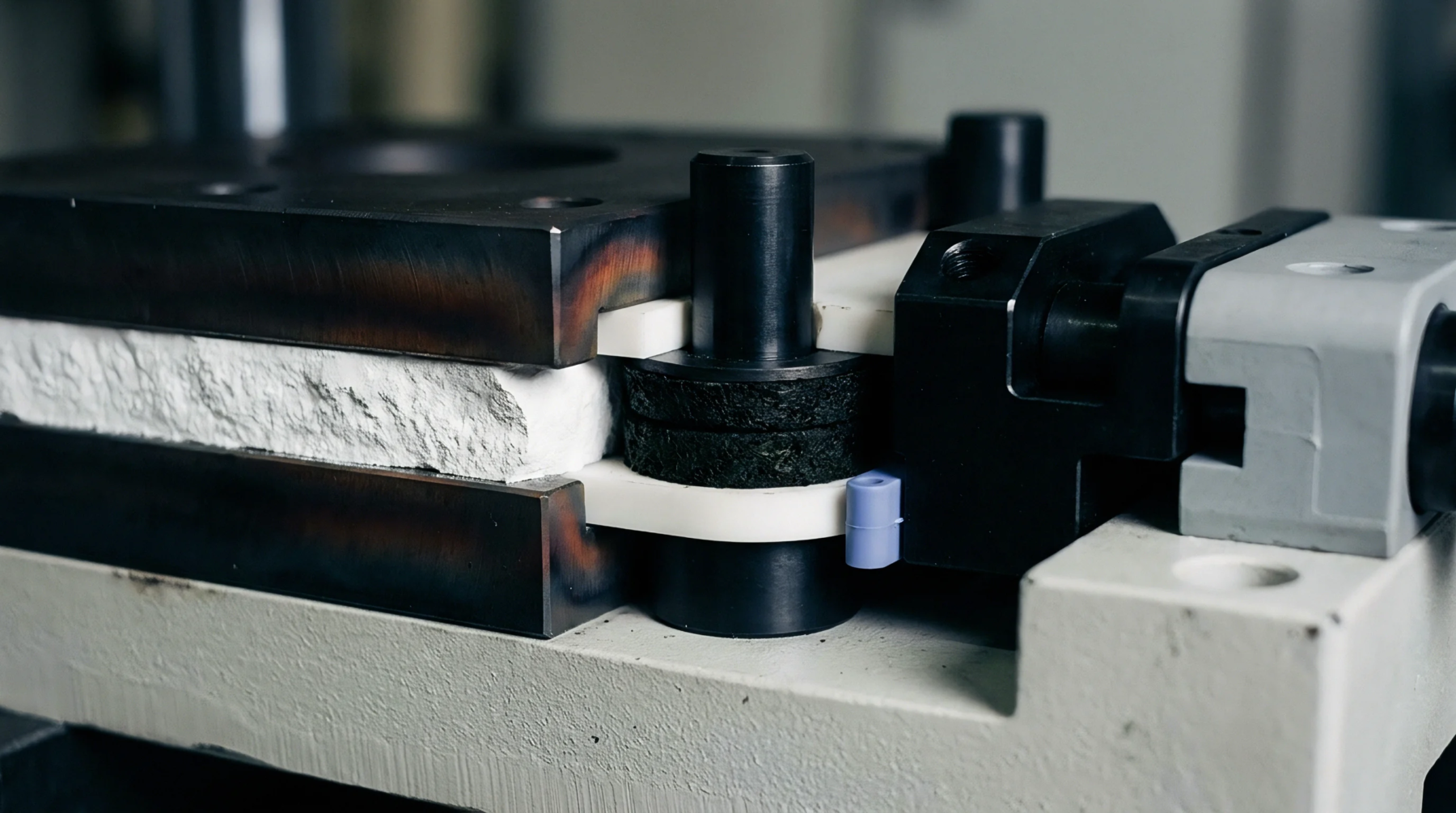
Evaluated against conductive heat transfer rates across adjacent mold plates, localized heat shielding prevents uncontrolled thermal energy flow between hot runner manifolds and cold tool structural plates. Installing thermal barrier isolation minimizes energy loss and heat transfer between machine platens and slide mechanisms. Synthetic ceramic plates and high-performance polyimide sheets serve as thermal insulators mounted between the mold base and press platens.
Inadequate isolation causes temperature drops in hot runner nozzles, resulting in gate freezing and inconsistent cavity filling. Proper thermal insulation improves energy efficiency while maintaining tight dimensional tolerances on cooled mold plates.
Insulation Materials
Asbestos-free composite plates resist high compression loads without creeping under clamping pressure. Ceramic insulation sheets provide low thermal conductivity and high mechanical strength at extreme operating temperatures. Air gap pockets machined into mold base plates create additional natural thermal barriers.
Thermal Contamination
Unshielded heat flow from hot runner manifolds warms cold core plates, extending required cooling times and increasing cycle duration. Thermal expansion of uninsulated mold plates misaligns slides and core inserts. Energy consumption rises significantly as chillers work harder to remove stray heat from structural tool plates.
Efficiency Optimization
Thermal isolation plates mounted on top and bottom clamping plates reduce total heating power requirements by up to thirty percent. Stable tool temperatures shorten cycle times and extend mold component service life.