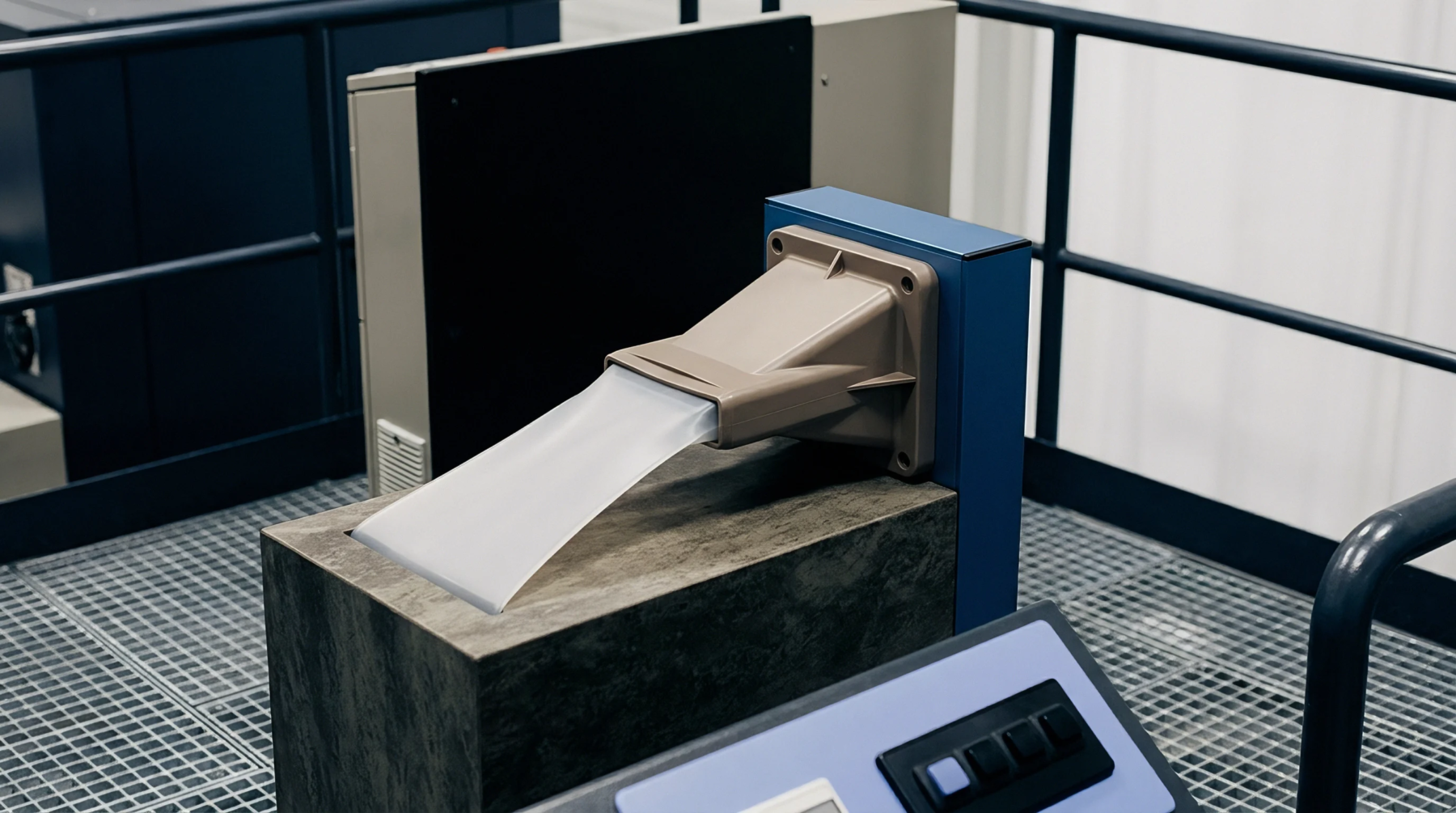
Slip and Antiblock Additives Migrating into a Sealed Film
Excess primary amide migration depresses hot tack and seal peel strength; control with secondary amides or non-migrating siloxanes verified via ATR-FTIR.
Finely ground hydrated magnesium silicate particles dispersed within a thermoplastic resin matrix act as a physical separator to prevent film layers from adhering to each other during windup or storage. Talc antiblock functions by creating microscopic surface roughness that reduces the contact area between adjacent polymer webs. This separation mechanism lowers the coefficient of friction, which prevents unwanted blocking where heat or pressure might otherwise bond layers together.
The mineral operates as an inorganic filler, maintaining chemical inertness within the host matrix while providing a stable spacing effect that remains effective under elevated warehouse temperatures.
Proper incorporation of talc antiblock requires specific processing conditions during the extrusion of linear low density polyethylene or other blown films. Agglomerates of the mineral must undergo thorough high-shear mixing to ensure individual particles distribute uniformly across the entire web surface. Insufficient distribution leaves regions of the film unprotected, which leads to localized sticking or blocking issues that impede subsequent conversion processes.
Moulders and film manufacturers specify the particle size distribution of the additive to ensure the peaks protruding from the polymer surface provide sufficient separation without degrading the optical clarity of the final product. Higher loading levels increase the anti-sticking performance but often decrease the transparency and gloss of the film because the mineral particles scatter incoming light.
Inclusion of these mineral additives shifts the cost structure for film production by modifying the efficiency of post-extrusion handling. Virgin resins often require precise dosing of the masterbatch to achieve the target sliding characteristics without interfering with seal strength or printability requirements. Recycled materials introduce variation in the base surface roughness, which forces a readjustment of the additive concentration to maintain consistent slip properties across different production lots.
Purchasing specifications for the additive focus on moisture content and purity to ensure the particles remain dry and free flowing within the hopper. Controlling the feed rate at the extruder maintains a stable additive concentration that prevents variability in the coefficient of friction during the production run. Excess additive increases wear on tooling and components, while inadequate levels result in rejected rolls that cannot be unspooled effectively at the converting stage.
Performance of talc antiblock rests upon the stability of its mineral morphology throughout the high temperature environment of the molten resin. Variations in the crystal structure of the supplied grade lead to inconsistent slip levels even when the dosage remains constant across several production batches. Testing procedures measure the kinetic and static coefficient of friction against a polished steel surface to provide a proxy for the anti-blocking efficacy of the material.
This measurement acts as a quality control checkpoint to verify that the additive prevents internal adhesion despite differences in resin cooling rates. The mineral provides a durable solution for high-speed conversion equipment that demands low surface resistance for steady web tension management. Surface chemistry dictates the efficiency of the mineral bond to the polymer matrix, confirming that the particles remain fixed during high-speed film handling operations.
Excess primary amide migration depresses hot tack and seal peel strength; control with secondary amides or non-migrating siloxanes verified via ATR-FTIR.
Expertise is a utility, not a secret. sentiention™ publishes its working knowledge as open reference: intelligence layer covering the materials it sources, the markets it enters, and the reference that serves both.