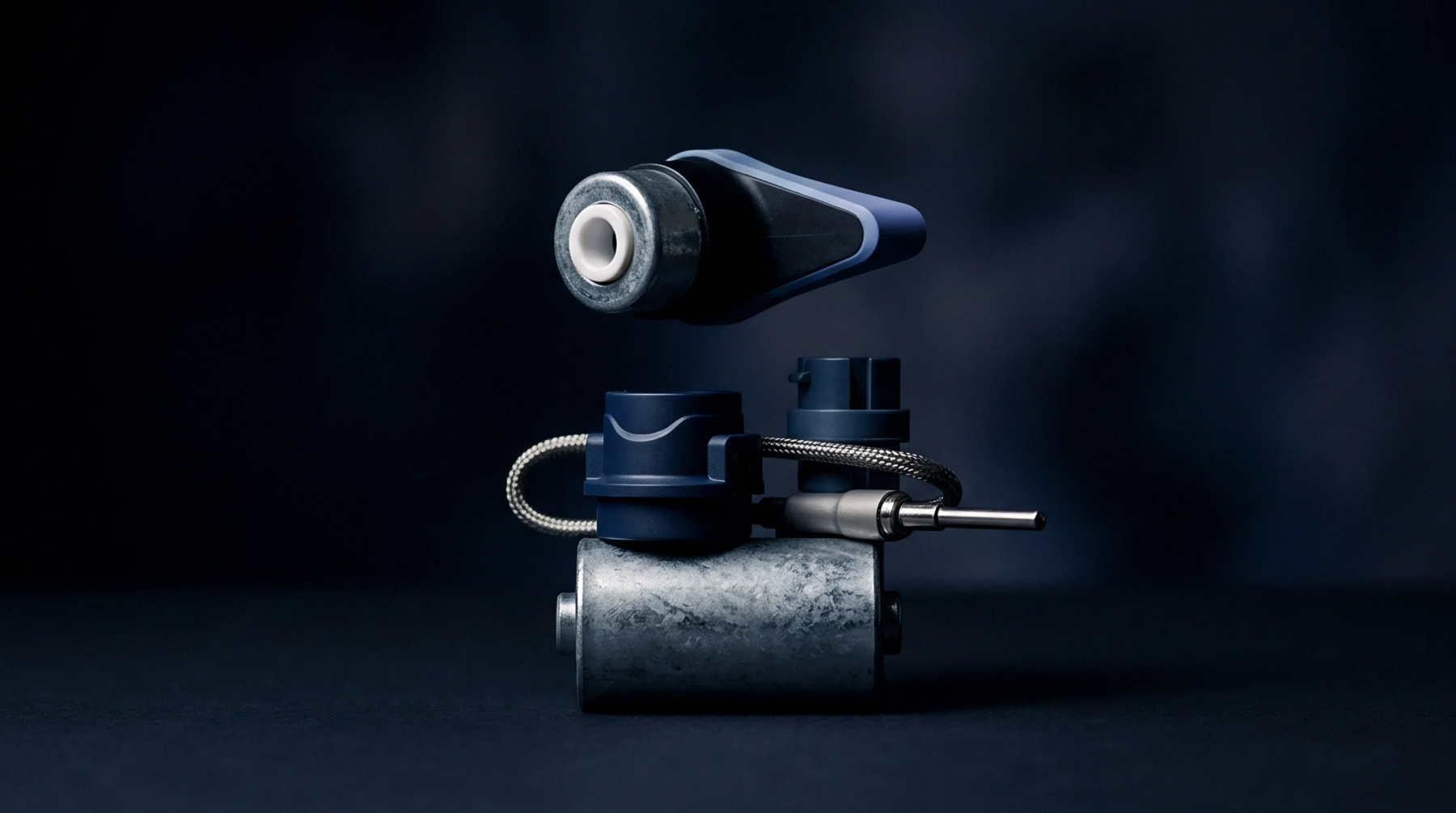
Mineral Insulated Cable Routing Strategies for High Temperature Mould Telemetry
Recessed MI cable routing with thermal expansion loops prevents wire pinch, shields noise, and eliminates press downtime in high-temperature moulds.
Injection molding cavity geometry often incorporates a dedicated strain relief pocket to isolate internal mechanical cable anchors from the surrounding polymeric housing during terminal potting operations. This localized recess prevents applied tensile loads from transferring directly to delicate wire terminations inside electrical connectors and electronic enclosures. Designers establish this geometric feature during the initial cavity milling phase of the production tooling lifecycle to accommodate varying wall thicknesses and shrinkage rates.
Uncontrolled thermal contraction during cooling across high pressure injection stages can warp the surrounding plastic matrix, which reduces the mechanical holding force of the pocket. Virgin engineering thermoplastics maintain the dimensional stability required for reliable cable retention, whereas excessive regrind addition lowers melt viscosity and causes inconsistent feature filling. Technicians must monitor melt temperature and packing pressure closely to prevent localized sink marks from degrading the inner walls of the strain relief cavity.
Cavity designers calculate draft angles within the mold insert specifically for this void to ensure clean part ejection without surface scoring or vacuum locking. Polymer flow paths split around the core pins that form this specific cavity zone, creating weld lines that require careful placement away from high stress load bearing areas. Thermal gradients across the mold boundary influence crystallization rates within the thin walls surrounding the recess, which directly affects the ultimate tensile strength of the moulded component.
Machining tolerances on the steel insert remain tight because microscopic tool marks on the pocket surfaces act as stress concentrators during final assembly testing.
Volumetric contraction rates dictate how accurately the polymer replicates the intended dimensions of the strain relief pocket after cooling to ambient temperatures. Semi crystalline materials exhibit higher post mold shrinkage than amorphous counterparts, necessitating larger compensatory dimensions designed directly into the steel tooling profile. Moisture absorption in hydroscopic engineering resins alters final part dimensions after molding, changing the interference fit between the polymer pocket and the inserted cable anchor.
Processing technicians adjust barrel temperatures and injection speeds to minimize differential shrinkage across thick and thin sections adjacent to the internal cavity.
Inadequate wall thickness surrounding the retention void leads to premature structural collapse under standard pull testing protocols specified by regulatory agencies. Brittle fracture occurs when processors exceed recommended injection speeds, inducing excessive molecular orientation and internal residual stress within the molded feature. Increased regrind ratios alter the melt flow index of the polymer compound, producing voids and incomplete filling within the corners of the strain relief pocket.
Proper process validation ensures that production parts maintain consistent mechanical integrity throughout continuous manufacturing runs without dimensional drift or structural degradation.
Recessed MI cable routing with thermal expansion loops prevents wire pinch, shields noise, and eliminates press downtime in high-temperature moulds.
Expertise is a utility, not a secret. sentiention™ publishes its working knowledge as open reference: intelligence layer covering the materials it sources, the markets it enters, and the reference that serves both.