Measuring Dynamic Interfacial Shear Relaxation Rates in Mixed Recyclate Matrixes under Variable Strain
Dynamic interfacial shear relaxation testing isolates phase stability and compatibilizer integrity in mixed recyclate matrixes under variable processing strains.

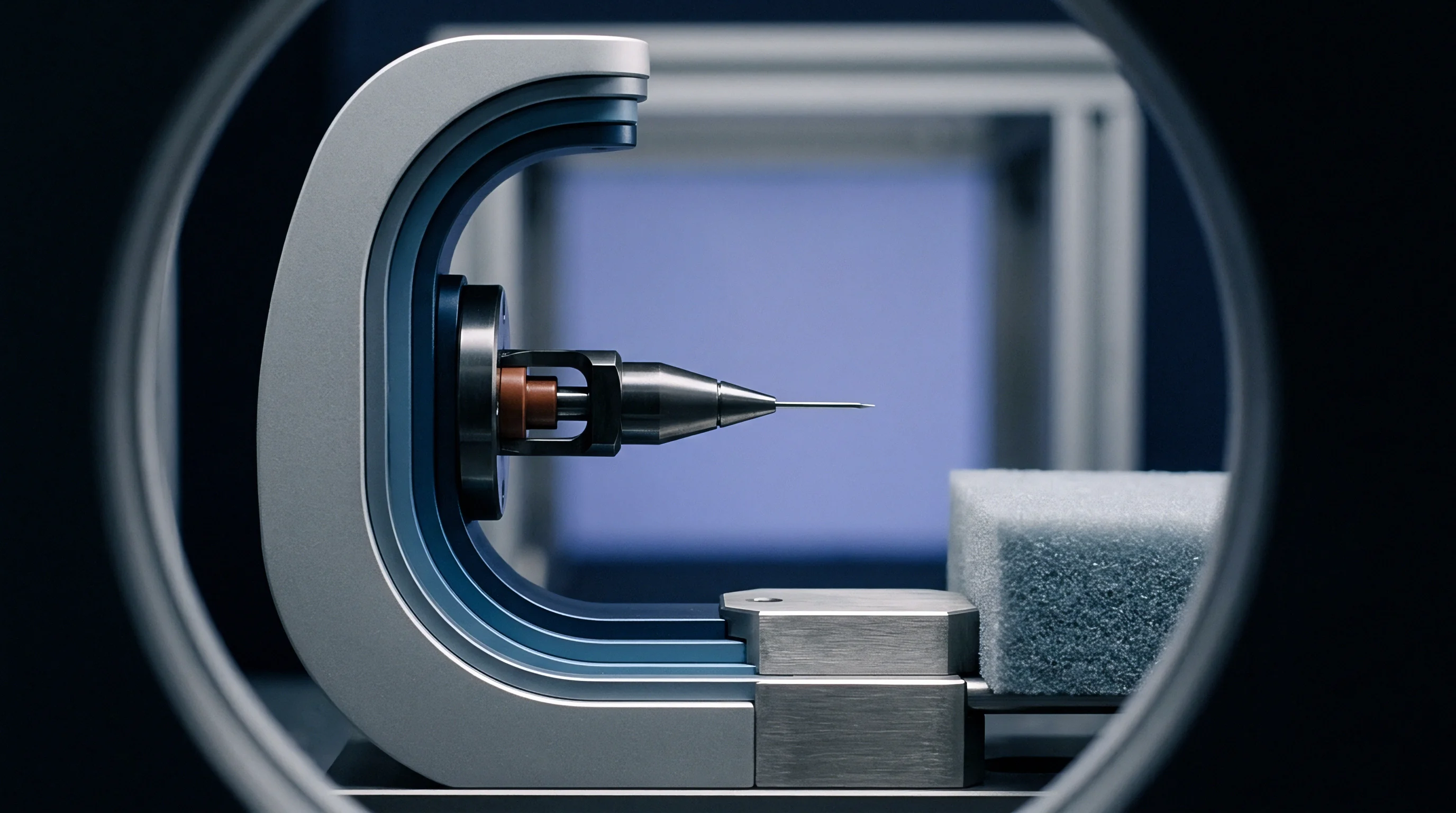
Probe
Torque transducers resolving down to zero point zero five micro-Newton-meters reveal structural details in post-consumer polyolefin blends that melt flow indexers miss entirely. Standard testing at one hundred ninety degrees Celsius under a two point one six kilogram weight per ISO 1133 forces a polymer melt through an orifice without separating bulk matrix deformability from the stress response of dispersed domains. When contaminated high-density polyethylene carries between three and fifteen percent polypropylene by weight, standard extrusion indices show uniform discharge while the two distinct phases slip past one another under injection pressure.
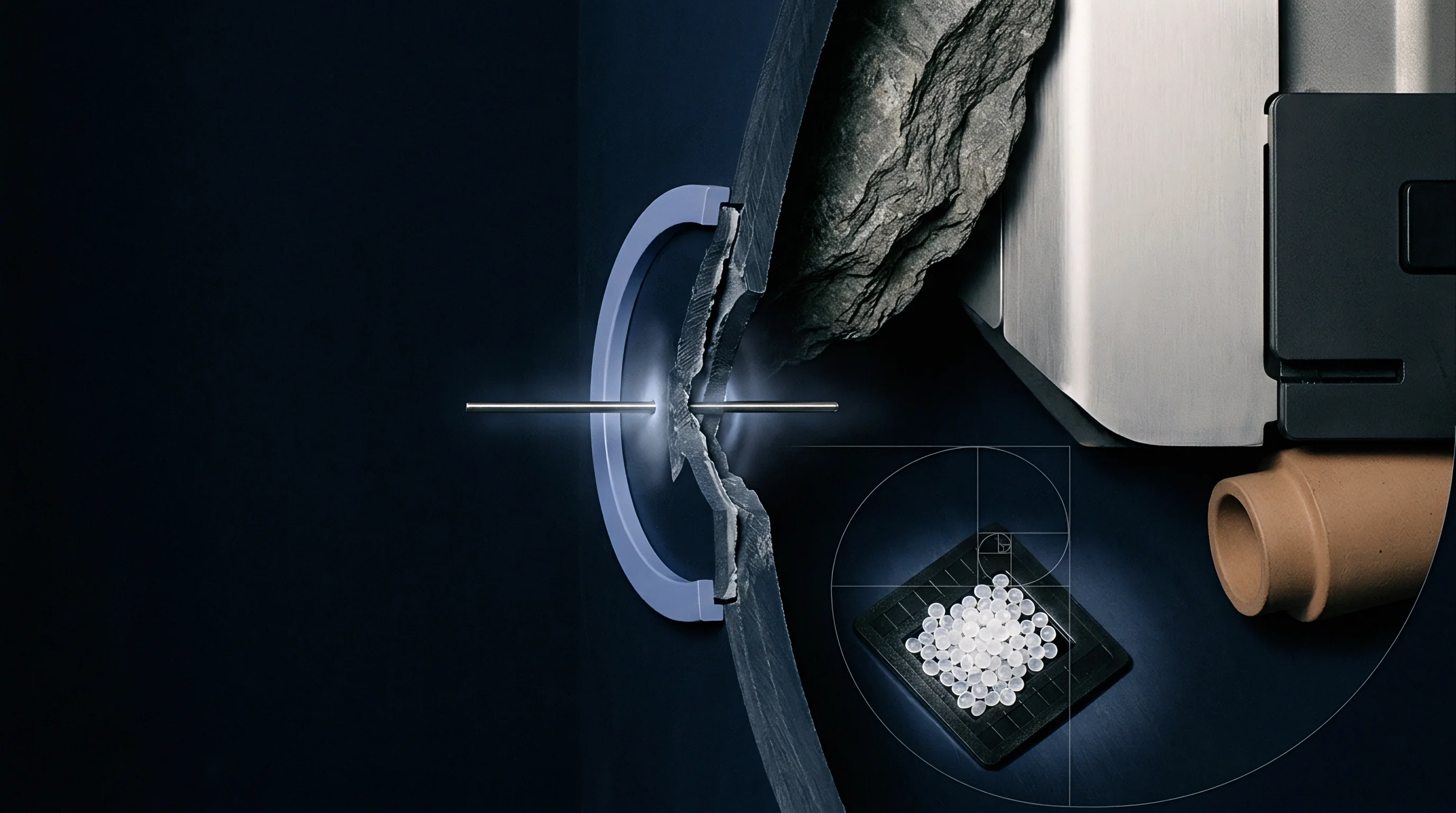
Rotational Geometry Selection for Recycled Polyolefins
Serrated parallel plates measuring twenty-five millimeters across eliminate slip artifacts common to smooth surfaces when shearing immiscible polymers. Gels jam narrow cones. Solid inclusions such as crosslinked polyethylene particles or residual paper fiber exceeding fifty micrometers alter the gap distance in cone-and-plate setups, causing normal force overloads and spurious torque readings.
A fixed one-millimeter gap between parallel plates accommodates post-consumer particulate variance without destroying transducer heads.
Thermal stability during extended shear experiments dictates strict nitrogen purging. Polyolefin regrind degrades quickly through thermal oxidation when oxygen levels exceed twenty parts per million in the test convection chamber, skewing the terminal relaxation plateau upward through crosslinking or downward through chain scission. Parallel fixtures prevent mechanical damage.
Gap calibration dictates reproducibility.
A twenty-five millimeter parallel plate geometry at a one-millimeter gap accommodates dispersed crosslinked particles up to one hundred micrometers without normal force overload at two hundred degrees Celsius.
Linear Viscoelastic Strain Windows
Determining the boundary between undisturbed structural probing and irreversible droplet deformation involves precise amplitude sweeps across strain percentages ranging from zero point zero one to twenty percent. At angular frequencies of one radian per second, virgin matrix homopolymers exhibit linear viscoelastic responses up to strains of five percent. Recycled polyolefin matrices containing compatibilizing block copolymers lose linearity at strains below zero point eight percent due to early distortion of the sub-micron droplet network.
Incoming inspection benches verifying recycled pellet shipments test amplitude response across multiple parameters before committing to frequency runs:
- Initial Strain Sweep establishes the linear threshold across five decades of stress from zero point zero one to ten percent deformation.
- Time Sweep Stability tracks storage modulus drift under a constant zero point two percent strain over eighteen hundred seconds to verify antioxidant protection.
- Matrix Baseline Subtraction quantifies pure resin torque contribution against contaminated compound values at identical temperature profiles.
- Gap Thermal Expansion Correction adjusts plate separation during temperature equilibration between one hundred eighty and two hundred thirty degrees Celsius.
Exceeding the linear viscoelastic strain boundary during batch qualification distorts the droplet relaxation spectrum, producing falsified interfacial tension figures that hide phase separation risks until melted parts rupture inside customer tooling.


Decay
Stress relaxation following an instantaneous step strain provides direct access to interfacial kinetics in multiphase melts without harmonic convolution. Applying an instantaneous step strain of zero point zero five units at two hundred degrees Celsius induces immediate orientation of both the continuous matrix chains and the suspended droplet inclusions. As the continuous matrix chains disentangle, the measured shear stress falls through several decades of time.
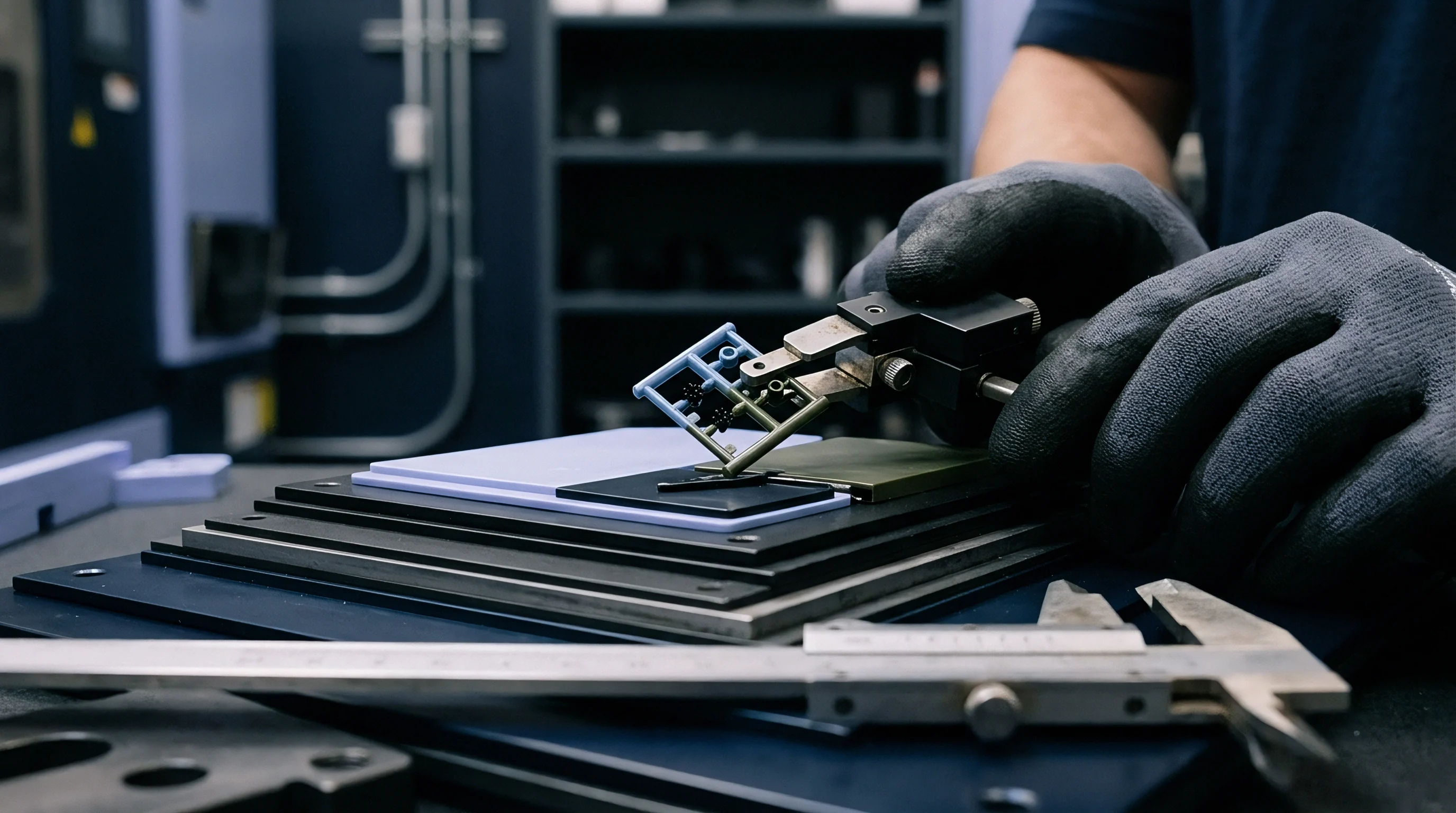
Step Strain Transients and Terminal Retraction
Polymer chains disentangle rapidly. Dispersed inclusions resist rapid realignment. While the continuous high-density polyethylene matrix completes its Rouse and reptation relaxation modes within zero point five seconds, the recovery of stretched polypropylene droplets back to spherical equilibrium takes between five and fifty seconds.
This prolonged tail in the transient shear relaxation modulus reflects the restoring force of interfacial tension counteracting shape deformation.
Mathematical extraction of this interfacial contribution relies on subtracting the pure matrix relaxation curve from the overall blend response. The Palierne emulsion model adapted for transient step shear connects the shape relaxation time to the volume-average droplet radius and the interfacial tension divided by matrix zero-shear viscosity.
Contractual acceptance terms referencing ISO 6721-10 void seller liability when incoming oscillatory test frequencies exceed the linear viscoelastic limit of the matrix.

Why Do Droplet Relaxation Spectra Broaden?
Post-consumer recycling streams rarely exhibit uniform spherical domain sizes, yielding multiple overlapping time constants rather than a sharp interfacial peak. Flake sorting operations leaving varying levels of low-density polyethylene inside a high-density polyethylene continuous phase generate polydisperse inclusion distributions spanning from zero point two to eight micrometers in diameter. Each droplet diameter relaxes at a distinct rate proportional to its volume.
The table below summarizes measured relaxation parameters for an eighty-twenty recycled polyethylene and polypropylene blend at two hundred degrees Celsius under various strain steps, referencing measurements conducted according to ISO 6721-10.
| Strain Amplitude | Matrix Relaxation Time | Interfacial Relaxation Time | Droplet Diameter | Interfacial Tension |
|---|---|---|---|---|
| 0.01 | 0.14 s | 14.8 s | 1.2 µm | 1.85 mN/m |
| 0.05 | 0.15 s | 16.2 s | 1.3 µm | 1.78 mN/m |
| 0.10 | 0.15 s | 21.4 s | 1.5 µm | 1.52 mN/m |
| 0.20 | 0.16 s | 32.6 s | 2.1 µm | 1.18 mN/m |
| 0.50 | 0.18 s | 58.9 s | 3.8 µm | 0.74 mN/m |
When analytical laboratories qualify incoming resin lots, testing teams follow a sequence of steps to extract valid interfacial decay profiles:
- Dry incoming pellets in a desiccant cabinet at seventy degrees Celsius for four hours to eliminate trapped volatiles and moisture.
- Compression mould twenty-five millimeter discs at one hundred ninety degrees Celsius under ten megapascals of pressure for five minutes to erase thermomechanical memory.
- Load the disc into the rheometer chamber under continuous dry nitrogen flow at a temperature of two hundred degrees Celsius.
- Execute a small amplitude strain sweep to verify the linear region before initiating the step strain profile.
- Apply the defined step strain and capture stress decay across one hundred seconds at a minimum acquisition rate of fifty points per second.
Suppliers supplying off-spec compound often claim that raw spectra deceive unwary analysts. Purchase contracts citing ISO 6721-10 without specifying the step strain magnitude permit compounders to deliver lots tested at zero point five strain, effectively masking severe phase separation under artificially suppressed interfacial tension numbers.


Flake
Mechanical shredding of post-consumer containers generates irregular flakes containing unpredictable surface contaminants and polyolefin cross-contamination. Baled milk jugs and detergent bottles processed through optical sorters yield flakes carrying between two and twelve percent foreign polyolefins alongside traces of mineral fillers, ethylene vinyl alcohol barrier layers, and residual adhesives. Regrind variance ruins predicted flow.
Flake purity alters compounding margins.

Feedstock Contamination and Phase Inversion
Uncompatibilized domains coalesce under heat. In an injection moulding facility running automotive wheel liners, switching from a certified post-consumer blend to uncompatibilized mixed polyolefin flakes produces catastrophic delamination across structural ribs. High shear through the sprue elongates foreign polypropylene inclusions into fibrillar threads that fail to relax into stable spheres, peeling apart along phase boundaries during unmoulding.
Silo lots vary widely.
Take a compounding run processing a forty-tonne batch of post-consumer polyethylene containing eight percent post-consumer polypropylene contamination. Virgin linear low-density polyethylene trades at twelve hundred fifty dollars per metric tonne, while mixed flake trades at six hundred twenty dollars per metric tonne. Attempting to process the raw flake without compatibilization produces an injection scrap rate of twelve percent due to structural skin delamination.
Adding one point five percent styrene-ethylene-butylene-styrene block copolymer at four thousand two hundred dollars per metric tonne increases compounding cost by sixty-three dollars per tonne while reducing moulding scrap down to zero point five percent.
Uncompatibilized polyolefin flakes produce wide droplet distributions that distort terminal modulus plateaus.

Compatibilizer Saturation at Variable Amplitudes
Interfacial saturation occurs when block copolymer chains completely pack the boundary between high-density polyethylene and polypropylene domains. Adding compatibilizer beyond this critical micelle concentration forces excess block copolymer into the continuous matrix phase, forming independent micelles that increase low-frequency complex viscosity without improving adhesion between phases. The table below outlines formulation economics and physical parameters across varying compatibilizer dosages in eighty-twenty post-consumer blends.
| Compatibilizer Loading | Additive Cost Per Tonne | Interfacial Tension | Relaxation Time | Moulding Scrap Rate |
|---|---|---|---|---|
| 0.0 wt% | $0.00 | 4.80 mN/m | 8.2 s | 12.4% |
| 0.5 wt% | $21.00 | 2.90 mN/m | 12.5 s | 6.8% |
| 1.0 wt% | $42.00 | 1.85 mN/m | 16.2 s | 1.9% |
| 1.5 wt% | $63.00 | 1.15 mN/m | 22.1 s | 0.4% |
| 3.0 wt% | $126.00 | 1.10 mN/m | 23.4 s | 0.5% |
When challenged regarding elevated scrap rates, flake compounders routinely claim that variation in incoming packaging collections naturally widens melt flow tolerances and that mechanical segregation falls outside standard recycling pricing agreements.
Modulus
Storage modulus curves plotting energy elasticity against excitation frequency exhibit characteristic shoulder deviations when interfacial relaxation processes overlap with matrix reptation. In virgin homopolymers, storage modulus slopes approach two in the terminal low-frequency zone below zero point one radians per second. Immiscible recyclate blends depart from this theoretical slope, flattening into an extended plateau dictated by droplet shape elasticity.

Nonlinear Stress Decompositions under Variable Strain
Higher amplitudes detach block copolymers. Large amplitude oscillatory shear testing reveals nonlinear phenomena that small deformation tests conceal entirely. When oscillatory shear strain exceeds one hundred percent at frequencies of zero point one radians per second, the stress output waveform ceases to be sinusoidal.
Fourier transform rheology decomposes the distorted stress waveform into odd harmonic ratios, where the third-to-first harmonic ratio quantifies structural degradation along droplet surfaces.
The table below presents higher harmonic ratios alongside calculated interfacial shear storage values across increasing strain amplitudes at zero point one radians per second and two hundred degrees Celsius.
| Strain Amplitude | Third Harmonic Ratio | Fifth Harmonic Ratio | Interfacial Modulus | Interface State |
|---|---|---|---|---|
| 0.05 | 0.002 | 0.0001 | 145 Pa | Intact Envelope |
| 0.20 | 0.015 | 0.0012 | 138 Pa | Elastic Distortion |
| 0.50 | 0.068 | 0.0085 | 92 Pa | Partial Slip |
| 1.00 | 0.185 | 0.0340 | 41 Pa | Interfacial Rupture |
| 2.00 | 0.420 | 0.0980 | 12 Pa | Complete Disruption |
Third harmonic ratios reflect instability. Analyzing these distortion peaks identifies specific failure mechanisms occurring at phase boundaries:
- Interfacial Slip Failure occurs when shear stress exceeds interfacial friction, generating an abrupt reduction in measured torque without droplet breakup.
- Compatibilizer Desorption strips block copolymer molecules away from the droplet boundary into the bulk phase under high strain gradients.
- Marangoni Stress Gradient Collapse equalizes surfactant density along the elongated droplet boundary, eliminating restoring elasticity.
- Coalescence Shear Banding drives adjacent uncompatibilized droplets together into macroscopic defects along the mould cavity wall.
Melt elasticity measurements below zero point one radians per second capture interfacial storage terms obscured during standard melt index testing.

How Do High Strains Break Compatibilizer Envelopes?
Shear strain fields during plasticization stretch droplets into extended liquid threads. When the strain rate exceeds the interfacial relaxation rate, the capillary number surpasses its critical value, forcing the thread to break into satellite droplets. During this breakup, compatibilizer block copolymers trapped at the original interface become diluted across the newly created surface area, leaving portions of the fresh polymer boundaries completely bare.
Whether compatibilizer molecules migrate fast enough along expanding polyolefin interfaces to prevent droplet coalescence during high-velocity cavity filling remains completely unverified by current inline melt measurement techniques.


Settlement
Financial exposure in post-consumer resin procurement centers entirely on the gap between datasheet promises and delivered pellet properties. Compounders selling recycled polyolefins quote melt flow rates tested at two point one six kilograms, concealing severe interfacial degradation that manifests only when hot melt hits the restricted gates of production moulds. Tool wear climbs with separation.
Rejected lots stall moulding operations. Freight penalties punish late rejections.

Purchasing Specifications for Mixed Polyolefins
Procurement documents that specify only density and single-point melt flow rate expose buyers to massive financial scrap liabilities. A comprehensive raw material purchase specification incorporates dynamic interfacial parameters to establish binding lot rejection thresholds before material leaves the supplier warehouse. Rejection clauses require verified terminal storage modulus slopes and relaxation spectrum thresholds measured between zero point zero one and zero point one radians per second.
Procurement contracts incorporating rheological thresholds protect operations against hidden compounding shortcuts. When a compounder substitutes cheap post-industrial polypropylene regrind into a post-consumer polyethylene lot, terminal relaxation values drift immediately. Buyers auditing incoming railcars with parallel plate rheometers catch cross-contamination within forty-five minutes of sampling, returning out-of-spec resin before rail demurrage charges accrue.

Landed Resin Costs and Scrap Penalties
Calculating the true landed cost per good finished part requires factoring in the operational scrap produced by interfacial failure. A compound priced at fourteen hundred dollars per metric tonne with an eight percent moulding scrap rate costs fifteen hundred twenty-one dollars per effective net tonne of parts produced, completely erasing the margin advantage over higher-grade pelletized recyclate trading at fifteen hundred dollars with a half-percent scrap rate.
A stable interfacial relaxation spectrum in post-consumer polyolefins guarantees uniform mould shrinkage across production runs.