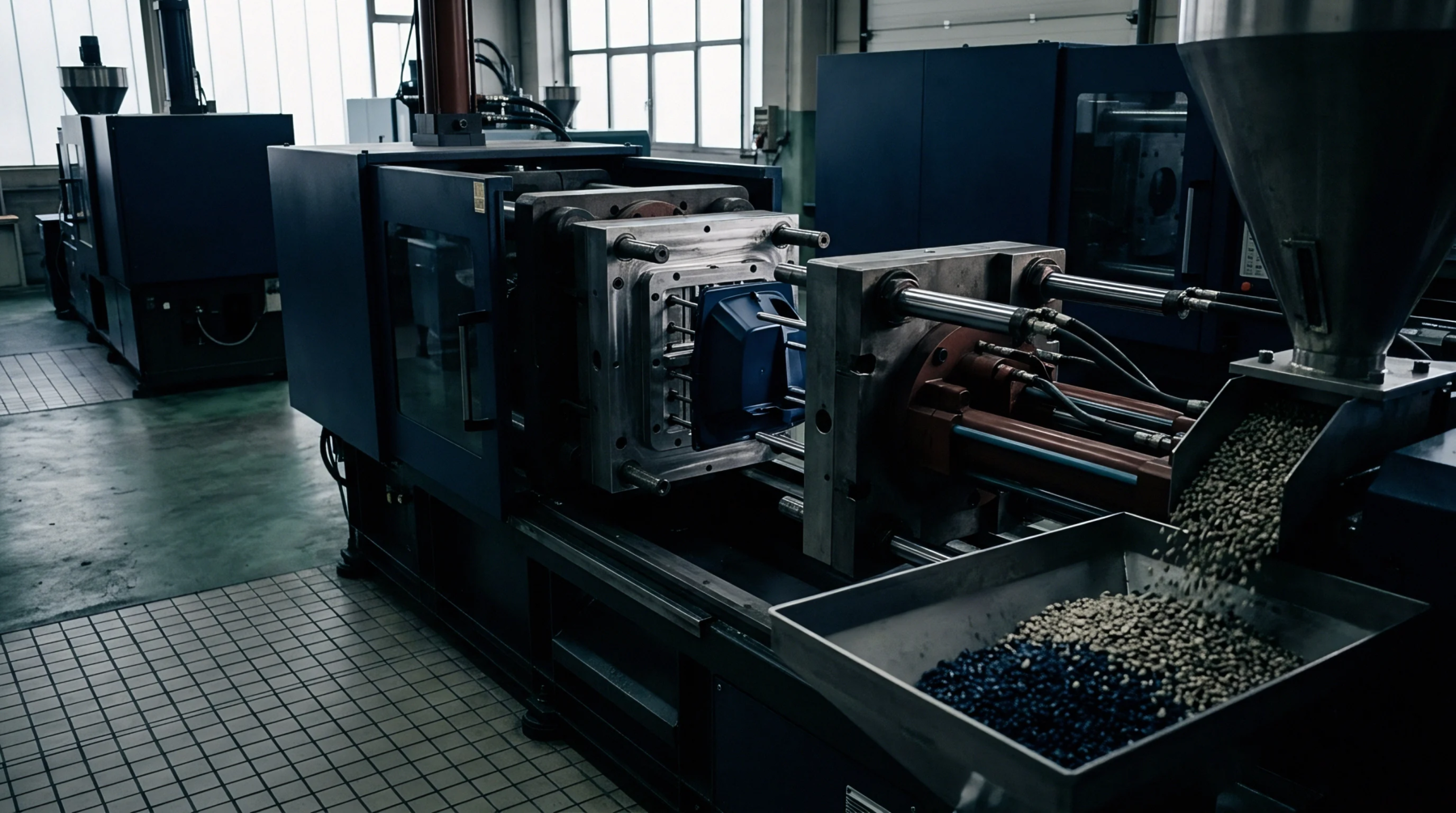
Establishing Press Side Fill Balance Protocols for Multi Cavity Injection Moulding Tooling
Press-side fill balance protocols decouple injection velocity from hold pressure using short shot weight analysis to equalize cavity fill within 5% balance.
Shear redistribution engineering represents a mechanical modification applied inside injection moulding barrel tips and nozzle assemblies to homogenize polymer melt streams before cavity entry. This specific hardware intervention counters laminar flow velocity profiles by dividing the radial polymer mass and recombining layers to eliminate thermal discrepancies. Thermoplastic viscosity depends heavily upon temperature uniformity across the flow channel, so spatial variations induce uneven volumetric expansion upon exiting the gate.
Rotational flow geometries force peripheral polymer layers inward while simultaneously directing core material toward the boundary walls. Operational windows widen because the equipment maintains consistent molecular orientation regardless of fluctuating cycle speeds or back pressure adjustments. Melt flipper technology operates exclusively within the plastication unit and hot runner manifolds, terminating at the parting line where part geometry assumes final form.
Viscosity gradients across a polymer strand generate localized molecular orientation mismatches that manifest as warpage or dimensional shrinkage upon cooling. Thermal imbalances emerge when barrel friction and heater bands impart excessive energy to the outer boundary while the central core remains relatively cool. Mechanical redistribution channels eliminate these temperature deltas by introducing controlled radial mixing without imparting excessive residence time or causing thermal degradation.
Process engineers monitor melt temperature consistency across the nozzle cross section using infrared sensors to verify that standard deviation remains within acceptable operational limits. Virgin resin tolerates higher shear rates than recycled compounds, making precise thermal equalization particularly critical when processing mixed regrind streams containing degraded polymer chains.
Fluid restriction inside injection tooling increases the required clamping force and risks exceeding machine hydraulic limits during the high-speed filling phase. Channel geometry optimization balances the physical mixing requirement against allowable pressure drop to prevent premature freeze-off in thin-walled sections. Restricting the flow path too aggressively elevates shear heating, which eventually degrades heat-sensitive engineering thermoplastics such as polyoxymethylene or polyvinyl chloride.
Hydraulic transducers measure dynamic pressure decay across the mixing zone, providing quantitative metrics for validating tool efficiency before production release. Material specifications dictate the maximum allowable shear stress, ensuring that mechanical manipulation enhances homogeneity without inducing polymer chain scission.
Final component integrity relies upon uniform packing density, which prevents sink marks, internal voids, and residual stress concentrations in structural mouldings. Volumetric shrinkage corresponds directly to local melt temperature at the exact moment the gate freezes, governing dimensional repeatability across large production runs. Structural components demand isotropic mechanical properties that only thermal uniformity across the melt front can guarantee during high-pressure injection cycles.
Moulder process settings require constant adjustment when flow conditioning hardware is absent, whereas dedicated mechanical mixing stabilizes the process against ambient temperature fluctuations. Component testing confirms that redistributing the melt profile reduces standard deviation in tensile strength across multiple cavity layouts.
Press-side fill balance protocols decouple injection velocity from hold pressure using short shot weight analysis to equalize cavity fill within 5% balance.
Expertise is a utility, not a secret. sentiention™ publishes its working knowledge as open reference: intelligence layer covering the materials it sources, the markets it enters, and the reference that serves both.