Meaning
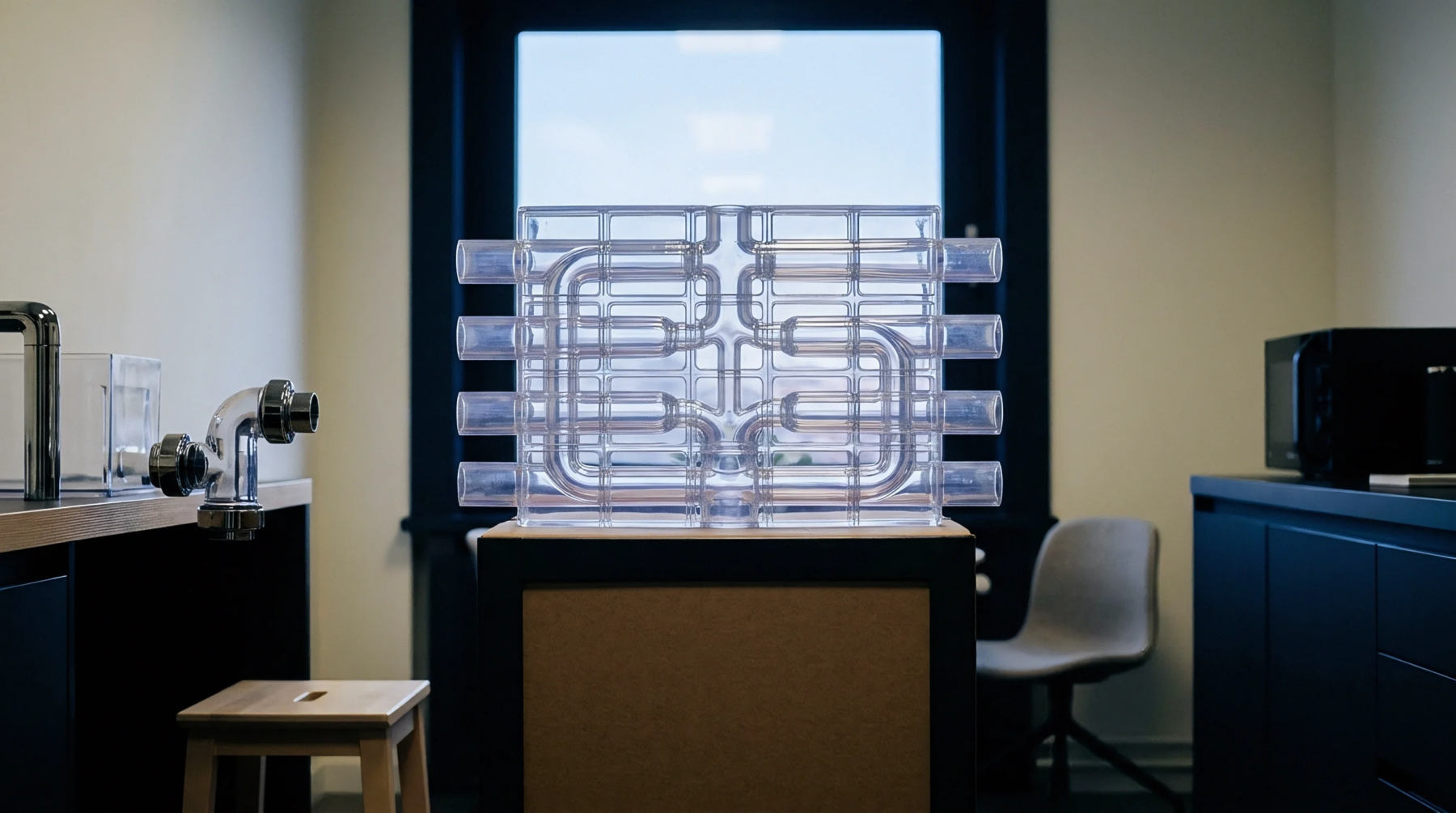
Injection moulding flow control techniques reorganize the stratified thermal layers within a runner system. A melt flip is executed by a specific runner geometry that rotates the flowing polymer ninety degrees to balance the melt temperature before it enters the mold cavities. This flow rotation ensures that each cavity receives material with identical viscosity and temperature.
Shear Relocation
High shear rates along the runner walls generate localized frictional heating in the polymer stream. This localized heating creates a non-uniform temperature profile where the outer layers of the melt are hotter than the core. The melt flip process redistributes these hot layers to the center of the flow channel, preventing asymmetric viscosity.
Thermal Balance
Consistent melt temperature across all cavities is necessary to achieve uniform part dimensions and weight. Without a thermal correction, the cavities fed by the hotter side of the runner fill faster and pack denser than those fed by the cooler side. This imbalance leads to internal stresses and warpage in the finished parts.
In severe cases, the differential shrinkage causes some parts to stick in the mould, which disrupts the cycle time and can damage the ejector system.
Moulding Efficiency
Quality variations between cavities in a multi-cavity tool increase scrap rates and require wider process windows. Implementing the melt flip technology reduces the need for high injection pressures to force the polymer into the cooler cavities. This adjustment leads to a more stable production run and lowers the clamp force required on the moulding machine.