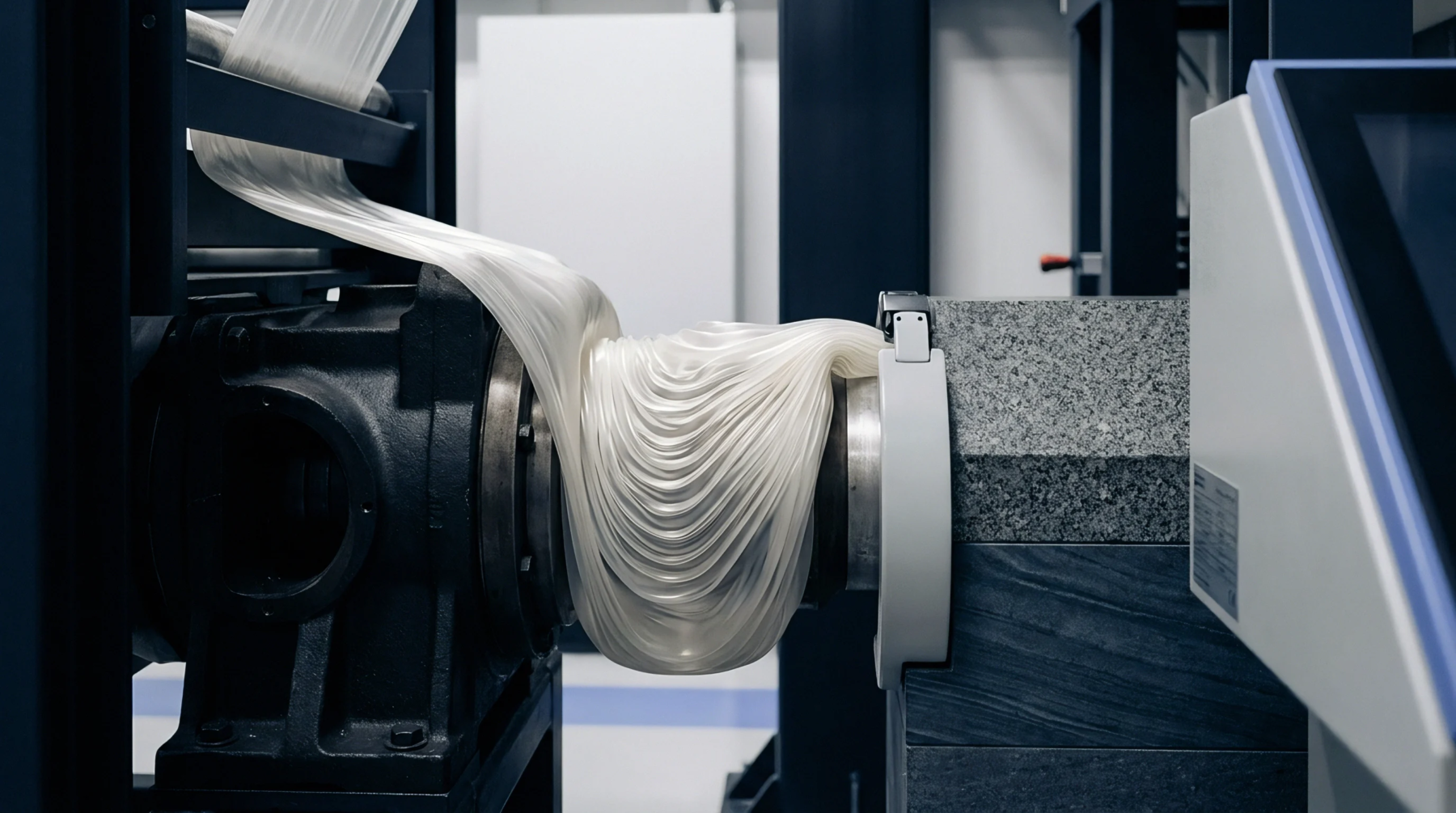
Optimizing Melt Channel Bifurcations to Eliminate Shear Heating Viscosity Gradients
Optimizing melt channel bifurcations with melt rotation geometry and stepped hydraulic diameters eliminates shear-induced viscosity gradients across cavities.
High-temperature semi-aromatic polyamide compounds reinforced with inorganic fibres provide structural rigidity, dimensional stability and creep resistance in thermal environments exceeding the limits of standard aliphatic polyamides. Reinforcement loadings in glass filled polyphthalamide typically range from thirty to fifty percent chopped glass fibres by weight, raising tensile modulus and continuous service temperature thresholds significantly above neat polymer baselines. Moisture absorption remains substantially lower than that observed in nylon 6 or nylon 66, limiting the plasticization effects and volumetric swelling that destabilize precision assemblies.
This material category ceases to function as a viable design option when continuous exposure temperatures surpass the polymer thermal degradation threshold, or when dynamic impact fatigue fractures brittle thin-wall geometries.
Anisotropic distribution of inorganic fibers during cavity filling determines mechanical performance across different coordinate axes. Injection molding of glass filled polyphthalamide forces reinforcement fibers into parallel alignment along shear flow paths, generating higher tensile stiffness parallel to fill direction while leaving perpendicular dimensions weaker and more susceptible to cross-flow shrinkage. Differential volumetric shrinkage causes dimensional distortion, bowing and out-of-round tolerances on structural bushings or flanges.
Gate positioning governs these flow orientations, forcing tool makers to position gating locations where weld lines do not coincide with structural load planes. Weld lines create local failure sites because fiber ends fail to bridge across meeting melt fronts.
High melt temperatures between three hundred ten and three hundred thirty-five degrees Celsius demand wear-resistant barrel metallurgy and tight process control. Hygroscopic tendencies in glass filled polyphthalamide mandate desiccant drying to moisture levels below zero point one percent prior to processing, because hydrolytic cleavage of amide bonds rapidly depolymerizes the resin chain and destroys mechanical toughness. Mold surface temperatures must reach one hundred thirty-five to one hundred sixty degrees Celsius using pressurized water or hot oil heaters to promote full crystallization.
Cold tooling freezes an amorphous skin layer, yielding chalky surface finishes, lower chemical resistance and secondary shrinkage during end-use thermal cycling.
Regrind blending rates directly affect physical properties through fiber attrition occurring during mechanical granulation. Successive shear cycles in the screw break glass filaments below their critical load-transfer length, reducing the reinforcing efficiency of the compound. Tensile strength drops progressively when regrind levels exceed fifteen percent, preventing converters from utilizing high scrap ratios in certified under-the-hood automotive or electrical connector contracts.
Bulk density fluctuations between virgin pellets and irregular regrind flakes alter screw recovery times, inducing shot-to-shot packing variability. Virgin polymer purchases carry high initial material pricing that cannot be fully offset by closed-loop reprocessing because degraded fibers yield unrecoverable scrap fractions.
Optimizing melt channel bifurcations with melt rotation geometry and stepped hydraulic diameters eliminates shear-induced viscosity gradients across cavities.
Expertise is a utility, not a secret. sentiention™ publishes its working knowledge as open reference: intelligence layer covering the materials it sources, the markets it enters, and the reference that serves both.