Meaning
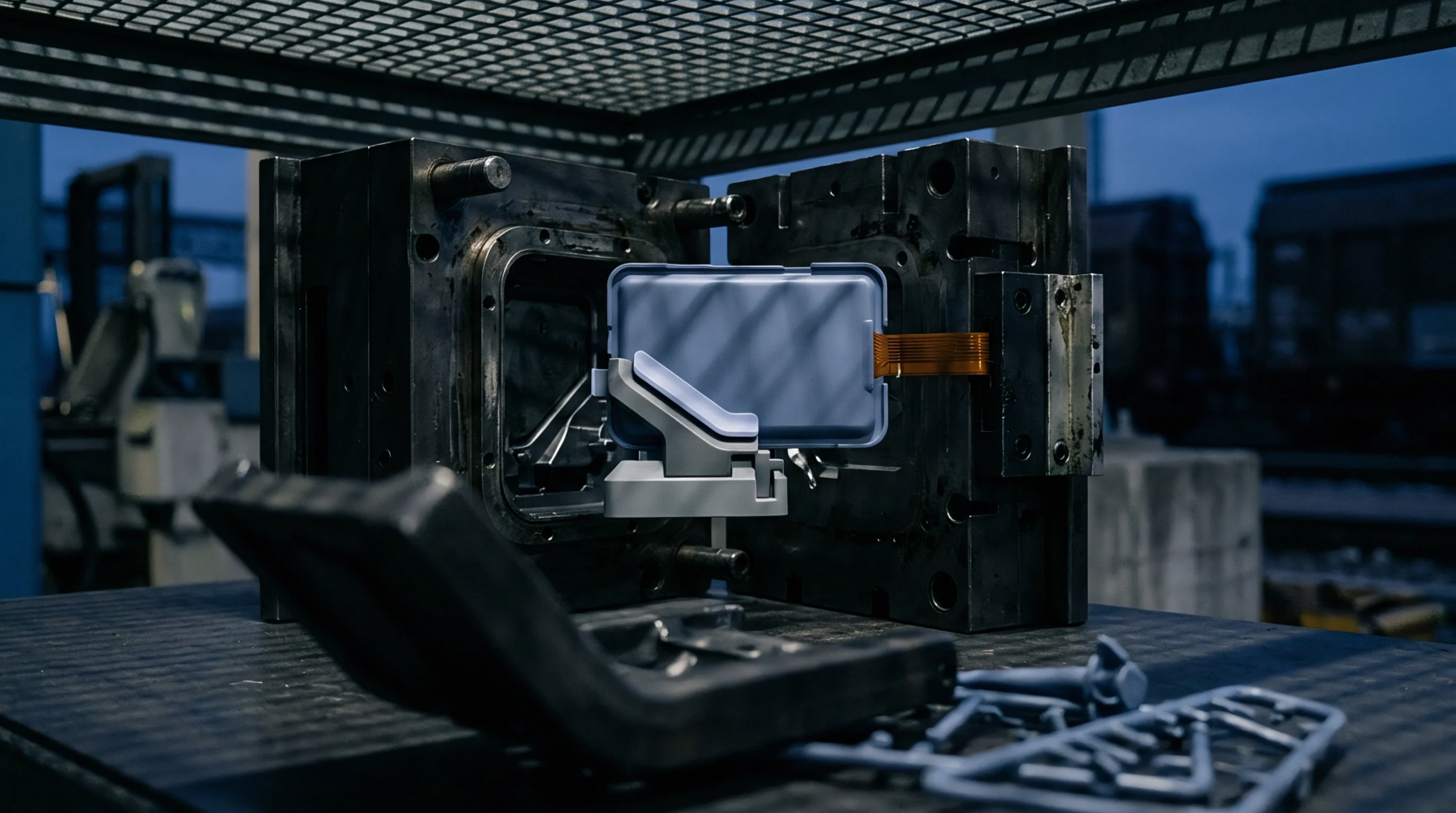
Thermal conduction principles describe the rate at which energy moves through a solid material based on local temperature gradients. fourier heat transfer dictates the cooling time required for a molded part to reach ejection temperature within a tool and applies as long as the material remains in physical contact with the mold wall.
Thermal Gradient
Energy moves from the hot melt at the center of a part toward the colder steel of the cavity. The speed of this movement is proportional to the temperature difference across the thickness of the wall. Thicker sections create a steeper barrier to energy loss because the heat must travel through more insulating polymer.
Material Resistance
Polymers possess low thermal conductivity compared to metals, which limits the rate of heat removal. This property ensures that the surface solidifies quickly while the core remains molten. High thermal conductivity inserts are often placed in the mold to help overcome this limitation in thick-walled designs.
Processing Cycle
Cooling times scale with the square of the part thickness according to the heat equation. A doubling of the wall thickness leads to a fourfold increase in the time needed for the center to freeze. Accurate modeling of this behavior allows designers to predict cycle times and avoid defects like sink marks or internal voids.