Meaning
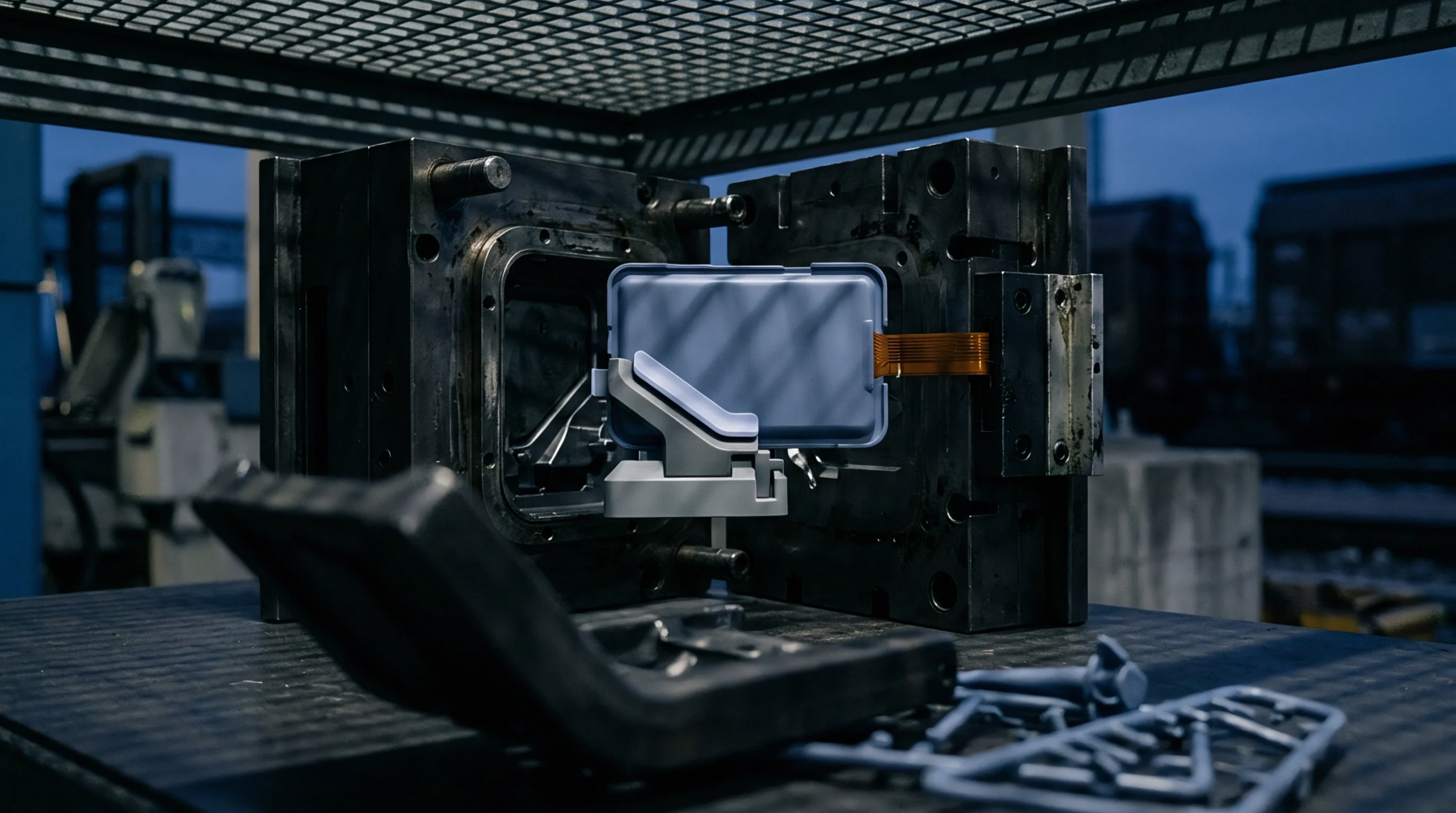
A distortion in the intended shape of a plastic part that occurs when internal stresses exceed the structural integrity of the component during the cooling phase of production. This defect manifests as a part that is twisted, bowed or otherwise deviated from the original computer-aided design model. It is fundamentally caused by differential shrinkage, where different areas of the part contract by different amounts or at different speeds.
Factors like wall thickness variations, gate location and the orientation of polymer chains or reinforcement fibers all play a role in this process. While some warpage can be predicted and compensated for during the design stage, it often requires adjustments to the moulding process to reach a state of dimensional stability.
Internal Stress
The invisible forces locked within the polymer matrix are the primary drivers of geometric instability. As the molten plastic is forced into the mould and cooled, the molecules are stretched and then frozen before they can return to a relaxed state. This creates a reservoir of energy that wants to pull the part out of shape as soon as it is released from the constraints of the metal tool.
High injection pressures and rapid cooling tend to increase the level of this residual stress. Annealing the parts in an oven can sometimes relieve these forces, but it is an expensive and time-consuming secondary operation. The best approach is to minimize the creation of stress through smart part design.
A well-balanced part is less likely to deform.
Cooling Cycle
The management of heat removal from the tool is the most powerful lever a moulder has to control the final shape of the part. If one side of a part is cooled more quickly than the other, it will become rigid sooner and the hotter side will continue to shrink, causing the part to bend. Modern moulds use complex cooling channels, sometimes following the contours of the part, to ensure the temperature is as uniform as possible.
Adjusting the coolant temperature or the flow rate can often fix a warping issue without changing the tool steel. However, adding more cooling time to the cycle increases the cost of the part, so there is always a trade-off between speed and quality. Precise thermal management is the key to producing flat and straight components.
Structural Stability
The geometry of the part itself can be used to resist the forces that cause deformation. Adding ribs, gussets or curved surfaces can significantly increase the stiffness of a component and help it maintain its shape even when internal stresses are present. Thin-walled parts are much more prone to warping than thick, chunky parts because they have less material to fight against the shrinking forces.
Engineers often use simulation software to predict how a part will warp and then add features to counteract that movement. This predictive work is much cheaper than fixing a tool after it has already been cut. Designing for stiffness is a fundamental rule for high-quality plastic parts.
The final quality is a result of both material properties and geometric design.