Thermal Expansion and Mold Frame Deflection Adjustments for Angled Hydraulic Shutoffs
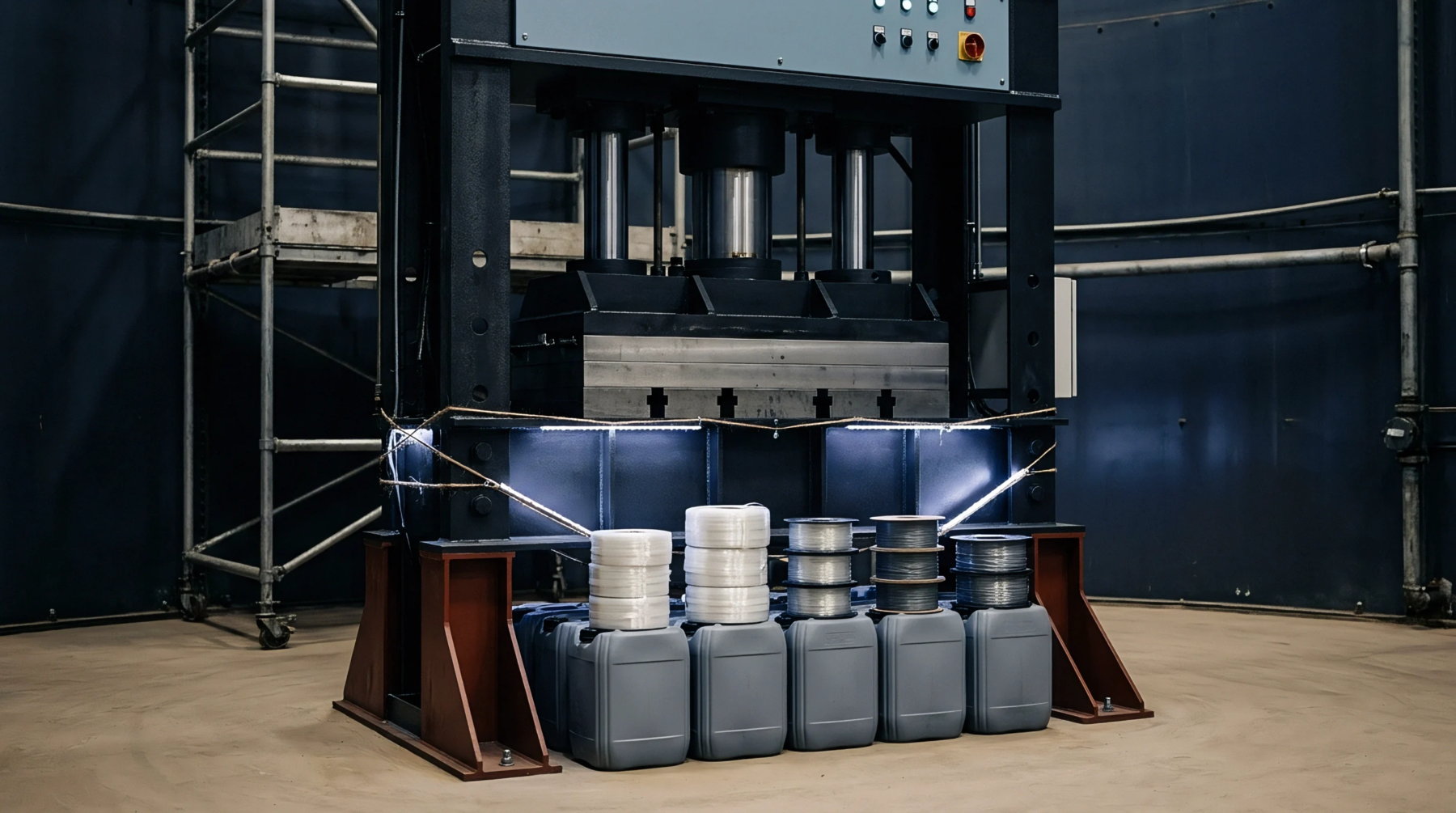
Angled hydraulic shutoffs demand deliberate cold clearances and mechanical preloads to balance thermal expansion against frame deflection and prevent flash.
Thermodynamic resistance to uniform isotropic compression quantifies the ratio of an infinitesimal hydrostatic pressure increase to the resulting relative volume reduction in a substance. In polymer melt processing and structural engineering, bulk modulus governs the volumetric compressibility of molten and solid resins inside closed cavities under high pressures. This variable establishes how much additional resin mass enters an injection mould during the packing phase to compensate for volumetric shrinkage as the melt cools from process temperature down to room condition.
Molten thermoplastics display significant compressibility, shrinking or expanding markedly with fluctuating process pressures. The bulk modulus of a typical polymer melt falls in the range of one to three gigapascals, meaning a packing pressure of one hundred megapascals compresses the melt by roughly three to five percent of its unpressurised volume. Machine screw positions must advance during packing to force extra material into the cavity against this volumetric compliance.
If the packing pressure drops before the gate freezes, the compressed polymer decompresses, driving material back toward the runner system and generating internal voids or surface sink marks on thick sections. Semi-crystalline resins like polypropylene and polyamide demonstrate rapid changes in bulk modulus across their transition temperatures, demanding precise pressure profiling compared to more gradual amorphous polymers like polycarbonate.
Dynamic measurements of internal mould pressure directly reveal changes in resin volumetric compliance across long production campaigns. When a processor introduces high fractions of regrind or changes resin suppliers, shifts in molecular weight distribution modify the pressure-volume-temperature response and the effective bulk modulus of the melt. A stiffer melt exhibiting a higher modulus resists compression, transferring higher peak forces to the steel cavity walls and increasing the clamp tonnage needed to prevent parting line flash.
Conversely, a lower bulk modulus absorbs injection pressure, delaying pressure transmission to the end of fill and risking short shots on thin-walled ribs. Closed-loop control systems use real-time cavity pressure transducers to switch from injection velocity to holding pressure precisely when the polymer matrix achieves targeted volumetric compression.
Deviations between datasheet modulus values and real mould performance yield erratic dimensional results across production lots. Amorphous resins with insufficient packing show excessive sink marks over internal ribs, whereas over-packing beyond the volumetric limit strains internal bonds and leaves high residual stress. This frozen-in stress lowers chemical resistance and provokes stress cracking when moulded parts encounter solvents or environmental stress-cracking agents in field service.
Thin-walled containers moulded under improper packing regimes display unpredictable warpage patterns because uneven volumetric shrinkage sets up unbalanced bending moments across the part geometry. Accurately mapping polymer bulk modulus across temperature and pressure ranges provides the engineering basis for calculating mould shrinkage allowances before cutting steel tooling.
Angled hydraulic shutoffs demand deliberate cold clearances and mechanical preloads to balance thermal expansion against frame deflection and prevent flash.
Expertise is a utility, not a secret. sentiention™ publishes its working knowledge as open reference: intelligence layer covering the materials it sources, the markets it enters, and the reference that serves both.