Correlation Parameters between Laboratory Hydrolysis Kinetics and Commercial in Vessel Composting Degradation Rates
Laboratory hydrolysis kinetics fail to match in-vessel composting rates without mathematical adjustments for mechanical attrition and matrix water activity.
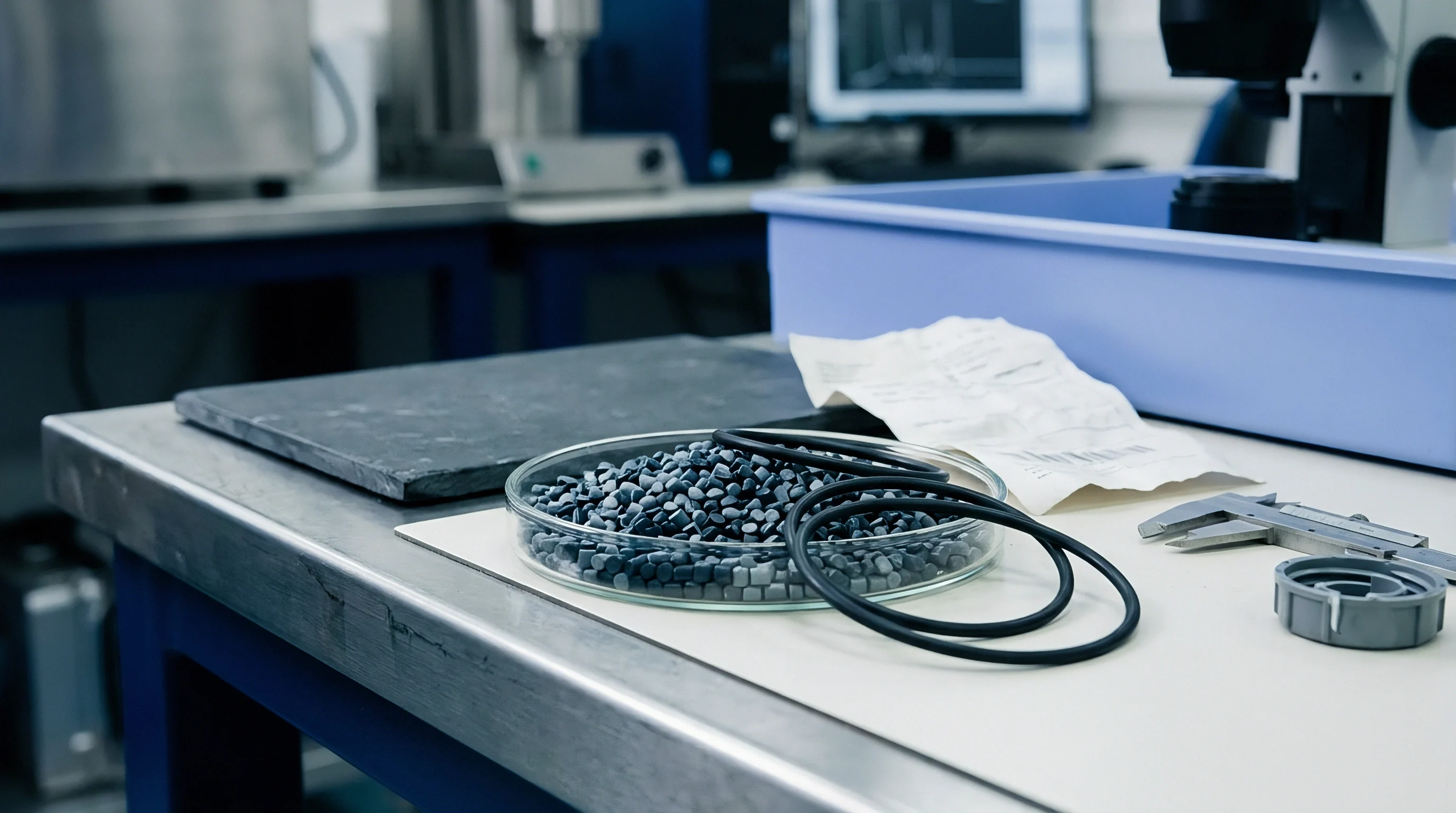
Disparity
Polymer buyers screening aliphatic-aromatic copolyesters regularly evaluate zero-shear viscosity, mass-loss curves, and chain cleavage rates derived from clean laboratory baths. A water bath running at 58 degrees Celsius according to ISO 15814 delivers a predictable hydrolytic profile for poly(lactic acid) (PLA) and poly(butylene adipate-co-terephthalate) (PBAT). Distilled water provides continuous wetting across every square millimeter of the test plaque.
The reaction kinetics follow pseudo-first-order ester bond cleavage driven strictly by internal water diffusion and bulk autocatalysis from accumulating carboxyl end groups. These clean aqueous conditions yield degradation rate constants that diverge sharply from real processing environments. Commercial in-vessel composting (IVC) systems expose the same resin grades to dynamic mechanical agitation, fluctuating water activities, microbial biofilm competition, and heterogeneous organic matrices.
A resin clearing ASTM D6400 or EN 13432 fragmentation criteria inside a controlled respirometer often stalls when dropped into a continuous industrial tunnel.
Laboratory hydrolysis measures abiotic chain scission where ester links split under thermal and chemical action. Water molecules diffuse into the amorphous domains of the polyester, cleaving ester bonds to form one hydroxyl and one carboxyl end group. The carboxylic acid groups drop the internal pH, accelerating subsequent scission within the polymer core.
Commercial in-vessel operations combine this abiotic hydrolysis with microbial surface erosion. Microbial colonization requires accessible surfaces, specific moisture films, and stable nutrient balances. When an industrial drum tumbles incoming food waste with structural bulking agents, the polymer experiences localized dry zones, cyclical shear forces, and thermal spikes exceeding 65 degrees Celsius.
These physical conditions disrupt the steady diffusion paths documented during bench immersion.
A neat PLA plaque undergoing immersion at 58 degrees Celsius maintains an internal water concentration near one weight percent throughout the degradation period.
Laboratory test procedures isolate variables by fixing the test medium. Respirometry trials governed by ISO 14855-1 utilize mature compost matrices with controlled moisture contents between 50 and 55 percent, maintaining carbon-to-nitrogen ratios from 20 to 30. Commercial IVC facilities run on radically different inputs.
Digestate from anaerobic plants, municipal solid food waste, and post-consumer packaging enter the vessel in unevenly blended charges. Acidic food waste drops initial batch pH below 5.0, inhibiting the mesophilic and thermophilic actinobacteria required for rapid enzymatic attack. Heavy loads of fats and greases coat the polymer surfaces, creating hydrophobic barriers that slow liquid water transport while simultaneously producing localized anaerobic pockets.
The hydrolytic degradation rate calculated in an analytical flask represents an upper boundary for thermal bond scission rather than an operational degradation timeline.
| Evaluation Environment | Temperature Range | Aqueous Medium | Dominant Cleavage Mechanism | Observed Kinetic Rate Constant |
|---|---|---|---|---|
| Aqueous Immersion (ISO 15814) | 50 to 58 C | Deionized water | Bulk abiotic autocatalysis | 0.012 to 0.028 per day |
| Compost Respirometry (ISO 14855) | 58 C | Controlled solid compost matrix | Abiotic scission plus bio-assimilation | 0.035 to 0.065 per day |
| Continuous Rotary Drum (IVC) | 52 to 68 C | Mixed municipal digestate and woodchips | Enzymatic surface wear and mechanical shear | 0.008 to 0.045 per day |
| Agitated In-Vessel Tunnel | 45 to 62 C | Food waste blend with periodic aeration | Heterogeneous moisture film scission | 0.005 to 0.032 per day |
Incoming inspection procedures struggle with this kinetic divergence. Quality teams test resin lots by measuring initial melt flow rates via ISO 1133 at 190 degrees Celsius with a 2.16-kilogram load, followed by gel permeation chromatography to capture number-average molecular weight. These metrics confirm whether the supplier delivered virgin grade, unhydrolyzed polymer pellets with clean initial carboxyl end group counts below 20 milliequivalents per kilogram.
They do not predict the fragmentation rate inside an aerobic composting drum operating at 40 percent moisture. Pellets formulated with chain extenders or Joncryl-type epoxy-functional oligomers show artificially depressed hydrolysis in bench water baths. Once subjected to intense microbial esterase activity in an in-vessel bed, these extended networks break down into irregular fragments that either pass or fail municipal sieves depending entirely on drum retention times.
A supplier who guarantees laboratory compliance under standard immersion tests frequently disclaims responsibility for field fragmentation times inside active municipal infrastructure.
Drum
Mechanical stress inside commercial in-vessel composting systems fundamentally alters how aliphatic-aromatic polyesters break apart. Industrial drum composting reactors rotate continuously or intermittently at speeds between 0.5 and 2.5 revolutions per minute. This motion churns the polymer along with dense bulking agents, gravel, grit, and abrasive organic matter.
In a static laboratory vessel, degradation proceeds through chemical dissolution and bio-assimilation of stationary surfaces. Inside a rotating drum, mechanical attrition continually rubs away the degraded, embrittled outer skin of the resin part. This mechanical removal exposes fresh, unhydrolyzed polymer beneath the eroded layer, altering the effective kinetic surface area throughout the active degradation cycle.
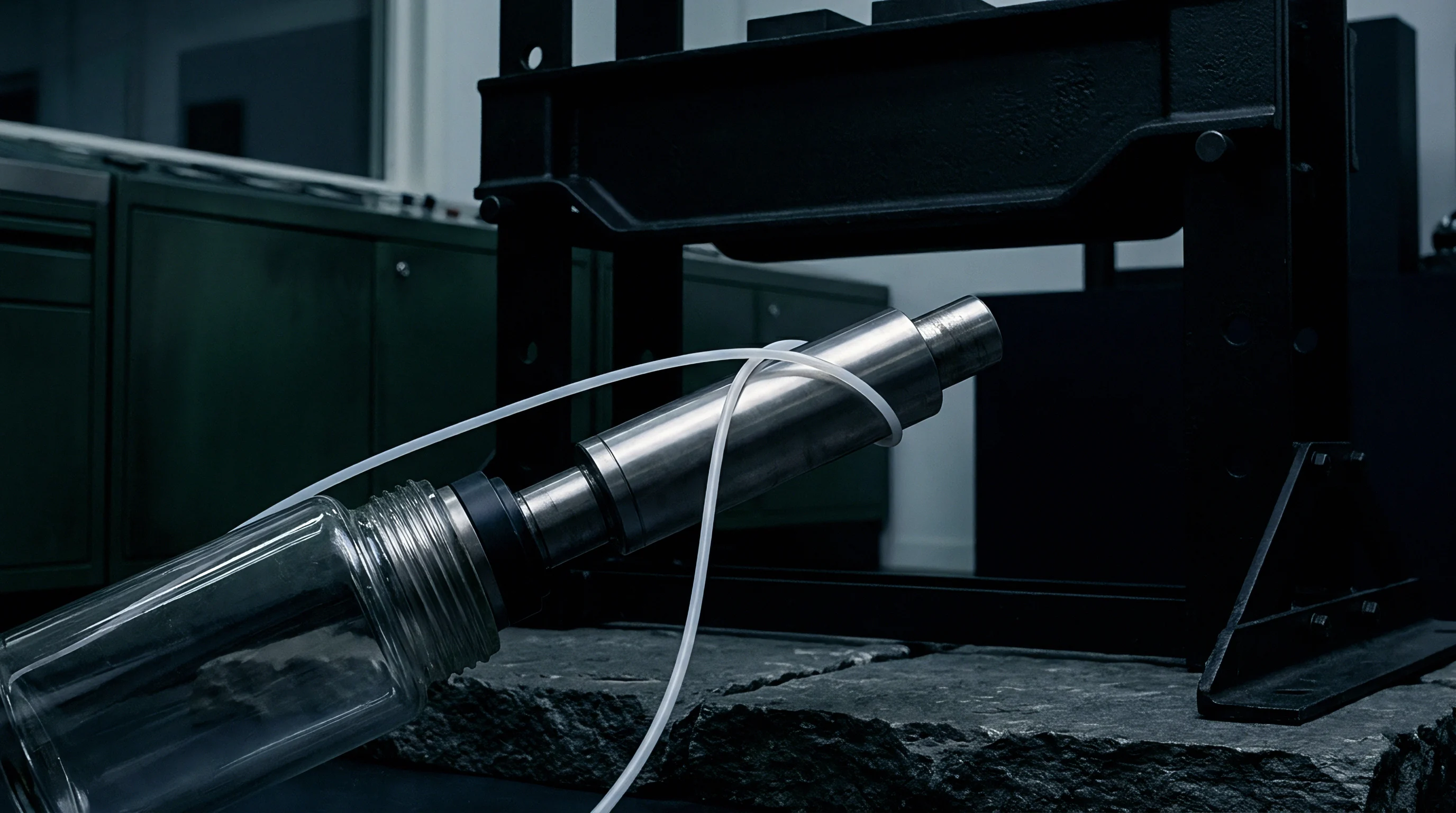
Impact of Mechanical Abrasion
The tumbling action subjects thermoformed articles and film sections to multi-axial mechanical strain. As abiotic hydrolysis reduces the weight-average molecular weight of a PLA blend below 40,000 grams per mole, the polymer undergoes a ductile-to-brittle transition. In a static bench setting, the brittle item remains intact as a cracked matrix until extensive bulk scission causes structural collapse.
In an industrial drum, mechanical shock pulverizes this embrittled material into millimeter-scale fragments long before respirometric mineralisation reaches 60 percent. This accelerated fragmentation alters the bulk surface-area-to-volume ratio, directly increasing the reaction interface for extracellular fungal and bacterial depolymerases.
- Rotational friction strips partially hydrolyzed oligomers from polymer surfaces, accelerating mass transfer across the solid-liquid boundary.
- Impact compression from dense organic matter fractures structural ribs and flanges on thermoformed containers.
- Tensile elongation induced by moving composting beds tears flexible agricultural films along oriented crystallization paths.
- Particle segregation transports lighter polymer flakes toward the core or perimeter of the rotary drum, isolating them from optimal thermal zones.
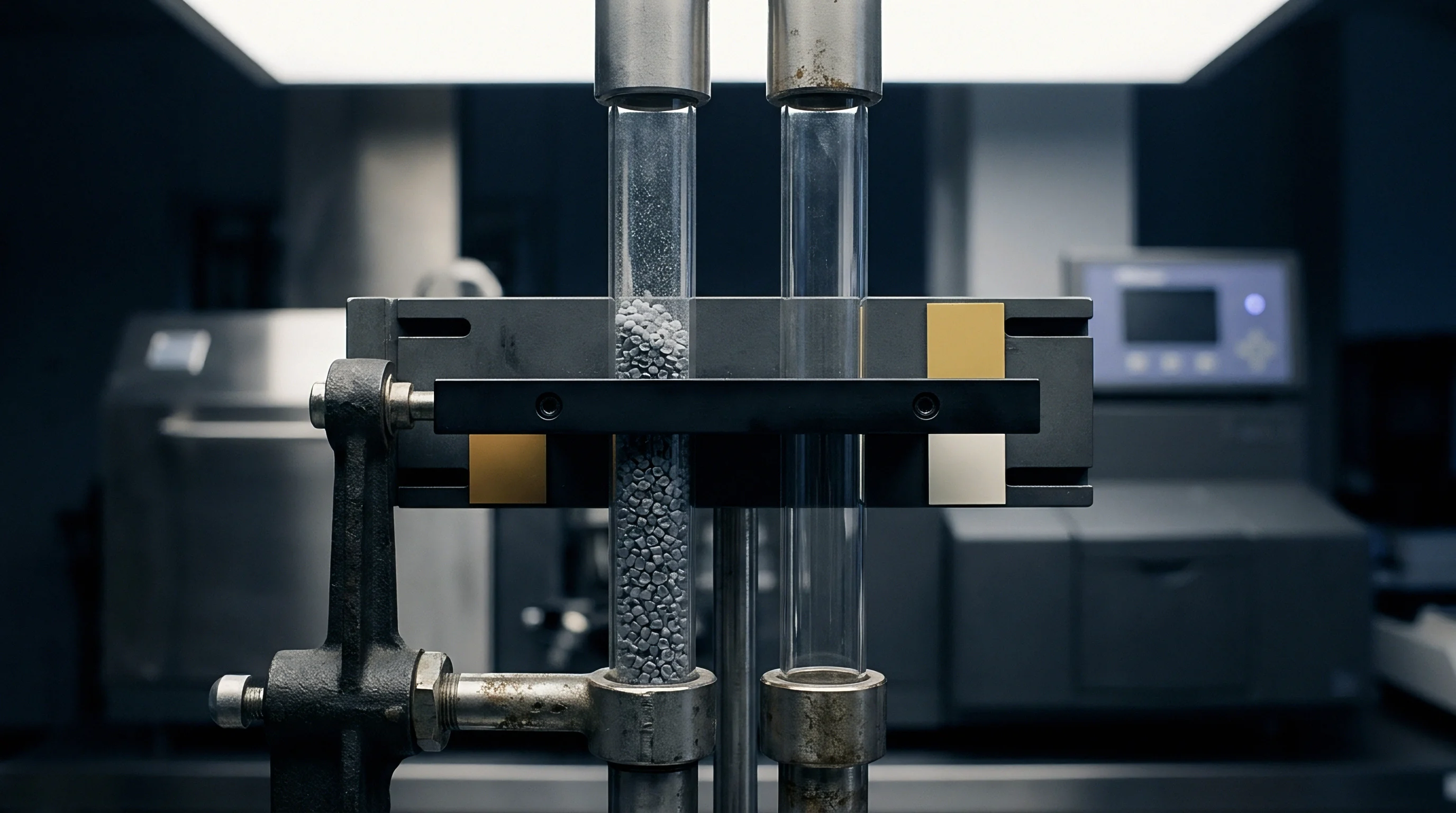
Aeration Dynamics and Moisture Stratification
Forced aeration within commercial in-vessel tunnels introduces pronounced oxygen and humidity gradients. Process blowers push air through perforated floor plenums at static pressures ranging from 2.5 to 8.0 kilopascals to maintain bed oxygen levels above 10 percent. The incoming dry air strips moisture from the lowest 300 millimeters of the composting bed, lowering water activity below the 0.85 threshold required for bacterial metabolism.
Polymers residing in this dry lower layer cease hydrolyzing efficiently. Conversely, the upper layers collect condensing moisture vapor, creating water-saturated, micro-aerobic conditions. These rapid moisture swings disrupt the steady-state water concentration gradients that laboratory kinetic equations assume.
Dynamic mechanical attrition accelerates physical fragmentation by stripping the brittle outer layer from the bulk polymer core.
Temperature distribution inside industrial drums compounds this kinetic complexity. Core bed temperatures regularly hit 65 to 70 degrees Celsius during the initial thermophilic stage, driven by the intense metabolic heat of spore-forming bacteria. These temperatures exceed the glass transition temperature of unmodified PLA grades, which sits between 55 and 60 degrees Celsius measured by differential scanning calorimetry at a 10-degree heating ramp.
Above this thermal boundary, polymer chains transition from a rigid glassy state to a rubbery state, increasing free volume and accelerating internal water diffusion by a factor of four. Thin-walled containers and blown films collapse, sticking together to form thick, consolidated agglomerates. These melted masses drastically lower the exposed surface area, slowing down both chemical hydrolysis and enzymatic accessibility.
The resulting residence time distribution within commercial drums forces operators to design retention schedules around the slowest-degrading consolidated agglomerates.
Moisture
Water availability inside the composting matrix controls the rate of abiotic ester scission. In an ISO 15814 bench bath, the polymer is fully immersed in an infinite water reservoir where chemical activity equals 1.0. Within an industrial composting bed, water exists in three distinct thermodynamic phases: free gravitational water within large pores, capillary water bound inside cell wall structures, and thin surface films coating solid particles.
The thermodynamic water activity of an active composting mass typically fluctuates between 0.82 and 0.98. When municipal compost moisture drops below 45 percent on a wet basis, water activity plummets, starving the polymer matrix of the mobile water molecules required to break the ester backbone.
Will Lab Kinetics Predict Industrial In-Vessel Retention?
Analytical models derived from laboratory immersion data assume steady-state internal water diffusion governed by Fickian mechanics. The diffusion coefficient of water through semi-crystalline polyesters ranges between 1.0e-8 and 5.0e-7 square centimeters per second at 58 degrees Celsius. In a dry or improperly turned commercial tunnel, the rate-limiting step shifts from chemical ester cleavage to external mass transfer through the boundary film.
The liquid-solid contact angle increases on hydrophobic polyester surfaces, preventing continuous wetting. Thin films degrade unevenly, displaying dense intact zones directly adjacent to fully perforated sections. Laboratory kinetics fail to capture these boundary-layer resistance variations, yielding optimistic degradation timelines that real processing facilities cannot replicate.
| Polymer Chemistry and Grade Class | Equilibrium Water Content at 100% RH | Equilibrium Water Content at 70% RH | Water Diffusion Coefficient (D) | Hydrolytic Cleavage Rate at 100% RH |
|---|---|---|---|---|
| Homopolymer Poly(lactic acid) (PLA, D-lactide 1.5%) | 1.15 wt% | 0.48 wt% | 2.1e-8 cm2/s | 0.018 per day |
| Random Poly(lactic acid) Copolymer (D-lactide 4.5%) | 1.35 wt% | 0.62 wt% | 3.8e-8 cm2/s | 0.027 per day |
| Poly(butylene adipate-co-terephthalate) (PBAT) | 0.85 wt% | 0.31 wt% | 1.4e-7 cm2/s | 0.009 per day |
| Poly(hydroxybutyrate-co-valerate) (PHBV, 8% HV) | 0.42 wt% | 0.15 wt% | 6.2e-9 cm2/s | 0.003 per day |
The competition between abiotic bulk hydrolysis and biotic surface erosion depends directly on matrix water content. Poly(hydroxyalkanoates) (PHA) and poly(hydroxybutyrate-co-valerate) (PHBV) undergo minimal abiotic chemical hydrolysis at 58 degrees Celsius compared to PLA. Their degradation proceeds almost exclusively via extracellular depolymerases secreted by bacteria such as Streptomyces and Bacillus.
These enzymes require continuous liquid films on the polymer surface to maintain their tertiary catalytic structures and enable substrate transport. In commercial drums where moisture drops below 50 percent, enzymatic erosion halts completely. In contrast, PLA articles continue their slow abiotic thermal degradation provided internal moisture remains above 0.3 weight percent.
Commercial buyers evaluating mixed resin streams must account for these divergent dependencies on ambient moisture.
Bio-compounders alter moisture uptake profiles by blending inorganic fillers and plasticizers into virgin resin grades. Calcium carbonate additions at 20 weight percent create micro-voids along the polymer-filler interface during thermoforming and blown film orientation. These micro-capillaries channel water directly into the bulk of the part via capillary action, raising apparent diffusion coefficients.
Talc nucleating agents increase crystallization kinetics, generating tightly packed spherulites that block water molecules from entering the amorphous matrix. An incoming shipment of compound containing 15 percent talc nucleated to 45 percent crystalline fraction takes nearly twice as long to hydrolyze inside a 55 percent moisture composting tunnel compared to an amorphous grade with an identical chemical formulation.
Under commercial composting conditions, falling below fifty percent moisture on a wet basis shifts the rate-limiting degradation step to external boundary-layer mass transfer.
The cost of inaccurate moisture assumptions appears on the screening deck of the commercial composter. When packaging materials fail to break down within the standard 21-to-28-day active cycle of an in-vessel system, the operator must re-screen the entire batch through a 10-millimeter trommel. The oversized, undecomposed plastic fragments are pulled out alongside valuable bulking woodchips and sent directly to an industrial landfill.
The facility assesses a contamination surcharge to the organic waste supplier, who in turn passes the cost down to the packaging converter. Calculating degradation using fully saturated laboratory models directly triggers these commercial rejections.
The legal terms of processing contracts assign full financial liability for post-trommel screening rejects directly to the packaging supplier when materials fail to meet site retention windows.

Yield
Transforming laboratory kinetic data into dependable commercial degradation projections requires a quantitative conversion model. Standard abiotic hydrolytic scission is governed by an Arrhenius relationship where the rate constant depends on reaction temperature and apparent activation energy. For poly(lactic acid), published laboratory activation energies for neutral abiotic hydrolysis consistently measure between 85 and 105 kilojoules per mole depending on initial molecular weight and d-lactide stereochemical purity.
A predictive mathematical framework maps these laboratory rate constants to dynamic in-vessel systems by applying correction factors that account for effective water activity, dynamic microbial biomass density, and mechanical particle attrition.
Mathematical Construction of the Kinetic Transfer Model
To establish a functional conversion, take a commercial packaging article thermoformed from an extrusion-grade PLA resin containing 2.5 percent d-lactide, with an initial number-average molecular weight of 85,000 grams per mole and an average wall thickness of 350 micrometers. Assume the article enters a commercial in-vessel drum operating across a 21-day residence program. The program runs seven days at an average thermophilic temperature of 62 degrees Celsius, seven days at 55 degrees Celsius, and seven curing days at 42 degrees Celsius.
During this cycle, average matrix moisture fluctuates between 48 and 58 percent, yielding a calculated mean water activity of 0.89.
The degradation rate constant determined under ISO 15814 conditions at 58 degrees Celsius is 0.021 per day. To adjust this laboratory constant to the real commercial cycle, the calculation splits the kinetic process into an abiotic internal scission factor and a surface-erosion mechanical wear factor. The corrected daily rate constant integrates through three distinct steps:
- Thermal adjustment factor recalculates the base hydrolytic scission rate constant across each thermal stage using the Arrhenius equation with an activation energy of 92 kilojoules per mole, yielding rate constants of 0.034 per day at 62 degrees Celsius, 0.015 per day at 55 degrees Celsius, and 0.003 per day at 42 degrees Celsius.
- Moisture activity coefficient scales the thermal rate constant by multiplying it against the prevailing water activity raised to the power of 1.4, reducing the effective chemical cleavage rates across the 21-day process by 16.5 percent to account for unsaturated boundary layers.
- Mechanical fragmentation multiplier introduces a surface exposure acceleration term based on the rotational speed of the drum and the abrasive mass fraction of the bulking agent, applying a 1.25 multiplier to the physical fragmentation velocity while reducing the effective thickness parameter by 0.008 millimeters per day.
Summing these kinetic segments over the 21-day run predicts an end-of-process number-average molecular weight of 18,200 grams per mole. Because the ductile-to-brittle threshold for this polymer blend sits at 35,000 grams per mole, structural failure and mechanical breakdown occur on day 11 of the in-vessel cycle. The remaining ten days provide sufficient mechanical agitation to break the embrittled matrix below the critical 2.0-millimeter screening sieve size.
If the drum temperature drops by an average of five degrees throughout the cycle, the calculated final molecular weight climbs to 41,500 grams per mole. The part then exits the 21-day drum intact, failing commercial disintegration specifications.
| Process Stage (7-Day Increments) | Mean Bed Temperature | Effective Water Activity (aw) | End-of-Stage Molecular Weight (Mn) | Cumulative Mass Loss Through 2mm Sieve |
|---|---|---|---|---|
| Stage 1: Active Thermophilic | 62 C | 0.92 | 46,200 g/mol | 0 wt% |
| Stage 2: Maturing Mesophilic | 55 C | 0.88 | 24,800 g/mol | 38 wt% |
| Stage 3: Aerated Stabilization | 42 C | 0.84 | 18,200 g/mol | 94 wt% |
Epistemic variance remains significant in the surface-erosion mechanical wear factor. While abiotic thermal scission constants are reproducible across testing laboratories to within a five percent standard deviation, the physical attrition multiplier rests on empirical measurements from specific drum designs. Changing the geometry of the internal lifters, increasing the gravel content of municipal food waste, or operating at a 40 percent drum filling volume rather than 60 percent alters mechanical shear rates by more than 80 percent.
When sourcing teams calculate compliance margins, they must assign a broader confidence band to mechanical wear parameters than to chemical hydrolysis kinetics.
A plant manager seeking guaranteed compliance adjusts formulation chemistry directly, incorporating hydrolytic accelerators or specifying higher d-lactide grades that depress melting temperatures and reduce polymer crystal volume.
Expense
Discrepancies between laboratory certifications and field degradation performance extract a direct financial toll across the resin supply chain. Sourcing managers buying certified compostable compounds pay a substantial price premium over conventional packaging polyolefins. While blow-molding grade high-density polyethylene settles on long-term supply contracts near 1,250 dollars per metric ton, film-grade PBAT/PLA blends trade between 2,800 and 3,600 dollars per metric ton depending on monomer settlement prices and logistical duties.
Converters absorb this 150 to 200 percent material cost increase on the commercial promise that their finished articles comply with composting regulations and bypass extended producer responsibility fees.
When an article carries a certified ASTM D6400 stamp based on bench respirometry but fragments too slowly for an industrial composter, the commercial supply chain breaks down. Commercial organics processing facilities in major municipal zones operate on tight processing margins, earning gate tipping fees between 45 and 90 dollars per incoming metric ton of organic material. If certified compostable containers fail to clear the trommel screens at the end of the vessel retention cycle, the composter incurs substantial re-handling expenses.
Disposing of screening residues containing intact plastic articles at local landfills costs between 60 and 140 dollars per ton in transportation and tipping fees, wiping out the initial operational margin of the facility.
A converter paying a two-hundred percent raw material premium for certified biopolymers remains commercially vulnerable if the finished part fails active twenty-day in-vessel retention windows.
Municipalities and private processing facilities respond by establishing strict receiving guidelines and imposing non-compliance penalties on waste haulers and food service operators. In severe cases, commercial facilities ban certified compostable packaging entirely, redirecting all single-use packaging to incinerators or landfills. This operational exclusion destroys the commercial value proposition of compostable resins.
Brand owners who invested millions in retooling thermoforming equipment, adjusting hot runner temperatures, and testing new packaging lines find themselves holding expensive, non-functional inventory that municipal infrastructure refuses to accept.
Incoming resin testing must bridge this operational gap before pellets enter the extruder hopper. Sourcing specifications should incorporate multi-point quality control metrics rather than relying on static supplier certificates of analysis. Buyers protect their landed investments by enforcing rigorous internal verification procedures:
- Carboxyl end group determination via potentiometric titration on incoming resin lots identifies pre-hydrolyzed or degraded inventory before processing.
- Accelerated micro-bath testing running at 65 degrees Celsius for 72 hours measures mass retention to verify batch-to-batch hydrolytic consistency.
- Melt volume rate stability checks across five-minute and twenty-minute barrel residence times catch volatile or heat-sensitive chain extenders.
- High-performance liquid chromatography analysis screens for non-reactive plasticizer migration that alters surface wetting in composting tunnels.
Raw material purchasing agreements must link invoice payment terms directly to functional degradation milestones rather than static third-party laboratory passes. Standard resin supply contracts place complete delivery risk on the buyer once the resin bag is opened or unloaded into a storage silo. By inserting specific clauses tying payment releases to accelerated pilot-scale vessel disintegration tests, procurement teams transfer kinetic performance risk back to the resin compounder.
If a resin batch fails an empirical 14-day fragmentation trial despite presenting an authentic laboratory certification, the supply agreement triggers liquidated damages covering extruder downtime and obsolete finished goods inventory.
The standard warranty line on a biopolymer invoice limits supplier liability strictly to replacing the delivered weight of defective pellets while disclaiming all downstream conversion and sorting costs.