Statistical Fatigue Modeling of Injection Tool Shutoffs under Dynamic Clamping Forces
Dynamic press breathing accelerates injection shutoff fatigue, demanding statistical Weibull modeling to set insert replacement intervals before flash occurs.

Imprint

Dynamic Clamping Forces and Shutoff Contact Loading
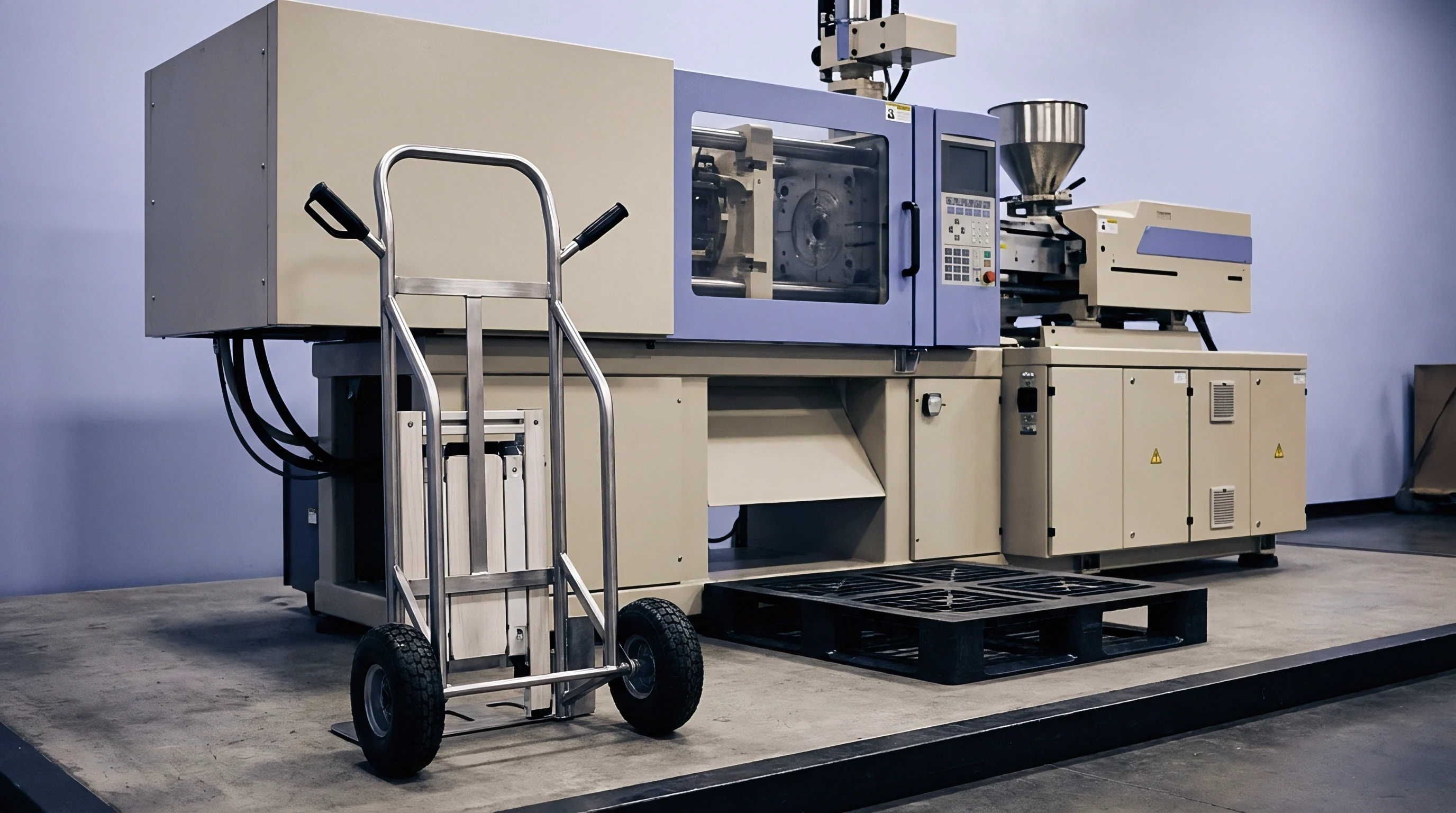
Injection tooling parting lines undergo continuous hydraulic and mechanical excitation during production cycles. Machine platens flex under tonnage, transferring dynamic shock loads through core and cavity plates directly into narrow mating faces. Steel shutoffs on angled faces experience localized compressive stress spikes far exceeding static force calculations.
Standard clamp tonnage settings reflect overall machine hydraulic holding capacity, yet localized land areas take the full force of lock-up micro-impacts. Tool designers specify nominal draft angles between three and seven degrees to achieve volumetric sealing, but cyclic press operation converts platen elastic deformation into high stress amplitudes directly on these precision contact zones.
Platens flex under load. Hydraulic toggle presses generate cyclic displacement pulses during high-pressure injection, forcing parting surfaces to micro-shift dynamically by fifteen to forty-five micrometers per stroke. Melt pressure within the mold cavity acts as a internal hydraulic jack, counteracting clamp tonnage and altering the mechanical pre-load on shutoff lands during the filling phase.
This continuous redistribution of mechanical stress results in localized contact fatigue, microscopic galling, and premature land degradation long before the tool reaches its nominal fatigue threshold.
| Shutoff Angle (Degrees) | Nominal Preload (MPa) | Dynamic Peak Stress (MPa) | Micro-Shift Amplitude (µm) | Fatigue Life Impact (%) |
|---|---|---|---|---|
| 3.0 | 245 | 380 | 38 | -62 |
| 5.0 | 185 | 275 | 22 | -35 |
| 7.0 | 135 | 190 | 12 | -12 |
| 10.0 | 95 | 125 | 6 | -3 |

Platen Deflection and Transient Stress Peaks
Tie-bar strain imbalance amplifies localized land crushing. When a press experiences thermal variation across its frame, clamping tonnage shifts asymmetrical force onto diagonally opposing corners of the tool plate. Peak compressive stress on shutoff land corners quickly crosses the yield point of standard tool steel alloys.
Repeated micro-yielding flattens the precision sealing edge, expanding the contact surface area and decreasing the effective sealing pressure required to stop polymer melt from flashing.
Clamping force fluctuates every cycle. Dynamic toggle mechanics combined with machine frame elastomeric breathing create high-frequency impact spikes at the moment of tool touch-down. These impact transients create compressive fatigue waves within the mold core steel, degrading the structural integrity of thin shutoff blade profiles.
- Asymmetrical platen bending concentrates closing forces on the outer perimeter shutoffs, crushing peripheral sealing lands while leaving central shutoffs vulnerable to resin flashing.
- Thermal growth differential between hot runner manifolds and cold core plates shifts shutoff alignment by up to fifty micrometers during initial production bring-up.
- Dynamic injection pressure spikes flex cavity walls outward, creating shear friction vectors across steep shutoff angles during the packing phase.
A dynamic clamp variance of twelve percent drops the calculated structural fatigue life of a three-degree steel shutoff land by more than half.
Ignoring dynamic platen flexure during initial tool land calculations causes rapid shutoff edge deformation, leading directly to part flashing, unbudgeted tool room repair hours, and permanent mold plate distortion.


Deformation

Strain Fatigue Mechanics at Steel Shutoff Intersections
Cyclic contact stress on micro-lands initiates localized plastic strain networks within the steel grain matrix. High-cycle fatigue models based strictly on elastic stress fail when applied to narrow tool shutoff lands because micro-impacts repeatedly push surface layers beyond their yield strength. Coffin-Manson relation formulations accurately describe this low-cycle strain-fatigue regime, accounting for cumulative plastic deformation across thousands of press cycles.
Hardened steel surfaces work-harden initially, followed by micro-cracking along grain boundaries directly under the contact interface.
Steel yields under peak strain. Material selection establishes the baseline fatigue resistance of shutoff details. Grade 1.2343 tool steel hardened to 52 HRC provides robust toughness, whereas grade 1.2083 stainless steel offers superior corrosion resistance at the expense of lower fatigue limit thresholds under micro-impact conditions.
Matching core and cavity shutoff steels with identical hardness leads to immediate galling; a hardness differential of two to four HRC maintains clean wiping action without micro-welding the contact faces.
| Steel Grade | Hardness (HRC) | Yield Strength (MPa) | Fatigue Limit at 10^7 Cycles (MPa) | Galling Threshold (MPa) |
|---|---|---|---|---|
| 1.2343 (H13) | 52 | 1650 | 720 | 310 |
| 1.2083 (420 SS) | 50 | 1480 | 610 | 240 |
| 1.2738 (P20+Ni) | 36 | 1020 | 430 | 180 |
| Ampcoloy 940 | 28 | 680 | 290 | 120 |
Micro-Fretting and Galling Failure Modes
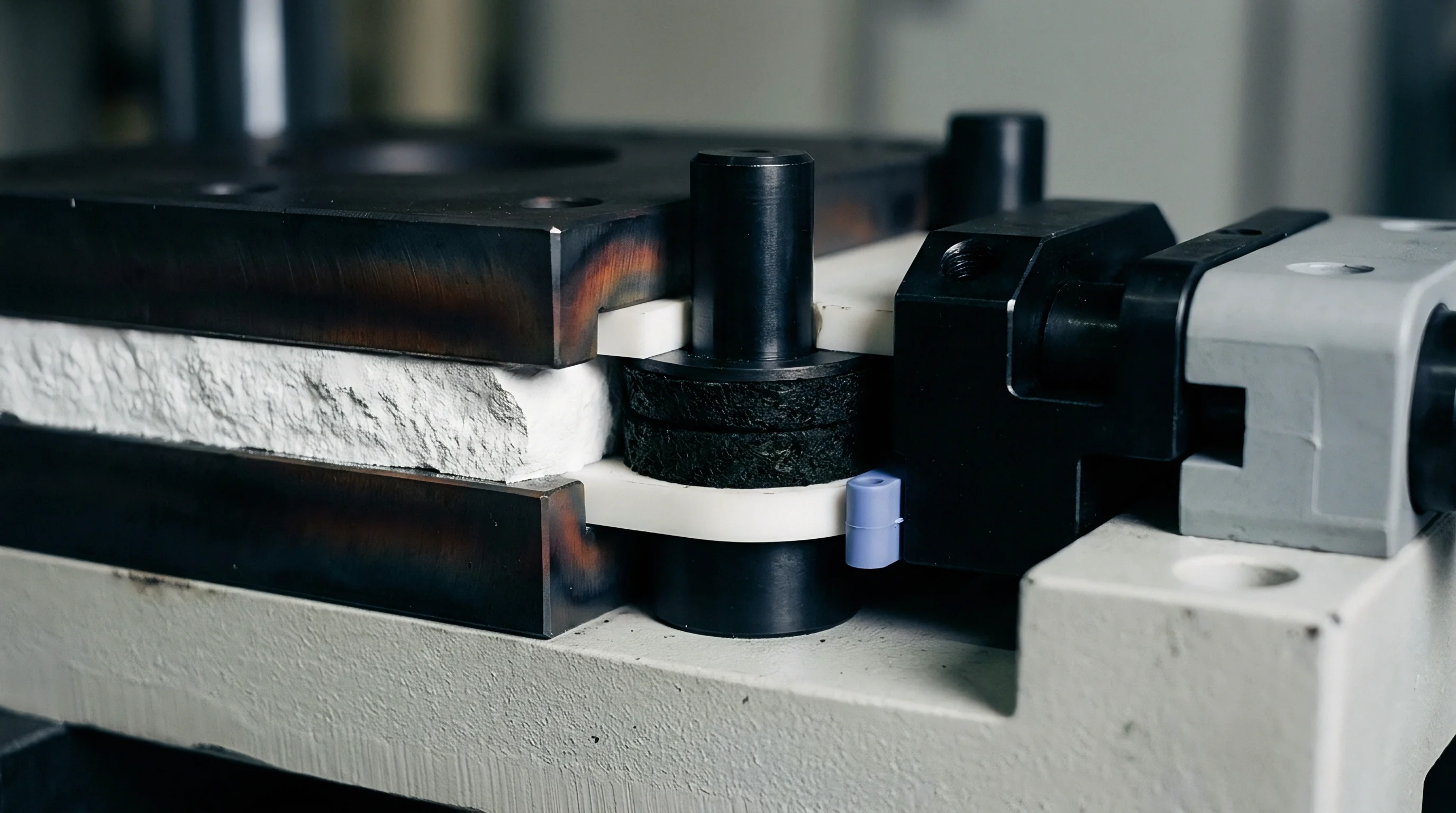
Contact friction under dynamic clamp vibration generates fretting corrosion on unlubricated shutoff faces. Fine metallic debris oxidizes between shutoff lands, acting as an abrasive compound that accelerates surface erosion with every press cycle. Over time, this abrasive mechanism creates micro-grooves along the sealing vector, allowing low-viscosity polymers to migrate past the parting line.
Galling destroys mold alignment. Fine shutoff blades subjected to combined compressive and shear forces deform lateral profile geometry, resulting in mushrooming along the leading edge. Once edge mushrooming begins, the shutoff blade rubs heavily against the opposing cavity wall, multiplying closing friction and causing sudden catastrophic galling.
- Plastic land peening flattens acute shutoff angles, widening the shutoff land and reducing contact pressure below the polymer sealing threshold.
- Micro-fretting oxidation produces iron oxide particles that scratch polished cavity surfaces and contaminate clear resin melt streams.
- Adhesive micro-welding transfers metal particles between mating steel surfaces, forming raised burrs that score opposing core surfaces during ejection.
- Sub-surface fatigue cracking propagates beneath the hardened surface layer, causing micro-spalling and chipping of narrow shutoff corners.
Matching shutoff steels without a minimum two HRC hardness gap causes micro-welding along telescoping lands within ten thousand cycles.
Toolmakers often claim that increased machine clamp force fixes parting line flash, when in reality excess tonnage simply crushes damaged shutoff lands faster and accelerates permanent steel deformation.


Variance
Stochastic Life Prediction via Weibull Distributions
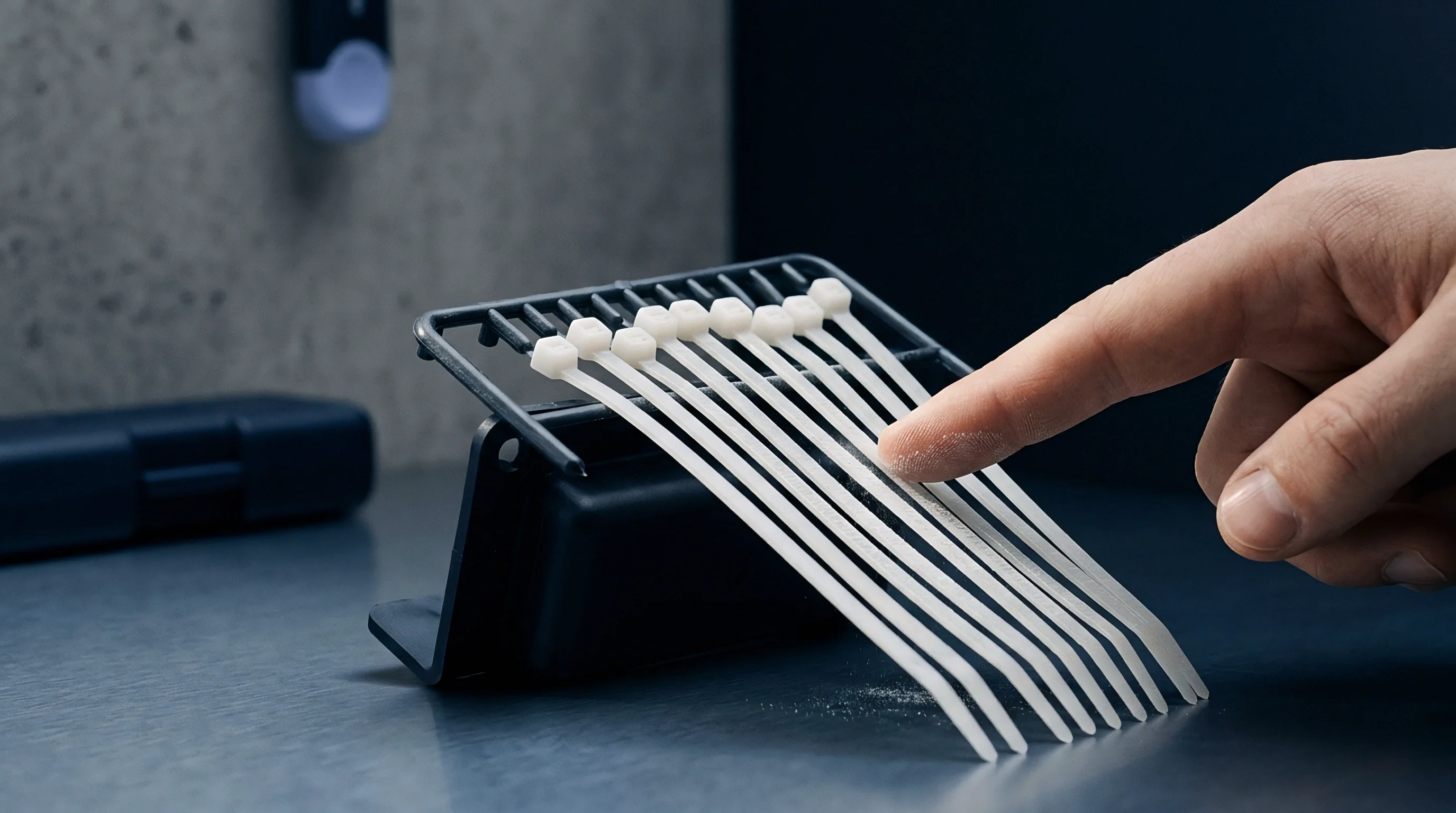
Deterministically modeling tool shutoff life yields wildly inaccurate predictions due to real-world press instability, operator clamping adjustments, and material lot variations. Statistical fatigue modeling employs two-parameter Weibull distribution functions to quantify shutoff survival probability across extended production runs. The shape parameter beta characterizes the failure rate over time, where values greater than one indicate wear-out fatigue mechanics dominating shutoff failure.
The scale parameter eta defines the characteristic lifecycle point where 63.2 percent of evaluated shutoff lands exhibit unacceptable plastic deformation or flash generation.
Wear increases clearance exponentially. Combining Basquin stress-life equations with Monte Carlo stress simulations accounts for real-time clamping fluctuations. Press-side variations in hydraulic oil temperature, tie-bar thermal expansion, and cycle timing create a stochastic distribution of stress amplitudes acting on the shutoff steel.
Integrating these distributions allows tooling engineers to establish realistic maintenance intervals based on cumulative fatigue damage accumulation.
Statistical Fatigue Calculation for a Telescopic Shutoff
Consider a four-cavity automotive connector tool running in a 300-tonne electric press. The core plate features sixteen 5-degree angled telescopic shutoff pins sealing against a 1.2343 cavity insert hardened to 54 HRC. Nominal design specs assume a static shutoff land contact pressure of 210 MPa.
Continuous press monitoring reveals dynamic clamping fluctuations following a Gaussian distribution with a mean contact pressure of 210 MPa and a standard deviation of 28 MPa.
Using the S-N fatigue curve for 1.2343 steel, the endurance limit sits at 680 MPa, with Basquin exponent b equal to -0.085. A deterministic calculation using nominal 210 MPa stress predicts an infinite fatigue life exceeding ten million cycles. Performing a Monte Carlo simulation across one million simulated cycles introduces dynamic press breathing, thermal expansion variations of +/- 15 micrometers, and clamping force overshoots up to 290 MPa.
The resulting Weibull distribution yields a shape parameter beta of 2.65 and a scale parameter eta of 620,000 cycles. At a 95 percent reliability requirement, the statistical fatigue limit drops to 215,000 cycles, at which point localized plastic deformation exceeds the maximum allowable clearance of eight micrometers for thin-wall nylon melt.
| Steel Combination | Mean Contact Stress (MPa) | Stress Std Dev (MPa) | Weibull Shape (β) | Characteristic Life η (Cycles) | B10 Life (Cycles) |
|---|---|---|---|---|---|
| 1.2343 vs 1.2343 | 220 | 32 | 2.85 | 480,000 | 210,000 |
| 1.2343 vs 1.2083 | 220 | 32 | 2.41 | 350,000 | 135,000 |
| 1.2738 vs 1.2738 | 150 | 22 | 1.95 | 180,000 | 58,000 |
| 1.2343 vs Ampcoloy | 180 | 25 | 3.12 | 820,000 | 410,000 |
Under dynamic thermal expansion, a five-degree shutoff land experiences stress spikes thirty-five percent higher than cold-static setup targets.
What statistical variance in press hydraulic response remains acceptable before parting line seal failure becomes mathematically inevitable across a twenty-four-hour shift?
Metrology
How Does Dynamic Land Wear Alter Part Flash Thresholds?
Tolerance bands shift rapidly. Polymer melt viscosity dictates the maximum permissible parting line clearance before material flows into damaged shutoff zones. Crystalline polymers like polyamide 66 and polyoxymethylene flash through gaps as narrow as six to eight micrometers under standard injection pressures.
Amorphous polymers like polycarbonate and ABS tolerate shutoff gaps up to fifteen to twenty micrometers before developing noticeable flash. Tracking shutoff wear through high-precision metrology prevents costly part rejection during production shifts.
Flash forms along the parting line. Non-contact optical profilometry and structured blue-light scanning measure microscopic steel recession along shutoff edges during tool maintenance cycles. Surface topography scans identify wear tracks, edge rounding, and micro-spalling before physical flash appears on molded parts.
Establishing a baseline scan at initial tool sign-off allows quality inspectors to plot shutoff land degradation over cycle volume.
| Polymer Family | Melt Index Range (g/10min) | Flash Gap Threshold (µm) | Wear Depth Limit (µm) | Inspection Interval (Cycles) |
|---|---|---|---|---|
| PA66 (Unfilled) | 25 – 45 | 6 | 4 | 50,000 |
| POM (Copolymer) | 9 – 21 | 8 | 5 | 75,000 |
| PP (Homopolymer) | 12 – 35 | 12 | 8 | 100,000 |
| ABS (Standard) | 5 – 15 | 18 | 12 | 150,000 |
| PC (High Flow) | 10 – 30 | 15 | 10 | 125,000 |

Procedure for Parting Line Shutoff Integrity Audits
- Clean shutoff surfaces thoroughly using a non-abrasive solvent to remove resin gassing residues and carbon deposits.
- Apply optical surface profiling across three reference locations on each shutoff land to quantify total surface displacement.
- Measure vertical land recession relative to adjacent undisturbed tooling reference planes.
- Record lead-in draft angle changes using high-resolution tactile stylus profilometry.
- Compare measured micro-land dimensions against initial T1 tool validation scan data.
- Calculate current Weibull fatigue progression state to forecast remaining cycles before flash limit exceedance.
Part tolerances defined under DIN 16742 Grade TG4 require parting line shutoff clearances to stay within ten micrometers across the entire production run.
Commercial tooling agreements citing ISO 20753 force suppliers to absorb part sorting and re-tooling expenses whenever parting line flash exceeds fifty micrometers in height.
Ledger

Tooling Maintenance Economics and Refurbishment Lifecycles
Inserts absorb localized strain. Tooling economics depend heavily on designing shutoff zones as replaceable modular inserts rather than cutting shutoffs directly into monolithic core and cavity plates. Machining shutoffs directly into primary mold steel lowers initial tooling procurement cost by fifteen to twenty-five percent, but elevates long-term maintenance liabilities.
When monolithic shutoffs collapse under dynamic fatigue, repairing the tool requires complete plate removing, welding, stress relieving, and re-machining, causing weeks of unscheduled press downtime.
Refurbishment restores original height. Modular shutoff inserts allow rapid bench repair or pre-machined spare insertion within hours. Advanced laser cladding using tungsten-carbide or high-hardness cobalt alloys rebuilds worn shutoff edges with minimal thermal stress, restoring original steel height and hardness.
Calculating the total cost of ownership involves comparing initial tooling investment against projected shutoff repair cycles across the total contract volume.
| Repair Method | Direct Cost Ratio (% Tool Price) | Press Downtime (Hours) | Restored Cycle Life (%) | Dimensional Retention |
|---|---|---|---|---|
| Modular Insert Swap | 4 – 8 | 4 – 8 | 100 | Optimal (< 3 µm) |
| Laser Cladding + CNC Micro-Milling | 12 – 18 | 36 – 72 | 85 | Good (< 8 µm) |
| TIG Welding + Manual Fitting | 8 – 14 | 24 – 48 | 50 | Moderate (< 15 µm) |
| Plate Recess Regrinding + Shim Adjustment | 6 – 10 | 16 – 32 | 65 | Fair (< 12 µm) |
Thermal growth changes shutoff clearance. Strategic allocation of tooling reserves requires evaluating the landed cost per part against maintenance frequency. Tools built with modular hardened inserts carry higher upfront tooling invoice prices, yet yield lower cost-per-part ratios over five-hundred-thousand cycle production contracts by eliminating extended downtime during maintenance interventions.
Hardened modular inserts cut lifetime tooling maintenance reserves by forty percent compared to monolithic tool plate construction.
Cutting shutoffs directly into main tool plates saves initial capital outlay while creating massive financial exposure when dynamic clamp stress collapses parting line edges mid-run.