Chromatographic Epoxidation Yield Variations in Low Density Polyethylene Unresolved Complex Mixtures
Variable epoxidation yields during polyolefin oligomer analysis distort MOAH quantification, requiring reaction-rate corrections to prevent improper lot rejections under EU food contact rules.
Chain

Oligomeric Branching Patterns and Olefinic Structure
Low-density polyethylene synthesized via high-pressure free-radical polymerization contains complex hyperbranched hydrocarbon backbones with both terminal and internal carbon-carbon double bonds. Radical transfer reactions generate short- and long-chain branching architectures encompassing thousands of distinct isomeric species below one thousand Daltons. Analytical screening of raw solvent extracts reveals a dense background signal known as an unresolved complex mixture.
Within this hydrocarbon hump, polyolefin oligomeric saturated hydrocarbons co-exist with unsaturated oligomers containing vinyl, vinylidene, trans-internal alkene, and trisubstituted double bond moieties.
Unsaturated oligomeric species create severe analytical interference during food contact compliance testing. Standard separation on silica gel columns relies on polarity differences to separate saturated fractions from aromatic contaminants, but unsaturated branched alkenes possess polarization characteristics that overlap with bicyclic aromatic ring systems. Without chemical modification, these unsaturated polyolefin components elute directly into the mineral oil aromatic hydrocarbon fraction, generating false-positive signals.
Epoxidation converts these carbon-carbon double bonds into oxirane rings, increasing their polar retention so they separate cleanly from native aromatic molecules.
As oligomers migrate under heat, steric accessibility dictates how fast peracids attack their double bonds. Terminal vinyl groups expose unhindered carbon centers that undergo rapid electrophilic addition, whereas internal trisubstituted alkenes flanked by quaternary carbons carry high activation energies that slow oxygen transfer.
| Olefin Subtype | Structural Position | Average Fraction in UCM (%) | Steric Accessibility | Electrophilic Addition Rate |
|---|---|---|---|---|
| Terminal Vinyl | Chain End | 18 to 24 | High | Rapid |
| Vinylidene (1,1-disubstituted) | Branch Origin | 42 to 55 | Moderate | Moderate |
| Trans-Internal Alkene | Mid-Chain Backbone | 12 to 18 | Moderate | Moderate |
| Trisubstituted Alkene | Branch Junction | 8 to 15 | Low | Slow |
| Conjugated Diene | Degraded Sequence | 2 to 6 | Variable | Variable |
Because electrophilic attack varies with structure across the unresolved complex mixture, epoxidation rates differ enough to prevent uniform chemical conversion across all mass ranges. Standardized derivatization protocols that assume complete quantitative conversion risk leaving stubborn internal olefinic structures unreacted.
- Interference Co-elution Alkene fractions retained on unmodified silica gel mimic bicyclic aromatic structures, generating false-positive signals in non-polar detector channels.
- Steric Shielding Resistance Highly branched internal double bonds resist oxygen insertion, leaving unreacted unsaturated oligomers in the saturated hydrocarbon fraction.
- Over-oxidation Degradation Extended contact duration converts primary oxirane rings into polar diols, shifting analyte retention into oxygenated non-intentionally added substance bands.
Extracts exposed to food simulant D2 for 10 days at 60 degrees Celsius yield oligomeric hydrocarbon mixtures where unsaturated structures constitute up to 34 percent of total migratable mass.
Steric crowding around internal tertiary carbons retards electrophilic addition far more than at unhindered terminal vinyl groups.


Reagent
Oxidant Electrophilicity and Reaction Pathway Branching
Organic peracids convert carbon-carbon double bonds into oxirane rings through a concerted electrophilic addition mechanism. Meta-chloroperoxybenzoic acid acts as the standard reagent for off-line sample preparation of polymer extracts. Dissolved in dichloromethane or toluene, it transfers an sp2-hybridized oxygen atom to the pi-electron cloud of the double bond, yielding an oxirane adduct alongside meta-chlorobenzoic acid as a byproduct.
Reaction rates depend on temperature, reagent concentration, and matrix polarity.
Without buffered conditions, acid catalysis degrades oxiranes: free meta-chlorobenzoic acid generated during oxidation acts as a weak acid catalyst, inducing nucleophilic ring opening of newly formed oxirane groups. In the presence of trace moisture or residual alcohol solvents, oxiranes convert into 1,2-diols, chlorobenzoate esters, or ether alcohols. These secondary ring-opening products exhibit significantly higher column retention times than simple oxiranes, causing peak broadening and loss of mass balance during flame ionization detection.
| Oxidant Formulation | Solvent Medium | Reaction Temperature (°C) | Reaction Duration (min) | Oxirane Yield (%) |
|---|---|---|---|---|
| mCPBA (1.2 equivalents) | Dichloromethane | 0 | 30 | 62 to 74 |
| mCPBA (2.0 equivalents) | Dichloromethane | 25 | 60 | 84 to 92 |
| Performic Acid (In Situ) | Formic Acid and Hydrogen Peroxide | 40 | 45 | 48 to 65 |
| Dimethyldioxirane (DMDO) | Acetone | 20 | 15 | 89 to 97 |
In-situ generated performic acid offers an alternative pathway, but its strongly acidic environment accelerates ring-opening side reactions. Bicarbonate buffering stabilizes oxirane rings by neutralizing carboxylic acid byproducts as they form, while maintaining reaction temperatures between zero and twenty-five degrees Celsius preserves primary oxiranes and suppresses over-oxidation.
Standard testing specifications requiring complete elimination of olefinic interferences without specifying acid-scavenger additions lead to total sample invalidation through uncontrolled ring-opening reactions.
Unreacted unsaturated oligomers present in testing extracts can reflect analytical over-derivatization artifacts rather than intrinsic polymer constituents.

Resolution
Chromatographic Phase Interacting and Isomeric Splitting
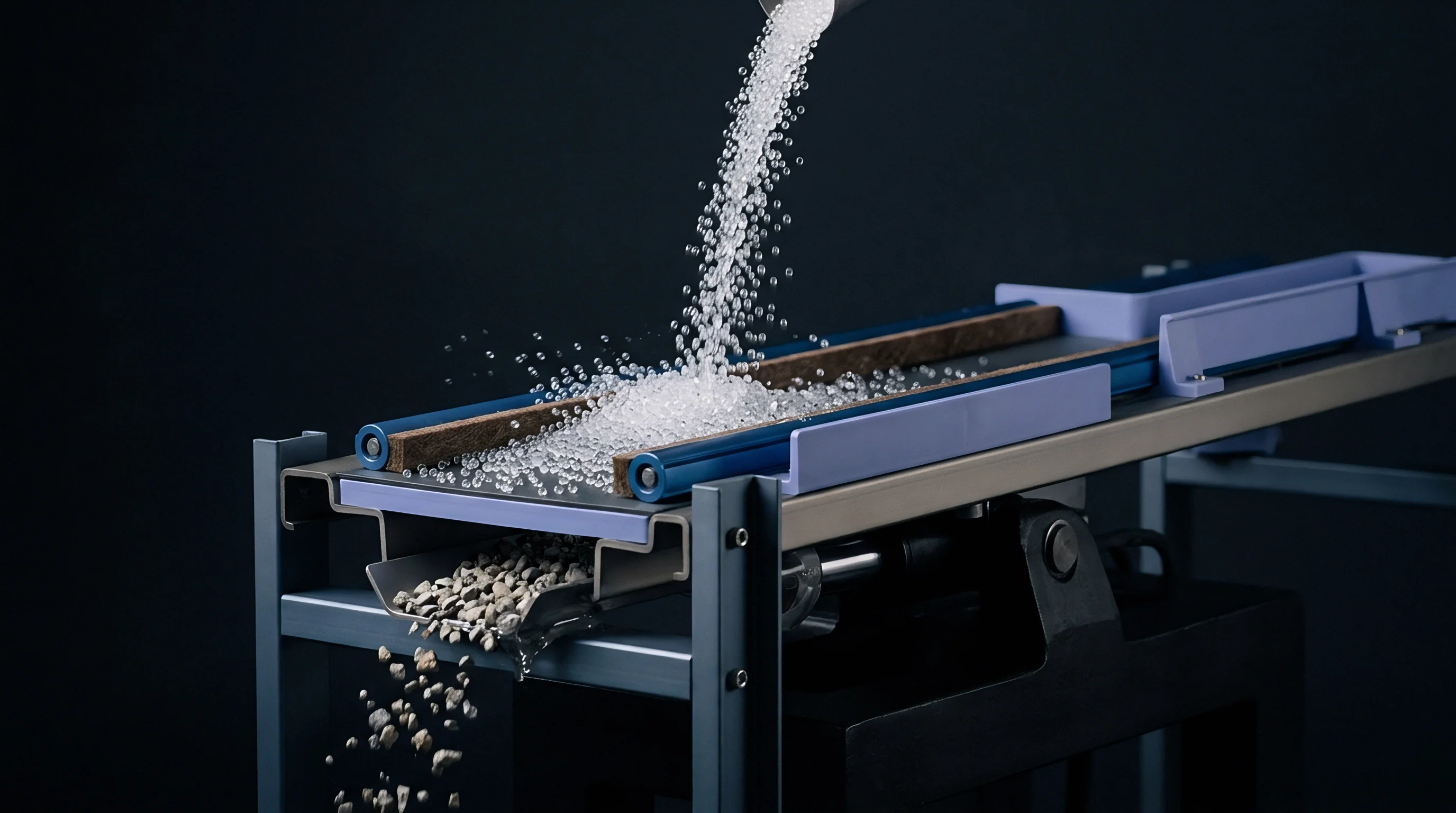
Two-dimensional gas chromatography paired with flame ionization detection isolates oxirane derivatives from unreacted aliphatic matrices based on polarity differences. Normal-phase liquid chromatography upfront separates saturated hydrocarbons and aromatic hydrocarbons into distinct retention windows. When epoxidized polyolefin extracts enter a silica gel column, native saturated species elute immediately in the first fraction, non-epoxidized aromatics elute in the second, and oxirane derivatives retain strongly through dipole interactions between the oxygen atom and silanol groups, eluting in a third polar fraction.
Epoxidation of an unsymmetrical internal olefin generates two chiral carbon centers, producing enantiomers and diastereomers that split across phases. As a result, single olefinic oligomers divide into multiple distinct chromatographic peaks upon epoxidation.

Why Do Unsaturated Oligomers Yield Split Peaks?
Steric isomerism across newly generated chiral oxirane centers produces distinct retention splits on polar stationary phases. A single trisubstituted alkene oligomer yields two diastereomeric oxiranes with different boiling points and dipole moments. On high-resolution capillary columns, these diastereomers separate into doublets or triplets, spreading the analyte signal across a wider retention window and lowering individual peak heights toward the limit of detection, which complicates automated integration of the unresolved complex mixture.
- Extract five grams of polyethylene film using hexanes for six hours under reflux conditions.
- Evaporate the extraction solvent under a gentle stream of nitrogen at thirty degrees Celsius until reaching one milliliter volume.
- Add two milliliters of meta-chloroperoxybenzoic acid solution in dichloromethane at zero degrees Celsius.
- Quench excess peracid by introducing sodium thiosulfate solution followed by neutral alumina column cleanup.
- Inject the purified extract into the online liquid chromatography gas chromatography system for dual-fraction quantification.
Silver nitrate impregnated silica gel provides enhanced separation of unreacted alkenes from saturates without chemical derivatization. Silver ions form reversible pi-complexes with double bonds, retaining alkenes while allowing polyolefin saturated hydrocarbons to pass through unhindered. However, silver-phase columns degrade when exposed to light and polar solvents, leaving off-line chemical epoxidation as the predominant method for high-throughput compliance laboratories.
Incomplete epoxidation leaves residual disubstituted and trisubstituted alkenes in the extract that mimic aromatics and co-elute with bicyclic aromatic hydrocarbons during silica gel fractionation. Flame ionization detectors assign non-selective carbon responses to these co-eluting peaks, artificially inflating calculated mineral oil aromatic hydrocarbon values.
Increasing stationary phase polarity separates oxirane derivatives from native aromatic structures while compressing saturated hydrocarbon bands.
Whether complex branched trisubstituted oxiranes maintain identical flame ionization detector response factors relative to their parent olefinic precursors remains unsettled in analytical practice.


Limit

Compliance Evaluation under European Union Standards
Regulatory evaluation of food contact plastic materials under Regulation EU 10/2011 mandates strict mass thresholds for non-intentionally added substances migrating into food simulants. Specific migration testing employs food simulant D2, consisting of vegetable oil, or alternative simulants like ninety-five percent ethanol and Tenax. Migration protocols specify contact durations of ten days at forty degrees Celsius for ambient storage applications, or ten days at sixty degrees Celsius for hot-fill conditions.
Because food simulants absorb low molecular weight species, polyolefin oligomers below one thousand Daltons migrate readily into fatty matrices. European Food Safety Authority guidelines set a target threshold of 0.5 milligrams per kilogram of food for total mineral oil saturated hydrocarbons, while demanding absence of mineral oil aromatic hydrocarbons at a detection threshold of 0.01 milligrams per kilogram. Uncorrected olefinic interference from incomplete epoxidation routinely causes compliant low-density polyethylene resins to breach this 0.01 milligram per kilogram threshold.
| Simulant & Test Condition | Uncorrected MOAH Signal (mg/kg) | Epoxidation Yield (%) | Corrected MOAH Concentration (mg/kg) | Regulatory Conformity Status |
|---|---|---|---|---|
| Simulant D2 (10 days at 60°C) | 0.042 | 68 | < 0.01 (Below Limit) | Passes Verification |
| 95% Ethanol (10 days at 60°C) | 0.028 | 72 | < 0.01 (Below Limit) | Passes Verification |
| Tenax (10 days at 40°C) | 0.015 | 54 | < 0.01 (Below Limit) | Passes Verification |
| Simulant D2 (10 days at 40°C) | 0.009 | 85 | < 0.01 (Below Limit) | Passes Verification |
When a laboratory report attributes unreacted polyolefin unsaturated oligomers to the aromatic fraction, importers face immediate compliance rejections and shipment holds. Documenting the conversion efficiency of the epoxidation reaction establishes a scientific basis for subtracting non-aromatic interference from the integrated total.
- Substrate Olefin Screening Measure raw baseline double bond content via Fourier-transform infrared spectroscopy before initiating derivatization procedures.
- Yield Calibration Standardization Run parallel reaction controls using synthetic branched alkene standards to determine batch conversion percentages.
- Dossier Traceability Verification Correlate total oligomer peak areas directly with specific resin lot numbers recorded on declarations of conformity.
Polyolefin oligomeric unsaturated hydrocarbons falsely elevate reported aromatic mineral oil levels when chemical transformation efficiency drops below eighty percent.
Supply agreements incorporating mandatory compliance clauses under EN 1186 require analytical reports to specify exact derivatization yields whenever olefinic epoxidation precedes chromatographic integration.


Ledger

Financial Impact of Analytical Oversights
Commercial clearing of polymer resin shipments depends on a clear separation between true contamination and analytical artifacts. Rejection of a single resin container based on false-positive mineral oil aromatic hydrocarbon reports creates severe friction across supply chains. For example, a forty-tonne shipment of low-density polyethylene resin priced at 1,450 Euros per tonne incurs demurrage fees at container ports of 150 Euros per container per day while disputing an analytical finding.
Border holds accrue fees and re-testing delays product release, while engaging an accredited third-party laboratory for comprehensive two-dimensional gas chromatography with quad-time-of-flight mass spectrometry costs approximately 3,500 Euros per sample matrix. When initial screening fails due to uncorrected epoxidation yields of sixty-five percent, the importer incurs port storage penalties, lab re-analysis costs, and production downtime.
During a two-week border detention for a four-container lot, port storage fees reach 8,400 Euros. Confirmatory derivatization testing across four composite lot samples adds 14,000 Euros, and emergency air-freight replacement of compliant film raw material adds 22,000 Euros in expedited logistics expenses. Total financial exposure from a single false-positive reading exceeds 44,400 Euros, representing over seventy-six percent of the original raw material value.
Incorporating yield-corrected epoxidation protocols into routine quality verification files requires rigorous batch sampling to prevent unnecessary lot rejections and protect landed-cost margins.
Failing to correct for variable transformation efficiency during oligomer screening results in unjustified lot rejections, unnecessary air-freight resupply expenses, and contract termination by downstream packaging converters.