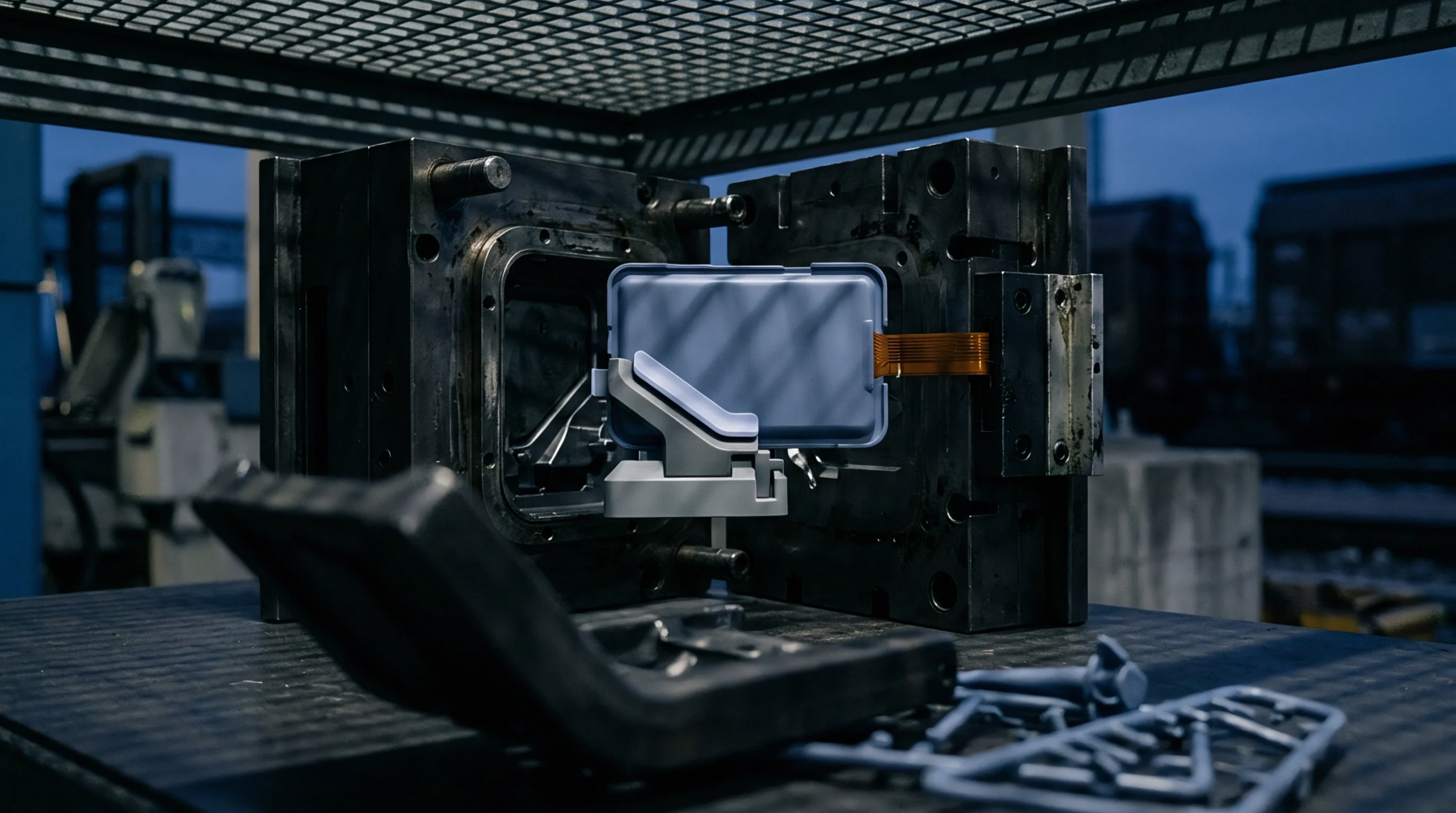
Quantifying Inter Cavity Thermal Drift Rates in High Cavitation Tool Steel Assemblies
Inter-cavity thermal drift in high-cavitation steel tooling shifts part dimensions; turbulent coolant flow and conductive inserts eliminate temperature spreads.
Rigid structural barriers possessing low thermal conductivity find widespread application in polymer processing machinery and mould assemblies to restrict heat transfer between heated barrel zones, hot runner manifolds, and surrounding ambient structures. Thermal insulation boards govern barrel temperature stability and heat dissipation rates during injection moulding and extrusion operations. These compressed fibre or ceramic composite sheets are positioned between the metal platen of a clamping unit and the rear of the mould base during the press setup phase.
Excessive heat migration from cartridge heaters into machine platens induces premature hydraulic fluid degradation and clamp parallelism distortion, whereas insufficient thermal isolation causes thermal drift across cavity walls. The application boundary sits precisely at the exterior mounting interfaces of processing equipment, leaving internal fluid channels outside the scope of this definition.
Thermal retention panels installed across high tonnage clamping systems minimize energy loss through convection and direct conduction into machine frames. Injection moulding facilities evaluate energy consumption metrics by measuring kilowatt hours per kilogram of polymer processed under specific cycle times. When thermal insulation boards degrade or compress beyond acceptable tolerances, heater bands draw increased electrical current to compensate for unmanaged thermal leakage.
This parasitic energy drain elevates plant overhead costs and increases cooling water demands within the hydraulic circuit. Moulder operators verify thermal barrier performance by recording surface temperatures on the outer edges of steel platens during steady state production runs.
Heat sink effects originating from uninsulated mould bases cause localized freezing of polymer melts within runner channels and gate zones during prolonged machine stoppages. Thermal insulation boards interrupt this conductive path to maintain uniform melt viscosity across the entire shot volume. Melt temperature fluctuations exceeding specific processing windows trigger polymer chain scission, gel formation, and volatile gas release in shear sensitive engineering thermoplastics such as polyoxymethylene and unplasticized polyvinyl chloride.
Virgin resin economics depend heavily on strict thermal control, because thermal history variations accelerate molecular weight breakdown and render recycled regrind batches unsuitable for subsequent moulding cycles. Part specifications demand consistent mechanical properties that unmanaged platen heat transfer compromises by altering crystallization kinetics within the mould cavity.
Clamping forces exerted by toggle or hydraulic presses generate mechanical stresses that interact with thermal gradients across the tool mounting interface. Thermal insulation boards prevent localized thermal expansion of machine platens from transferring uneven loads into the mould base. Unbalanced thermal loads create parallelism errors that manifest as flash on parting lines, core shift in thin walled components, and rapid wear on guide pins.
Toolmakers establish dimensional tolerance targets for finished mould components assuming a uniform operating temperature across the entire support plate assembly. When insulation thickness varies across the clamping surface, uneven platen deflection causes wall thickness discrepancies in precision moulded parts.
Inter-cavity thermal drift in high-cavitation steel tooling shifts part dimensions; turbulent coolant flow and conductive inserts eliminate temperature spreads.
Expertise is a utility, not a secret. sentiention™ publishes its working knowledge as open reference: intelligence layer covering the materials it sources, the markets it enters, and the reference that serves both.