Meaning
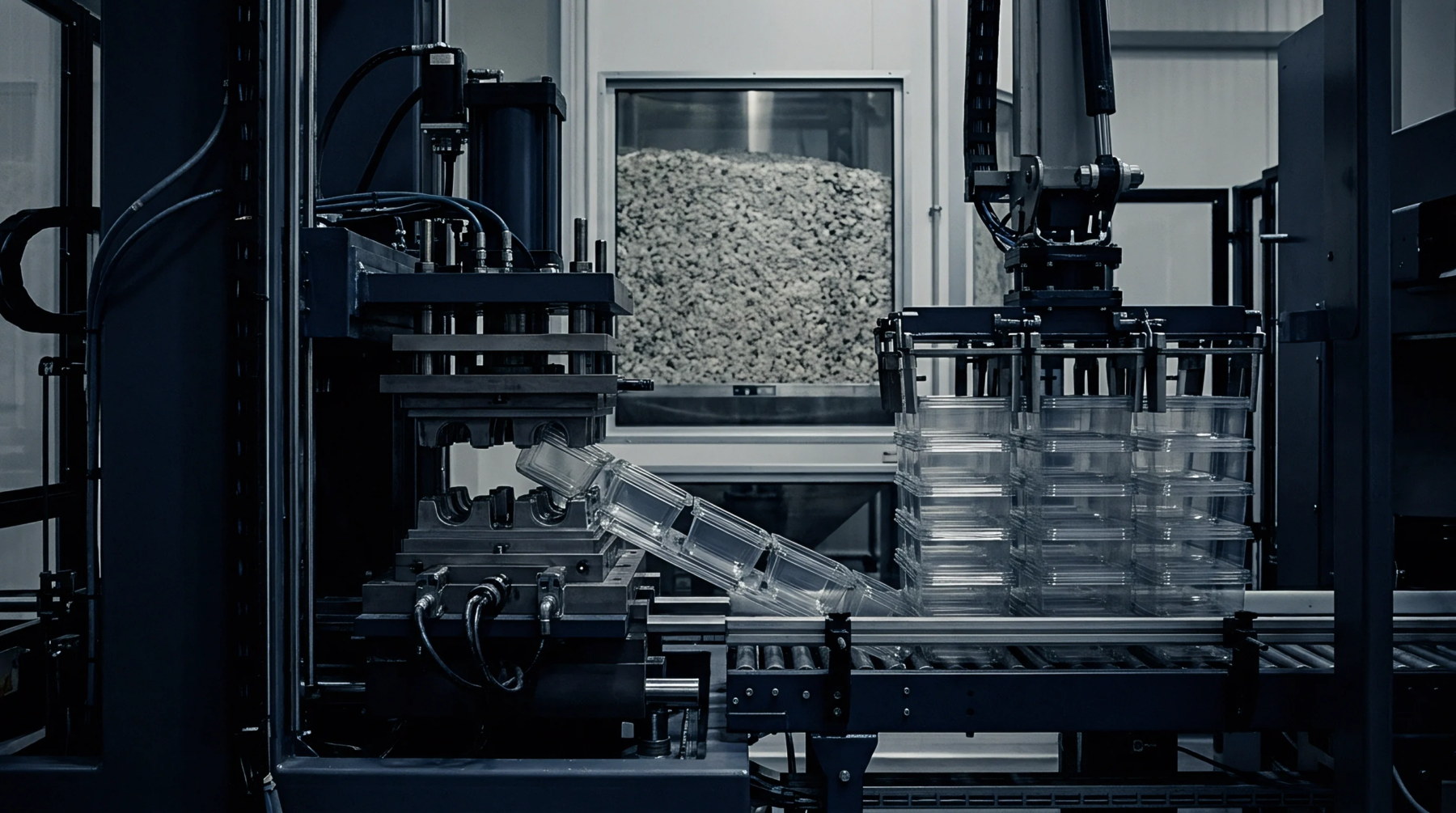
High temperature reshaping transforms amorphous thermoplastic sheeting into deep drawn cavities through controlled heat and vacuum application. Polycarbonate thermoforming governs the specific glass transition window where molecular chains soften enough for permanent deformation without losing tensile strength. Sheet thickness uniformity dictates the ultimate mechanical integrity of the finished component.
The boundary of this forming operation ends once edge trimming finishes and residual internal stress is annealed out.
Process Variable
Sheet sag during the heating cycle provides the primary visual indicator for optimal draw temperature. Operators monitor infrared heater bank output to prevent localized overheating that causes bubbling or polymer degradation. Cooling rates across male and female tool surfaces determine final part crystallinity and residual stress distribution.
Uneven cooling induces severe warp and optical distortion in transparent enclosures.
Resin Specification
Virgin grade material maintains the melt flow index stability required for predictable elongation ratios during the drawing phase. Regrind incorporation alters viscosity profiles and introduces weak points that fail under pneumatic stress. Datasheet values for tensile strength represent laboratory molded plaques rather than actual performance in drawn parts.
Real world components suffer localized thinning at corners where draw depth stretches the polymer beyond its nominal limit.
Cost Impact
Scrap rates escalate rapidly when heater calibration drifts outside narrow processing tolerances. Tooling expenditure includes thermal management channels to stabilize mold temperatures over long production runs. Material waste from incorrect sheet clamping forces directly erodes manufacturing margins in high volume electronics housings.