Meaning
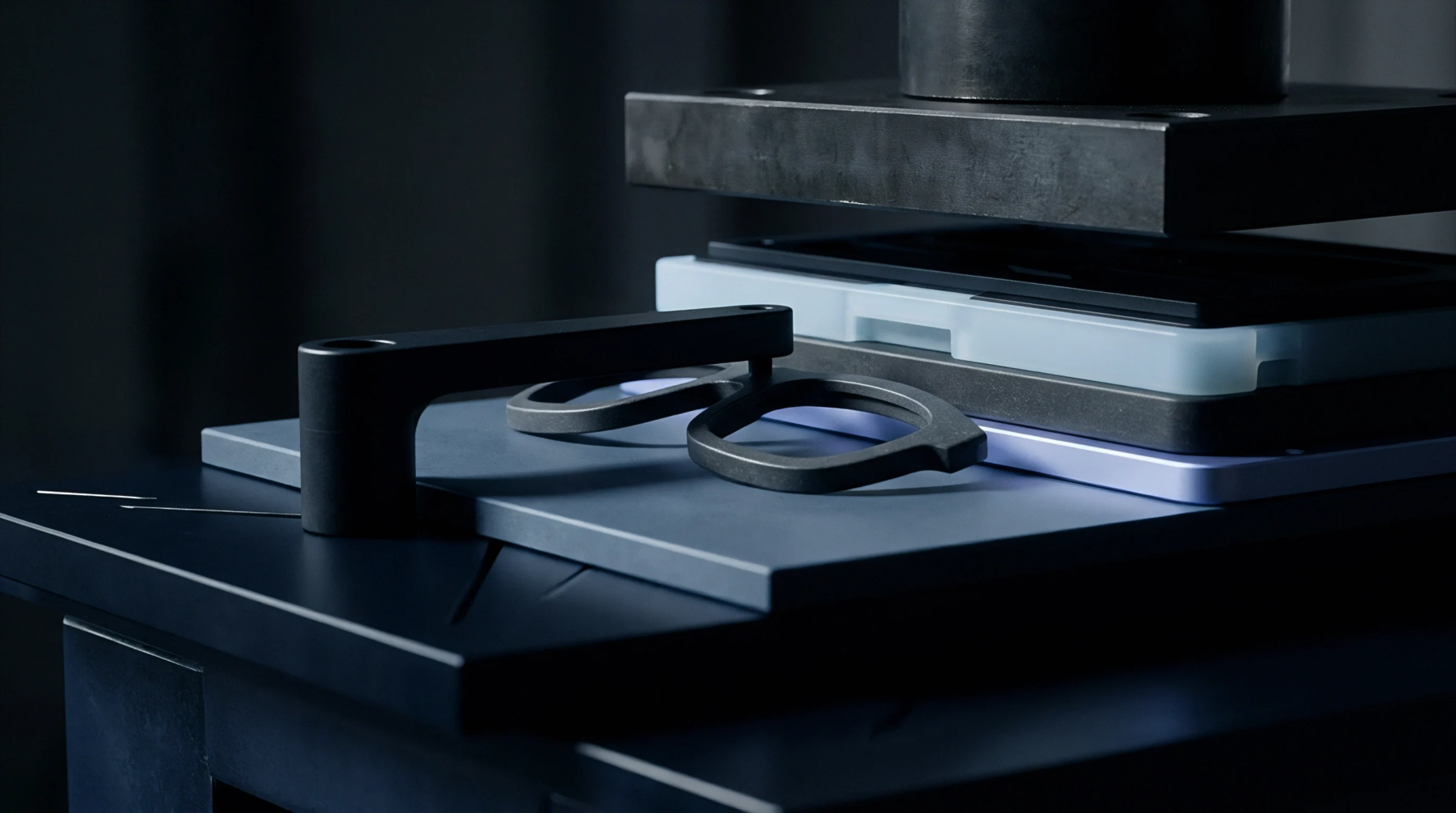
A production tooling assembly containing two or more identical impressions produces multiple thermoplastic components during a single machine injection cycle. Designed for mass manufacturing, a multi-cavity injection mould utilizes symmetrical cold or hot runner systems to deliver molten polymer simultaneously to each distinct moulding space. The engineering governs shot consistency, clamp tonnage distribution and unit production economies across high-volume production programmes.
Toolmakers construct these complex assemblies from hardened steel alloys to endure hundreds of thousands of continuous clamping cycles without physical deformation. The tool architecture becomes unviable when part geometry requires disproportionate lateral slide mechanisms or when production volumes cannot absorb high upfront fabrication expenses.
Flow Balancing
Hydraulic pressure losses throughout the melt delivery network dictate individual part dimensions and weight repeatability. Inside an advanced multi-cavity injection mould, naturally balanced hot runner manifolds ensure that resin flow length and shear heating remain uniform from the machine nozzle to every separate gate. Uneven runner geometry causes hesitation in distant cavities, producing short shots on outer impressions while overpacking central cavities.
Overpacked locations suffer flash formation, excessive residual stress, severe part warpage and prolonged cycle times. Flow discrepancies cannot be resolved through machine adjustments because modifying injection pressure affects all cavities concurrently. Precision machining tolerances across hot runner tips and gate orifices preserve part weight consistency within one percent across the entire shot.
Thermal Regulation
Conformal cooling channels bored throughout the cavity blocks remove heat at identical rates to stabilize cycle times. Unequal cooling temperatures across a multi-cavity injection mould distort part shrinkage, forcing out-of-spec dimensions between different cavities operating in the same moulding press. Chilled water circuits must maintain turbulent flow through each zone to extract thermal energy predictably across high-speed cycles.
Economic Threshold
Tool fabrication expenditures scale directly with cavity multiplication and runner sophistication. Adding impressions cuts piece costs dramatically through reduced machine hour charges, yet initial capital requirements multiply alongside routine maintenance overheads. High-cavity tooling becomes financially advantageous only when long commercial production runs amortize substantial steel cutting and hot runner controller investments.