Meaning
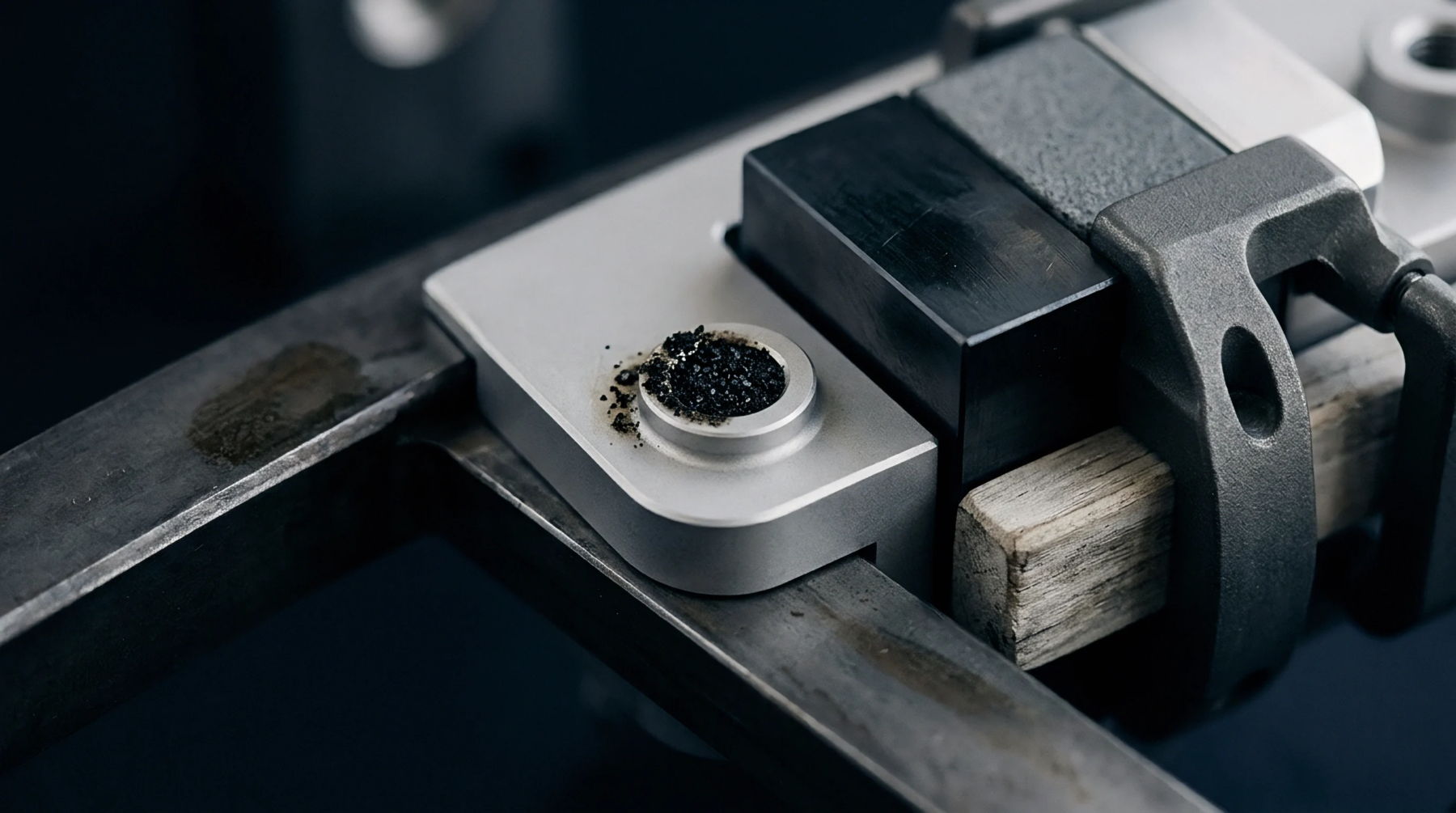
Severe surface degradation caused by oscillatory sliding amplitudes between contacting metallic interfaces frequently manifests during injection moulding machine platen operation. Micro-fretting corrosion occurs when high clamp tonnages combine with microscopic relative displacement under vibration, wearing away protective oxide layers and generating abrasive metallic debris. Tooling engineers specify high alloy tool steels with specialized surface nitriding treatments to resist this mechanical wear mechanism during high speed cyclic loading.
Surface Degradation
Dynamic clamping forces create localized frictional heating that accelerates oxidative wear across mating component boundaries. Repeated micro motions fatigue the underlying crystalline structure until microscopic particles break free from the steel matrix. Lubric selection directly influences how effectively boundary films separate contacting asperities under heavy cyclic loads.
Material Specification
Alloy selection dictates the endurance limit of moving mold components against localized surface fatigue. Moulders must distinguish between baseline laboratory datasheet values and actual performance maintained across high volume production runs. Virgin feedstock processing requires consistent thermal profiles to prevent localized hardening variations that exacerbate micro-fretting corrosion during extended clamp cycling.
Operational Tolerance
Dimensional stability across multi cavity tooling depends entirely on maintaining precise guide pillar clearance limits. Excessive thermal expansion during continuous operation narrows lubricating gaps and initiates rapid abrasive wear between moving steel faces. Part rejection rates escalate rapidly once mating tolerances drift beyond specified limits and accelerate surface failure.