Meaning
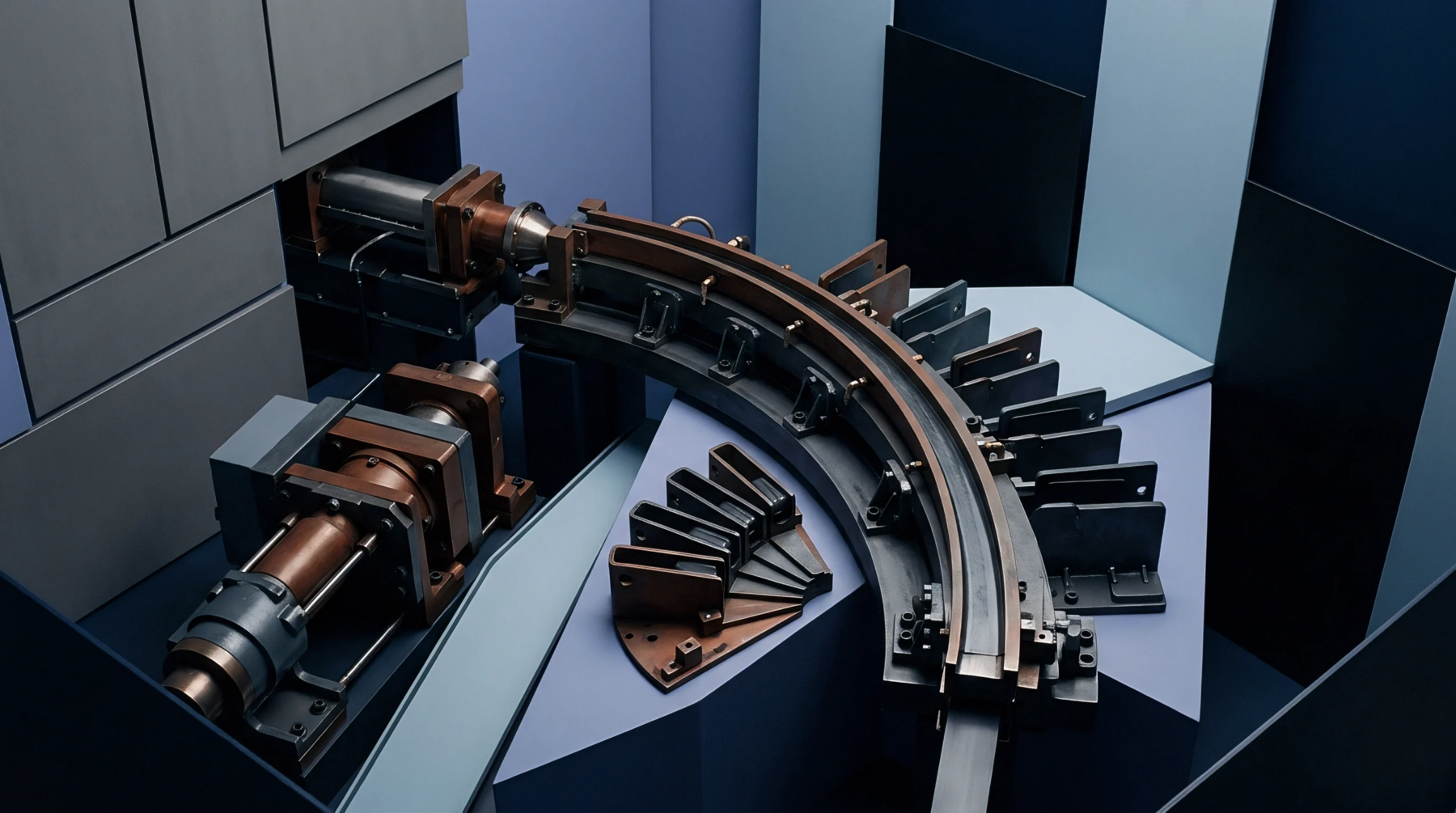
Static channel design embedded within the runner system of an injection mold alters the orientation of the polymer melt layers to eliminate thermal imbalances. This melt rotation technology repositions the hotter shear layers from the outer edges of the runner into the center or to the opposite side of the flow channel before the melt splits into separate branches. By reorienting these thermal gradients, the technology ensures that each branch receives material with identical temperature profiles and viscosity.
Channel Shear
Flowing polymer creates high shear and heat next to the runner walls, while the core of the melt remains relatively cool. When this stratified melt encounters a standard tee junction, the hotter material tends to flow into one branch while the colder core goes into the other. This split leads to severe temperature differences between the cavities, which causes filling and dimensional inconsistencies.
Temperature Balancing
Specially shaped inserts or machined channel geometries twist the flowing stream by ninety or one hundred and eighty degrees at the runner intersections. This physical rotation redistributes the high-shear, low-viscosity layers evenly across both downstream channels. The resulting balance ensures that the subsequent cavities fill at the same rate and pack to the same density.
Cavity Consistency
Using this flow manipulation method reduces part weight variation and dimensions across multi-cavity molds without requiring changes to the machine settings. The improvement is achieved entirely through the passive reorientation of the melt during the injection phase of the cycle. This method provides a robust solution for high-precision components.