Meaning
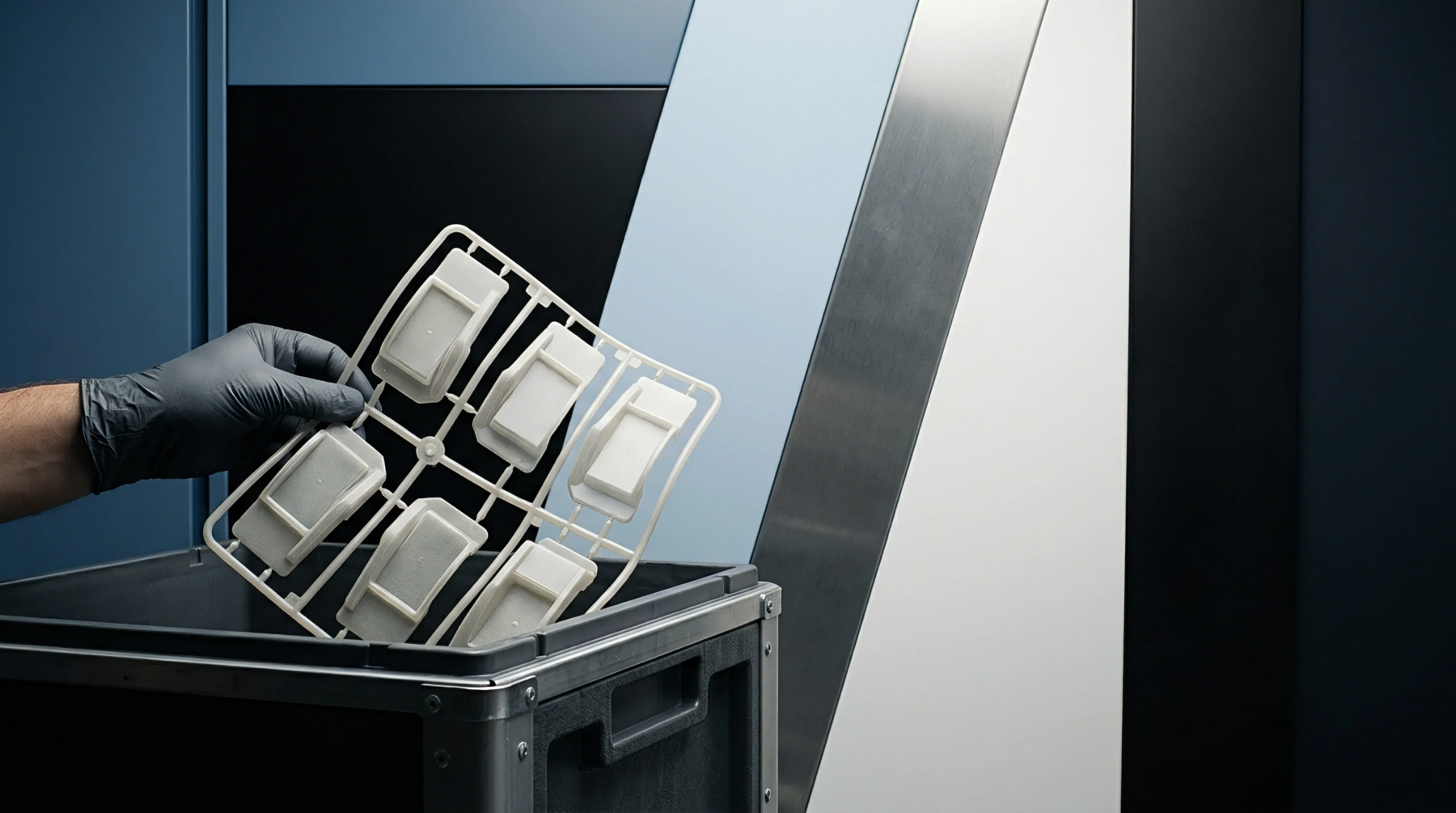
Shear-induced thermal imbalances generated in symmetrical runner systems create asymmetric melt viscosity distributions between inner and outer runner branches. Installing a melt flipper runner insert reorients the high-shear outer layer of polymer melt into the central core before the stream reaches subsequent branching junctions. Applicability extends to geometrically balanced multicavity molds where non-uniform filling occurs despite identical channel lengths.
Tooling Retrofit
Hardened steel inserts fit into standard runner intersection pockets. Positioning a melt flipper runner insert allows molders to correct flow imbalances without re-machining primary plate steel.
Shear Redistribution
As polymer flows through runner channels, high shear rates near channel walls generate localized frictional heating that lowers local viscosity. Passing through a melt flipper runner insert rotates the melt stream ninety degrees, shifting the hot skin material into the interior and cold core material to the walls. This rotation equalizes temperature profiles across downstream runner split sections, preventing high-temperature resin from preferentially filling inner cavity sets.
Semi-crystalline materials like polypropylene exhibit extreme shear sensitivity, making mechanical inversion effective at eliminating part weight variation. Datasheet viscosity curves fail to predict these localized thermal gradients, making physical stream reorientation necessary for stable multi-cavity processing.
Imbalance Reduction
Filling variation across high-cavity tooling causes part warpage, dimensional drift and uneven mechanical performance. Implementing a melt flipper runner insert reduces cavity-to-cavity pack pressure variance from over fifteen percent down to under three percent. Controlled cavity filling reduces part rejects and allows lower overall injection pressures, protecting delicate core pins from lateral deflection.