Meaning
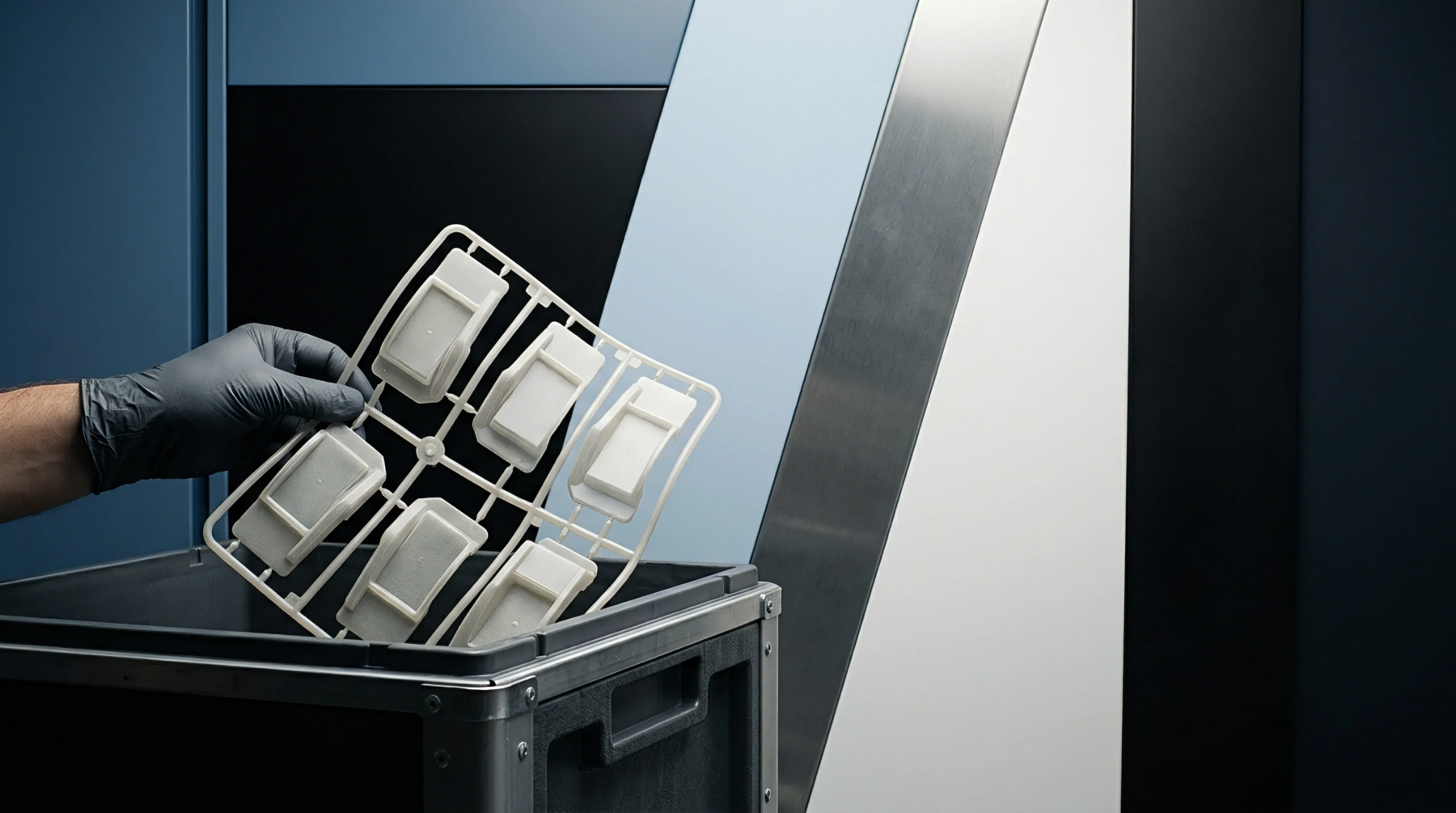
Multicavity feed system layouts arrange identical runner flow lengths and diameters from a central sprue to every gate impression in a balanced tree structure. Incorporating a geometric balance H pattern ensures that melt arrives at every cavity gate simultaneously at equal temperature and pressure. The layout applies strictly to multi-cavity injection molds with cavity counts in powers of two, such as eight, sixteen or thirty-two impressions.
Flow Symmetry
Flow length matching eliminates early filling in central cavities. Using a geometric balance H pattern provides equal hydraulic resistance along every flow pathway.
Cavity Uniformity
Pressure distribution across identical cavity impressions dictates dimensional tolerances in high-precision component moulding. When feed channels utilize a geometric balance H pattern, part weight variance between inner and outer cavities drops well below threshold limits established for medical or electronic housings. Unbalanced layouts cause outer cavities to flash while inner cavities short shot, raising scrap rates and wasting virgin resin feed.
Resin viscosity fluctuations caused by varying regrind percentages are damped evenly across all cavities, preventing localized sink marks or differential shrinkage in finished components. Molders verify cavity balance by conducting short shot studies under reduced injection velocity settings.
Runner Layout
Tool space allocation requires careful placement of primary, secondary and tertiary runner branches. Designing with a geometric balance H pattern expands the overall mold plate footprint compared to radial or fishbone channel arrangements. The resulting layout increases runner volume and scrap mass, requiring efficient regrind granulating equipment to maintain process economics.