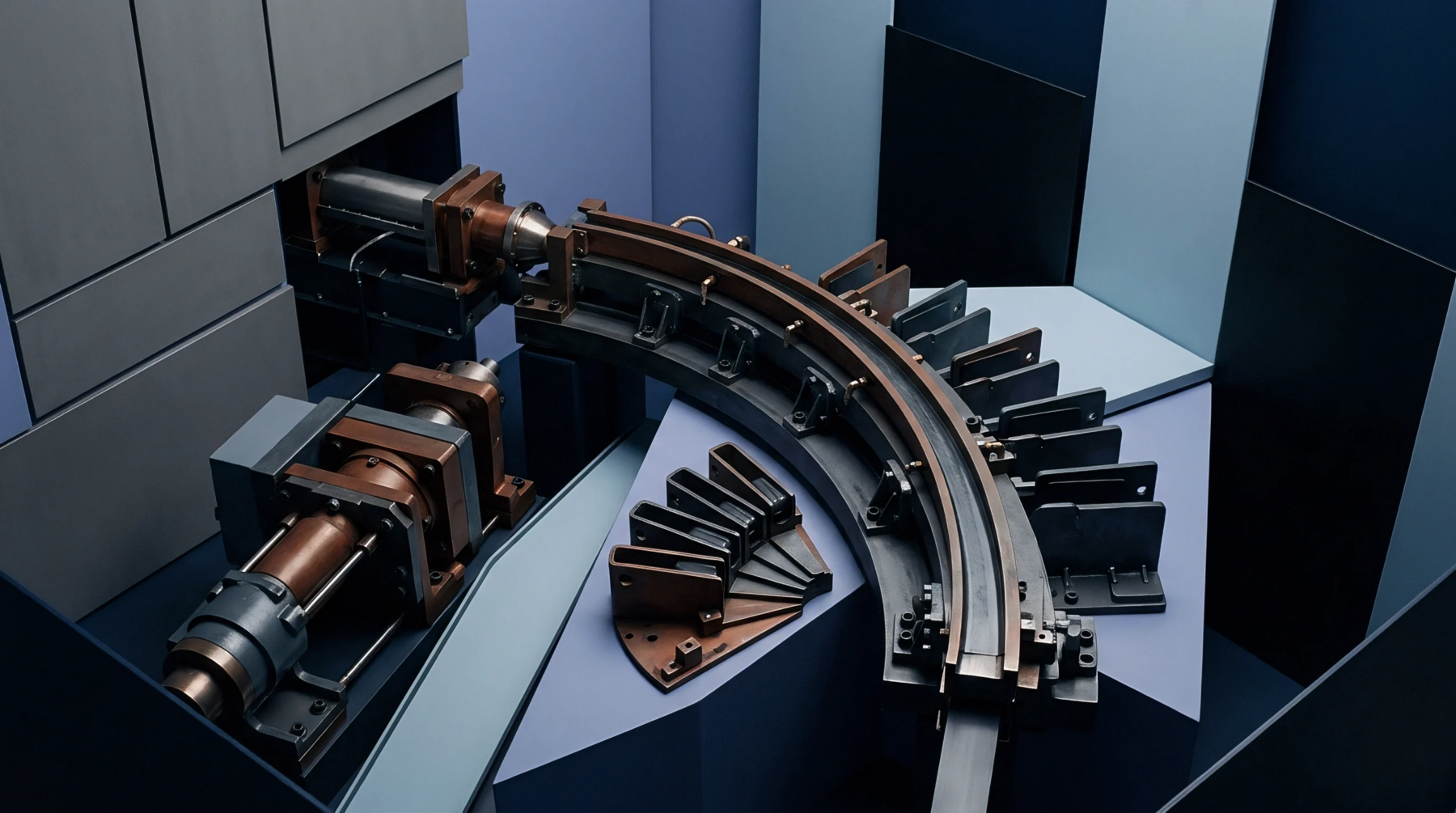
Managing Hot Runner Shear Induced Thermal Imbalance across High Density Cavity Layouts
Managing shear imbalance across high-density cavities depends on rotating channel boundary layers at runner splits to equalize melt viscosity before gating.
The intersection point inside a multi cavity injection mould tool where a single polymer melt stream divides into multiple feeder paths is known as a flow channel junction. This geometric node governs local shear rate distribution and melt front velocity across diverging runners. Material viscosity shifts abruptly at this dividing interface due to sudden changes in thermal boundary layers and local pressure drops.
Unbalanced runner geometry near the branching point causes differential packing pressures during the high pressure hold phase of the cycle. Part specification requirements dictate uniform molecular orientation, meaning asymmetric flow division yields built in residual stress fields and warpage in the moulded article. Virgin polymer batches tolerate moderate shear heating through the splitting geometry without molecular chain scission, whereas high melt flow rate regrind materials degrade rapidly under identical thermal and mechanical stress.
The specification boundary stops at the external perimeter of the part cavity gates, leaving downstream cooling rates outside the direct governance of the split geometry.
Cross sectional area ratios across the branching geometry dictate whether pressure losses remain symmetrical during the filling phase of production. Engineers set these geometric dimensions during the initial tool steel milling stage using computer aided flow simulation software. Shear viscosity spikes when the melt stream splits into sharp ninety degree corners, generating localized overheating and thermal polymer degradation inside the runner system.
Datasheet melt flow index values assume steady pipe flow, while actual conditions at the dividing node involve complex extensional deformation and sudden velocity gradients. Moulders hold tight dimensional tolerances on runner radii to prevent stagnation zones where stagnant material thermally decomposes and produces black specks in clear optical components.
Melt temperature discrepancies downstream from the splitting node originate from asymmetric heat transfer through adjacent mould plates. Process technicians adjust heater band outputs on the barrel to compensate for frictional heat generated at the splitting walls, though barrel adjustments cannot fix inherent runner imbalances. Cycle times increase when excessive cooling is required to freeze thick sections created by poor melt distribution at the intersection.
Part warpage measurements reflect changes in volumetric shrinkage caused by thermal gradients established right at the dividing point.
Scrap rates escalate rapidly when runner imbalance forces moulders to overpack one cavity to fill an adjacent short shot. Production costs rise because excessive clamping tonnage is deployed to counteract flash generated by unbalanced cavity pressures across the parting line. Regrind incorporation aggravates flow instabilities at the splitting node because recycled polymer chains possess lower molecular weight and narrower thermal processing windows.
Tool modifications required to correct a poorly designed runner intersection demand expensive manual welding and recutting of hardened tool steel inserts. Unresolved flow imbalances across multi cavity moulds ultimately dictate whether a production run meets commercial profitability targets.
Managing shear imbalance across high-density cavities depends on rotating channel boundary layers at runner splits to equalize melt viscosity before gating.
Expertise is a utility, not a secret. sentiention™ publishes its working knowledge as open reference: intelligence layer covering the materials it sources, the markets it enters, and the reference that serves both.