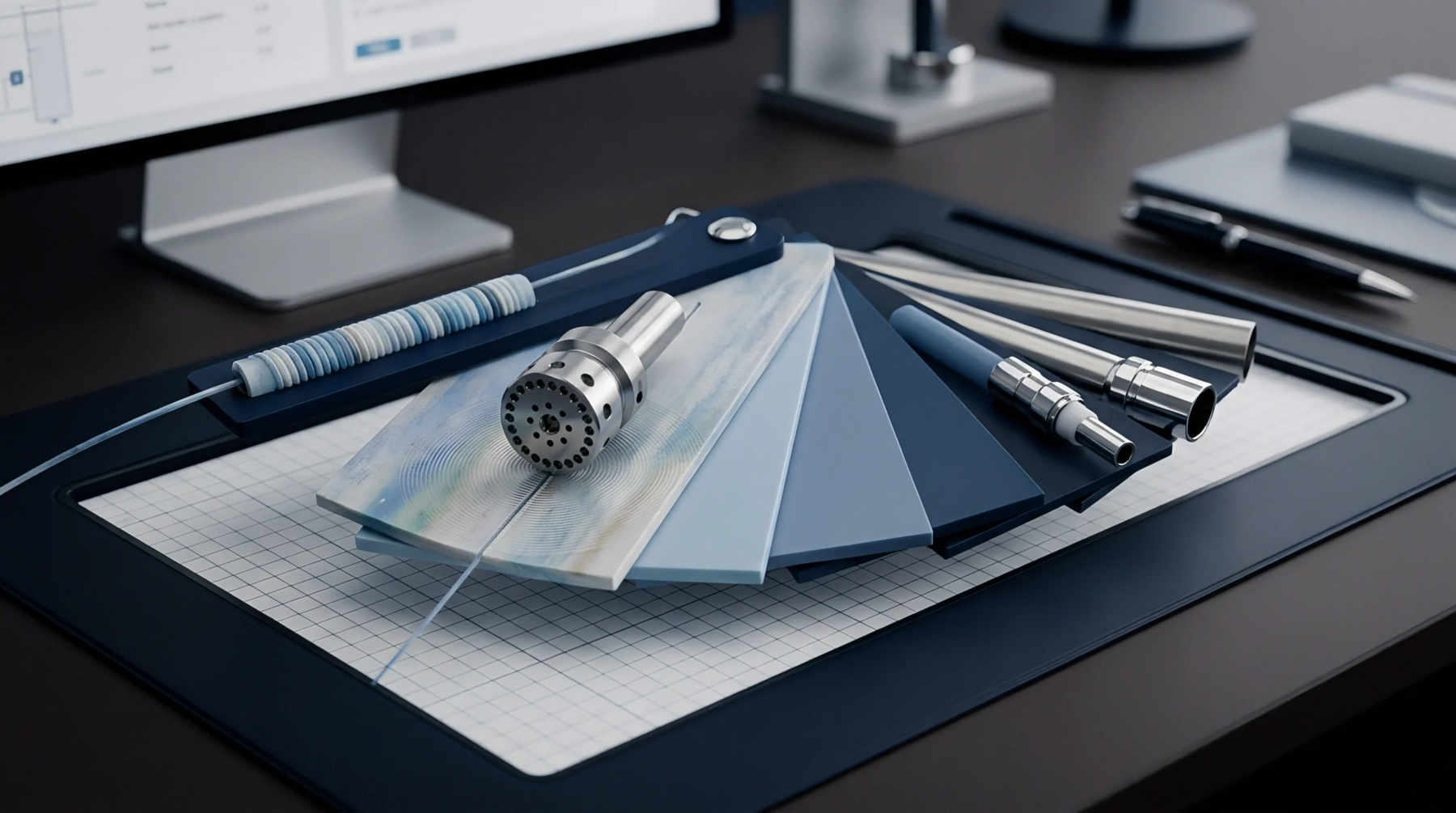
Toolroom Blueing Shut off Verification for Injection Moulding
Toolroom blueing shut-off verification proves metal contact under compression to eliminate plastic flash, protect tool steel, and validate parting line pre-load.
Engineering blue identifies a specific visual standard for identifying high pressure cooling lines within injection mould tooling systems to prevent accidental connection to lower pressure circuits. This chromatic marker governs the application of high visibility cyan coatings onto cooling ports, hoses and manifold couplings during the final stages of tool assembly. The boundary for this application remains strictly within the cooling water circuit where thermal regulation meets structural integrity.
The industry relies on this visual identification to ensure moulders connect hoses correctly during the installation of complex multi cavity tools.
Maintenance technicians apply engineering blue to distinguish cooling channels rated for extreme inlet pressures from standard circuits within the same mould base. These high pressure zones require thicker wall tubing and specialised high flow connectors to avoid bursting during cycle activation. When moulders confuse these pressure ratings, the resulting failure causes internal leakage and catastrophic damage to delicate tool inserts.
Technicians set the marking at the point of manifold manifold fabrication to ensure visual consistency across the production floor. Using this system reduces the chance of manual error during tool setup on the machine platen. A uniform color code allows floor staff to inspect circuits without consulting technical drawings or digital schematics every time a mould enters the production sequence.
Correct application of engineering blue ensures that thermal management maintains the rheological stability of the injected polymer during the fill phase. High pressure circuits enable the rapid heat extraction necessary for materials with high glass transition temperatures where slow cooling leads to poor surface finish or crystalline defects. Moulders often face parts with warpage when the heat transfer rate falls outside the window defined for the specific resin grade.
The cooling setup supports the target cooling time and prevents thermal degradation of the material near the gate locations. Regrind percentages affect the viscosity of the melt and necessitate specific cooling rates to maintain the required tolerance across long production runs. A moulder adjusts the flow rate to compensate for temperature drift while relying on the colour code to keep the circuit path clear and identified.
The presence of engineering blue signifies a system validated for peak operational stress rather than merely a cosmetic addition to the tool hardware. Consistent application of this identifier creates a reliable protocol for identifying hardware requirements during routine maintenance intervals. Moulding facilities that ignore this protocol face increased downtime due to mismatched connectors or fractured cooling lines under peak pressure conditions.
Proper identification of the high pressure circuit determines the ceiling for the cooling throughput of the entire system. Tooling components that meet this standard operate predictably under the highest cycle demands required for precision thermoplastic production.
Toolroom blueing shut-off verification proves metal contact under compression to eliminate plastic flash, protect tool steel, and validate parting line pre-load.
Expertise is a utility, not a secret. sentiention™ publishes its working knowledge as open reference: intelligence layer covering the materials it sources, the markets it enters, and the reference that serves both.