Meaning
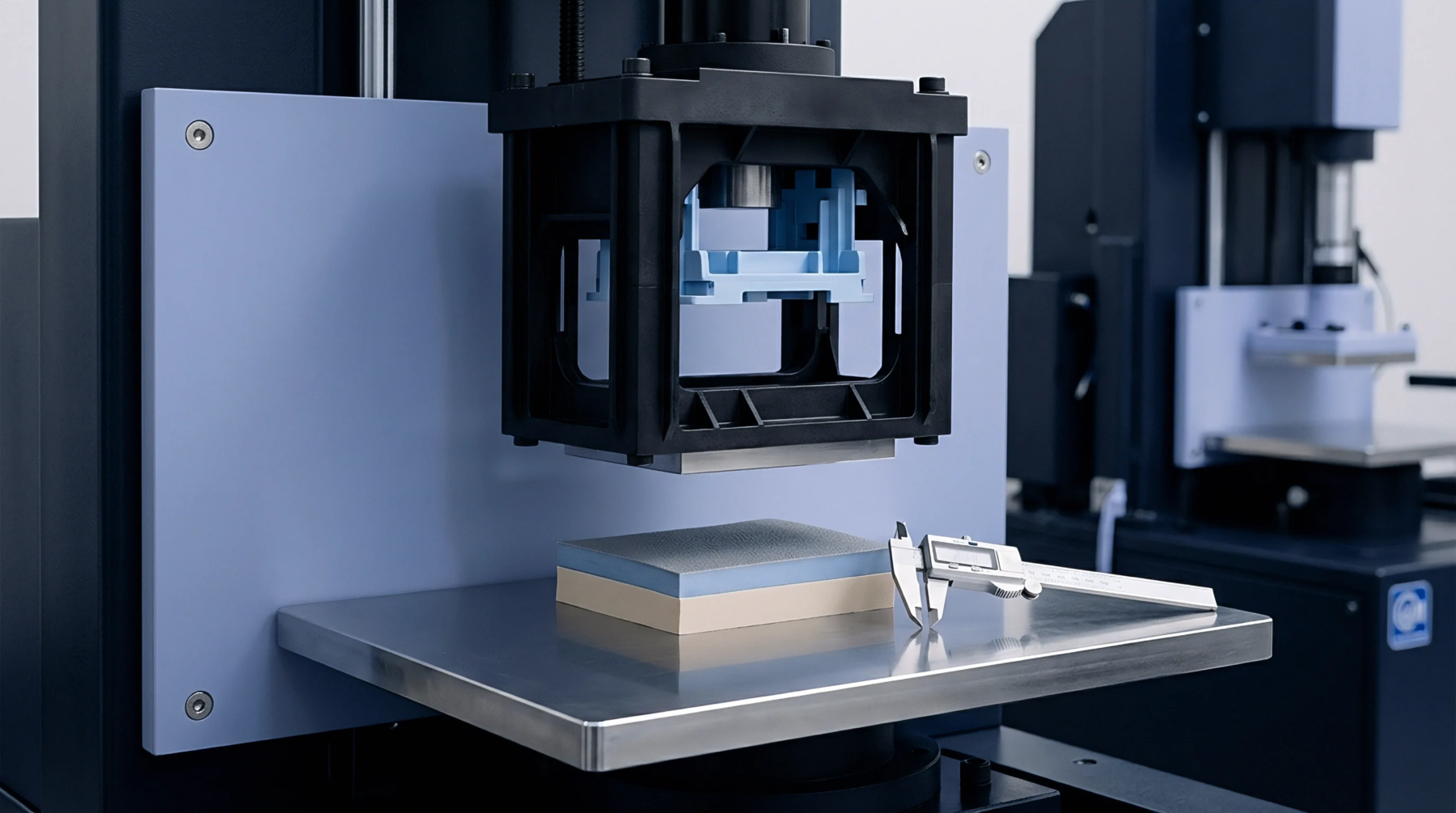
Standard compression molding protocols define specific temperature trajectories to ensure repeatable material properties across laboratory trials. Designated as cooling rate method a, this thermal regulation procedure prescribes a controlled cooling rate of fifteen degrees Celsius per minute to prepare thermoplastic test specimens from their molten state. Continuous monitoring establishes a reference baseline for density, preventing the artificial variation of mechanical values through uncontrolled quench cycles.
Solidification behaves predictably under this steady reduction.
Thermal Protocol
Chamber cooling governs the heat removal rate from the molten platen assembly. Specimen preparation using cooling rate method a prevents excessive amorphous regions from forming during solidification. Operators use this controlled descent for laboratory resin assessment.
Standard Variation
Alternative methods in ASTM D4703 specify different quench regimes like rapid cold water baths or slow insulated cooling. For materials that crystallize slowly, choosing cooling rate method a ensures a moderately ordered microstructure is formed without incurring the hour-long cycles of slower protocols. Specimen density remains stable as a result.
Mold Consequence
Molding operations cannot always mimic laboratory solidification rates in high-speed cycle times. When the actual mold cooling rate diverges from cooling rate method a, the molded part exhibits lower density and altered tensile properties compared to datasheet values. This divergence means the lab-determined values represent a controlled potential rather than a run-time guarantee.