Recycled Content Claims Priced into a Packaging Tax Line
Recycled content tax claims require lot-specific EN 15343 audit trails and migration reports to withstand customs audits and avoid retroactive landed tax liabilities.
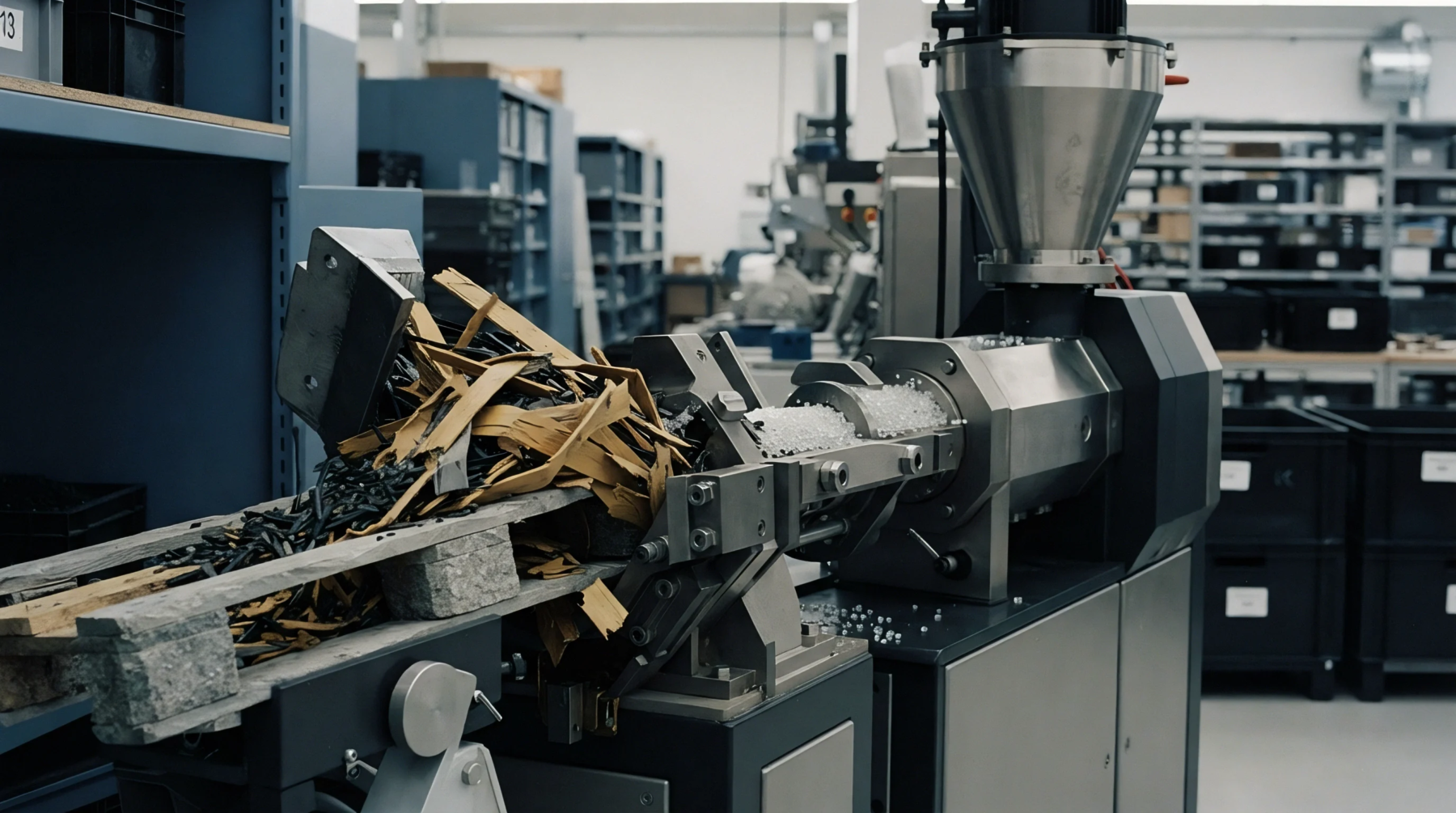
Industrial compounding methods involve the simultaneous feeding and mixing of multiple polymer resin streams or additives within a single processing unit to ensure a uniform melt. This method of continuous extrusion blending relies on gravimetric or volumetric feeders mounted directly above the extruder throat to maintain precise ratios. It differs from batch mixing where materials are blended in a separate vessel before being moved to the hopper.
In high volume production, continuous extrusion blending eliminates the risk of material stratification during transport. The process handles virgin resin alongside regrind and masterbatch pellets to create a homogenous melt before the material reaches the die.
Precise dosing of raw materials constitutes the primary requirement for a stable manufacturing cycle. Gravimetric systems used in continuous extrusion blending measure the weight loss of each hopper to adjust screw speeds in real time. Automated adjustment compensates for changes in bulk density or pellet geometry that might otherwise cause fluctuations in the final part properties.
When a moulder integrates recycled content, the feeders manage the variation in particle size to prevent surging in the barrel. The accuracy of these feeders determines whether the final product meets the mechanical specifications defined in the material datasheet.
Shearing forces within the extruder barrel facilitate the dispersion of pigments and functional additives throughout the polymer matrix. Successful mixing efficiency in continuous extrusion blending depends on the screw design and the residence time of the material in the heated zones. High shear elements like kneading blocks break down agglomerates while distributive elements ensure the additives are spread evenly.
If the mixing is insufficient, the resulting parts may show colour streaks or localized structural weaknesses. Excessive shear can degrade the polymer chains and reduce the impact strength of the moulded components. Molten polymer must pass through these zones at a velocity that prevents stagnant spots from forming near the barrel wall.
Carbonised particles from degraded resin often originate in these low flow areas and appear as black specks in the finished product.
Long production runs benefit from the steady state thermal conditions provided by a constant flow of material through the machinery. Maintaining production consistency through continuous extrusion blending reduces the volume of scrap produced during start up and shut down cycles. Stable melt pressure ensures that the dimensions of extruded profiles or injection moulded parts remain within the specified tolerances.
Frequent adjustments to the blend ratio are avoided by using calibrated sensors that track the output of every feed stream. A reliable blending system allows a facility to use higher percentages of regrind without compromising the quality of the finished goods. When the material cost for virgin resin rises, the ability to incorporate internal scrap accurately protects the profit margin of the project.
This stability holds as long as the moisture content of all feedstocks is strictly controlled to avoid gas bubbles or hydrolysis. Monitoring the energy consumption of the motor provides a secondary check on the melt quality. Fluctuations in motor torque indicate changes in the viscosity of the resin blend.
Recycled content tax claims require lot-specific EN 15343 audit trails and migration reports to withstand customs audits and avoid retroactive landed tax liabilities.
Expertise is a utility, not a secret. sentiention™ publishes its working knowledge as open reference: intelligence layer covering the materials it sources, the markets it enters, and the reference that serves both.