Extrusion Minimum Runs Measured in Tonnes Rather than Pieces
Extrusion runs are quoted in tonnes because start-up scrap, thermal equilibration, and bulk resin compounding operate as continuous mass processes.

Purge
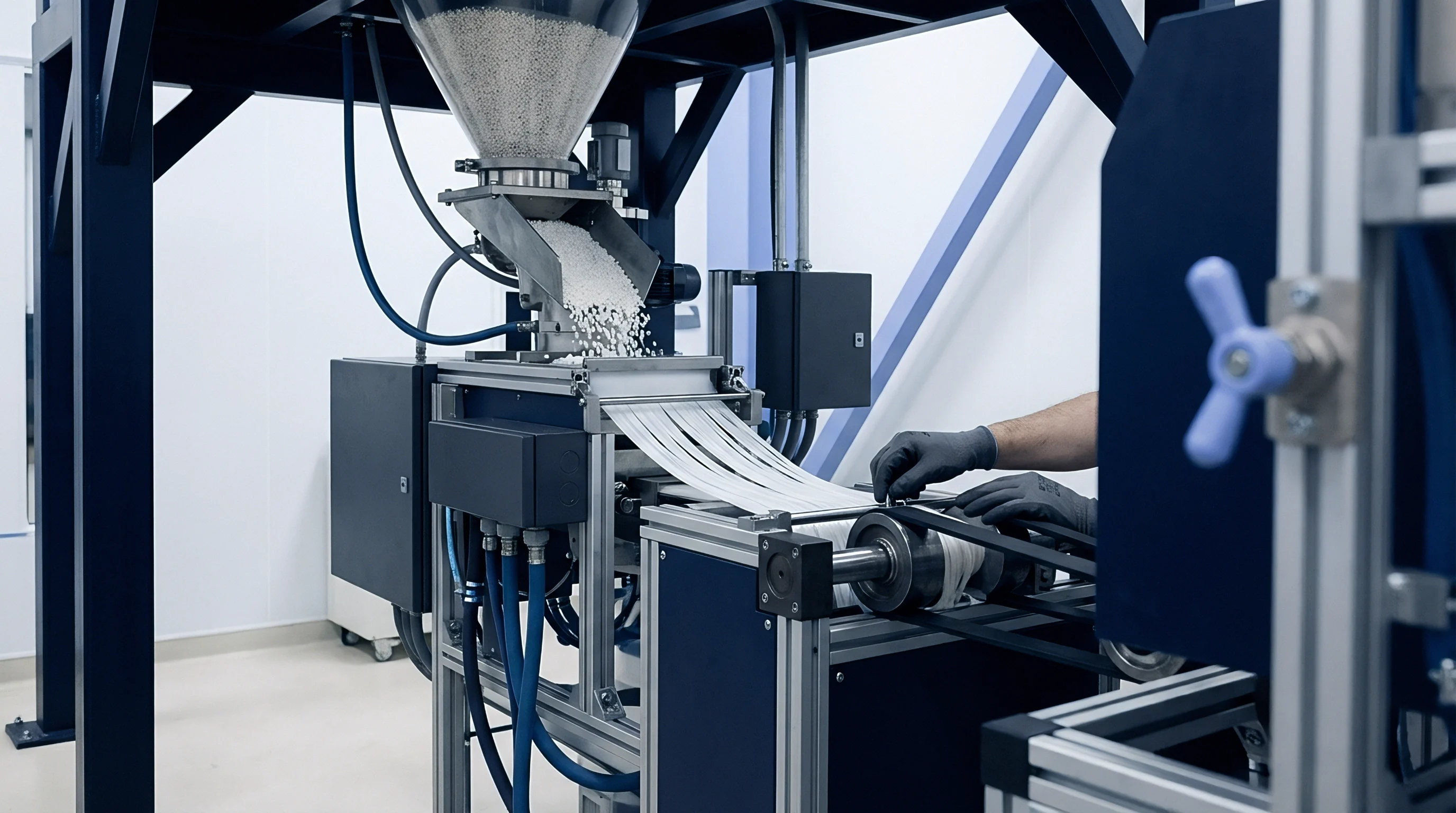
Continuous profile and sheet extruders consume raw material by weight long before the puller grips the first meter of saleable profile. Bringing a ninety-millimeter single-screw extruder up to steady-state melt temperature requires flushing the previous run out of the barrel, establishing uniform backpressure across the breaker plate, and balancing the temperature zones across the die body. Until the extrudate reaches thermal homogeneity, the molten polymer emerging from the die orifice exhibits irregular swell, uneven wall distribution, and variable melt strength that cannot maintain shape through the calibration sleeves.
Start-up scrap on a ninety-millimeter extruder processing rigid polyvinyl chloride reaches seventy-five kilograms before the downstream puller synchronizes with die output.
On profile conversion sheets, extruder start-up scrap frequently exceeds fifty kilograms before sizing stabilizes. The transition between polymer lots, masterbatch shades, or base resin grades compounds this loss. A clean shutdown leaves residual material baking in the barrel flights.
Clearing degraded polymer demands aggressive purging compounds or high-viscosity sacrificial base resin run at maximum screw revolutions. The machine operator cannot cycle individual parts; the process is a continuous fluid stream. Scrap accrues by the minute and registers directly on the platform scale beneath the die face.
| Screw Diameter | Barrel Volume | Output Rate | Equilibration Time | Start-Up Scrap Mass |
|---|---|---|---|---|
| 45 mm | 4.2 dm³ | 45 kg/h | 20 min | 15 kg |
| 65 mm | 12.8 dm³ | 120 kg/h | 35 min | 70 kg |
| 90 mm | 34.5 dm³ | 280 kg/h | 45 min | 210 kg |
| 120 mm | 78.0 dm³ | 550 kg/h | 60 min | 550 kg |

Transient Material Losses in Barrel Flushes
Emptying an extruder barrel does not resemble clearing an injection cylinder. Continuous lines resist rapid stops. The rotating screw depends on constant feed throat replenishment to generate hydrostatic pressure against the melt pump or breaker plate.
Stopping the line causes the polymer inside the barrel to undergo thermal degradation, resulting in black specks and cross-linked gels that ruin cosmetic surfaces. Transitioning from dark to natural resin requires three to five complete barrel volume exchanges of natural carrier before optical contamination drops below acceptable inspection thresholds.
On heavy-wall rigid PVC lines, thermal stabilization consumes hundreds of kilograms of transitional regrind. The thermal mass of a heavy profile die, weighing between two hundred and eight hundred kilograms of tool steel, takes up to two hours to reach absolute equilibrium across every cartridge heater zone. During this window, outer wall thicknesses drift out of DIN 16941 tolerance bands, producing uncalibrated linear scrap that converters sell off to recyclers at a fraction of virgin pellet cost.
Failing to account for these transition scrap tonnages leaves the extrusion house bearing direct resin deficits that wipe out conversion margins on short-run orders.
Calibration
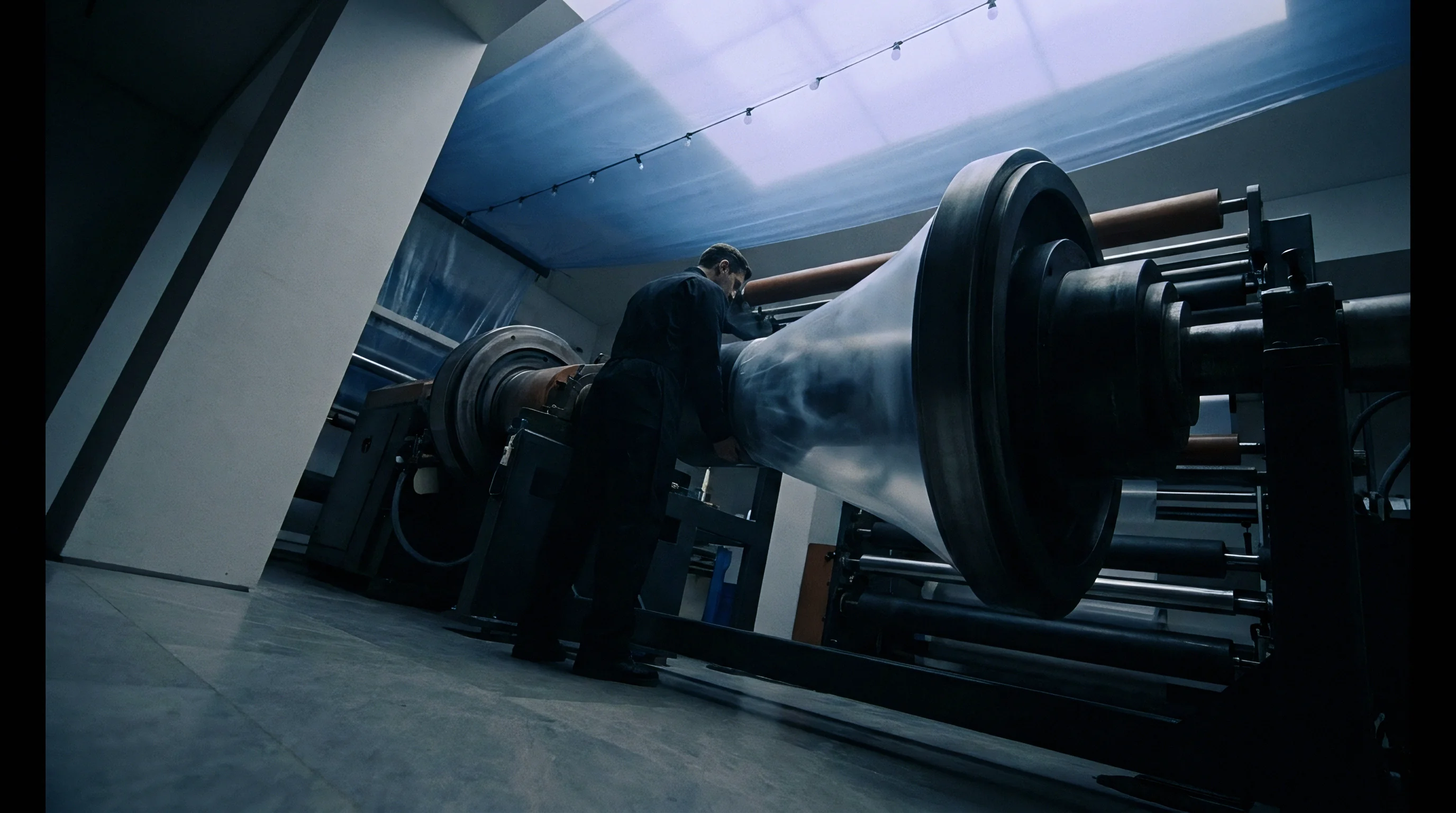
Downstream sizing tanks transform amorphous molten profiles into rigid cross-sections through vacuum draw-down and intensive water cooling. Vacuum calibrators generate friction. The pulling tractor downstream exerts continuous tensile force on the hot profile, drawing it through stainless steel dry-calibration plates or flooded vacuum tanks.
If the operator alters the line speed by two percent to compensate for a sagging bottom leg, the wall thickness across the entire cross-section thins proportionally. The entire cooling line functions as a single continuous mechanical spring.
- Differential shrinkage stresses warp asymmetrical profile sections whenever cooling water bath temperatures fluctuate by more than two degrees Celsius.
- Melt fracture defects emerge along thin decorative fins when excessive haul-off speeds exceed the shear rate limits of the die land.
- Vacuum calibration drag marks the outer profile show surface whenever cooling tank vacuum levels exceed twenty-five kilopascals during initial line acceleration.
- Internal wall collapse occurs within hollow multi-chamber window profiles when internal air venting pins become clogged with volatile plasticizer vapors.
Line stability demands hours of uninterrupted haul-off operation. Draw balance establishes wall uniformity. Adjusting water flow rates, vacuum tank pressures, and puller belt traction involves subtle mechanical balances that take dozens of linear meters to register at the cut-off saw.
Operators cannot run twenty meters of a complex custom profile, shut the machine down, and achieve identical tolerances on the subsequent restart. The initial setup scrap is fixed by physical line length, while steady-state running scrap remains a linear function of time.
Tooling stability in vacuum sizing tanks depends entirely on steady-state line equilibrium maintained over several continuous production hours.
The die cannot hold dimension until the haul-off puller runs at continuous target speed against steady vacuum tank resistance.

Tonnage
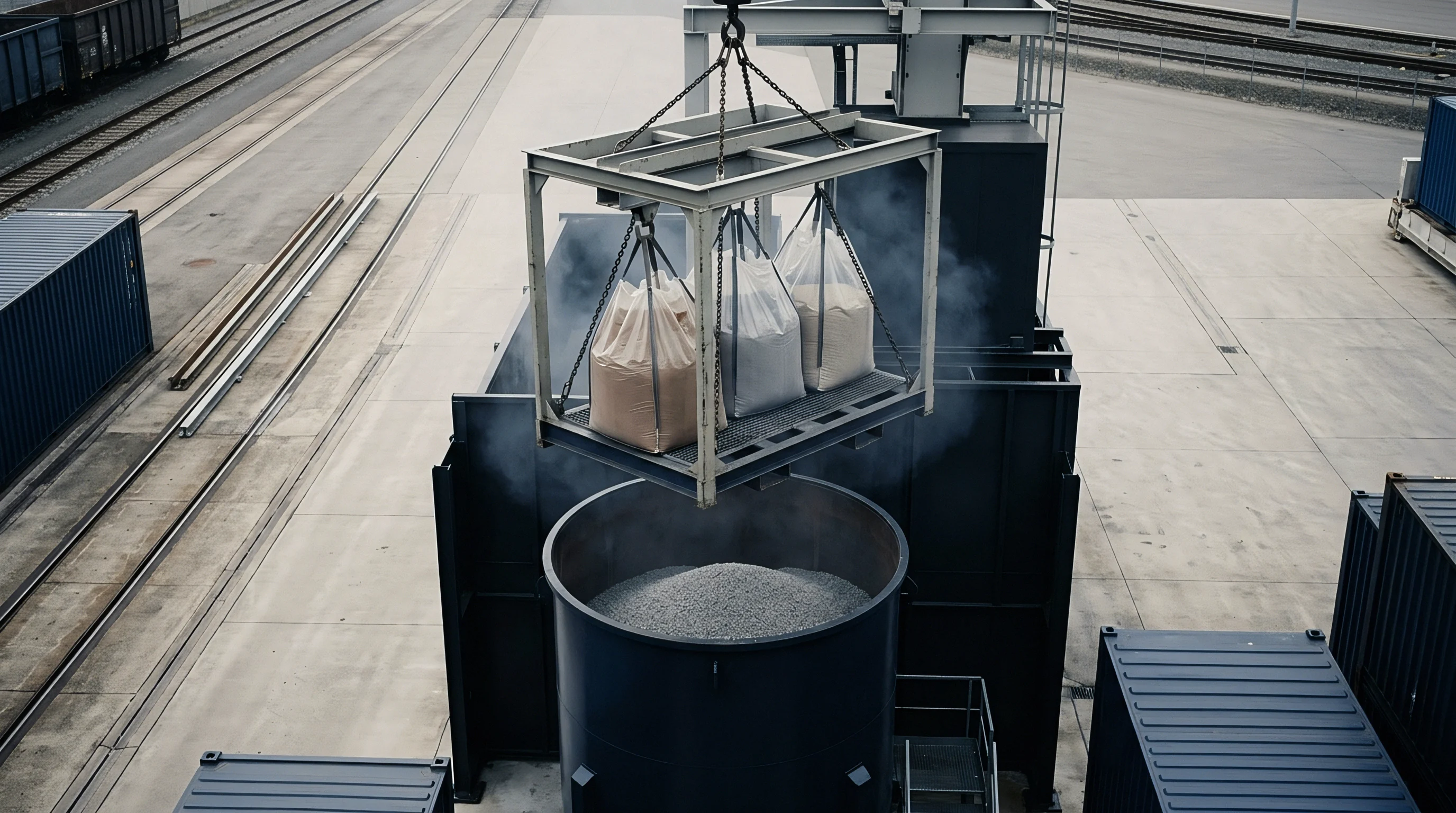
Bulk raw material supply chains dictate conversion economies through minimum packaging formats and compounding vessel capacities. Resin buyers sign for kilograms. Standard thermoplastic polymers arrive in twenty-five-kilogram multi-wall bags, one-tonne octabins, or twenty-tonne bulk road tankers.
Custom color matching introduces another constraint: masterbatch suppliers formulate bespoke color concentrates in minimum blending batches of twenty-five to fifty kilograms. At a three-percent let-down ratio, twenty-five kilograms of color concentrate commits the extruder to processing over eight hundred kilograms of natural base polymer.
- Compound formulation verification ensures that UV stabilizers, impact modifiers, and flame retardants mix homogeneously in high-speed industrial blenders.
- Drying hopper loading charges desiccant drying silos with sufficient polymer inventory to prevent moisture streaks during multi-hour runs.
- Gravimetric dosing alignment synchronizes base resin, regrind proportion, and color masterbatch feed rates above the extruder throat.
- Bulk lot clearance releases the finished extrusion lot against density, melt flow index, and color coordinates recorded during stable production.
In custom profile extrusion quotes, conversion pricing scales with total barrel throughput rather than packaging counts. Extruders calculate profitability on kilograms converted per machine hour. When a machine runs at three hundred kilograms per hour, allocating machine setup, die changeover, and teardown labour against an order of three hundred pieces weighing one hundred grams each results in an absurd piece price.
The conversion house establishes a baseline order volume, typically one to three tonnes, where fixed changeover costs dilute into acceptable processing margins.
Contractual supply agreements standardly incorporate an overrun and underrun delivery tolerance of plus or minus ten percent against the nominal order weight.
Commercial contracts standardly specify that purchase orders under five tonnes are subject to minimum compounding surcharges that transfer raw material inventory risk directly to the buyer.

Chop
Cut-off machinery separates the endless extrudate into discrete saleable units through pneumatic traveling saws, rotary knives, or inline guillotines. Inline saws introduce kerf loss. A high-speed carbide-tipped saw blade measuring three millimeters in thickness removes three millimeters of material per cut.
On short component lengths, such as one-hundred-millimeter spacers, saw kerf waste alone consumes three percent of the total converted polymer mass. The extruder operator monitors the profile weight per meter on an analytical balance, adjusting haul-off speed to keep the linear density within target engineering boundaries.
| Profile Outer Dimensions | Linear Weight | Order Mass Target | Gross Yield Length | Final Yield at 2.0 m Length |
|---|---|---|---|---|
| 25 mm x 25 mm x 1.5 mm Angle | 0.145 kg/m | 1,000 kg | 6,896 m | 3,448 pieces |
| 50 mm x 50 mm x 2.0 mm Channel | 0.410 kg/m | 1,000 kg | 2,439 m | 1,219 pieces |
| 80 mm x 40 mm Hollow Box | 0.890 kg/m | 2,500 kg | 2,808 m | 1,404 pieces |
| 120 mm x 60 mm Structural Rib | 1.750 kg/m | 5,000 kg | 2,857 m | 1,428 pieces |
| Yield calculations assume zero kerf scrap and nominal wall thickness density of 1.42 g/cm³ for unplasticized PVC. | ||||
Piece count remains a secondary mathematical quotient derived from linear density and cut length. If an engineer designs a profile with a nominal weight of 0.500 kilograms per meter, a two-tonne production run yields four thousand linear meters. If the profile wall runs near the upper tolerance limit at 0.525 kilograms per meter, that identical two tonnes of resin produces only three thousand eight hundred and nine meters.
The buyer ordering discrete piece counts faces shortages unless the order contract explicitly accounts for linear weight variance across the production shift.
To prevent downstream disputes, buyers write linear density tolerance limits directly into purchase orders. Extruders invoice actual processed resin. A buyer expecting ten thousand parts based on nominal drawing volume discovers that standard extrusion tooling tolerances shift the final piece count by several hundred units in either direction.
The industry continues to debate whether optical inline thickness gauges can eventually eliminate wall thickness drift sufficiently to allow piece-based ordering on custom profile geometries without shifting financial risk onto convertors.
Settlement
Financial reconciliation in extrusion manufacturing rests on mass balances verified through freight weighbills and scrap logs. Extruders invoice raw material consumption plus machine conversion hours. When tooling trials yield the first usable profile samples, the commercial department establishes the baseline cost structure using polymer mass.
If a buyer requires ten thousand pieces of a two-meter weatherstrip, the quoting engineer translates that demand into meters, applies the target gram-per-meter density, adds seven to ten percent for start-up and saw scrap, and rounds up to the nearest standard resin lot size.
Because heavier sections run slower, profile wall thickness controls line velocity as thick plastic sections dissipate heat slowly through water cooling baths. An extrusion line producing thick-walled high-density polyethylene pipe might run at two meters per minute, whereas a light polypropylene straw runs at two hundred meters per minute. The conversion charge reflects the total time the barrel occupies the plant floor, making the hourly resin throughput in kilograms the fundamental unit of manufacturing capacity.
Extrusion manufacturing conversion costs scale with processed mass throughput per machine hour rather than finished piece count.
Understanding this continuous mass balance allows sourcing engineers to negotiate tooling commitments, batch sizes, and scrap allowances with technical precision. An order structured around resin tonnage aligns procurement directly with the physical realities of polymer melt processing, line stabilization physics, and bulk chemical logistics.
Extrusion orders quoted by weight reflect the fundamental physics of the continuous melt line.