Meaning
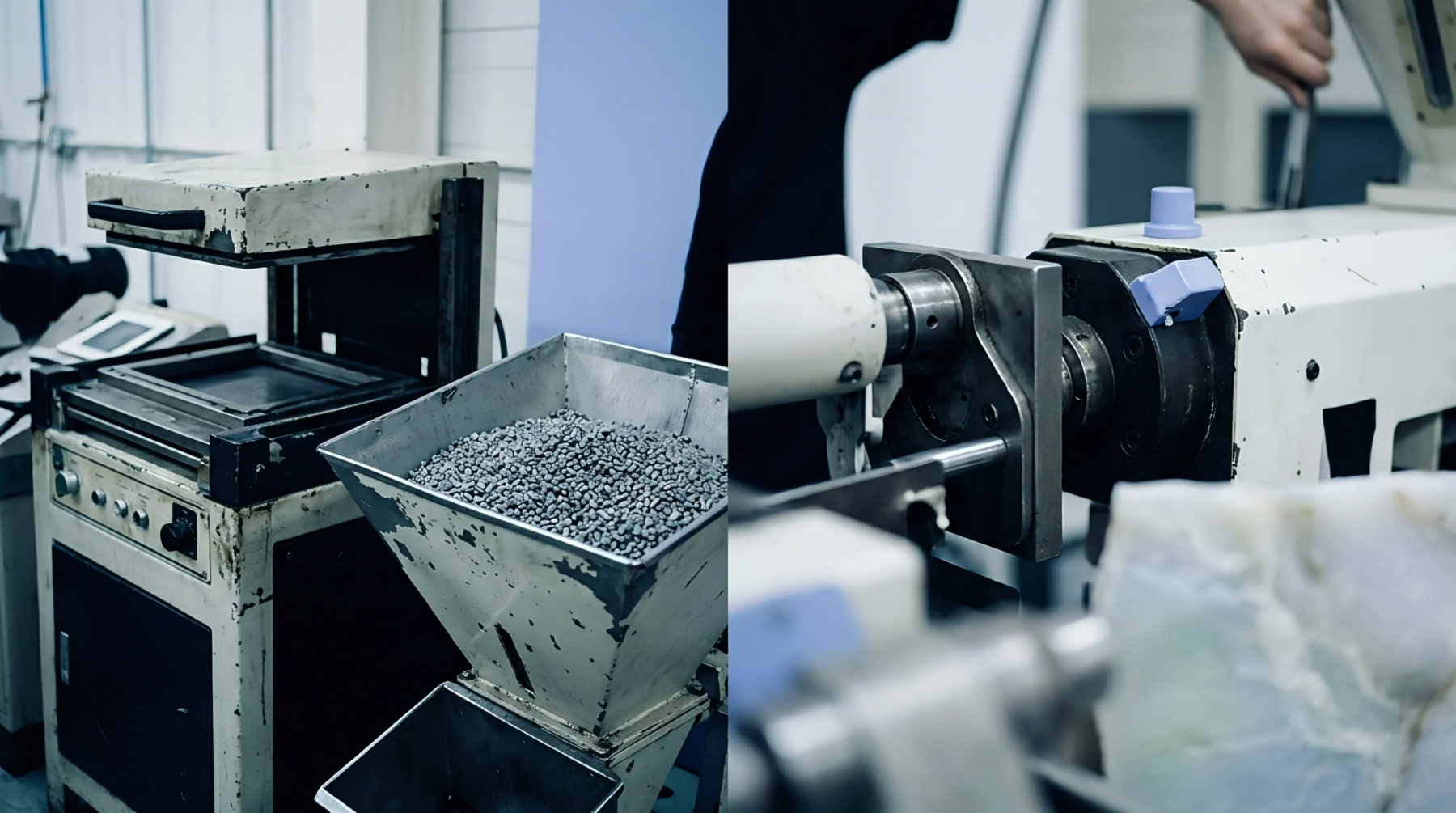
Extrusion hardware includes thick metal discs drilled with multiple parallel holes that sit between the extruder screw and the die. Inside this flow path, the breaker plate functions to transition the helical flow of molten polymer from the screw into a straight, axial stream. This design prevents rotational memory in the extruded profile.
Mechanical Support
High-pressure melt streams require a robust physical backing to prevent the fine metal mesh screens of the filtration system from collapsing or dislodging under load. Here, the breaker plate provides a rigid, flat surface that resists the immense forces generated by the screw. Its structural thickness ensures that the screen mesh remains positioned against the molten polymer stream.
Without this rigid backing, the high shear pressures would rupture the screen and permit contaminants to enter the die.
Upstream Resistance
Process variables are directly affected by the flow restriction created by the pattern of drilled holes. The breaker plate generates a backpressure that enhances the mixing and thermal homogenization of the polymer melt inside the barrel. This resistance ensures that the resin is compressed and completely melted before exiting the extruder.
Moulders and extruders monitor this localized pressure to maintain consistent output rates.
Maintenance Requirement
Molten polymers subjected to prolonged heat in dead zones can degrade and form carbonized deposits on the metal surfaces. Regularly cleaning the breaker plate removes these accumulated residues and prevents contamination in subsequent production runs. Pyrolysis ovens or chemical baths are typically employed to clear the blocked holes without causing mechanical damage to the machined surfaces.
Neglecting this maintenance leads to black specks in the finished extruded parts.