Meaning
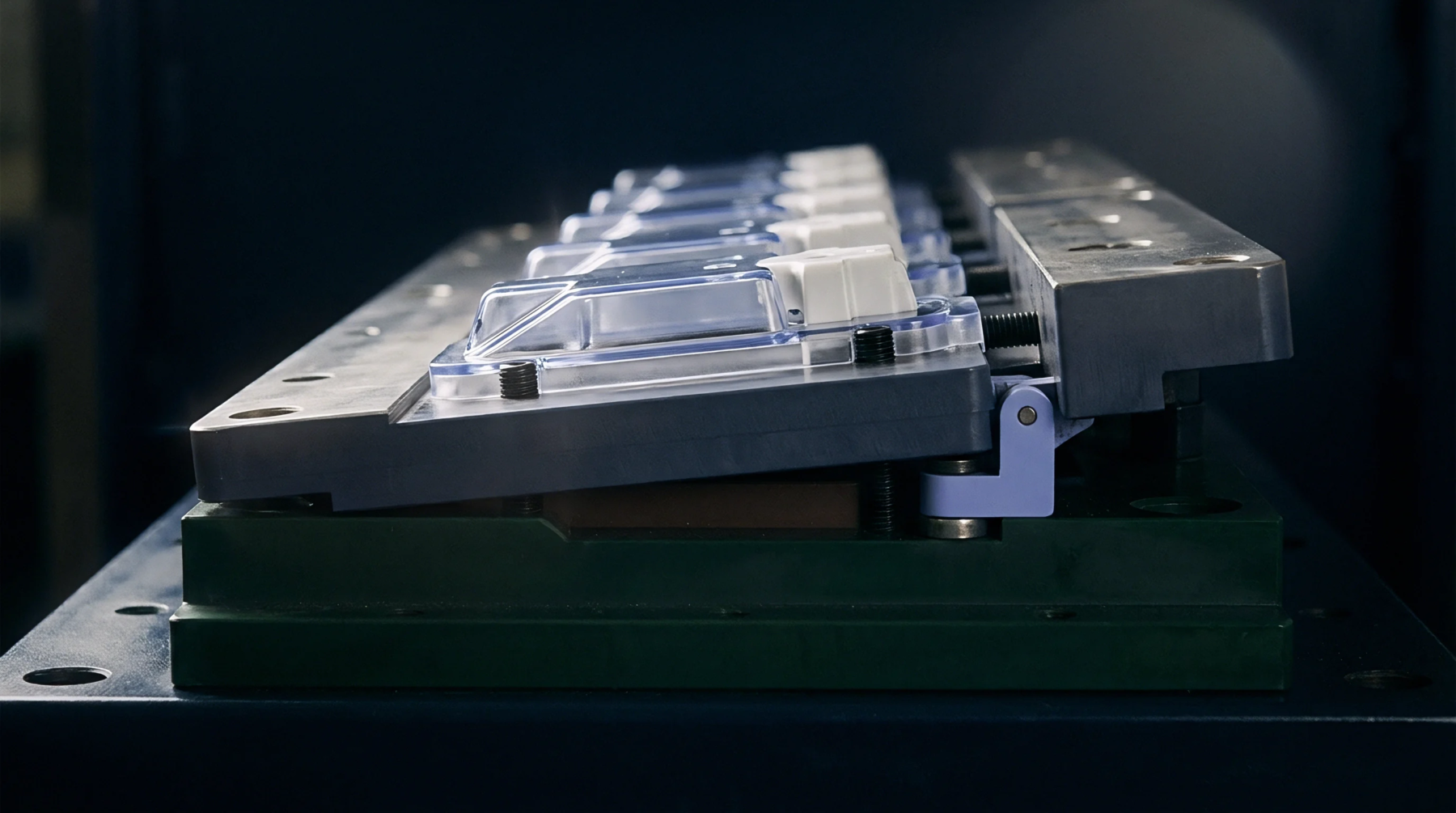
Compressed gas pockets inside an injection mold cavity cause localized thermal spikes that can damage both the polymer melt and the steel surfaces. This phenomenon, known as an adiabatic gas trap, arises when the advancing melt front seals off a pocket of air before it can escape through the parting line vents. High compression raises temperatures past the degradation threshold of the resin, causing dark burns on the molded part.
Thermal Dynamic
Injection molding processes occur under extreme pressures that compress trapped air with extreme rapidity. The resulting heat generation within an adiabatic gas trap occurs with negligible thermal transfer to the surrounding steel. This leads to temperatures that can exceed several hundred degrees Celsius within milliseconds.
Material Degradation
Polymer chains undergo rapid chain scission when subjected to these localized extreme temperatures. This chemical breakdown ruins the structural integrity of the molded plastic.
Mitigation Strategy
Relocating the gate or adjusting the part wall thickness can alter the flow front to push the air toward existing vents. If redesign is not feasible, toolmakers can install active vacuum venting or insert porous metal vents to extract the air before the melt reaches the pocket. Vent pins or ejector pins placed at the fill endpoint can also release the trapped pressure and prevent the defect entirely.