Solid State Polycondensation Kinetic Modeling for Restoring Hydrolyzed High Temperature Extrusion Scrap
Solid state polycondensation restores hydrolyzed scrap by driving forward transesterification under dry inert flux, bounded by flake core condensate diffusion.

Deficit
Incoming industrial strap regrind arrives at the extruder throat carrying 450 parts per million of moisture. Melt temperatures inside an unvented 45-millimeter single-screw barrel reach 295 degrees Celsius. Residence times near four minutes cleave ester linkages at speed.
The polymer chains snap through water-driven ester hydrolysis, dumping the intrinsic viscosity from 0.98 deciliters per gram down to 0.61 deciliters per gram as measured in a 60/40 phenol/1,1,2,2-tetrachloroethane mixture at 30 degrees Celsius under ASTM D4603.
The carboxyl end-group concentration surges from 18 equivalents per metric ton in the virgin chip to 52 equivalents per metric ton in the chopped skeletal web. That generation of carboxyl groups alters the polycondensation chemistry. Hydrolysis cuts the chain, creating one carboxyl end group and one hydroxyl end group per scission event.
Thermal cracking at 295 degrees Celsius introduces vinyl ester and carboxyl terminals, destroying the stoichiometric balance between hydroxyl and carboxyl partners needed for chain extension.
A carboxyl surplus over twelve equivalents per metric ton caps the achievable molecular weight ceiling regardless of vacuum depth.
Pellet buyers viewing an incoming certificate of analysis see an extrusion grade priced at a steep discount to prime virgin chip. The sheet line operator notices the deficit immediately. The extrudate sags from the die lip.
Melt strength collapses. Parison stability disappears. Zero-shear melt viscosity falls by 78 percent under ISO 6721-10 parallel-plate rheometry at 280 degrees Celsius.
Hydrolytic Damage Profile across Skeletal Edge Trim
Industrial edge trim from high-draw polyester strapping exhibits non-uniform degradation patterns across its physical cross section. The drawn core retains oriented crystalline domains. The unoriented slit edges carry concentrated surface moisture picked up during water-bath cooling and ambient granulator transport.
| Processing State | Intrinsic Viscosity (dL/g) | Carboxyl End Groups (eq/t) | Hydroxyl End Groups (eq/t) | Weight-Average Mass (g/mol) |
|---|---|---|---|---|
| Virgin Prime Infeed | 0.98 | 18.2 | 54.1 | 48200 |
| Extrusion Edge Web | 0.74 | 36.5 | 41.8 | 34100 |
| Agglomerated Granulate | 0.61 | 52.4 | 30.2 | 26500 |
| Desiccant Dried Scrap | 0.60 | 53.1 | 29.8 | 25900 |
The numbers in that baseline audit originate from an operating line running ten metric tons per day of poly(ethylene terephthalate) strapping scrap. The analytical testing protocol relies on potentiometric titration for end groups and capillary viscometry under ISO 1628-5. An undetected temperature calibration error of five degrees on the titrator bath shifts the measured carboxyl value by 3.2 equivalents per metric ton.
Such an analytical error alters the calculated reaction time in subsequent upgrading operations by up to two hours.
Granulating the web without crystallization causes agglomeration inside drying hoppers. The material softens at 78 degrees Celsius, fusing into solid clusters that lock free water inside the core. A compounding hall running this scrap directly into a twin-screw extruder without intermediate chemical upgrading faces continuous melt pressure oscillation, surging motor loads, and brittle finished goods that fail standard dart drop tests under ISO 7765-1.


Bed
Solid phase processing lifts polymer molecular weight without entering the liquid melt state. The chopped granulate undergoes crystallization at 170 degrees Celsius in an agitated pre-crystallizer to reach 42 percent bulk density before charging into a vertical moving bed reactor. Operating temperatures inside the main reactor column stay between 205 and 220 degrees Celsius.
This window sits comfortably above the polymer glass transition temperature of 78 degrees Celsius and well below the crystalline melting onset of 255 degrees Celsius.
Reaction vessels run in two industrial configurations: continuous gravity-flow columns operating under countercurrent nitrogen sweep, or batch vacuum tumble dryers operating below 0.5 millibar absolute pressure. High-temperature scrap restoration succeeds only when the by-products of forward polycondensation leave the polymer particles rapidly. Those by-products consist of ethylene glycol generated by transesterification and water generated by esterification.

Equipment Configurations for Thermal Processing
Reactor selection dictates mass transfer resistance through the gas-solid boundary layer. Nitrogen sweep systems rely on gas purity to maintain driving force.
- Preheating vessel brings the crystallized flake to 200 degrees Celsius using hot dehumidified nitrogen gas with an operational dew point below minus 40 degrees Celsius.
- Moving bed reactor passes the polymer downward by gravity while dry nitrogen ascends through the particle bed at superficial velocities between 0.15 and 0.25 meters per second.
- Condensate scrubber strips volatile ethylene glycol and water from the exiting gas before catalytic oxidation returns the nitrogen stream to the reactor base.
- Discharge cooler drops the product below 60 degrees Celsius under an inert atmosphere to stop oxidative yellowing before silo storage.

How Does Particle Geometry Alter Diffusion Resistance?
Flake thickness dominates the solid-state reaction rate. In a melt reactor, mechanical agitators renew the interfacial area continuously. In a solid-state bed, the reaction rate couples to the Fickian diffusion of ethylene glycol through the rigid amorphous fraction between crystalline lamellae.
Pellet diffusion length sets the reaction ceiling long before chemical catalyst kinetics take control.
Thick flakes cut from sheet skeletons present diffusion paths up to 1.8 millimeters. Fine regrind presents paths below 0.4 millimeters. That disparity creates severe molecular weight polydispersity within a single processed batch.
The thin particles build chain length rapidly. The thick particles lag behind, trapped by condensate accumulation within their core.
A supplier attempting to explain off-spec, low-viscosity material will typically assert that the incoming flake possessed an irregular bulk density that disrupted the gas sweep pattern through the vessel walls.

Flux
Condensate species must escape the particle core to shift the chemical equilibrium toward chain growth. The solid-state process involves four primary reversible reactions operating simultaneously within the amorphous phase. Transesterification between two hydroxyl end groups forms an ethylene glycol molecule and extends the polymer chain.
Esterification between a carboxyl end group and a hydroxyl end group forms water and an ester linkage. Thermal degradation generates vinyl end groups and carboxyl ends while consuming molecular weight.
Second-order forward reaction rate constants govern the chain-building steps. The rate expression for hydroxyl-hydroxyl transesterification uses an intrinsic rate constant multiplied by the concentrations of functional end groups, divided by an equilibrium constant. The reverse reaction depends directly on the local concentration of free ethylene glycol retained inside the amorphous polymer domains.

Which Boundary Conditions Govern Carboxyl End Group Rebalance?
Degraded high-temperature scrap carries a skewed ratio of hydroxyl to carboxyl terminals. Forward esterification consumes carboxyl groups while generating water. The water molecule is smaller than the ethylene glycol molecule.
Water exhibits a diffusion coefficient inside poly(ethylene terephthalate) roughly one order of magnitude higher than that of ethylene glycol at 215 degrees Celsius. Water diffuses out fast. Ethylene glycol lingers inside the matrix.
Because water departs rapidly, the esterification reaction proceeds forward even in relatively thick flakes. The transesterification reaction stalls if the local partial pressure of ethylene glycol remains elevated. The overall reaction trajectory bifurcates based on the internal mass transfer rates of these two condensate molecules.
| Parameter Description | Symbol | Numerical Value | Units |
|---|---|---|---|
| Ethylene Glycol Diffusivity | D_EG | 2.10 × 10^-12 | m²/s |
| Water Diffusivity | D_H2O | 1.85 × 10^-11 | m²/s |
| Transesterification Rate Constant | k_p | 1.45 × 10^-4 | kg/(mol·s) |
| Esterification Rate Constant | k_e | 2.80 × 10^-4 | kg/(mol·s) |
| Degradation Rate Constant | k_d | 4.10 × 10^-8 | 1/s |
| Transesterification Activation Energy | E_a | 89.5 | kJ/mol |
The values recorded above represent parameters calibrated across twenty-four pilot runs on high-draw polyester strap scrap. A buyer must evaluate these values critically. The transesterification rate constant rests on an assumed residual antimony catalyst concentration of 220 parts per million.
Scrap lots containing low-catalyst formulations or phosphorus thermal stabilizers at concentrations above 35 parts per million exhibit forward rate constants 40 percent lower than the figures listed in the table.
One specific figure in active commercial use is the activation energy of 89.5 kilojoules per mole for transesterification. That figure derives from experimental batch trials conducted on five-kilogram regrind samples in a rotary reactor during 2021. The value holds only if the crystalline fraction remains pinned between 48 and 51 percent.
Significant transesterification can cause additional crystallization during annealing. That crystallization immobilizes chain ends and restricts segmental mobility, causing the actual activation barrier to climb above 105 kilojoules per mole.
The desk cannot fully defend the thermal degradation rate constant of 4.10 × 10^-8 per second under variable vacuum purity. Atmospheric oxygen ingress through worn rotary shaft seals accelerates chain cleavage via thermo-oxidative pathways. When oxygen levels in the reactor exceed 15 parts per million, a buyer discounts theoretical model projections and increases reactor residence times by 15 percent to counter unmodeled chain cleavage.
Commercial vacuum lines often show transient pressure spikes during shift changeovers when nitrogen filters backpulse. These operational interruptions alter volatile partial pressures at the pellet skin, leaving the actual kinetic equilibrium point between esterification and degradation an unresolved question across variable regrind lots.

Simulation
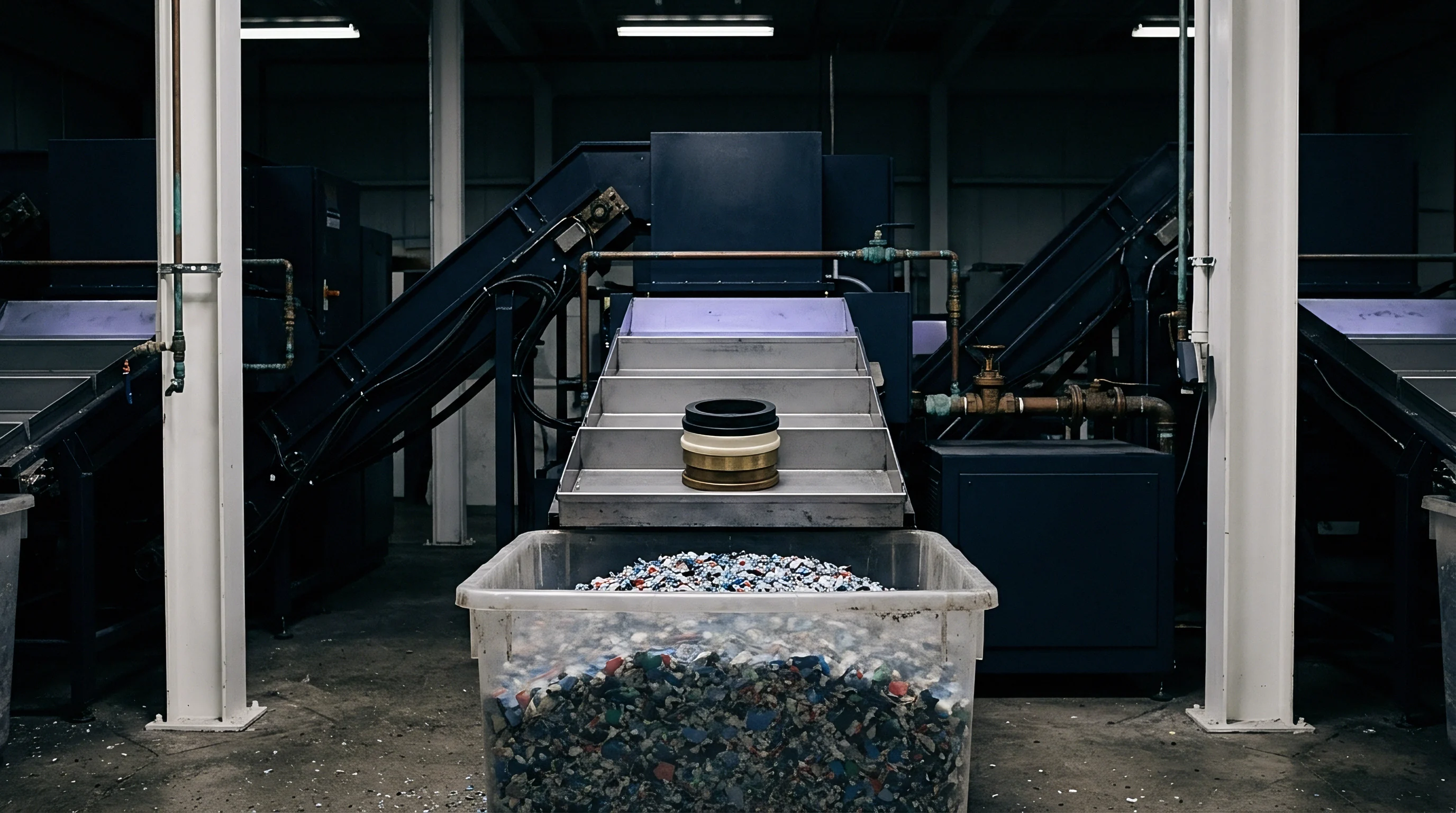
Mathematical modeling of the solid-state process links local chemical kinetics to the partial differential equations describing transient Fickian diffusion. Consider a spherical particle approximation where the radial coordinate represents the diffusion axis. The local concentration of condensate species balances accumulation, diffusive flux, and chemical generation terms.
The coupled system tracks four state variables across space and time: hydroxyl end groups, carboxyl end groups, ethylene glycol, and water. The differential equation for ethylene glycol diffusion inside the particle radius takes the following form:
The time derivative of the ethylene glycol concentration equals the effective diffusion coefficient multiplied by the Laplacian of the concentration, plus the net generation rate from forward and reverse transesterification. An identical spatial transport equation governs water concentration, driven by the esterification generation term. At the external boundary, the surface concentration of each condensate drops to zero under pure vacuum or matches the bulk gas partial pressure in a nitrogen sweep system.
Predictive Viscosity Rebound Curves
Integrating the local end-group concentrations over the entire particle volume yields the average number-average molecular weight. Conversion to intrinsic viscosity proceeds via the empirical Mark-Houwink relationship calibrated for polyester polymers. For poly(ethylene terephthalate) in phenol/tetrachloroethane at 30 degrees Celsius, the parameters are K equal to 4.68 × 10^-4 deciliters per gram and alpha equal to 0.68.
Simulation results expose the precise operational boundary where solid-state polycondensation transitions from reaction-limited to diffusion-limited behavior. The dimensionless Thiele modulus captures this relationship. Small Thiele moduli below 0.5 indicate that chemical kinetics govern the overall rate.
Condensates diffuse out rapidly, keeping internal concentrations near zero. Thiele moduli exceeding 2.0 indicate that internal mass transfer resistance dominates. Reaction rates drop because condensates accumulate in the particle interior, driving the reverse reactions.
A Thiele modulus exceeding two indicates that internal mass transfer bottlenecks hold back molecular growth.
In the wider field of semiconductor wafer fabrication, gaseous by-products must diffuse outward through sub-micron trench architectures during chemical vapor deposition without redepositing on planar features. Solid-state polycondensation presents an inverted physical challenge within the bulk resin domain. The reactive species remain fixed along the solid polymer backbone while the small volatile product molecules must navigate narrow amorphous corridors between rigid crystalline lamellae to reach the surrounding gas stream.
Kinetic Discrepancies across Particle Classifications
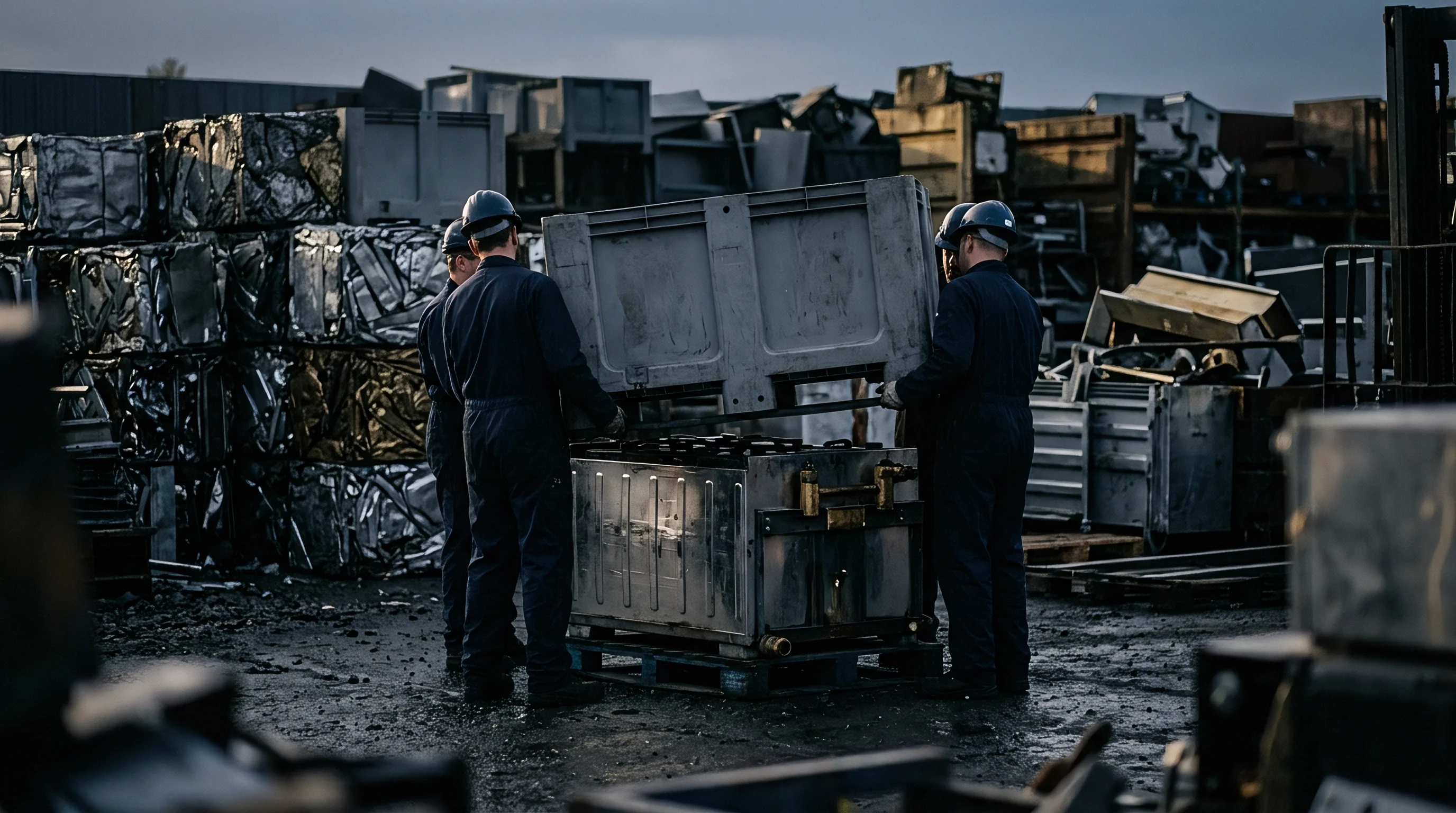
The industrial reality of extrusion regrind undermines idealized single-particle spherical models. Regrind contains flat flakes, jagged chunks, and fine dust. The model must incorporate a discrete particle size distribution to yield actionable predictions.
- Fine dust particles reach an intrinsic viscosity of 1.15 deciliters per gram within four hours because short diffusion paths minimize condensate retention.
- Flat skeletal flakes require eight hours to climb from 0.61 to 0.92 deciliters per gram under identical thermal exposure.
- Thick purgings and chunks retain high internal ethylene glycol concentrations, experiencing severe yellowing while their core intrinsic viscosity stalls at 0.72 deciliters per gram.
A procurement specification citing ASTM D7209 must define the exact particle size distribution permitted in the upgraded regrind stream before processing begins. Failure to fix the screening mesh geometry in the supply contract allows the processor to deliver material with high lot-to-lot viscosity variance while meeting average target bulk values.

Ledger
Upgrading hydrolyzed polyester extrusion scrap carries a clear capital and energetic cost profile. A continuous solid-state reactor requires 0.18 kilowatt-hours of electrical energy and 0.45 kilowatt-hours of thermal energy per kilogram of processed resin. Nitrogen consumption in open-loop purge systems runs at 0.8 kilograms of gas per kilogram of polymer.
Closed-loop recovery systems reduce nitrogen consumption to 0.05 kilograms per kilogram, but introduce gas purification catalyst replacement expenses.
Consider a working financial model based on a 40-metric-ton lot of degraded extrusion skeleton. Virgin prime strap-grade resin trades at 1,480 dollars per metric ton landed at the factory door. Clean hydrolyzed edge scrap sells at 620 dollars per metric ton.
The price spread between degraded feedstock and virgin prime material sits at 860 dollars per metric ton.
Comparative Restoration Ledger under Continuous Operation
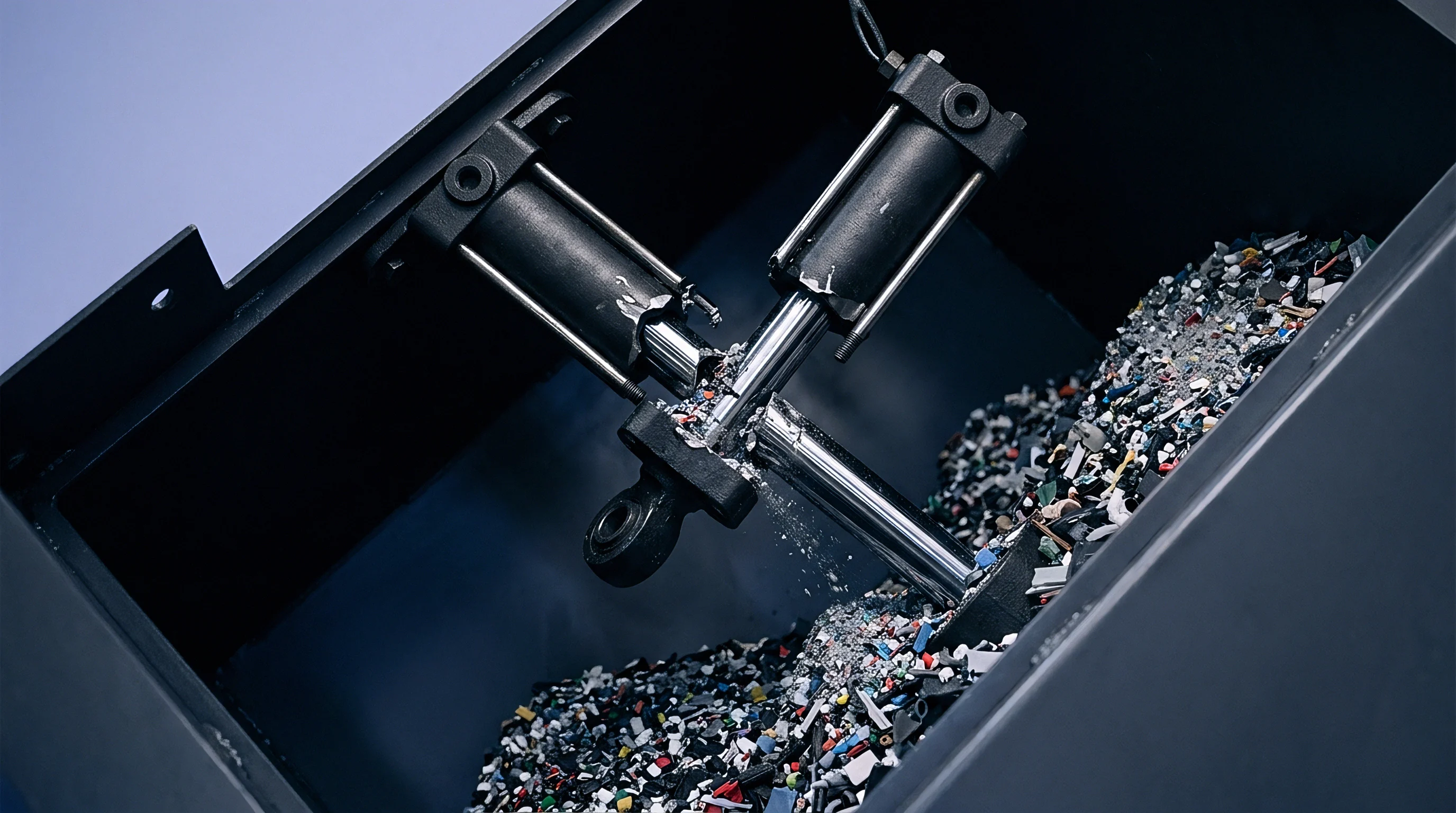
Processing forty tons through an off-site solid-state polycondensation toller establishes the baseline operational cost structure.
| Cost Component | Specific Rate | Total Lot Outlay (USD) | Cost Per Metric Ton (USD) |
|---|---|---|---|
| Scrap Feedstock Infeed | 620 USD/t | 24800 | 620 |
| Thermal Crystallization | 45 USD/t | 1800 | 45 |
| Reactor Residence Charge | 210 USD/t | 8400 | 210 |
| Nitrogen and Utility Purge | 65 USD/t | 2600 | 65 |
| Screening and Fines Loss (3%) | Market rate | 1008 | 25 |
| Freight to Extrusion Plant | 55 USD/t | 2200 | 55 |
The total delivered cost of the upgraded material reaches 1,020 dollars per metric ton. The processor realizes an effective savings of 460 dollars per metric ton compared to purchasing virgin prime chip. On a forty-ton batch, the net financial margin equals 18,400 dollars.
The process yields financial returns only when the restored resin performs reliably on the manufacturing line. If the solid-state reaction time is cut by two hours to reduce tolling fees, the intrinsic viscosity reaches only 0.78 deciliters per gram instead of the required 0.95 deciliters per gram. That shortfall causes edge-tear defects during subsequent biaxial stretching, generating an immediate scrap rate of fourteen percent on the finished production line.
The arithmetic is harsh. A two percent elevation in finished product scrap obliterates the entire margin gained from using upgraded feedstock.
Fine dust generation during solid-state tumble processing compounds these economic risks. Fines must be separated via air classification before packaging. That dust cannot be returned to the extruder throat without risking carbon specks and die buildup.
Every kilogram of lost fines directly inflates the net cost of the surviving pellets.
Thorough mechanical screening of incoming regrind flakes protects reactor productivity and final melt stability.