Resolving Metrology Variance between Preparative Fractionation and Spectroscopic Bulk Analysis in Contested Copolymers
Reconcile bulk FTIR discrepancies by enforcing preparative solvent fractionation mass balance limits within resin procurement specifications.
Elution
Thermodynamic Separation Mechanics in Polyolefin Copolymer Fractionation
Preparative thermal separation methods split complex polyolefin matrices into discrete crystalline and amorphous fractions. In ethylene-propylene impact copolymers and ethylene-octene polyolefin elastomers, bulk monomer ratios fail to describe structural heterogeneity. Melt flow alone fails.
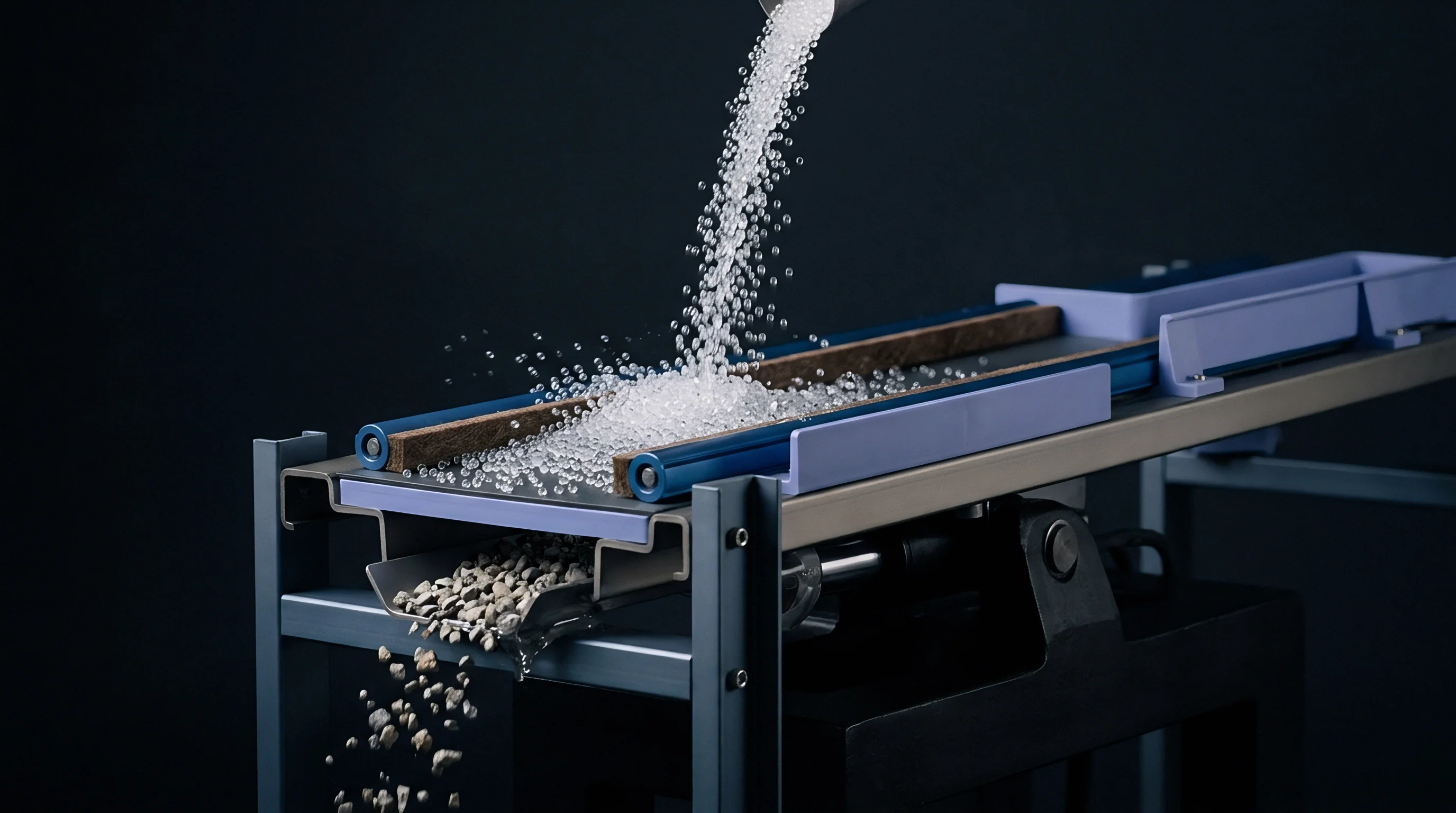
A copolymer exhibiting a nominal 10 weight percent ethylene content by bulk spectroscopy can consist of a pure polypropylene matrix containing isolated high-ethylene rubber pockets, or a uniform random insertion along every chain. Physical fractionation isolates these populations based on crystallizability and solubility in chlorinated solvents such as xylene or orthodichlorobenzene. Temperature Rising Elution Fractionation operates by dissolving the polymer at 140 °C, depositing it onto an inert support matrix during controlled cooling at 1.5 °C per hour down to 30 °C, and eluting fractions with isothermal temperature steps.
Amorphous fractions elute early.
The thermodynamic driving force during cooling relies on chain sequence length. Polymer chains containing long crystallizable ethylene or propylene runs precipitate at elevated temperatures, while chains carrying high short-chain branching densities remain in solution down to ambient levels. Crystallization Elution Fractionation speeds this separation by pumping solvent through the column during the cooling ramp, eliminating mass-transfer delays inherent to traditional packed beds.
When evaluating contested copolymer resin lots, preparative fractionation recovers discrete weight fractions for downstream analysis, revealing whether co-monomer incorporation is inter-molecularly uniform or segregated into distinct phase-separated blends.
A copolymer that meets bulk monomer targets can still fail cold impact tests if the co-monomers cluster entirely within low-density fraction tails.
Structural Segregation in Bimodal and Impact Polyolefins
Heterogeneity drives physical failure. Heterogeneous co-monomer distribution across molecular weight distributions generates severe metrology discrepancies when comparing bulk spectroscopic results against fractionated yields. In high-density polyethylene pipe grades and linear low-density film resins, target properties depend on placing short-chain branches preferentially into high molecular weight chains to form inter-lamellar tie molecules.
Bulk spectroscopic metrics integrate the total methyl or ethyl absorbance across all chains, treating a blend of low molecular weight branched material and high molecular weight linear polymer identically to a targeted reverse-comonomer architecture.
Fractionation uncovers hidden homopolymer. In heterophasic polypropylene impact copolymers, preparative solvent extraction using boiling xylene splits the matrix into a xylene-soluble rubbery fraction and a xylene-insoluble crystalline matrix. Analysis of the soluble fraction by high-temperature gel permeation chromatography coupled with infrared detection reveals the intrinsic viscosity and ethylene content of the elastomeric phase.
A shift of 2 weight percent ethylene within the xylene-soluble rubber alters phase morphology, domain sizing under electron microscopy, and notched Izod impact strength at negative 20 °C, despite the bulk compound exhibiting an unvaried total ethylene percentage on incoming certificates of analysis.
Uncontrolled variations in preparative cooling rates alter peak elution temperatures by up to 3.5 °C, causing misassignment of crystalline fractions and invalidating mass-balance calculations across comparative laboratories.

Probe
Spectroscopic Averaging and Absorptivity Variations
Fourier transform infrared spectroscopy and high-temperature nuclear magnetic resonance measure volume-averaged elemental ratio across intact polymer mass. In transmission FTIR standard protocols such as ASTM D5576, ethylene content in polyethylenes and polypropylenes relies on calibration curves linking the band intensity ratio at 720 cm-1 and 1378 cm-1 to monomer concentration. Spectra average disparate chains.
These calibration functions carry an implicit assumption: that the molar absorptivity of specific vibrational modes remains constant regardless of co-monomer sequence distribution and crystalline phase morphology.
Solvents alter chain conformation. Standard solid-state or compression-molded film FTIR measurements suffer from orientation effects and crystallinity variations. The absorptivity of the 720 cm-1 methylene rocking doublet shifts when ethyl or butyl branches group into amorphous domains versus entering the crystal lattice.
Carbon-13 nuclear magnetic resonance spectroscopy operated at 120 °C in 1,2,4-trichlorobenzene provides absolute triad sequence distributions, quantifying EEE, EEP, PEP, PPP, PPE, and EPE sequence concentrations. Bulk NMR integration sums all carbons in solution, masking whether a specific triad signal originates from a short random segment or a long blocky chain segment embedded in a high molecular weight tail.
| Method | Target Parameter | Primary Bias Source | Standard Protocol | Precision Limit |
|---|---|---|---|---|
| FTIR Bulk Film | Total methyl/methylene ratio | Crystallinity and absorptivity shift | ASTM D5576 | ±0.8 wt% co-monomer |
| 13C-NMR Bulk Solution | Triad sequence distribution | Overlapping resonance integral bounds | ASTM D5017 | ±0.3 mol% co-monomer |
| Analytical TREF | Crystallizability distribution | Co-crystallization and solvent flow rate | ISO 17744 | ±0.5 °C elution peak |
| Preparative CEF | SCBD by fraction mass | Chain entanglements in packed column | ISO 20557 | ±0.4 wt% recovery error |
Standard ASTM D5576 FTIR calibration curves yield composition errors up to 4.2 weight percent when applied to ethylene-octene copolymers exhibiting broad short-chain branching distributions.
Absorbance Band Overlap and Triad Signal Processing Limitations
Quantification of low-level co-monomer incorporation encounters spectral interference from additive packages and oxidation products. Hindered amine light stabilizers, phenolic antioxidants, and slip agents like erucamide introduce carbonyl and amide absorbance features between 1600 cm-1 and 1750 cm-1, overlapping weak copolymer overtone bands. In carbon-13 spectroscopy, signal-to-noise ratios require extended acquisition times exceeding twelve hours per sample to resolve isolated methylene carbons in long-chain branched polyethylenes.
Quantification errors accumulate rapidly when integrating low-intensity triad signals near baseline noise thresholds.
- Absorptivity Calibration Drift occurs when FTIR standard curves derived from narrow random copolymers are applied to bimodal resin grades containing blocky co-monomer distributions.
- Co-Crystallization Interference distorts thermal elution profiles when highly crystalline homopolymer chains entrap highly branched amorphous chains during rapid cooling cycles.
- Solvent Retention Artifacts alter gravimetric balance measurements when solvent residues remain trapped within dried preparative polymer fractions prior to spectral analysis.
- Relaxation Time Insufficiency in nuclear magnetic resonance experiments yields under-integrated quaternary carbon peaks when pulse delays fall below five times the spin-lattice relaxation time.
Resin compounders frequently claim that bulk transmission FTIR results represent absolute composition, attributing discrepancies with fractionation data to sample preparation error rather than spectral averaging artifacts.
Gap
Is Bulk NMR Integration Sufficient for Lot Release?
Discrepancies between bulk spectroscopic numbers and integrated preparative fractions arise from physical phase behavior during crystallization. Co-crystallization distorts fraction yields. When a broad co-monomer distribution undergoes cooling in analytical TREF or preparative solvent fractionation, linear high-density molecules precipitate rapidly, creating a dense lamellar network.
This crystal scaffold physically traps branched, lower-melting chains that would otherwise remain soluble at lower temperatures. The resulting high-temperature fraction contains an artificially inflated concentration of co-monomer branches upon spectroscopic analysis, distorting the apparent short-chain branching distribution profile.
Datasheets report bulk averages. Consider an ethylene-octene copolymer specified for high-clarity blown film applications, supplied under a specification calling for 15.0 weight percent total octene. Bulk 13C-NMR analysis reports 14.8 weight percent octene, suggesting compliance.
Preparative fractionation splits the lot into four discrete temperature cuts: below 35 °C, 35 °C to 70 °C, 70 °C to 90 °C, and above 90 °C. Gravimetric analysis combined with FTIR characterization of each fraction reveals that 12 weight percent of the total resin mass sits in the above-90 °C fraction containing less than 1.5 weight percent octene, while 28 weight percent sits in the sub-35 °C soluble fraction carrying 29.5 weight percent octene. The material contains an unexpected high-density crystalline fraction that causes gel formation and optical haze during film extrusion, despite the bulk spectroscopic measurement satisfying invoice terms.
| Lot Designation | Bulk FTIR Ethylene (wt%) | 13C-NMR Ethylene (wt%) | Integrated TREF Ethylene (wt%) | Variance (wt%) | Field Failure Rate |
|---|---|---|---|---|---|
| Lot A-104 | 12.4 | 12.1 | 10.2 | 1.9 | 0.02% |
| Lot A-108 | 12.6 | 12.5 | 8.8 | 3.7 | 4.10% |
| Lot B-201 | 14.1 | 13.9 | 14.0 | 0.1 | 0.00% |
| Lot C-055 | 9.8 | 9.7 | 6.9 | 2.8 | 2.45% |
| Lot C-060 | 10.1 | 10.0 | 9.9 | 0.1 | 0.01% |
Compliance clauses specifying ISO 17744 crystallization elution fraction limits eliminate batch rejection disputes by defining accepted co-monomers distribution bands.

Solvent Retention and Mass Balance Accounting in Fractionated Residues
Quantifying structural divergence demands absolute mass balance accounting. Solvent retention within isolated fractions presents a persistent source of metrology error. High-boiling solvents like orthodichlorobenzene carry boiling points near 180 °C, requiring vacuum drying at 140 °C for at least 24 hours to reach constant mass.
Incomplete drying leaves residual solvent that inflates the apparent weight of low-density amorphous fractions while adding aromatic ring absorbance features to downstream FTIR spectra at 1470 cm-1 and 745 cm-1. Calibration standards drift over time.
Precision defines landed cost. Mass recovery across all preparative elution fractions must sum to between 98.5 and 101.0 percent of the initial sample charge. Losses occurring during filtration or precipitation steps preferentially remove fine amorphous particles, biasing the reconstructed bulk composition toward higher crystallinities.
When mass recovery drops below 98.0 percent, the integrated preparative composition cannot be reconciled with bulk NMR standards, leaving the source of physical performance defects unresolved in legal arbitration.
Whether co-crystallization entraps branched chains via mechanical occlusion or microphase thermodynamics remains disputed when elution cooling rates drop below 0.05 °C per minute.
Partition

Reconciliation Workflows for Mass Balance and Spectral Integration
Reconciling mass-fraction composition with bulk absorbance values requires systematic cross-validation across solvent extraction cuts. The metrology workflow matches mathematical integration of physical fractions against direct bulk measurements. A rigorous analytical protocol eliminates laboratory bias by forcing mass and compositional balances to close within defined statistical bounds before issuing certificates of compliance.
- Dry incoming copolymer resin pellets under vacuum at 60 °C for four hours to eliminate surface moisture and volatile monomer residues.
- Dissolve five grams of dried polymer in 250 milliliters of xylene at 135 °C under nitrogen atmosphere with gentle stirring until full dissolution occurs.
- Cool the solution to 25 °C at a controlled rate of 0.5 °C per minute to precipitate the insoluble crystalline matrix while keeping amorphous rubber in solution.
- Filter the slurry through a pre-weighed sintered glass filter to separate the soluble filtrate from the insoluble cake.
- Evaporate solvent from the filtrate using a rotary evaporator, then dry both fractions under vacuum at 130 °C to constant mass.
- Measure gravimetric mass fractions, confirming that the combined recovery reaches 99.0 percent of initial sample weight.
- Record transmission FTIR spectra on compression-molded films prepared from both dried fractions and the raw bulk resin.
- Calculate integrated total co-monomer content by multiplying individual fraction mass fractions by their respective spectroscopic co-monomer percentages.
- Compare reconstructed bulk co-monomer values against direct bulk NMR integration metrics to verify mathematical closure.
Discrepancies invite commercial dispute. When calculated composite values diverge from direct bulk readings by more than 0.5 weight percent, the analytical bias originates from incorrect absorptivity coefficients or lost fraction mass during filtration.
Audit Checklist for Laboratory Analytical Protocols
Technical verification of third-party laboratory reports requires reviewing sample history and calibration chains. Compounding operations must verify analytical rigor before accepting supplier analytical credentials for critical application grades.
- Temperature Control Precision requires verification of thermal sensors across crystallization ramps to maintain rate accuracy within 0.1 °C per hour during TREF runs.
- Gravimetric Baseline Stability demands analytical balances calibrated to 0.01 milligrams with environmental vibration isolators for accurate fraction tare weights.
- Solvent Purity Standards mandate HPLC-grade 1,2,4-trichlorobenzene stabilized with 2,6-di-tert-butyl-4-methylphenol to prevent oxidative chain scission during dissolution.
- Spectroscopic Reference Materials require primary polyolefin calibration standards traceable to NIST or ISO certified reference matrices rather than internal compounder retain samples.
Valid characterization protocols require that reconstructed mass-composition integrals match independent high-temperature solution NMR metrics within 3 percent relative error across three consecutive extraction runs.
Remedy
Contractual Enforcement of Fractionation Specifications
Commercial supply contracts for high-performance polyolefin resins frequently fail when certificate of analysis criteria rely exclusively on bulk spectral analysis. Procurement agreements must define acceptable compositional distribution limits alongside nominal monomer targets. A buyer specifying linear low-density polyethylene for high-speed film lines faces extrusion bubble instability if the supplier shifts co-monomer distribution from a narrow single-site structure to a broad Ziegler-Natta profile, even if bulk density and melt flow index match invoice line items.
Chain scission alters solubility. Incorporating preparative fractionation parameters into purchase specifications protects buyers against silent upstream synthesis changes. A contractually binding material specification specifies the allowed mass fraction ranges for specific elution temperature windows.
Defining an upper limit on high-temperature crystalline fractions prevents accepting resins containing unwanted homopolymer tails that cause gel defects, un-melted particles, and tear propagation failures in converted products.
| Characterization Route | Verification Cost per Lot | False Acceptance Risk | Scrap Rate Range | Landed Cost Premium |
|---|---|---|---|---|
| Bulk FTIR Certificate Only | $45 | High (12-18%) | 4.5 – 8.0% | Baseline |
| Bulk NMR + Melt Flow Index | $220 | Moderate (5-8%) | 1.5 – 3.0% | +1.2% |
| Preparative TREF + FTIR Fractions | $850 | Low (<0.5%) | 0.1 – 0.4% | +3.8% |
| Full CEF Microstructure Dossier | $1,400 | Negligible (<0.1%) | <0.1% | +5.5% |
Relying on bulk spectroscopy for resin lot acceptance shifts downstream failure risks directly onto the molding processor.

Landed Cost Arithmetic and Defect Exposure Mitigation
Financial evaluations of incoming quality verification must weigh test expenditure against processing scrap costs. Polymer processing plants running high-speed thin-wall packaging tooling absorb severe losses when un-plasticized homopolymer fractions clog hot-runner nozzles or cause brittle part ejection. Testing cost represents a fraction of scrap expenses generated by off-spec resin lots.
Consider a converter consuming 500 tonnes of impact copolymer per month at a resin price of $1,450 per tonne. Landed raw material cost totals $725,000 monthly. Accepting a lot containing an incorrect ethylene distribution increases molding reject rates from 0.5 percent to 4.5 percent due to drop-impact failure during automated packing.
The resulting scrap cost reaches $29,000 per month in lost resin value, machine downtime, and labor overhead. Spending $1,700 per shipment on preparative fractionation verification prevents accepting off-spec material, yielding a net monthly savings of $27,300.
Rejection rights activate under ASTM F2102 addenda when preparative fraction mass yields deviate by more than 2.5 weight percent from baseline qualification dossiers.