Quantifying Comonomer and Low Molecular Weight Dispersant Interference in Polyolefin Masterbatch Tariff Classifications
Solvent extraction isolates low molecular weight dispersants before spectroscopic testing to prevent polyolefin masterbatch tariff reclassifications.
Boundary
Customs classification under Chapter 39 of the Harmonized System hinges on measuring exact comonomer mass fractions and additive concentrations in polymeric materials. When polyolefin compounds cross international borders, tariff authorities inspect the raw polymer backbone alongside non-polymeric processing aids before assigning an eight-digit tariff line. Minor changes in additive formulation can distort this evaluation.
Masterbatches formulated for polyolefin film extrusion, pipe blowing, or injection molding contain heavy loadings of functional additives suspended in polyethylene or polypropylene carrier resins, and these additives often alter the apparent analytical signature of the carrier polymer during routine entry screening.
Importing entities face significant classification exposure when low molecular weight dispersants and polar comonomers interact during customs laboratory testing. Under the Harmonized Tariff Schedule, a polyolefin compound entering as an ethylene-alpha-olefin copolymer under heading 3901 may face administrative reclassification into chemical preparations under heading 3824 or synthetic waxes under heading 3404 if analytical protocols fail to isolate dispersant waxes from the primary polymer chain. The legal framework governing resin classification establishes strict mass thresholds that dictate whether an imported pellet is classified as a primary polymer, a copolymer, a synthetic wax, or a pigmented preparation.

Tariff Classification Mechanics under Harmonized System Chapter 39
Polyolefin resin compounds in international trade are categorized primarily by the predominant monomer unit. Heading 3901 covers polymers of ethylene in primary forms, while heading 3902 covers polymers of propylene. Within heading 3901, tariff lines split ethylene homopolymers from copolymers using density thresholds and comonomer mass percentages.
Ethylene polymers with a specific gravity below 0.94 g/cm³ drop into subheading 3901.10 when uncompounded, whereas ethylene-alpha-olefin copolymers containing five percent or more by weight of comonomers like 1-butene, 1-hexene, or 1-octene land under subheading 3901.40.
When a masterbatch incorporates inorganic pigments like titanium dioxide or carbon black at concentrations between 30 and 70 percent by weight, customs authorities evaluate whether the material retains its character as a plastic compound under Chapter 39 or transitions to a coloring preparation under heading 3206. If the polyolefin carrier functions strictly as a binding medium for pigment particles and contains high levels of low molecular weight processing aids, customs laboratories reclassify the shipment away from primary resin subheadings. This shift alters applicable ad valorem duty rates and triggers trade compliance reviews.
Comonomer Thresholds and Chapter Note Legal Triggers
Legal Note 4 to Chapter 39 specifies that copolymers are classified based on the monomer unit prevailing by weight over every other single comonomer unit. For classification within subheadings 3901.10 to 3901.90, Subheading Note 1 to Chapter 39 dictates that comonomers forming five percent or more by weight of the total polymer content determine the definitive copolymer designation. Ethylene-vinyl acetate copolymers containing more than five percent vinyl acetate units by weight migrate to subheading 3901.30, bringing distinct duty structures and potential trade remedy exposure.
Problems arise when low molecular weight dispersants containing functional ester, carboxyl, or amide groups are blended into the masterbatch. Customs testing protocols that analyze unfractionated pellets sum all polar organic species together. This cumulative integration causes a polyolefin containing three percent vinyl acetate comonomer and three percent oxidized polyethylene wax to breach the five percent comonomer threshold on paper.
Consequently, customs authorities treat the entire polar fraction as copolymerized monomer units, pushing an ethylene homopolymer matrix into a functional copolymer tariff line.
Subheading Note 1 to Chapter 39 dictates that polymer blends containing more than five percent by weight of an alpha-olefin comonomer shift classification from homopolymers to copolymer subheadings.
| HS Code Heading | Polymer / Additive Matrix | Legal Mass Criterion | Applicable Duty Rate Range (%) |
|---|---|---|---|
| 3901.10 | Polyethylene Homopolymer (Density < 0.94 g/cm³) | Ethylene monomer units ≥ 95 wt% of total polymer mass | 0.0 to 6.5 |
| 3901.40 | Ethylene-Alpha-Olefin Copolymer (Density < 0.94 g/cm³) | 1-Octene or 1-Hexene comonomer units ≥ 5 wt% of total polymer mass | 0.0 to 6.5 |
| 3404.20 | Synthetic Polyethylene Wax | Number-average molecular weight (Mn) ≤ 10,000 g/mol; drop point 40 ~ 160 °C | 0.0 to 5.8 |
| 3206.19 | Pigment Concentrates in Polyolefin Carrier | Inorganic pigment > 30 wt% or carrier functioning strictly as dispersant binder | 0.0 to 6.5 |
Miscalculating additive mass fractions by even two percent can push raw polyolefin shipments into pigment masterbatch tariffs, triggering retrospective duty liabilities and holds at container terminals.

Extraction
Analytical separation isolates low molecular weight dispersants from high molecular weight polyolefin matrices before spectroscopic quantification, as raw pellet analysis without extraction yields confounded baselines. Standard laboratory protocols for tariff defense rely on liquid-solid and liquid-liquid extraction sequences designed to remove non-polymeric processing aids, low molecular weight hydrocarbon waxes, metal stearate lubricants, and organic pigments from the primary carrier resin.
Hydrocarbon polymers exhibit molecular-weight-dependent solubility in organic solvents. High molecular weight polyethylene (weight-average molecular weight exceeding 50,000 g/mol) resists dissolution in cold alkanes, whereas low molecular weight dispersants (number-average molecular weight below 5,000 g/mol) dissolve readily in warm hexane or refluxing toluene. Exploiting these solubility differentials enables isolation of individual chemical fractions for independent quantification under standardized ASTM and ISO test methods.
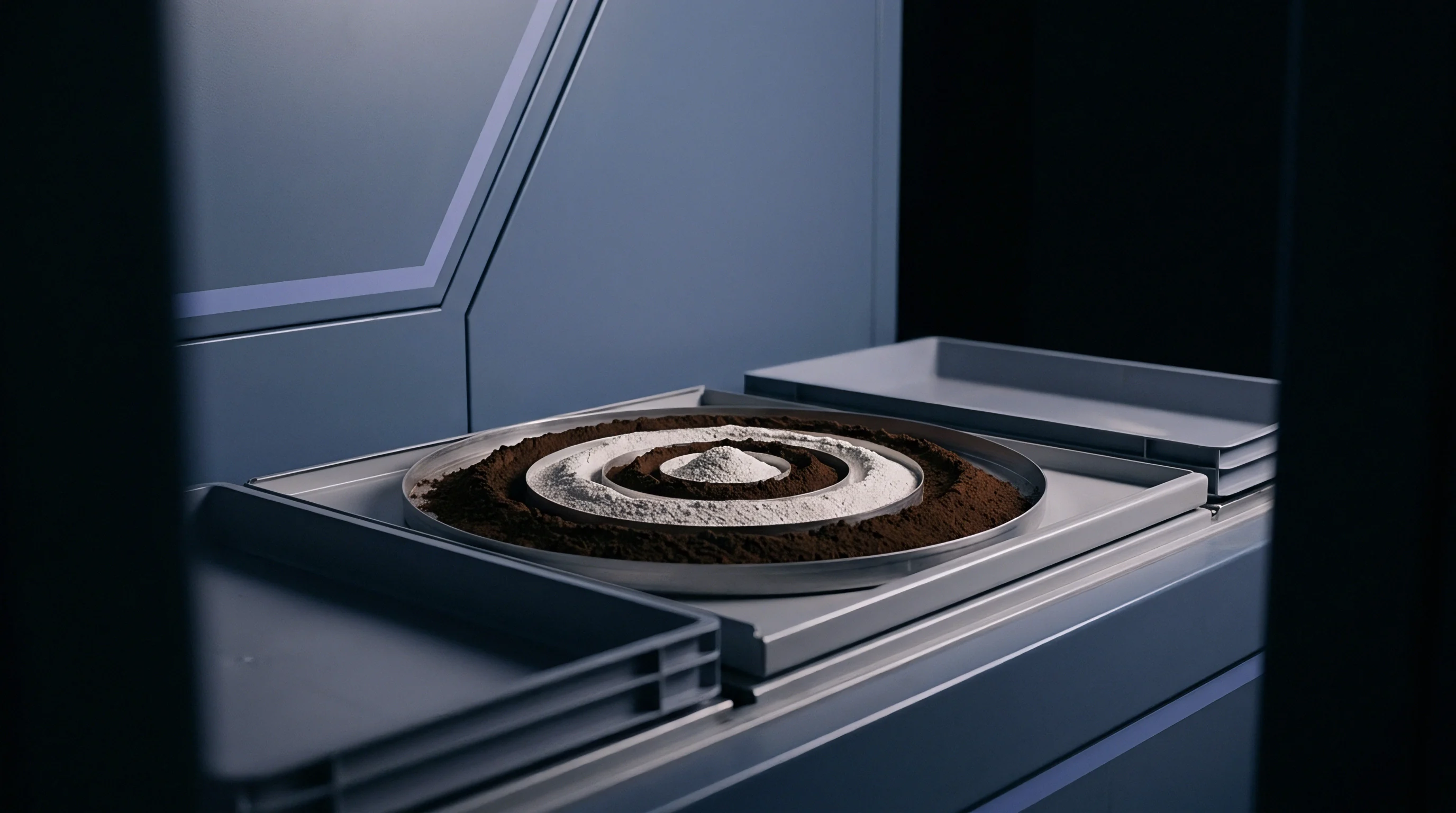
Analytical Isolation Protocols for Additive Separation
Standardized Soxhlet separation under ASTM D4754 uses refluxing xylene over six hours to dissolve soluble polyolefin fractions while retaining insoluble mineral pigments on a glass thimble. To isolate low molecular weight dispersants without dissolving the high molecular weight polymer matrix, lab technicians run a selective cold solvent extraction. A ten-gram sample of ground masterbatch pellets is immersed in n-hexane at 40 °C for two hours under constant agitation under ISO 17855 conditioning rules, leaving the high molecular weight carrier suspended as an insoluble solid phase.
Filtering the mixture through a 0.45-micron PTFE membrane yields a clear filtrate containing extracted low molecular weight waxes, fatty acid amides, and esters. Evaporating the solvent under a nitrogen stream at 60 °C leaves the non-volatile dispersant residue. Gravimetric measurement of the dried residue under ISO 527 sample preparation guidelines gives the precise mass fraction of low molecular weight additives in the masterbatch compound, preventing additive interference during downstream spectroscopic identification of the polymer backbone.

Spectroscopic and Thermal Quantitation Workflows
High-temperature size-exclusion chromatography operating at 140 °C in 1,2,4-trichlorobenzene resolves the molecular weight distribution of the extracted organic phase. Refractive index detection coupled with online viscometry establishes whether the extracted wax fraction exhibits a number-average molecular weight below 10,000 g/mol, confirming its status as a synthetic wax under heading 3404. Differential scanning calorimetry performed under ASTM D3418 at a heating rate of 10 °C per minute measures the melting enthalpy of the isolated wax phase.
Following solvent extraction, the purified polyolefin residue undergoes Fourier-transform infrared spectroscopy under ASTM E168 or high-temperature carbon-13 nuclear magnetic resonance spectroscopy in deuterated ortho-dichlorobenzene at 130 °C. Because low molecular weight dispersants have been stripped from the sample, spectral absorption bands at 1715 cm⁻¹ or 1735 cm⁻¹ reflect comonomer units covalently bound within the polymer backbone rather than free additive molecules.
- Dissolve five grams of masterbatch pellets in 150 milliliters of refluxing xylene at 138 °C for four hours under a nitrogen atmosphere.
- Cool the solution to 25 °C to precipitate the high molecular weight polyolefin backbone while keeping low molecular weight waxes suspended.
- Filter the slurry through a 0.45 micron PTFE membrane to separate insoluble inorganic pigments and precipitated polyolefin resin.
- Evaporate the filtrate under reduced pressure at 80 °C to yield the isolated dispersant wax fraction for thermal testing.
- Test the dried residue using differential scanning calorimetry under ASTM D3418 to record the peak melting temperature and enthalpy.
A sharp melting peak below the core resin melt temperature flags the presence of low molecular weight wax additives in a polyolefin compound.
Whether high-temperature field NMR can fully separate short-chain branching carbon resonances from low molecular weight polyethylene wax carbons without solvent separation remains disputed among customs analytical laboratories.

Wax
Low molecular weight additives serve critical processing functions in masterbatch compounding but create substantial analytical interference during tariff verification. Twin-screw extrusion requires reduced melt viscosity to wet high surface area pigments like titanium dioxide, calcium carbonate, and carbon black. Compounders introduce non-polar polyethylene waxes, oxidized polyethylene waxes, ethylene bis-stearamide, and zinc stearate to reduce torque and prevent pigment agglomeration during processing.
Masterbatch formulations contain between two and fifteen percent low molecular weight additives by weight. When these molecules remain in the compound during customs laboratory testing, their chemical structures generate spectral signals that overlap directly with signals produced by comonomers like 1-butene, 1-hexene, 1-octene, vinyl acetate, and methyl acrylate. Distinguishing between a short-chain branch on a polymer backbone and a free low molecular weight hydrocarbon wax molecule demands rigorous spectroscopic deconvolutions.
Dispersant Chemistries and Processing Mechanics
Compounding plants combine linear low-density polyethylene carrier resins with functional lubricants to promote pigment dispersion during twin-screw extrusion. Non-polar polyethylene waxes produced by high-pressure thermal degradation or direct polymerization feature number-average molecular weights between 1,000 g/mol and 4,000 g/mol. These waxes exhibit melt viscosities below 0.10 Pa·s at 140 °C under ASTM D3236, and their fully saturated paraffinic structure closely mirrors the chemical composition of ethylene homopolymers and alpha-olefin copolymers.
Oxidized polyethylene waxes carry functional hydroxyl, ketone, and carboxylic acid groups introduced through controlled air oxidation. These polar sites anchor to pigment particle surfaces and lower internal viscosity. However, the carbonyl groups in oxidized PE waxes absorb strongly in the infrared spectrum at 1715 cm⁻¹.
When a customs lab scans an unextracted pellet, automated peak assignment algorithms interpret this 1715 cm⁻¹ absorbance as acrylic acid or maleic anhydride comonomers in the polymer backbone, falsely shifting the resin classification into functionalized copolymer headings.

Why Do Low Molecular Weight Waxes Alter Monomer Mass Fractions?
Customs laboratories using total carbon integration by nuclear magnetic resonance frequently misattribute terminal methyl carbon peaks from low molecular weight polyethylene chains to short-chain alpha-olefin comonomers. In carbon-13 NMR spectra of polyethylene, terminal methyl carbons appear at roughly 14.1 ppm relative to tetramethylsilane. Branches derived from 1-butene comonomers yield ethyl branches with methyl carbons absorbing near 11.1 ppm, whereas 1-hexene comonomers produce butyl branches with methyl carbons absorbing at 14.1 ppm.
Low molecular weight polyethylene waxes contain a high concentration of terminal methyl end-groups because of their short chain length. In an unfractionated masterbatch containing five percent polyethylene wax with a number-average molecular weight of 2,000 g/mol, the concentration of terminal methyl carbons matches that of a linear low-density polyethylene resin containing four weight percent 1-hexene comonomer. The spectrometer records an inflated methyl peak area at 14.1 ppm.
Without solvent extraction to remove the wax phase, the integration script calculates a false 1-hexene comonomer content, reclassifying an ethylene homopolymer from subheading 3901.10 to subheading 3901.40.
- Carbonyl Overlap from Oxidized Fractions Oxidized polyethylene waxes exhibit strong absorption peaks at 1715 cm⁻¹ on FT-IR spectra, overlapping directly with carboxylic acid comonomer bands.
- Terminal Methyl Carbon Inflation Low molecular weight polyolefin waxes contain a high density of chain end methyl carbons per unit mass, distorting carbon-13 NMR quantitative integration.
- Ester Peak Misattribution Fatty acid ester lubricants introduce ester carbonyl stretching bands at 1735 cm⁻¹, which customs software misidentifies as vinyl acetate comonomer units.
- Melt Flow Rate Distortion High let-down ratios of low molecular weight waxes increase overall compound melt flow rate under ASTM D1238 at 190 °C with 2.16 kg load, mimicking degraded matrix resin.
A two percent mass addition of oxidized polyethylene wax introduces sufficient carbonyl absorption at 1715 cm⁻¹ to falsely shift polyolefin classification into functional acrylic copolymer headings.
| Additive Chemical Type | Number-Average Mw (g/mol) | Melt Viscosity (Pa·s at 140 °C) | FT-IR Characteristic Peak (cm−¹) | Tariff Classification Interference |
|---|---|---|---|---|
| Non-Polar Polyethylene Wax | 1,500 ~ 4,000 | 0.02 ~ 0.15 | 2916, 2848 (C-H stretch) | Inflates 1-hexene comonomer calculation in carbon-13 NMR |
| Oxidized Polyethylene Wax | 2,000 ~ 5,000 | 0.05 ~ 0.30 | 1715 (C=O carbonyl stretch) | Mimics acrylic acid or maleic anhydride comonomer absorption |
| Ethylene Bis-Stearamide (EBS) | 593 | 0.01 (at 150 °C) | 1640, 1550 (Amide I & II) | Falsely registers as acrylamide functional copolymer units |
| Zinc Stearate Lubricant | 632 | Solid melt at 120 °C | 1540 (Carboxylate asymmetric) | Distorts total organometallic salt and acid monomer mass counts |
Spectroscopic data gathered on whole masterbatch pellets without solvent extraction always overstates functional comonomer content.


Discrepancy
Customs testing protocols frequently diverge from commercial supplier certificates of analysis due to differing sample preparation methodologies. A supplier certificate of analysis (CoA) generated at a compounding facility typically relies on nominal formulation values or high-speed quality control tests on raw polymer feedstocks before additive blending. In contrast, customs enforcement laboratories run analytical protocols on the finished, fully compounded pellet as imported.
When a customs laboratory receives a masterbatch lot, technicians cut microtome sections directly from imported pellets for transmission FT-IR analysis or dissolve whole pellets for direct NMR quantitative screening. If the compounding plant utilized low molecular weight synthetic waxes to disperse pigments, the customs lab report documents elevated comonomer mass percentages and reduced carrier resin molecular weights. This methodical divergence creates irreconcilable gaps between declared entry documentation and customs audit findings.
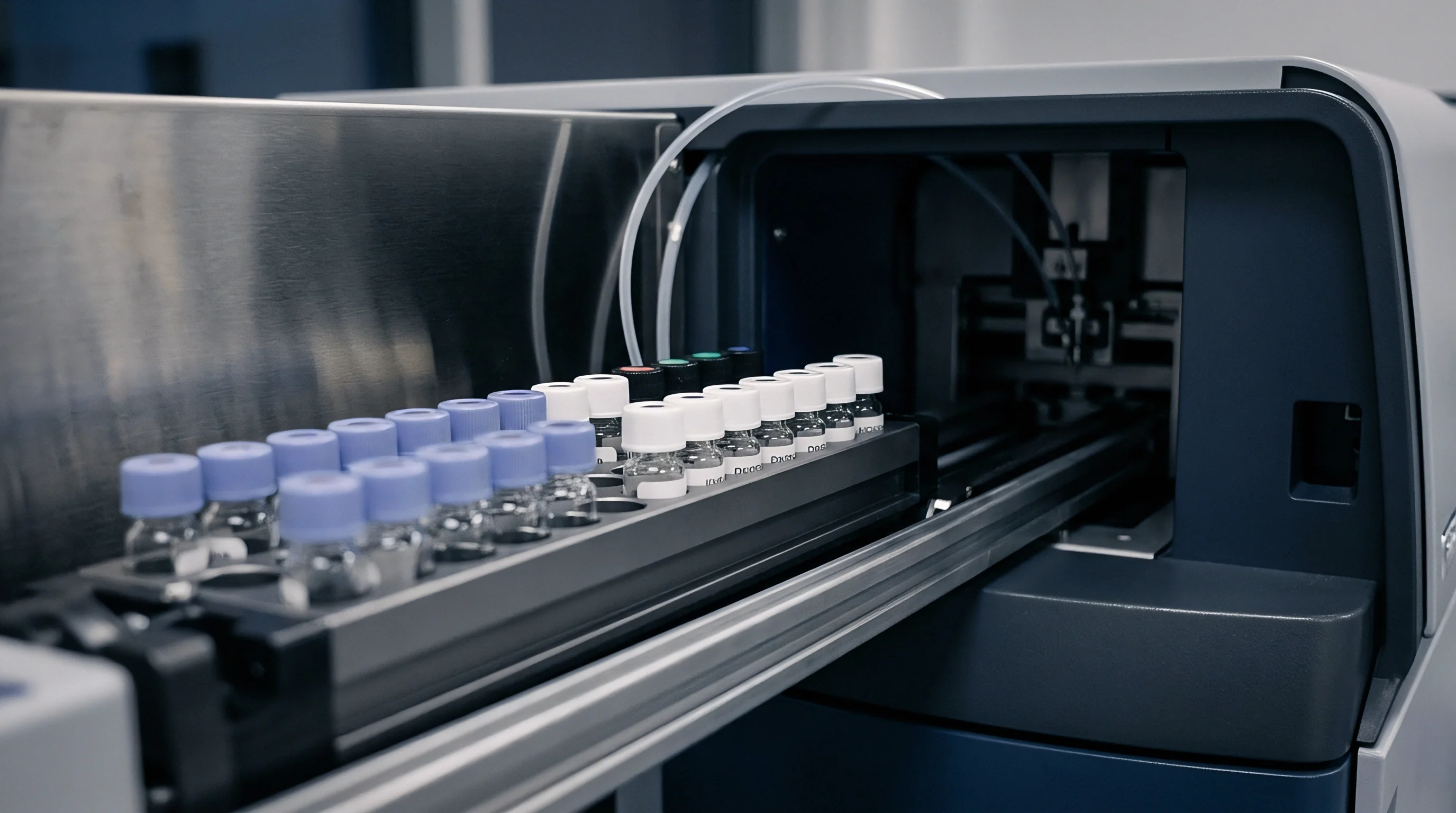
Spectroscopic Masking and Quantitative Carbon Errors
Proton and carbon-13 nuclear magnetic resonance spectroscopy measured at 130 °C in deuterated ortho-dichlorobenzene provides quantitative monomer ratios when spectral baselines remain clear of additive peaks. When unextracted masterbatch pellets containing zinc stearate or ethylene bis-stearamide undergo NMR analysis, carboxylate and amide carbon resonances interfere with polymer backbone carbon integrations.
Peak areas corresponding to ethylene carbon sequences between 29.9 ppm and 30.5 ppm lose quantitative accuracy when broad resonance bands from low molecular weight hydrocarbon waxes overlap the spectrum. Software routines integrated into spectrometer units calculate monomer mass fractions by dividing peak areas of specific side-chain carbons by total backbone carbon areas. When low molecular weight dispersants add non-backbone methyl and methylene carbons to the integrated area, the calculated comonomer mass fraction deviates from the true polymer backbone chemistry by up to 3.5 percentage points.

Worked Example of Comonomer Calculation Interference
Consider a 20-tonne shipment of linear low-density polyethylene masterbatch carrying ten percent inorganic pigment and two percent low molecular weight oxidized polyethylene wax by weight. The importer declares the material under subheading 3901.40 as an ethylene-1-octene copolymer containing 5.2 percent 1-octene by weight, entering duty-free under a regional trade arrangement. The compounder produced the material using an ethylene homopolymer matrix resin (density 0.918 g/cm³, melt flow rate 2.0 g/10 min at 190 °C under 2.16 kg load) blended with a functional 1-octene copolymer carrier to reach target mechanical properties.
During entry inspection, the customs laboratory skips solvent extraction and analyzes whole pellet microtome slices via FT-IR under ASTM E168. The two percent oxidized polyethylene wax generates a carbonyl absorbance band at 1715 cm⁻¹ equivalent to 1.8 percent by weight of polar acrylate monomer. Simultaneously, terminal methyl end-groups from the wax alter the carbon-13 NMR baseline, shifting calculated 1-octene content from 4.8 percent to 5.6 percent.
The customs laboratory aggregates these values, determining that the resin contains 7.4 percent total functional comonomers, including 1.8 percent acrylic acid equivalent. Consequently, customs reclassifies the shipment from duty-free 3901.40 to 3901.90, assessing a 6.5 percent ad valorem tariff plus administrative penalties.
- Extraction Certificate Annexes Test reports must append solvent extraction data under ISO 17855, isolating low molecular weight waxes prior to FT-IR quantitative integration.
- Differential Scanning Calorimetry Thermograms Qualification dossiers include baseline heating curves under ISO 11357-3 recorded at 10 °C per minute to establish secondary wax melting endotherms.
- Nuclear Magnetic Resonance Integration Logs Laboratory records detail carbon-13 resonance peak assignments between 10 ppm and 45 ppm, confirming methyl carbon source attribution.
- Ash Content Verification Records Certificates document total inorganic residue determined via muffle furnace calcination at 600 °C under ISO 3451-1 to fix binder polymer mass fractions.
Customs authorities reject supplier certificates of analysis that omit physical separation of low molecular weight processing aids prior to spectroscopic quantification.
| Property / Parameter | Supplier Certificate Method | Customs Authority Test Method | Analytical Shift | Classification Impact |
|---|---|---|---|---|
| Comonomer Mass Content | Solid-state FT-IR on raw carrier resin pellet | Solution ¹³C-NMR on unfractionated compound pellet | Wax carbonyls add +1.8 wt% false acrylic monomer | Reclassifies homopolymer 3901.10 to copolymer 3901.90 |
| Molecular Weight (Mn) | Melt Flow Rate (190 °C / 2.16 kg, ASTM D1238) | HT-SEC in 1,2,4-TCB at 140 °C (ISO 16014) | Dispersant plasticization reduces apparent Mn by 35% | Triggers synthetic wax classification under Heading 3404 |
| Inorganic Pigment Loading | Thermogravimetric Analysis (TGA under N&sbgt;2 to 800 °C) | Muffle furnace calcination at 600 °C (ISO 3451-1) | Wax burn-out shifts organic-to-inorganic mass ratio | Reclassifies resin compound to pigment concentrate 3206.19 |
Low molecular weight dispersants are often treated as forming an inseparable structural phase within the masterbatch carrier polymer.


Ledger
Financial exposure in polyolefin masterbatch procurement extends beyond raw resin pricing to encompass customs duty reclassifications and back-duty assessments. Procurement contracts that fail to establish rigorous analytical standards for masterbatch compositional verification expose importing entities to substantial landed-cost volatility. When customs audits overturn declared classifications three years post-importation, back-duty assessments, interest charges, and trade compliance fines wipe out compounder profit margins.
Importing polyolefin masterbatch compounds under primary resin headings carrying zero percent duty rates provides immediate cost advantages. However, if customs authorities determine during an audit that low molecular weight wax dispersants dominate the binder phase or that polar additives shift the monomer balance, reclassification under heading 3404 or 3824 levies retroactively applied duty rates of up to 6.5 percent. On a multi-thousand-tonne annual masterbatch procurement program, this tariff delta represents hundreds of thousands of dollars in unbudgeted liabilities.
Landed Cost Arithmetic and Tariff Duty Exposure
A five percent reclassification duty adjustment on a multi-container resin import converts expected compound gross margins into direct operating losses. Consider an annual procurement volume of 1,200 tonnes of color masterbatch imported at a landed price of $2,200 per tonne ($2,640,000 total annual purchase value). The importer clears the material under HS 3901.10.00 at a zero percent preferential tariff based on supplier certificates asserting an ethylene homopolymer matrix containing 40 percent titanium dioxide pigment and standard processing aids.
Customs authorities audit the importer two years later, testing archived entry samples using solvent extraction combined with high-temperature size-exclusion chromatography under ISO 16014. The analysis reveals that the compound contains eight percent synthetic polyethylene wax with a number-average molecular weight of 3,200 g/mol, alongside 42 percent titanium dioxide. Customs rules that the low molecular weight wax functions as the primary dispersion medium, reclassifying the import under HS 3206.19.00 at a 6.5 percent standard duty rate.
The resulting assessment levies $171,600 in back duties across the 1,200-tonne import volume, plus statutory interest and a civil penalty equal to 20 percent of unpaid duties ($34,320), increasing landed cost per kilogram by $0.17.
Contractual Compliance Clauses and Audit Dossier Architecture
Procurement specifications mandate full chemical disclosures from compounders prior to purchase order issuance. Sourcing practices protect capital by integrating standardized testing protocols into supply agreements, requiring masterbatch manufacturers to certify comonomer content and dispersant concentrations using solvent-extracted analytical methods. A comprehensive audit dossier accompanies every production lot, providing verifiable test data that defends the declared tariff code against customs challenge.
Dossier architecture includes complete compositional breakdowns detailing matrix polymer melt flow rate (ASTM D1238, 190 °C / 2.16 kg), comonomer weight fractions verified by high-temperature carbon-13 NMR post-extraction, total low molecular weight dispersant content measured via cold hexane extraction (ISO 17855), and inorganic ash residue (ISO 3451-1). Establishing these test requirements within commercial terms shifts financial liability for customs reclassification back to the masterbatch supplier if audit failures stem from undisclosed low molecular weight additives.
Purchasing agreements incorporate explicit language governing analytical verification of imported polymer compounds:
“Masterbatch Lot Acceptance Specification 409-B: The compounder certifies that all declared comonomer mass fractions and polymer backbone classifications are determined via carbon-13 nuclear magnetic resonance spectroscopy performed exclusively on the high molecular weight polymer fraction obtained after cold solvent extraction under ASTM D4754; any low molecular weight synthetic waxes (Mn ≤ 10,000 g/mol) or polar dispersants extracted during pre-treatment must be reported separately on the Certificate of Analysis, and the compounder indemnifies the buyer against all customs duties, penalties, and legal expenses arising from tariff reclassifications caused by unseparated additive interference.”