Harmonized System Chapter 39 Polyolefin Tariff Subheading Classification Rules
Polyolefin tariff subheading classification requires verifying monomer weight ratios above fifty percent and measuring density at twenty three degrees.

Chain
Polymers of ethylene and propylene classified under Chapter 39 follow rigorous quantitative monomer distribution rules. Harmonized System Chapter 39 Note 4 establishes the legal principle for classifying polyolefins, copolymers, and polymer blends under primary headings 3901 through 3914. Classification follows the single monomer unit predominant by weight over every other single comonomer unit.
In a binary polyolefin system containing ethylene and propylene, the monomer contributing over 50 percent of total polymer mass dictates the four-digit heading. Ethylene content exceeding propylene content places the material in heading 3901. Propylene content exceeding ethylene content places the material in heading 3902.
The monomer balance dictates the heading.
Monomer Weight Distribution and the Fifty Percent Rule
Chapter 39 Note 4 establishes that polyolefin copolymers classify according to the single monomer unit predominant by weight. Comonomer distribution calculations sum identical monomeric units throughout the polymer chain regardless of block structure, random insertion, or graft architecture. Ethylene-propylene random copolymers (EPR) and ethylene-propylene-diene monomer rubbers (EPDM) present classification boundary challenges depending on monomer mass proportions.
EPDM containing 68 percent ethylene by weight, 28 percent propylene, and 4 percent non-conjugated diene like ethylidene norbornene classifies under heading 3901 as a polymer of ethylene. The diene monomer content does not alter the fundamental polyolefin heading selection because ethylene remains the single comonomer unit predominant by weight.
Ethylene-octene copolymers containing 18 percent octene by weight yield a specific gravity of 0.868 g/cm³ at 23 °C under ISO 1183-1.
Polyolefin blends consisting of distinct polymers mixed mechanically or compounded in the melt follow the same weight dominance rule under Chapter 39 Note 4. A melt blend comprising 60 percent homopolymer polypropylene and 40 percent linear low-density polyethylene classifies in heading 3902. Customs authorities analyze the total weight percentage of monomer units across all constituent polymers in the blend.
The aggregate propylene monomer units constitute 60 percent of the total mass, establishing heading 3902 as the designated four-digit tariff classification. Importers documenting polymer shipments provide full formulation declarations identifying monomer weight fractions to support customs entry summary filings.

Copolymer Weight Allocation Mechanics
Calculating monomer weight fractions requires isolating the polymerized units within the backbone matrix. Chemically modified polyolefins like maleic anhydride grafted polypropylene (PP-g-MAH) follow Note 4 allocation provisions. Maleic anhydride grafted onto a polypropylene backbone at a level of 1.0 weight percent leaves propylene units contributing 99.0 percent of total mass.
Propylene remains the predominant monomer unit by weight, maintaining classification under heading 3902. If chemical modification alters the polymer backbone to the extent that it falls under a more specific heading elsewhere in the tariff schedule, Note 4 yields to specific heading terms.
In complex terpolymers containing three distinct monomers, no single monomer unit needs to exceed 50 percent of total polymer mass to secure classification. The monomer unit that holds the largest single mass percentage determines the heading. Consider a terpolymer composed of 42 percent ethylene, 38 percent propylene, and 20 percent 1-butene by weight.
Ethylene represents the largest single monomer fraction by weight. The material classifies under heading 3901 despite ethylene constituting less than half of total polymer mass. Sourcing practices audit supplier certificates of analysis to verify monomer mass proportions prior to export clearance.
Resin compounders frequently claim that trace alpha-olefin additions serve strictly as processing aids without altering the fundamental homopolymer classification of the shipped lot.


Code
Subheading classification within headings 3901 and 3902 relies on explicit quantitative thresholds established by Subheading Note 1 to Chapter 39. Within any single heading, polymers and copolymers classify according to specified prefix definitions and comonomer percentages. Subheading Note 1(a)(1) defines named polyolefins designated by the prefix “poly” (such as polyethylene or polypropylene) as polymers where the constituent monomer unit or units taken together contribute 95 percent or more by weight of total polymer content.
Polyethylene under subheading 3901.10 or 3901.20 contains 95 percent or greater ethylene monomer units by mass.
Density governs the six digit line.
Subheading Note Logic and the Ninety Five Percent Boundary
Homopolymer designations under six-digit subheadings demand nearly complete chemical purity of the principal repeating unit. Polyethylene containing 96 percent ethylene and 4 percent 1-hexene by weight satisfies the 95 percent threshold under Subheading Note 1(a)(1). This resin classifies as polyethylene under subheading 3901.10 or 3901.20 based on density.
If 1-hexene incorporation increases to 8 percent by weight, ethylene monomer content drops to 92 percent. This material fails the 95 percent requirement for polyethylene homopolymer designation and reclassifies into subheading 3901.40 as an ethylene-alpha-olefin copolymer.
| Polymer Chemistry Type | Ethylene Mass Percentage | Propylene Mass Percentage | Density at 23 °C (g/cm³) | HS Tariff Subheading |
|---|---|---|---|---|
| Low Density Polyethylene (LDPE) | ≥ 95.0% | 0.0% | < 0.940 | 3901.10.00 |
| High Density Polyethylene (HDPE) | ≥ 95.0% | 0.0% | ≥ 0.940 | 3901.20.00 |
| Ethylene-Vinyl Acetate Copolymer (EVA) | < 95.0% (EVA comonomer) | 0.0% | Variable | 3901.30.00 |
| Ethylene-Alpha-Olefin Copolymer (LLDPE) | < 95.0% (Alpha-olefin) | 0.0% | < 0.940 | 3901.40.00 |
| Polypropylene Homopolymer | 0.0% | ≥ 95.0% | 0.895 – 0.915 | 3902.10.00 |
| Propylene Copolymers (Impact / Random) | 1.0% – 45.0% | 55.0% – 98.0% | 0.890 – 0.910 |
Distinction between low-density polyethylene and high-density polyethylene under heading 3901 depends strictly on specific gravity. Subheading 3901.10 covers polyethylene having a specific gravity less than 0.940 g/cm³ measured at 23 °C. Subheading 3901.20 covers polyethylene having a specific gravity of 0.940 g/cm³ or greater. Specific gravity measurements follow standardized thermal conditioning procedures to eliminate thermal history variations.
Polymer density determines customs line selection regardless of polymer polymerization pressure, catalyst system, or degree of branching.

When Does an Ethylene Copolymer Shift to Heading 3902?
Transition from heading 3901 to 3902 occurs when propylene monomer weight equals or exceeds ethylene weight in the polymer chain. Propylene-ethylene random copolymers containing 92 percent propylene monomer and 8 percent ethylene monomer classify under subheading 3902.30 as propylene copolymers. Propylene units constitute the single monomer predominant by weight under Chapter 39 Note 4.
Subheading Note 1(a)(2) directs copolymers specified by name to their dedicated six-digit subheadings when comonomer levels exceed homopolymer limits.
Polyolefin masterbatch compounds containing carbon black, titanium dioxide, or calcium carbonate filler present sub-heading classification steps. Subheading Note 1 rules apply to the polymer fraction of filled compounds. An ethylene copolymer filled with 40 percent calcium carbonate evaluates the polymer portion alone for tariff assignment.
If the base resin contains 91 percent ethylene and 9 percent 1-butene, the total product classifies under subheading 3901.40. Importers state base resin polymer composition separately from inorganic pigment load on entry declarations.
When monomer weight fractions sit equal between two comonomers, classification defaults to the heading that occurs last in numerical order among those equally deserving consideration.

Assay
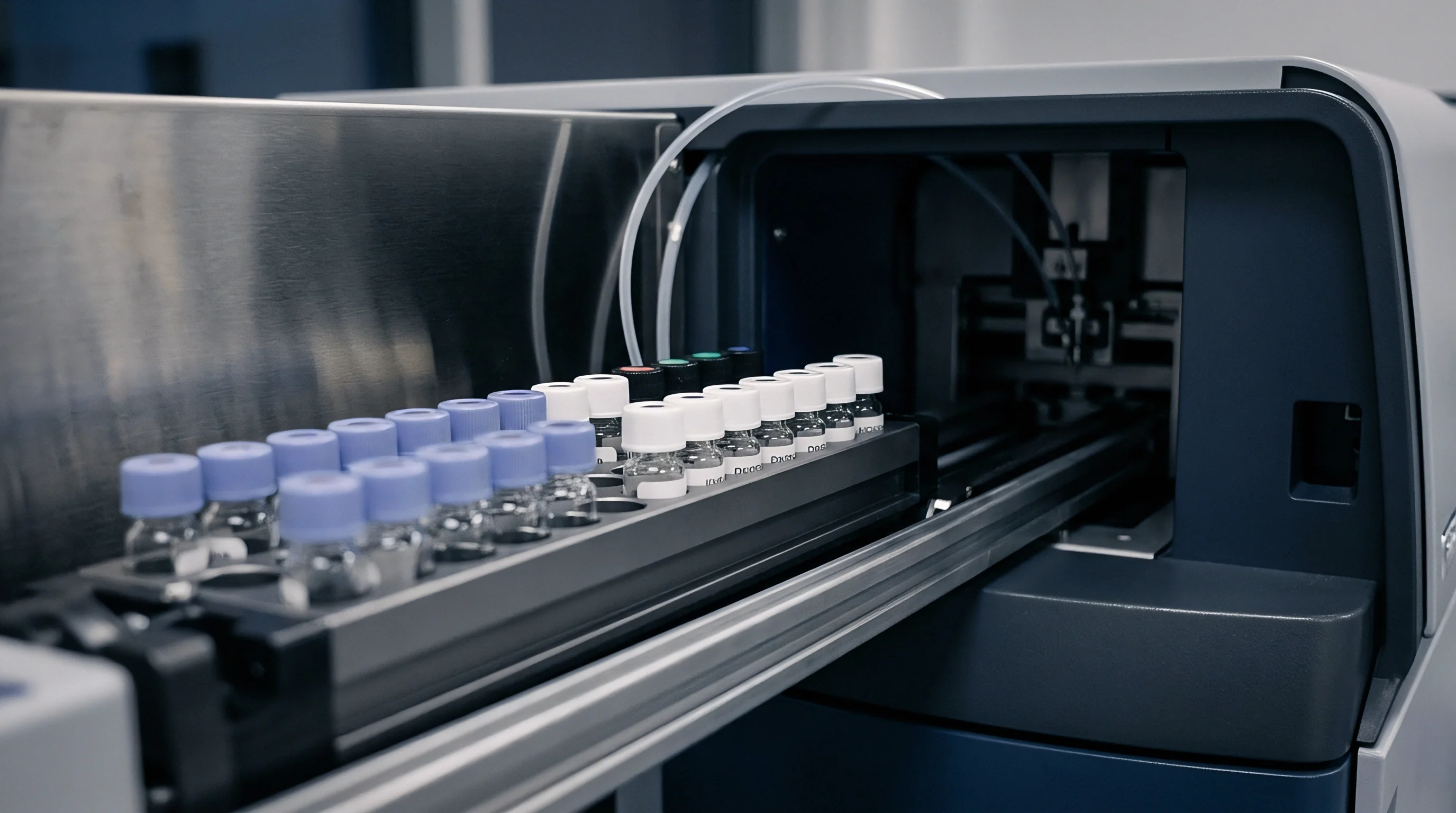
Analytical verification of polyolefin tariff entries demands laboratory testing protocols backed by standardized physical methods. Customs verification laboratories rely on physical tests to validate declared monomer ratios, polymer density, and structural parameters. Nuclear Magnetic Resonance (NMR) spectroscopy serves as the primary analytical standard for quantifying monomer mass fractions in polyolefin copolymers.
Carbon-13 NMR according to ASTM D5017 or ISO 21988 determines exact monomer sequences and triad distributions, yielding comonomer concentration figures within a precision tolerance of plus or minus 0.2 weight percent.
Customs labs test the actual pellet.
Spectroscopic Verification of Monomer Ratios
Spectroscopic evaluation isolates specific structural absorption bands to confirm comonomer incorporation. Fourier Transform Infrared (FTIR) spectroscopy performed under ASTM D5576 measures methyl group absorbance at 1378 cm⁻¹ and ethyl or butyl branch absorptions to calculate comonomer content in ethylene-alpha-olefin copolymers. Calibration curves derived from NMR standards convert infrared absorbance ratios into comonomer mass percentages.
When FTIR results sit near the 95 percent homopolymer boundary, customs laboratories escalate testing to high-temperature Carbon-13 NMR executed in ortho-dichlorobenzene at 130 °C.
Customs authorities rejecting ISO 1183 density test certificates that lack ISO 17855 thermal conditioning histories reclassify high density material into low density tariff lines.
Density measurement governs polyethylene subheading allocation under subheadings 3901.10 and 3901.20. Standardized density testing uses ISO 1183-1 Method A (immersion method) or ISO 1183-2 (density gradient column method). Specimen preparation follows ISO 17855-2, specifying controlled cooling rates during compression molding.
Rapid cooling traps amorphous regions, lowering measured density. Slow annealing increases polymer crystallinity, raising measured density by up to 0.004 g/cm³. Uncontrolled cooling rates cause a resin with a true annealed density of 0.941 g/cm³ to test at 0.938 g/cm³, resulting in incorrect subheading assignment under 3901.10.

Density Determination and Thermal Conditioning Standard Practice
Thermal conditioning standards mandate precise specimen history control. Standard annealing requires heating the molded plaque above the polymer melting peak to 160 °C, holding for 30 minutes, and cooling at a controlled rate of 15 °C per hour down to 40 °C. Annealing alters the measured density. Testing without standardized conditioning produces density values that fail customs audit scrutiny.
Sourcing practices stipulate ISO 17855 conditioning in resin procurement contracts to align supplier certificates of analysis with customs testing protocols.
- Pellet Sampling Routine retrieves representative 500-gram samples from top, middle, and bottom discharge ports of the shipping container.
- Specimen Compression Molding prepares void-free plaques under ISO 17855-2 guidelines at specified melt temperatures.
- Controlled Thermal Annealing cools plaques at 15 °C per hour to establish baseline equilibrium crystallinity.
- Density Gradient Column Analysis measures specimen buoyant density in an isopropyl alcohol and water medium at 23.0 °C under ISO 1183-2.
- High Temperature Spectroscopy executes Carbon-13 NMR on dissolved plaque fragments to confirm comonomer mass percentages.
Melt Flow Rate (MFR) testing under ISO 1133-1 provides secondary verification of polymer primary form status. MFR testing for polyethylene runs at 190 °C under a 2.16 kg load. MFR testing for polypropylene runs at 230 °C under a 2.16 kg load.
Ultra-low molecular weight polyolefin waxes exhibiting melt flow rates exceeding 500 g/10 min at standard conditions risk reclassification into heading 3404 as artificial waxes. Sourcing specifications set explicit MFR limits to maintain resin classification under Chapter 39 primary forms.
Purchase contracts stipulating that incoming resin lots carry ISO 1183 density certification with recorded ISO 17855 thermal cooling histories eliminate customs disputes regarding subheading density limits.


Form
Primary form classification under Note 3 determines whether polyolefin resin enters under headings 3901 and 3902 or waste heading 3915. Note 3 to Chapter 39 defines primary forms strictly as liquids, pastes, dispersions, blocks of irregular shape, lumps, powders, granules, flakes, and pellets. Polyolefin resins shipped in spherical or cylindrical pellet form satisfy Note 3(b) requirements.
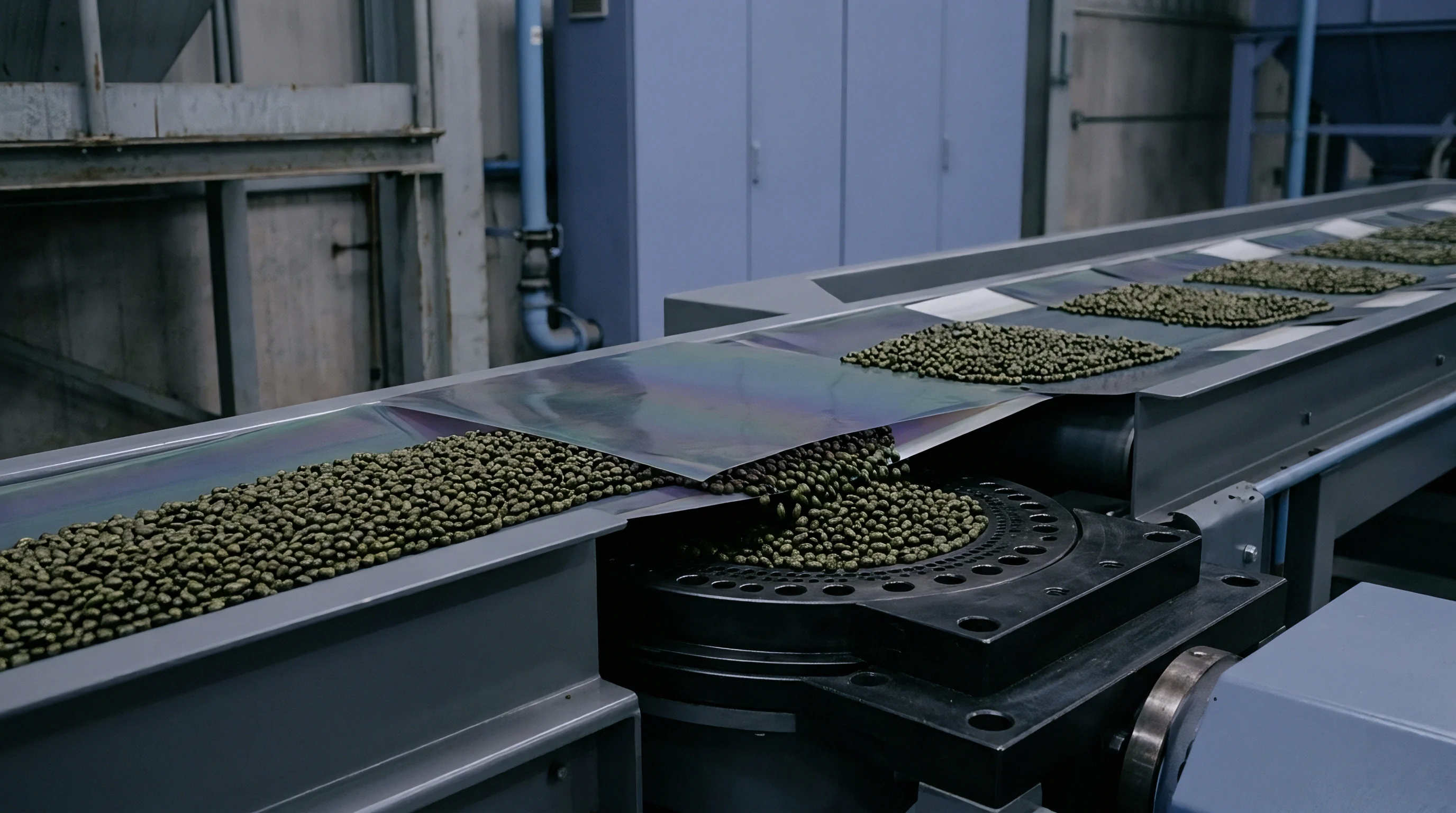
Reprocessed polyolefin pellets produced by melting and extruding industrial scrap qualify as primary forms under headings 3901 or 3902. Physical shape dictates tariff eligibility regardless of recycled content.
Waste flakes trigger scrap classification.

Primary Form Criteria and Regrind Physical States
Pelletized thermoplastic resins satisfy Note 3 requirements regardless of whether the polymer source is virgin or reprocessed feedstock. Regrind material consisting of shredded, unpelletized edge trim, sprues, or crushed defective parts fails primary form definitions. Unpelletized regrind classifies under heading 3915 as waste, parings, and scrap of plastics.
Heading 3915 entries face distinct customs valuation rules, environmental compliance audits, and import quota restrictions in multiple jurisdictions. Compounding facilities convert post-industrial regrind into uniform pellets before export to maintain primary form classification.
| Physical State / Product Description | Additive / Filler Loading | Primary Form Status | Harmonized Tariff Heading |
|---|---|---|---|
| Virgin / Recyclate Pellets | Unfilled or < 50% filler | Satisfies Note 3(b) | 3901 / 3902 |
| Unpelletized Flakes / Shreds | Irregular post-industrial scrap | Fails Note 3(b) | 3915.10 / 3915.20 |
| Color Masterbatch Pellets | > 30% inorganic pigment in PE | Dispersed in carrier resin | 3206.49 or 3901 / 3902 |
| Calcium Carbonate Concentrate | 70% CaCO₃ in PP carrier | Highly filled masterbatch | 3824.99 or 3902.10 |
| Micronized Polyethylene Powder | Particle size < 500 microns | Satisfies Note 3(a) | 3901.10 / 3901.20 |
Microscopic particle size distribution determines whether powdered polyolefins qualify as primary forms under Note 3(a). Polymer powders produced by ambient or cryogenic grinding must form continuous coherent structures upon heating without chemical crosslinking. Highly oxidized powders or degraded polymer fines exhibiting broad particle size distributions retain primary form status under heading 3901 provided melt processability remains intact.
Melt flow rate measurement confirms thermal flow behavior under load.
Masterbatch Concentration Limits and Additive Package Impact
Concentrated pigment and additive dispersions in polyolefin carrier resins create complex tariff classification boundaries. Masterbatches containing high concentrations of titanium dioxide or carbon black suspended in a polyolefin matrix evaluate carrier resin content against functional pigment thresholds. When inorganic pigment content exceeds 30 percent by weight, customs authorities in select jurisdictions reclassify color masterbatches from heading 3901 or 3902 into heading 3206 as prepared pigments.
Masterbatches carrying slip, anti-block, or antioxidant additives without color pigments remain under polyolefin primary form headings.
Pelletized reprocessed resin clears customs under primary form headings while unpelletized regrind flakes trigger classification under scrap tariffs.
- Incomplete Monomer Declarations omit comonomer mass fractions, prompting customs laboratories to assign conservative high-duty subheadings.
- Unannealed Density Testing yields artificially low specific gravity figures, misrouting high-density resins into low-density tariff lines.
- Unpelletized Scrap Shipments declared under primary form headings cause container clearance holds and customs reclassification fines.
- High Pigment Masterbatch Declarations under polyolefin headings trigger customs reclassification into chemical colorant tariffs.
- Oversized Regrind Granules failing Note 3 physical definitions undergo compulsory reassessment as plastic waste under heading 3915.
Calcium carbonate filled polyolefin compounds (often termed filler masterbatch) evaluate total inorganic content. A compound consisting of 75 percent calcium carbonate filler and 25 percent polypropylene carrier resin tests the boundary between heading 3902 and heading 3824 (chemical products not elsewhere specified). If the calcium carbonate functions strictly as a filler in a plastic compound shaped as uniform pellets, primary form polyolefin classification under 3902.10 or 3902.30 prevails in major tariff schedules.
Importers submit detailed compound specifications stating carrier resin type, polymer density, and inorganic residue fractions.
Misdeclaring unpelletized regrind edge trim under primary form headings leads to container seizure, regulatory fines, and immediate forfeiture of import privileges.
Tariff
Financial exposure during cross-border polyolefin procurement stems directly from duty rate differentials between six-digit subheadings. Standard Most-Favored-Nation (MFN) tariff rates for primary polyolefins range between 3.0 percent and 6.5 percent across major importing jurisdictions. Reclassification from ethylene-alpha-olefin copolymer subheading 3901.40 (duty rate 3.0 percent) to high-density polyethylene subheading 3901.20 (duty rate 6.5 percent) increases import duty expenditure by 116 percent.
On bulk resin trades shipped in multi-container volumes, unexpected reclassifications dismantle landed-cost models.
The tariff code fixes the rate.
Customs Rulings and Binding Tariff Mechanics
Importers seek formal administrative decisions to secure tariff classification prior to shipping large volumes. In the European Union, Binding Tariff Information (BTI) decisions issue legally binding classification determinations valid across all member states for three years. In the United States, U.S. Customs and Border Protection issues administrative ruling letters under 19 CFR Part 177.
Securing a binding ruling requires submitting representative pellet samples, certified Carbon-13 NMR spectroscopic data, ISO 1183 density records, and detailed manufacturing process descriptions.
Customs auditors apply retroactive six-digit reclassifications to historical imports when spectroscopy disproves seller copolymer declarations.
Consider a worked tariff adjustment scenario for a 50-tonne shipment of imported polyethylene resin. Assume an agreed purchase price of $1,350 per metric tonne, establishing a total shipment customs value of $67,500. The importer declares the resin under subheading 3901.40.00 as an ethylene-octene copolymer subject to a 3.0 percent duty rate, calculating a duty liability of $2,025.
Upon entry inspection, customs authorities draw samples and perform Carbon-13 NMR testing according to ASTM D5017. Test results reveal an octene monomer content of 3.8 percent by weight. Because total comonomer content sits below the 5.0 weight percent boundary established by Subheading Note 1(a)(1), ethylene content equals 96.2 percent.
The resin fails copolymer classification and reclassifies as high-density polyethylene under 3901.20.00 due to an annealed density of 0.942 g/cm³.
The reclassification under subheading 3901.20.00 raises the applicable duty rate to 6.5 percent, increasing the baseline duty liability to $4,387.50. The resulting duty shortfall equals $2,362.50. Customs authorities impose an administrative penalty equal to 100 percent of the unpaid duty ($2,362.50) plus accrued interest and demurrage storage fees during testing ($1,800.00).
Total landed costs increase by $6,525.00 on a single 50-tonne lot. Comonomer content determines the duty rate.

Anti Dumping Exposure across Polyolefin Subheadings
Trade enforcement measures target specific subheadings and country combinations to offset market distortions. Anti-dumping (AD) and Countervailing Duty (CVD) orders apply strict duty margins to specific resin grades originating from designated production sites. An AD order applying a 32.5 percent duty to polypropylene homopolymer under subheading 3902.10 does not automatically extend to propylene copolymers under subheading 3902.30 unless explicit scope language includes them.
Importers audit origin records and chemical classification definitions to determine anti-dumping liability.
- Monomer Composition Certification requires Carbon-13 NMR test reports detailing comonomer mass percentages for every production lot.
- Annealed Density Verification specifies ISO 1183 density testing performed strictly on ISO 17855 thermally conditioned plaques.
- Physical State Identification documents primary form compliance under Note 3(b) for pelletized resin shipments.
- Origin Traceability Recordkeeping maintains chain-of-custody documentation linking monomer synthesis to pellet packaging.
- Binding Ruling Archive attaches applicable BTI or customs administrative ruling reference numbers to commercial customs entries.
Rules of Origin for polyolefins dictate whether shipments qualify for preferential tariff treatment under regional trade agreements. Preferential origin rules require either a tariff heading shift (such as changing non-originating chemical feedstocks in Chapter 29 to primary polyolefins in Chapter 39) or a regional value content (RVC) threshold exceeding 40 to 50 percent. Compounding operations that simply melt-blend imported non-originating polyethylene pellets with local additives fail tariff shift requirements if the product remains under heading 3901.
Sourcing practices audit regional value content calculations to protect trade agreement duty exemptions.
Customs authorities continue to deliberate whether elastomeric ethylene-octene copolymers containing over thirty percent octene qualify as synthetic rubber under heading 4002 or remain polyolefins in heading 3901.


Cargo
Shipping documentation aligns with physical lab analysis to withstand international trade audits. Cross-border resin supply chains require harmony between commercial documentation, physical bag markings, and analytical certificates of analysis. Customs inspectors compare the Harmonized System tariff code listed on the ocean bill of lading, commercial invoice, and customs entry summary against analytical laboratory values derived from container discharge sampling.
Discrepancies between trade names printed on resin bags and declared six-digit tariff codes trigger physical inspection holds.
Spectroscopy overrides the commercial invoice.

Documentation Alignment across Bills of Lading and Certificates
Commercial invoices and packing lists state exact chemical names alongside trade names to prevent regulatory delays. A shipment described generically as “Polyethylene Resin” invites customs reclassification to higher duty subheadings. Precise invoice descriptions state full chemical detail: “Linear Low-Density Polyethylene Pellets (Ethylene-1-Hexene Copolymer, 6.2 wt% Hexene, Density 0.918 g/cm³, MFR 2.0 g/10 min at 190 °C/2.16 kg), Primary Form, HS Code 3901.40.00.” Stating exact polymer parameters aligns commercial documentation with customs classification requirements.
Certificates of Analysis (CoA) provided by resin manufacturers must accompany ocean shipping dossiers. The CoA lists batch-specific test results, including measured density per ISO 1183, melt flow rate per ISO 1133, and comonomer content quantified by NMR or FTIR. Customs auditors cross-check CoA lot numbers against physical bag markings and shipping container seal records.
If batch numbers on imported bags fail to match numbers on analytical test certificates, customs enforcement teams reject the analytical evidence, forcing independent laboratory re-testing at the importer’s expense.
Audit Defense Dossier Construction for Polyolefin Imports
Building a comprehensive compliance file protects resin buyers against retroactive customs reclassifications. Regulatory agencies conduct post-clearance audits extending up to five years after entry date. An unassailable audit defense dossier contains certified manufacturing process flow diagrams, monomer feed ratio logs from the polymerization plant, lot-specific Carbon-13 NMR test records, ISO 1183 density test charts with thermal cooling logs, and proof of origin documentation.
Retaining physical pellet retention samples from every container lot enables independent lab re-testing if customs authorities challenge historical entries.
Linking batch test values directly to customs entry numbers creates an unassailable audit trail that satisfies international customs enforcement teams during retroactive reviews.